
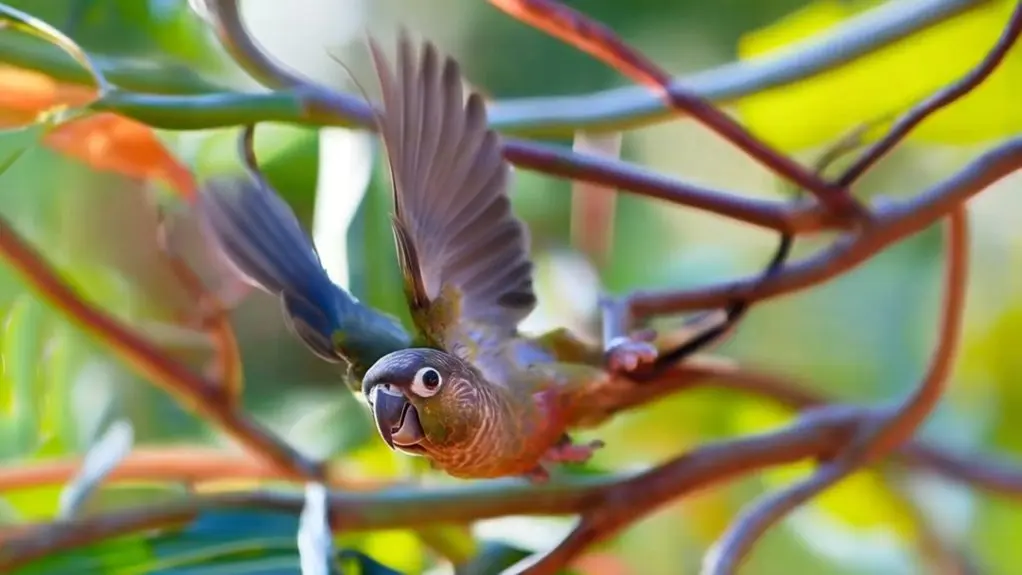
You might notice birds act hyperactive or distracted, but they don’t have ADHD like humans do. ADHD is a neurodevelopmental disorder linked to specific brain structures such as the prefrontal cortex, which birds lack.
Their behaviors, like rapid movement or vocalizing, serve natural functions shaped by evolution rather than neurological dysfunction. Scientists confirm bird attention mechanisms are distinct from human ADHD.
Understanding these differences helps you appreciate birds without imposing human traits. Exploring this further reveals some fascinating insights.
What Is ADHD And Why It’s Unique To Humans
Although symptoms like hyperactivity and impulsivity can appear in various species, ADHD is a neurodevelopmental disorder unique to humans, characterized by inattention, hyperactivity, and impulsivity.
ADHD, marked by inattention and impulsivity, is a neurodevelopmental disorder found only in humans.
You should understand that ADHD stems from specific genetic differences influencing brain structure and function. These differences primarily affect regions responsible for executive functioning and impulse control, such as the prefrontal cortex.
Unlike other animals, humans possess complex neural networks essential for regulating attention and behavior. While some species, like parrots, may display hyperactive behaviors, these don’t arise from the same neurodevelopmental mechanisms.
Consequently, the unique combination of genetic factors and brain structure alterations in humans underlies ADHD, distinguishing it from superficially similar behaviors observed in other animals. This highlights why ADHD is a distinctly human condition.
Why Birds Can’t Have Human ADHD
Because birds lack the prefrontal cortex and associated neural circuits critical for attention regulation, they can’t experience ADHD as humans do. This neurological distinction highlights some fundamental cognitive differences between avian and human brains.
Human ADHD involves dysfunction in specific brain regions responsible for executive functions and sustained attention, which birds don’t have. Instead, their brain structures support behaviors like foraging and flight.
These might look a bit like ADHD symptoms, but they actually come from different neural mechanisms.
Scientific research shows that ADHD is a neurodevelopmental disorder unique to humans. It’s defined by particular patterns of brain activity and behavior.
Common Bird Behaviors That Resemble ADHD Symptoms
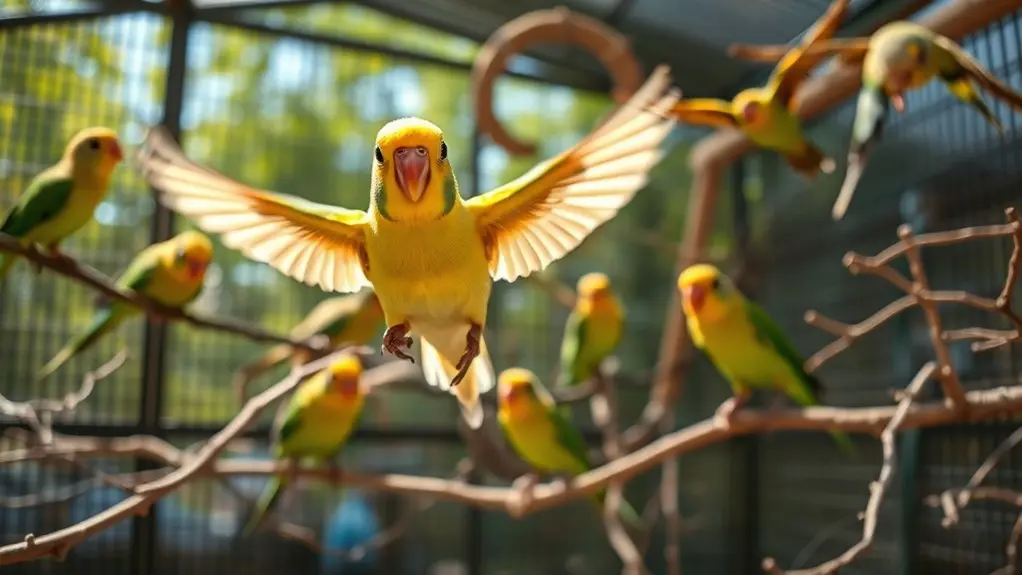
You’ll notice that many birds, like parrots and parakeets, show hyperactivity through constant movement and rapid, unpredictable actions. It’s pretty common to see them flitting around, almost like they can’t sit still.
Their attention span also varies a lot—they often shift quickly from one thing to another, which can look a lot like inattentiveness. But here’s the thing: while these behaviors might remind you of ADHD symptoms, they actually come from different biological and environmental reasons.
Hyperactivity In Bird Behavior
When observing birds like parrots and parakeets, you might notice behaviors that closely resemble hyperactivity symptoms seen in humans with ADHD. These birds often engage in rapid, repetitive movements and vocalizations, which are central to their bird communication.
For example, excessive chirping or squawking can indicate heightened arousal rather than a disorder.
Their flight patterns also demonstrate bursts of energetic activity, characterized by quick, erratic flights indoors or in captivity. Such frenetic movements and chasing behaviors are typical in young birds and serve natural purposes like exploration and play.
However, their intensity and frequency can mimic the hyperactivity component of ADHD, leading to misinterpretation.
Understanding these behaviors within the context of species-specific norms helps distinguish natural hyperactivity from pathological symptoms.
Attention Span Variability
Although birds don’t experience ADHD like humans do, their attention spans can vary in ways that resemble some symptoms of the disorder. You’ll notice parakeets rapidly switching between activities or sounds, which reflects attention shifts similar to distractibility.
Their vocal mimicry, involving repetitive and varied calls, may seem like hyperactivity or fidgeting.
Nesting instincts also drive variable focus, as birds alternate between building nests, foraging, and staying alert to environmental changes. These natural behaviors show flexible attention, supported by neural activity observed especially in parrots.
This variability actually serves survival functions rather than any disorder.
Understanding these patterns helps us tell the difference between instinctual behaviors and clinical symptoms. So, while birds do show attention span fluctuations, these are adaptive, not pathological.
It’s pretty fascinating how nature works, right?
How Bird Behaviors Differ From Human ADHD
While birds often display behaviors like repetitive vocalizations and heightened activity, these actions stem from species-specific instincts rather than neurological disorders such as ADHD.
You should recognize that bird behaviors arise from evolutionary adaptations tailored to their survival and social needs. Genetic differences between avian species and humans underlie distinct neural architectures, making direct comparisons to human ADHD invalid.
Unlike humans, birds don’t exhibit attentional deficits or impulsivity linked to neurological dysfunction. Instead, their high activity levels and vocalizations serve vital roles in communication and environmental interaction.
When you observe a parrot’s incessant chatter or a finch’s rapid movements, these reflect instinctual behaviors shaped by evolution, not signs of ADHD.
Understanding these biological distinctions clarifies why bird behaviors differ fundamentally from human ADHD symptoms. So, next time you see a bird being loud or restless, remember it’s all about their natural instincts, not a disorder.
How Scientists Study Bird Attention
Recognizing that bird behaviors stem from evolutionary adaptations rather than neurological disorders, scientists focus on how avian attention functions at a neural level. You’ll find that researchers study neural mechanisms by monitoring brain activity in response to stimuli like sounds and visual cues. They use brain imaging and electrophysiological techniques to identify neural circuits underlying cognitive processes related to attention.
Behavioral analyses, including reaction times and focus stability, further clarify how birds maintain attention. By comparing neural patterns across species, scientists gain insight into the evolution of attention and its regulation. This approach helps differentiate natural avian attention mechanisms from human neurological conditions, avoiding misinterpretation of behaviors as ADHD symptoms.
What Barn Owls Teach Us About Focus And Attention
Because barn owls rely heavily on sharp focus to hunt and navigate in low-light conditions, researchers study their brain activity to understand attention regulation. By examining the neural mechanisms in barn owls, you gain insight into how attention is sustained despite distractions.
Evolutionary differences between owls and humans reveal both unique and shared pathways for managing focus.
Key findings show:
- Specific neural activity patterns correlate with attention shifts.
- Owl brain circuits maintain prolonged focus during hunting.
- Behavioral responses to stimuli highlight attention control mechanisms.
- Comparative studies suggest parallels to human attention processes.
These discoveries help you appreciate how barn owls model biological attention regulation, offering potential clues for understanding human attention disorders like ADHD, without conflating species-specific behaviors.
It’s pretty fascinating how much we can learn from these birds!
Why Calling Bird Behavior ADHD Misleads Science And Public
Insights gained from studying barn owls’ attention mechanisms might tempt you to draw parallels between bird behavior and human conditions like ADHD. However, evolutionary differences and distinct brain structure between birds and humans make such comparisons misleading.
Birds lack the specific neural pathways and brain regions implicated in ADHD, so labeling their behaviors as ADHD oversimplifies complex species-specific traits. Scientific research confirms that varied avian attention and vocal behaviors don’t correspond to human neurodevelopmental disorders.
When you apply human mental health terms like ADHD to birds, you risk distorting both public understanding and scientific interpretations of avian cognition. This misapplication perpetuates misinformation, undermining rigorous study of animal behavior and human psychiatric conditions alike.
It also fails to acknowledge fundamental biological distinctions shaped by evolution.
How To Appreciate Birds Without Humanizing Them
You can really appreciate birds by respecting how they naturally behave. Instead of imagining them with human feelings or motives, try to focus on what makes each species unique—like how they forage for food or communicate with one another.
By keeping your observations objective and free from human traits, you’ll get a clearer understanding of their roles in the ecosystem.
This way, you enjoy watching birds for who they truly are, not who we might want them to be.
Respecting Bird Behavior
When observing birds, it’s essential to interpret their behaviors within the framework of their species-specific biology rather than through human psychological conditions. Birds’ rapid movements, vocalizations, and playfulness reflect natural instincts shaped by migration patterns and nesting behaviors, not human disorders.
To truly respect bird behavior, you should:
- Recognize that frequent vocal activity in species like parrots serves communication, not distraction.
- Understand migration patterns as survival strategies, not restlessness.
- Observe nesting behaviors as reproductive necessities, not hyperactivity.
- Appreciate that their actions respond to environmental stimuli, not human-like attention deficits.
Avoiding Anthropomorphic Bias
Although it’s tempting to interpret birds’ lively behaviors through a human lens, doing so risks imposing inaccurate psychological labels like ADHD. You need to avoid anthropomorphic bias by recognizing birds’ distinct neural structures and ecological contexts.
Cross species empathy means appreciating their behaviors without relying on human psychological frameworks or behavioral stereotypes. This approach fosters accurate, respectful understanding.
| Human-Centric View | Bird-Specific Reality |
|---|---|
| Hyperactivity = ADHD | Natural activity level |
| Distractibility = Disorder | Ecological adaptation |
| Behavioral stereotypes | Species-specific traits |
| Psychological labels | Contextual interpretation |
Observing Natural Bird Traits
Since birds exhibit behaviors shaped by evolutionary pressures rather than human psychological frameworks, observing their natural traits means focusing on species-specific actions like foraging, preening, and vocalizing.
When you watch birds, keep these key points in mind:
- Appreciate how bird migration reflects intricate navigational and survival strategies, not restlessness.
- Notice nest building as a purposeful, species-specific behavior essential for reproduction.
- Understand that their focus on tasks like hunting or grooming stems from instinct, not human attention disorders.
- Avoid attributing human emotions or conditions to their behavior, which only clouds scientific observation.
Frequently Asked Questions
Can Certain Bird Species Be More Inattentive Than Others?
You’ll find bird attention varies widely due to species variability. Parrots show higher focus and adaptability, while finches display more stereotyped behaviors. This makes some species inherently more inattentive than others based on neural and vocal control differences.
It’s pretty interesting how these differences play out in their behavior. Some birds are just naturally wired to be more alert, while others seem to zone out more often. It all comes down to their brain structure and how they control their vocalizations.
Do Environmental Changes Affect Bird Focus and Activity Levels?
You might be surprised, but yes. Habitat disruption and noise pollution directly impair bird focus and activity. These environmental changes increase distractions, alter natural behaviors, and reduce attention spans.
This profoundly impacts how birds forage and interact in their habitats.
Are There Treatments for Hyperactive Behaviors in Pet Birds?
Yes, you can manage hyperactive bird behavior through hyperactivity management techniques like environmental enrichment, providing stimulating toys, and establishing consistent routines.
It really helps to keep their environment interesting and engaging. Giving your bird toys that challenge them can make a big difference.
Also, sticking to a regular routine helps your feathered friend feel secure and less restless.
Consulting an avian veterinarian can help tailor bird behavior interventions effectively. They can give you advice specific to your bird’s needs.
How Do Bird Brains Process Attention Differently Than Mammals?
You can’t judge a book by its cover. Bird brains process attention using unique neural circuitry and neurotransmitter differences. They rely on the wulst rather than mammalian cortical structures.
This setup enables distinct sensory integration and selective focus mechanisms. So, birds handle attention in a way that’s quite different from mammals. It’s pretty fascinating once you dig into it!
Can Diet Influence a Bird’s Concentration and Energy?
Yes, bird nutrition and dietary supplements directly influence your bird’s concentration and energy by supporting brain function. Proper nutrients prevent lethargy, while imbalanced diets may cause hyperactivity or inattentiveness, impacting cognitive performance.
Conclusion
You might be tempted to call a restless bird “ADHD,” but that’s a misconception rooted in humanizing animal behavior. Unlike the scientifically defined neurological condition in humans, birds exhibit species-specific attention patterns shaped by evolution, not pathology.
Understanding these distinctions helps you appreciate birds on their own terms, much like a Renaissance scholar would respect the clockwork of a sundial. Recognizing this prevents misleading interpretations and promotes clearer scientific communication.