
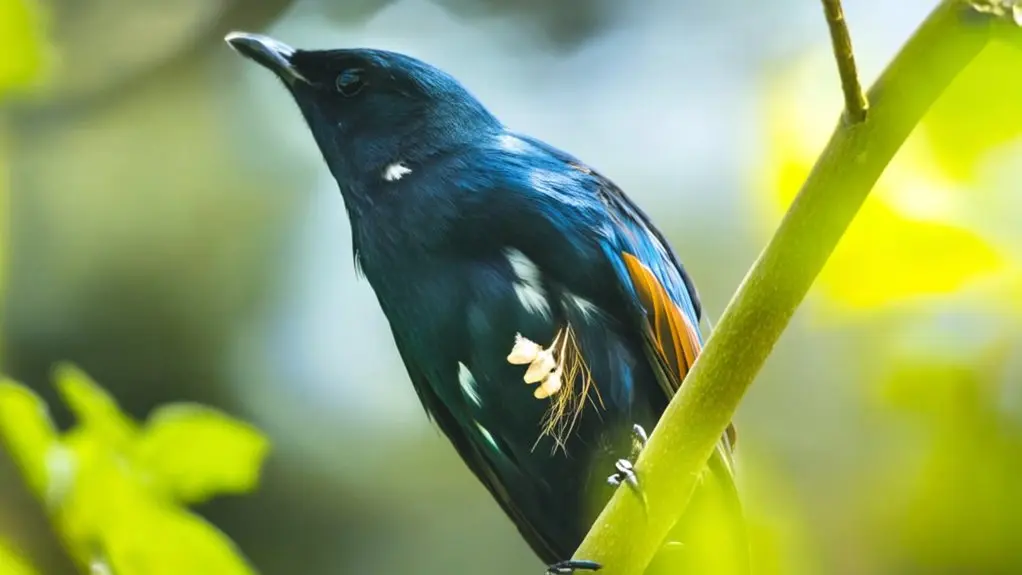
Yes, birds can grow their feathers back through a tightly regulated molting process. New feathers develop from specialized follicles beneath the skin. This renewal replaces damaged or worn feathers, restoring flight capability, insulation, and vivid coloration.
These features are essential for survival and mating. Larger birds molt more slowly to balance flight and feather regrowth. This slower process is a key factor that limits their size.
Understanding this process shows how complex strategies help maintain bird health and behavior during molt. It’s pretty fascinating how nature takes care of these needs, right?
How Birds Regrow Feathers During Molting
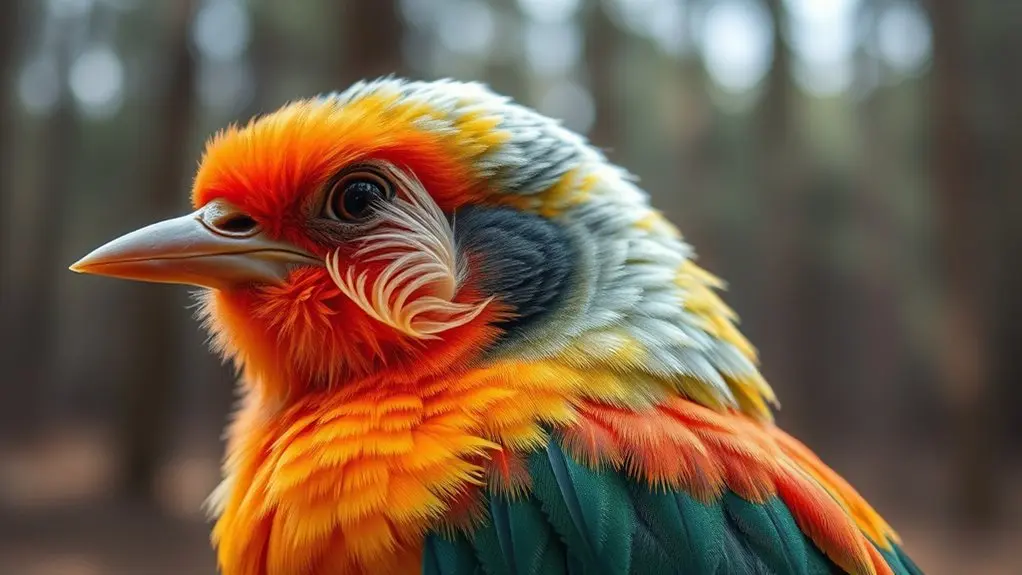
How exactly do birds regrow their feathers during molting? You’ll find that new feathers develop from specialized follicles beneath the skin through a cycle involving follicle activation, keratinization, and shedding of old feathers.
Birds regrow feathers through follicles activating, keratinizing, and shedding old ones in a seamless cycle.
This process is tightly regulated by molting synchronization, ensuring feather replacement occurs efficiently without compromising flight.
Feather pigmentation resumes as the new feathers grow, restoring the bird’s coloration precisely.
The growth rate scales with body mass to the one-sixth power, so larger birds take longer, often molting over years.
Smaller birds replace about 9 to 10 primary feathers annually.
This precise orchestration allows you to understand how birds maintain their plumage integrity through a scientifically controlled and synchronized molting process.
It’s pretty fascinating how nature keeps everything in balance, isn’t it?
Why Feather Regrowth Is Essential for Health and Flight
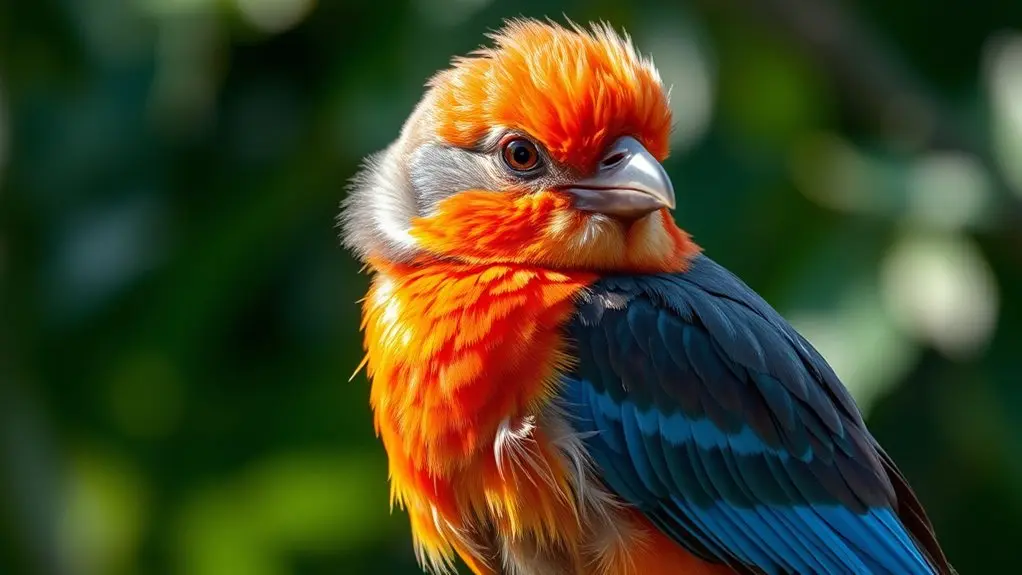
Because feathers are indispensable for flight mechanics and protection, birds must continuously regrow them to maintain ideal health and performance. Feather regrowth ensures you witness prime flight ability by replacing damaged or worn feathers, which is critical for maneuverability and energy efficiency.
It also helps maintain feather coloration, which is essential for species recognition and mating displays. Plus, it enhances defense against parasites, bacteria, and UV light damage, safeguarding skin and overall health.
Feather regrowth supports nesting behaviors too. Intact feathers provide insulation and camouflage for eggs and chicks, making a big difference during breeding seasons.
Since larger birds take longer to replace feathers, their regrowth strategy balances survival and flight needs. By regrowing feathers regularly, birds optimize their physical condition, reproductive success, and environmental adaptation.
That’s why feather regeneration is so important for both health and flight.
Why Feather Damage Triggers Feather Regrowth
When your bird’s feathers get damaged—whether from parasites, bacteria, or even too much UV light—its body quickly picks up on the problem. This damage sets off hormonal changes that kickstart the molting process.
These hormones then activate the feather follicles and encourage new cells to grow at the feather roots. This helps replace the lost or damaged feathers.
Knowing how this works makes it clear why feather regrowth is so important—it’s a natural way for birds to keep their feathers strong and maintain their ability to fly efficiently.
Causes of Feather Damage
Although feathers are remarkably resilient, they suffer damage from various environmental and biological factors such as flight wear, parasites, bacterial infections, and prolonged exposure to UV light. This damage compromises feather coloration, affecting visual signals essential during bird migration.
Common causes of feather damage include mechanical abrasion from frequent flight and environmental obstacles, infestation by external parasites that degrade feather integrity, bacterial infections breaking down keratin structures, and UV radiation causing molecular breakdown of feather pigments.
When you notice these factors impair feathers, the bird’s body detects the damage and prepares for molting. This process guarantees replacement of weakened feathers, maintaining ideal flight performance and insulation necessary for survival, especially during the energetically demanding migration periods.
Regrowth Mechanism Triggers
Feather damage sets off a complex biological response within birds that triggers the regrowth of feathers. When feathers break or wear down, sensory receptors detect this physical damage and activate molt signaling pathways. This hormonal response initiates feather regeneration to restore functionality and feather coloration, which are essential for camouflage and mating displays.
Environmental stressors like UV light and parasites further accelerate this process to maintain feather health. It’s pretty fascinating how damage to flight feathers prompts synchronized molt cycles, making sure birds can fly again as soon as possible.
Additionally, nesting behaviors influence when feathers regrow. Birds often molt before or after breeding seasons to optimize feather condition for incubation and chick protection. This precise coordination between physical cues and hormonal signals ensures birds efficiently replace damaged feathers that are critical for survival and reproductive success.
How Feather Regrowth Affects Bird Behavior and Survival
When a bird’s feathers get damaged, you’ll often see changes in how it behaves. That’s because the bird is focusing on regrowing those feathers to get back its ability to fly and stay warm.
During molting, birds might cut back on activities like foraging or even migration. This can have a real impact on their chances of survival.
Feather Damage And Repair
How do birds maintain ideal flight and insulation despite constant wear? They rely on molting season to shed damaged feathers and grow new ones, preserving feather coloration and function.
Feather damage from parasites, bacteria, UV light, or flight stress impairs performance, triggering regrowth. You’ll notice:
- Feather regrowth varies by species and feather size, often taking weeks to months.
- Larger birds prolong molting over years, preventing flightlessness.
- Efficient repair supports critical behaviors like migration and predator avoidance.
- Feather coloration restoration is essential for communication and camouflage.
Molt Impact On Behavior
Although molting demands significant energy, birds adjust their behavior to accommodate feather regrowth. They often reduce activity levels and flight intensity to conserve resources.
As new feathers emerge, changes in feather coloration may temporarily alter visual signals important for social interactions and mating. You’ll notice many birds increase rest periods, decrease foraging, and withdraw socially during this time.
Molt timing also impacts nesting behaviors. Birds may delay breeding or alter incubation schedules to avoid overlapping high-energy demands.
Flight impairment during feather replacement makes birds more cautious, influencing habitat use and predator avoidance strategies.
Larger species sometimes extend molt over multiple years, balancing regrowth with ecological needs.
Understanding these behavioral adjustments helps clarify how birds cope with the physiological demands of feather renewal.
Survival Through Feather Replacement
Since feather regrowth directly affects a bird’s ability to fly, you’ll notice some pretty significant behavioral changes during this vulnerable time. Birds often tweak their nesting habits and cut back on migration to save energy and stay safe from predators.
Feather colors might also look a bit duller for a while, which can signal to other birds that they’re molting.
Some key survival strategies include staggering molting in bigger birds so they can still fly a bit. They also tend to hide out in dense cover when they’re replacing all their feathers.
You might see them changing up their foraging habits too, making up for not being able to move around as easily.
Plus, they stay extra alert because they’re at a higher risk of being caught by predators.
This regrowth phase is really important since damaged feathers—from parasites or too much sun exposure—can slow down the process. That delay can mess with their flight and chances of survival.
Knowing these behavior shifts helps us understand how birds manage to get through feather replacement without too much trouble.
How Bird Size Influences Feather Growth and Molt Duration
When you examine bird size, you’ll notice it directly affects both feather growth rates and the duration of molting periods. Larger birds grow feathers more slowly relative to their size, as growth rate scales with body mass to the one-sixth power. Their molting often spans longer periods, sometimes years, to avoid compromising flight during critical nesting behaviors.
Feather coloration and replacement timing also align with these constraints, balancing survival and reproductive needs. Here’s a summary:
| Bird Size | Feather Length (cm) | Molt Duration (weeks) |
|---|---|---|
| Small (50 g) | 5 | 4 |
| Medium (500 g) | 10 | 8 |
| Large (5000 g) | 20 | 52+ |
| Albatross | 25 | Multi-year |
| Constraints | Growth rate ∝ mass¹/⁶ | Flight ability impact |
This table highlights how size dictates feather growth and molt length.
Molt Patterns in Small Birds Versus Large Birds
You’ll notice that small birds replace their primary flight feathers every year, usually shedding about 9 or 10 feathers per wing throughout the year.
On the other hand, large birds like swans take a different approach—they spread their molt over multiple years. Sometimes, they shed many feathers all at once, which can make flying a bit tricky for a while.
These different strategies really show how birds adapt their feather growth and the need to keep flying during the molt.
Molt Frequency Differences
Although all birds must replace their feathers periodically, the frequency and pattern of molt vary a lot between small and large species. You’ll notice that small birds typically undergo an annual molt, replacing 9 to 10 primary feathers per wing within weeks.
Large birds, on the other hand, spread their molt over several years. This helps them avoid impairing their flight.
Key differences include:
Small birds complete molts quickly, which helps keep their feather coloration consistent—something that’s essential for mating and nesting behaviors.
Large birds stagger feather loss, often replacing feathers sequentially or sometimes all at once. Extended molting minimizes flight disruption in large species.
Molt frequency actually correlates with body size, which affects how energy is allocated during nesting and feather regrowth.
Understanding these patterns helps you appreciate how feather replacement supports survival and reproductive success in different bird species.
Feather Replacement Strategies
Because feather replacement impacts flight and energy use, birds have evolved distinct molt strategies tailored to their size and lifestyle. Small birds typically undergo a rapid molt, replacing 9 or 10 primary flight feathers annually in a single cycle. This precise molt timing maintains ideal feather coloration and flight efficiency without prolonged vulnerability.
In contrast, large birds like swans extend their molt over 2 to 3 years, staggering feather loss to minimize aerodynamic disruption and energy costs. Some large species may replace multiple feathers simultaneously, risking temporary flightlessness but accelerating feather renewal.
These strategies balance the demands of feather coloration maintenance, predator avoidance, and the physical constraints of feather growth. Understanding these molt patterns reveals how birds optimize survival through specialized feather replacement adapted to their body size and ecological needs.
It’s pretty fascinating how their molt timing matches what works best for them.
Molting Strategies Birds Use to Maintain Flight Efficiency
When birds undergo molting, they adopt specific strategies to maintain flight efficiency despite the challenges of feather replacement. You’ll notice that feather coloration and preening behavior play critical roles in this process, aiding in feather health and aerodynamic integrity.
Birds use several precise strategies to minimize flight disruption. For example, they replace feathers sequentially to avoid losing multiple flight feathers at the same time. Larger species often have prolonged molting periods, which helps spread out the demands of feather growth.
They also time their molt strategically, usually during periods when they don’t need to fly as much. Plus, they engage in intensive preening to keep their feathers in good condition and to optimize coloration for camouflage and signaling.
These tactics make sure that molting birds can still fly well enough to forage, evade predators, and navigate their environment effectively until their feathers fully regrow. It’s pretty impressive how they manage all this while looking a bit scruffy!
Challenges Large Birds Face During Extended Molt
Maintaining flight during molt becomes increasingly complex for large birds because of their size and energy needs. When they shed multiple feathers at once, their flight performance takes a hit. This makes them more vulnerable to predators and less successful at finding food.
Extended molt strategies, like gradually replacing feathers over several years, help reduce these risks. But it’s tricky because they’ve to carefully coordinate this with their nesting behaviors. Otherwise, their reproductive success might take a hit.
You’ll also notice that changes in feather color during molt can affect how well they blend in or communicate with others. This plays a role in their survival too.
Large species often time their molting phases to line up with nesting cycles, balancing where they put their energy.
Even with all these adaptations, going a long time without full flight ability is a big challenge. It demands precise timing and a lot of physiological strength to keep the bird healthy and surviving.
How Feather Growth Limits the Size of Flying Birds
Although large body size offers advantages, feather growth puts strict limits on how big flying birds can get. Feather length increases roughly with the cube root of body mass. So, when a bird’s weight rises tenfold, feather length only doubles.
Feather growth limits flying birds’ size; a tenfold weight increase only doubles feather length.
This growth constraint affects flight and molting strategies. You’ll notice the upper size limit for flying birds is around 3 kg because of the demands of feather replacement. Plus, feather growth rate scales with body mass to the one-sixth power, which means feather renewal slows down in larger species.
Birds cope with this by having extended molt periods. This helps balance new feather growth while keeping effective feather coloration, which is really important for camouflage and signaling.
Nesting behaviors also often adapt to handle prolonged molting, offering protection during those vulnerable feather regrowth phases.
All these factors together keep size in check. That’s why flying birds don’t grow beyond certain limits, even though being bigger could have some benefits.
How You Can Support a Molting Bird’s Health
Because molting demands significant energy and nutrients, you should provide a diet rich in vitamins and minerals to support healthy feather regrowth. Nutrients like vitamin A, biotin, and zinc directly influence feather color and quality. Guarantee your bird has access to clean water to maintain skin hydration, which is essential for proper feather development.
Contrary to common molting myths, handling stress can impair feather regeneration. So, minimize disturbances and create a calm environment with appropriate perches to reduce feather wear.
Regularly monitor your bird’s health and consult an avian veterinarian to detect any underlying issues promptly.
This precise care helps maintain ideal feather structure and pigmentation during molting. It supports your bird’s overall wellbeing and natural restoration of feathers.
Frequently Asked Questions
Do All Bird Species Molt at the Same Time of Year?
You won’t find all bird species molting simultaneously; their feather coloration and migration patterns influence molting timing. Some molt post-breeding, others year-round.
This helps ensure their feathers are in ideal condition for migration and seasonal survival strategies. It’s pretty interesting how different species have their own schedules.
Can Injured Feathers Regrow Without Molting?
Like a torn canvas can’t fix its colors, feather repair without molting is impossible for you to witness.
The bird must undergo molting to restore feather coloration and structure precisely through follicle regeneration.
How Long Does It Take for a Single Feather to Fully Regrow?
Feather regrowth usually takes 1 to 2 months, depending on species and feather type. You’ll notice molting cycles influence timing. Smaller birds tend to regrow their feathers faster.
Larger species, like eagles, require longer periods to fully regrow a feather. So, it really varies depending on the bird you’re looking at. But generally, a month or two is a good estimate.
Are There Any Birds That Never Molt?
You won’t find birds like the phoenix that never molt. However, some species show extremely slow molting patterns and retain juvenile feather coloration for years.
They adapt their molting patterns to environmental pressures and ecological niches precisely. It’s pretty fascinating how flexible their molting can be depending on where they live and what they need to survive.
Does Diet Affect the Quality of New Feathers?
Yes, your bird’s diet directly affects feather coloration and quality. Nutrients influence molting triggers and feather regrowth. Without adequate proteins, vitamins, and fatty acids, new feathers may appear dull, weak, or malformed during molt cycles.
Conclusion
You might worry that damaged feathers mean permanent harm, but birds actually regrow their feathers through a precise molting process. This process is crucial for flight and survival. It’s a natural cycle that repairs damage and supports their health.
Even large species with longer molts go through this same process. Understanding this resilience helps you appreciate how molting is essential, not a setback. It ensures birds stay strong and agile.
By supporting molting birds, you’re helping their recovery and long-term well-being. It’s all part of how they keep thriving in the wild. So, next time you see a bird shedding feathers, know it’s just nature doing its thing.