

Yes, birds can have allergies, but they’re pretty rare because their immune systems evolved to tolerate proteins in feathers and droppings. You’re actually more likely to have allergic reactions from exposure to bird feathers, dander, and droppings. These can trigger sneezing, itchy eyes, and breathing issues.
Allergens in different bird species might cause cross-reactions, which can make managing allergies a bit tricky. Knowing how these allergens work and recognizing the symptoms can really help you protect yourself and your feathered friends better.
Bird Allergies in Humans vs. Birds
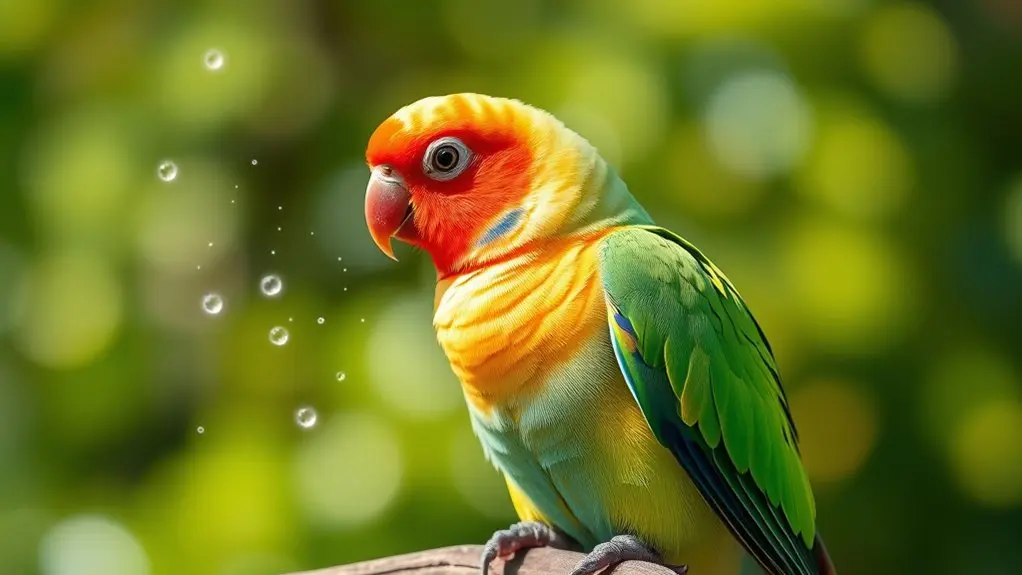
Although both humans and birds can suffer from bird allergies, the causes and symptoms differ markedly between the two. When birds develop allergies, they usually react to proteins found in their own feathers, serum albumin, or droppings. This can cause respiratory distress and itchy skin.
You might notice birds with allergies sneezing or showing nasal congestion. These symptoms are often worsened by poor ventilation or accumulated allergens in their environment. Feather coloration and nesting behaviors can influence allergen exposure since molting or frequent nest building increases feather and dander presence.
Unlike humans, birds’ allergic responses focus on these internal and environmental factors rather than external allergens. Understanding these differences helps you better care for birds and manage their specific allergy-related needs.
Common Bird Allergens and How They Affect You

You’re exposed to bird allergens mainly through proteins found in feathers, dander, droppings, and secretions—not just the feathers themselves. These allergens can set off symptoms like sneezing, coughing, nasal congestion, and irritated eyes.
Knowing about these key allergens can really help you spot and manage allergic reactions more easily.
Key Bird Allergens
When you come into contact with birds, your immune system may react to specific proteins found in their feathers, dander, droppings, and urine. Feather allergens and urine proteins are common triggers that can become airborne, causing allergic responses. For instance, canary serum albumin (Gal d 5) is a notable allergen linked to cross-reactivity with eggs and other birds.
| Allergen Source | Common Allergen | Effect on You |
|---|---|---|
| Feathers | Feather allergens | Airborne particles cause irritation |
| Urine | Urine proteins | Potent allergen causing sensitization |
| Droppings | Dander proteins | Can provoke respiratory issues |
Smaller birds generally release fewer allergens than larger parrots, but sensitivity varies by individual. So, it really depends on your own immune system and the birds you’re around.
Allergy Symptoms Overview
Because bird allergens like feathers, dander, droppings, and urine easily become airborne, they can quickly trigger allergic reactions in sensitive individuals.
When birds engage in feather grooming or nest building, they release proteins such as serum albumin (Gal d 5), which are common allergens.
You might experience respiratory symptoms like sneezing, coughing, nasal congestion, and itchy, watery eyes.
Direct contact with feathers or droppings can also cause skin reactions, including hives or red rashes.
These symptoms often develop gradually and worsen with continued exposure.
Understanding how these allergens affect you helps manage your environment and reduce reactions.
If you’re frequently around birds, paying attention to signs during activities like feather grooming or nest building is essential to avoid escalating allergic responses.
How Bird Allergens Trigger Allergic Reactions in People

Bird allergens come from proteins found in feathers, droppings, and urine, and these can easily become airborne and inhaled. When these proteins enter your respiratory system, your immune system might mistake them for something harmful, which can trigger allergic reactions like sneezing and wheezing.
What’s interesting is that some allergenic proteins are shared across different bird species. So, if you’re allergic to one type of bird, you might actually react to several kinds because of this cross-reactivity.
It’s a bit like your immune system getting confused and reacting to anything that looks similar.
Bird Allergen Sources
How do allergens from birds trigger allergic reactions in people? Bird allergens mainly come from proteins found in feathers, dander, and dried droppings. These proteins, including serum albumin (Gal d 5), become airborne when feathers shed or droppings dry out. This makes it easy for you to inhale them.
Even if you don’t have direct contact with birds, dust particles containing these allergens can circulate in the environment. This means your exposure risk goes up without you even realizing it.
The allergens spread through feather dust and tiny skin flakes, which makes avoiding them tough in places where birds are around.
Since many bird species share similar allergenic proteins, you might experience cross-reactivity. That means if you’re allergic to one kind of bird, you could also react to others.
Understanding where these allergens come from can really help you reduce exposure and manage your symptoms better.
Immune System Response
Allergens from feathers, dander, and droppings trigger your immune system to react as if these proteins pose a threat. In people without allergies, immune tolerance prevents an overreaction to these substances.
However, during allergen sensitization, your immune system mistakenly identifies bird proteins as harmful and produces specific IgE antibodies.
When you’re exposed again, these antibodies bind to mast cells, releasing histamine and other chemicals that cause allergy symptoms. This immune response inflames airway cells, leading to sneezing, coughing, and wheezing.
Understanding this process is key to managing bird allergies effectively.
By recognizing how your immune system shifts from tolerance to sensitization, you can better appreciate why certain exposures provoke such strong reactions. That’s why avoidance or treatment strategies focus on reducing contact with these allergens.
It really helps to know what’s going on inside your body.
Cross-Reactive Allergens
Once your immune system becomes sensitized to proteins from one type of bird, it can mistakenly react to similar proteins from other bird species. This phenomenon, known as allergen cross reactivity, happens because of immune epitope sharing, where IgE antibodies recognize conserved protein regions like serum albumin (Gal d 5) found across various birds.
For example, if you’re allergic to canaries, exposure to parrots or chickens may trigger allergic reactions due to these shared allergens. The primary allergens involved include inhaled feather proteins and serum albumins, which can cause respiratory and systemic symptoms.
This cross-reactivity can also lead to bird-egg syndrome, where you might react to egg yolk proteins because of similar albumin epitopes. Understanding this helps explain why bird allergies often extend beyond a single species.
It’s pretty interesting how one allergy can open the door to others!
Signs and Symptoms of Bird Allergies
Although bird allergies can vary in severity, you’ll often notice respiratory symptoms such as sneezing, coughing, and nasal congestion shortly after exposure to bird dander, feathers, or droppings. Bird grooming and nesting behaviors release allergens into the air, triggering these reactions.
Eye irritation, like itching and redness, is also common. Direct contact may cause skin issues such as hives or rashes. Repeated exposure can worsen respiratory conditions or lead to asthma.
| Symptom Type | Common Signs |
|---|---|
| Respiratory | Sneezing, coughing, congestion |
| Eye | Itching, redness, watering |
| Skin | Hives, red rashes |
| Onset | Minutes to hours post-exposure |
| Long-term Impact | Asthma, worsened breathing |
Recognizing these signs helps you manage bird allergies effectively. Just pay attention to how your body reacts after being around birds, and you’ll be better prepared to handle symptoms.
How Bird Allergies Are Diagnosed
To figure out if you have bird allergies, your doctor will first go over your medical history and ask about your symptoms.
Then, they might do a skin prick test, where they use extracts from bird feathers or dander to see if your skin reacts.
On top of that, there’s a specific IgE blood test that can check how your immune system responds to bird allergens, which helps confirm whether you’re allergic or not.
Medical History Evaluation
When you visit a healthcare provider for suspected bird allergies, they’ll start by evaluating your medical history. They’ll focus on any past exposure to birds and related allergy symptoms.
They’ll ask about your contact with different bird habitats, like homes with pet birds or outdoor environments. They’ll also consider the feather composition, since proteins in feathers often trigger allergic reactions.
Your provider will ask about symptoms like sneezing, coughing, itchy eyes, or skin irritation after bird exposure. This detailed history helps identify potential allergens and the timing of symptom onset.
It also helps distinguish bird allergies from other respiratory or environmental allergies.
Getting an accurate history guides whether further testing is needed. This makes sure the diagnostic approach is targeted and effective for your specific situation.
Skin Prick Testing
Since identifying specific allergens is essential for effective treatment, skin prick testing plays a key role in diagnosing bird allergies. During this test, small amounts of bird allergens, including feather dust and dander particles, are placed on your skin. The skin is then gently pricked to allow exposure.
Within 15 to 20 minutes, a raised, red bump called a wheal shows a positive reaction. This confirms an IgE-mediated allergy to specific bird proteins.
Common allergens tested come from canaries, parrots, and chickens, including feathers, dander, saliva, and droppings.
Accurate interpretation requires expert evaluation to distinguish true allergic reactions from irritations or false positives. This method gives you a clear understanding of your sensitivity.
That way, you can manage your bird-related allergic symptoms more effectively.
Specific IgE Blood Test
Alongside skin prick testing, specific IgE blood tests offer another reliable method to diagnose bird allergies. This form of allergy testing measures the level of allergen-specific IgE antibodies in your blood. It helps confirm sensitivity to particular bird species like canaries, parrots, or pigeons.
IgE measurement is especially useful if skin prick testing isn’t advisable or gives unclear results. Elevated specific IgE levels clearly indicate an allergic response. This guides your healthcare provider in diagnosis and developing an effective treatment plan.
Additionally, tracking your IgE levels over time helps assess the severity of your bird allergy and the success of management strategies.
Understanding Cross-Reactivity in Bird Allergies
Although you might be sensitized to just one bird species, your immune system can react to others because many birds share similar proteins, such as serum albumin. This cross-reactivity happens when IgE antibodies recognize shared allergenic epitopes, which can increase your allergy risk.
Genetic predisposition and environmental triggers also play a role in how strongly you react to multiple birds like canaries, parrots, pigeons, and chickens.
Here’s a quick overview:
| Bird Species | Shared Allergenic Proteins |
|---|---|
| Canaries & Parrots | Serum albumin, feather proteins |
| Pigeons & Chickens | Serum albumin, feather proteins |
| All Four Species | Cross-reactive epitopes present |
Understanding cross-reactivity can help you manage bird allergies better by anticipating symptoms across different species, even if you’re only exposed to one.
Why Birds Don’t Develop Allergies
You might wonder why birds don’t suffer from allergies the way humans do. The answer lies in their unique biology and immune system. Here’s why birds rarely develop allergies:
Birds’ immune systems have evolved avian immune adaptations that prevent overreacting to environmental proteins.
Bird feather toxicity and dander composition differ from humans’, reducing the chance of triggering allergic responses internally.
Birds tolerate their own proteins effectively, avoiding IgE-mediated reactions common in human allergies.
Their limited exposure to external allergens combined with these immune traits makes allergic sensitivities virtually nonexistent in birds.
These factors collectively explain why birds don’t experience allergies the same way humans do.
It really highlights some remarkable differences in immunology and protein interactions between species.
Preventing Exposure to Bird Allergens at Home
To effectively reduce bird allergen exposure at home, you should establish consistent cleaning and air filtration routines. Focus on bird cage design that allows easy access for thorough cleaning. This helps reduce allergen buildup on perches and surfaces.
Incorporate aviary maintenance practices, like regularly removing droppings and feathers using a HEPA-filter vacuum. Use HEPA air purifiers in rooms where birds are kept to capture airborne particles. These steps make a big difference.
Try to limit your contact with feathers and droppings, and keep birds confined to designated spaces. Avoid shared areas like bedrooms to reduce allergen spread.
Always wash your hands thoroughly after handling birds or cleaning cages. This helps prevent transferring allergens to your face or eyes.
Taking these steps helps maintain a healthier home environment and keeps allergen exposure to a minimum. It’s all about being consistent and careful!
Treatment Options for Bird Feather Allergies
When managing bird feather allergies, several treatment options can help reduce symptoms and improve your quality of life. Feather molting and bird migration seasons often increase allergen exposure, so treatment becomes really important.
You can consider the following: take antihistamines or nasal corticosteroids to relieve allergy symptoms. Using sublingual immunotherapy (SLIT) with customized extracts has been shown to improve symptoms by about 45% over two years.
It also helps to regularly clean bird cages and use HEPA air purifiers to minimize airborne allergens. Don’t forget to monitor IgE levels through blood tests, which can help adjust your treatment plan effectively.
Managing Life With Bird Allergies
Although living with bird allergies can be challenging, adopting effective strategies helps you maintain comfort and minimize symptoms. Start by regularly cleaning your bird habitat using HEPA filters to reduce airborne allergens. Keep birds out of bedrooms and use allergen-proof covers on bedding to limit nighttime exposure.
Pay attention to your bird’s feather grooming, as this process releases dander that can trigger allergies. Frequent cage cleaning is essential. Practice good personal hygiene by washing your hands after handling birds or cleaning cages to prevent allergen transfer.
Consult your doctor about allergy medications or immunotherapy to manage symptoms effectively.
Long-term, stay proactive with environmental modifications, routine allergy testing, and education to ensure you and your birds coexist comfortably and safely.
Frequently Asked Questions
Can Bird Allergens Affect Pets or Other Animals?
Yes, bird allergens like feather dust and bird droppings can affect your pets. They may cause sneezing, itching, or respiratory issues, especially with prolonged exposure.
Regular cleaning helps you minimize these allergic reactions. It’s a simple way to keep both your pets and home healthier. Just stay consistent, and you’ll notice the difference.
Do Different Bird Species Produce Varying Allergen Levels?
Yes, bird species produce varying allergen levels. You’ll notice that larger birds like parrots release more allergens than smaller species such as canaries. So, allergen variation depends on feather type, size, and dander production in each bird.
It’s pretty interesting how these factors come into play. Bigger birds tend to have more feathers and skin flakes, which means more allergens floating around. Meanwhile, smaller birds just don’t produce as much.
How Long Do Bird Allergens Remain Airborne Indoors?
Bird allergens’ airborne duration indoors can last up to 24-48 hours, depending on ventilation and cleaning. You’ll notice indoor persistence especially in poorly ventilated spaces, so regular cleaning and air purification are essential to reduce allergens.
Keeping the air moving really helps. Opening windows or using fans can make a big difference. Plus, vacuuming and dusting often will keep those pesky allergens from sticking around too long.
Are Bird Allergens Seasonal or Constant Year-Round?
Bird allergens, like feather sensitivity and dander triggers, stay constant year-round. You won’t see seasonal changes because exposure indoors is continuous.
Managing these allergens requires regular cleaning to reduce persistent symptoms effectively. It’s all about keeping your space as free from bird dander as possible to feel better.
Can Cleaning Bird Cages Reduce Allergen Presence Effectively?
You can achieve up to 70% allergen reduction by regular cage cleaning. By cleaning weekly and using HEPA-filter vacuums, you effectively minimize airborne dander and droppings. This considerably improves your environment’s air quality for both you and your bird.
Keeping things consistent really makes a difference. Just a little effort each week goes a long way in making the space healthier and more comfortable. It’s definitely worth it!
Conclusion
Dealing with bird allergies can feel like steering through a feather-filled storm, but with the right knowledge and precautions, you can keep symptoms at bay. Understanding how bird allergens affect you, recognizing signs early, and following prevention tips are key.
While birds don’t get allergies themselves, your immune system might react strongly. Stay proactive with diagnosis and treatment to enjoy the company of your feathered friends without the sneezy side effects.