
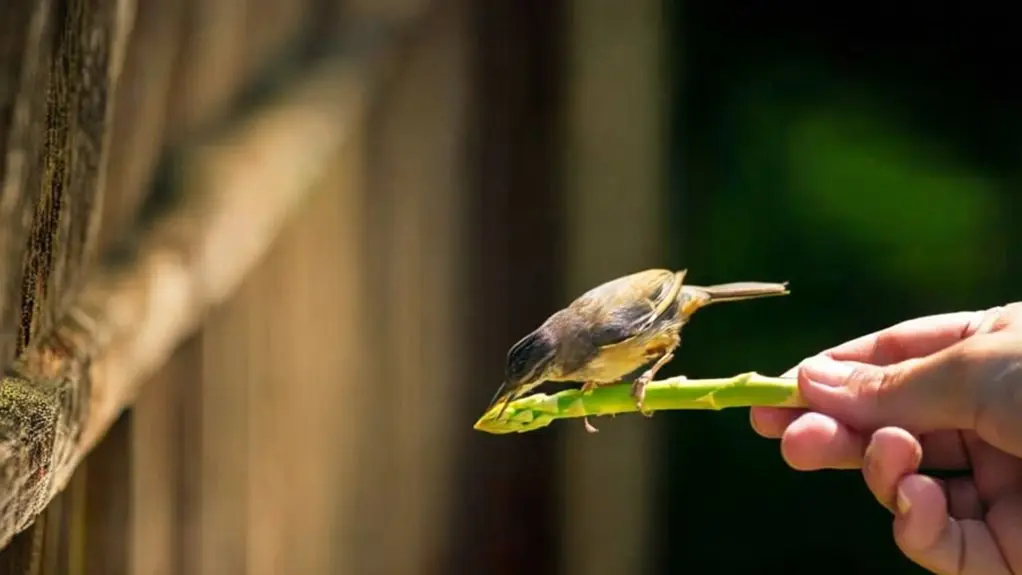
You can feed your bird asparagus in small, properly prepared amounts, such as washed, chopped, and lightly steamed pieces. However, asparagus contains compounds like asparagin that may cause digestive upset or toxicity. Scientific evidence about its safety is limited.
Some bird species tolerate it better than others, but watch for signs of discomfort or adverse reactions. If you want to understand how to feed asparagus safely and explore alternatives, there’s more important information to take into account.
Is Asparagus Safe for Birds?
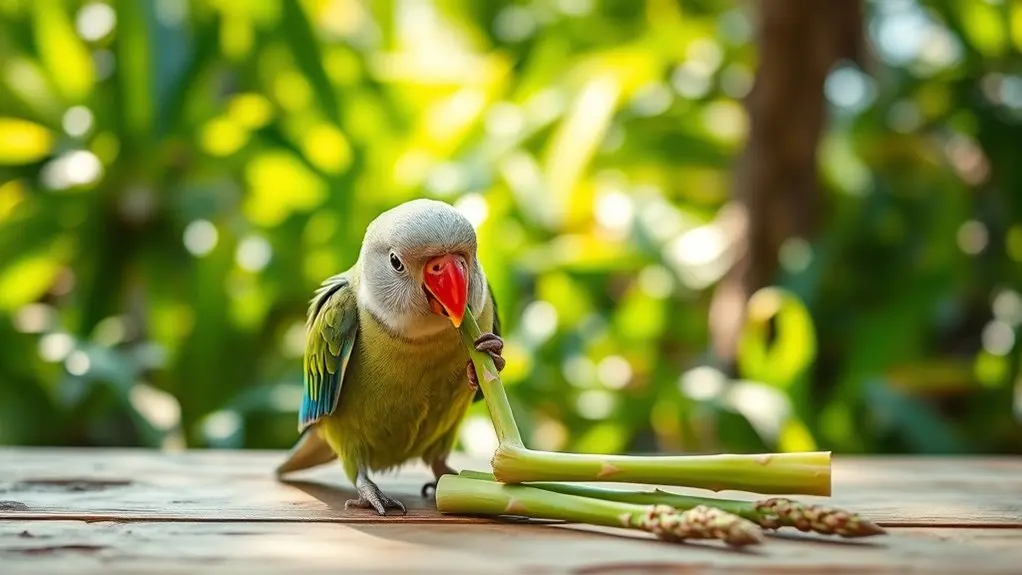
Although asparagus contains nutrients beneficial to humans, its safety for birds remains unclear due to compounds like asparagin that may cause stomach upset or toxicity. You should approach feeding asparagus carefully, as anecdotal reports link its consumption to adverse reactions and even bird deaths.
Green asparagus is sometimes considered safe in moderation for certain parrots, but most avian health experts recommend avoiding it until more definitive research confirms its safety.
Feeding asparagus improperly could compromise your bird’s feather health by inducing digestive distress that affects nutrient absorption.
Additionally, uneaten asparagus can degrade cage hygiene, promoting bacterial growth harmful to your bird’s wellbeing.
It’s best to prioritize a diet with well-established safe foods to maintain excellent feather health and cage hygiene. This way, you minimize risks linked to uncertain dietary components like asparagus.
Bird Species That Can Safely Eat Asparagus
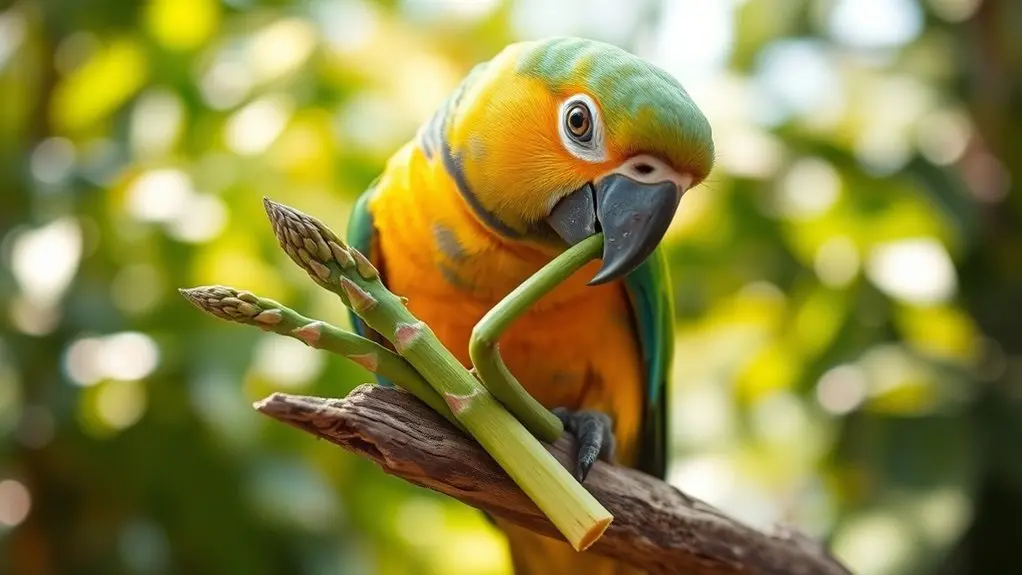
You’ll find that many parrot species—like Eclectus, African Grey, and Amazon parrots—can safely eat asparagus, as long as it’s prepared the right way.
Offering small, chopped pieces, either raw or lightly steamed, makes sure your bird can enjoy it safely.
Plus, asparagus provides valuable nutrients like folic acid and vitamin A.
If asparagus isn’t quite right for your feathered friend, don’t worry! There are plenty of other veggies with similar nutritional benefits that can support your bird’s diet just as well.
Parrot Breeds Enjoying Asparagus
When introducing asparagus to your parrot’s diet, consider species like Eclectus parrots, African Greys, and Amazon parrots. These birds not only accept asparagus readily but also benefit from its rich vitamin content. They gain essential vitamins A and K from asparagus, which supports their overall health.
Cockatoos and Conures can also safely enjoy asparagus when it’s properly prepared and offered in moderation. It’s a great idea to incorporate asparagus during parrot training sessions. This adds variety to their diet and stimulates their foraging behaviors, which is excellent for cage enrichment.
Always serve asparagus cooked or raw without any seasoning to avoid health issues. Introduce it gradually and keep an eye on your bird’s response, since sensitivities can vary.
Taking this careful approach helps you safely add asparagus to your parrot’s diet while supporting both their nutritional and behavioral needs.
Safe Feeding Alternatives
Since different bird species vary in their digestive tolerance and nutrient requirements, it’s important to identify which birds can safely consume asparagus. Parrots such as African Greys, Amazons, and Eclectus tolerate small amounts of raw or cooked asparagus well.
You should steam and chop asparagus into manageable pieces to aid digestion and reduce choking risks.
Feeding frequency should remain moderate. Offering asparagus once or twice weekly prevents overexposure to compounds that may be toxic in excess.
Always introduce asparagus gradually and monitor for adverse reactions.
For maximum freshness, store asparagus wrapped in a damp paper towel inside a sealed container in the refrigerator. This helps preserve nutrients and keeps it fresh longer.
It’s a good idea to consult an avian veterinarian to make sure asparagus suits your specific bird’s dietary needs and health status.
Key Nutrients in Asparagus That Benefit Birds
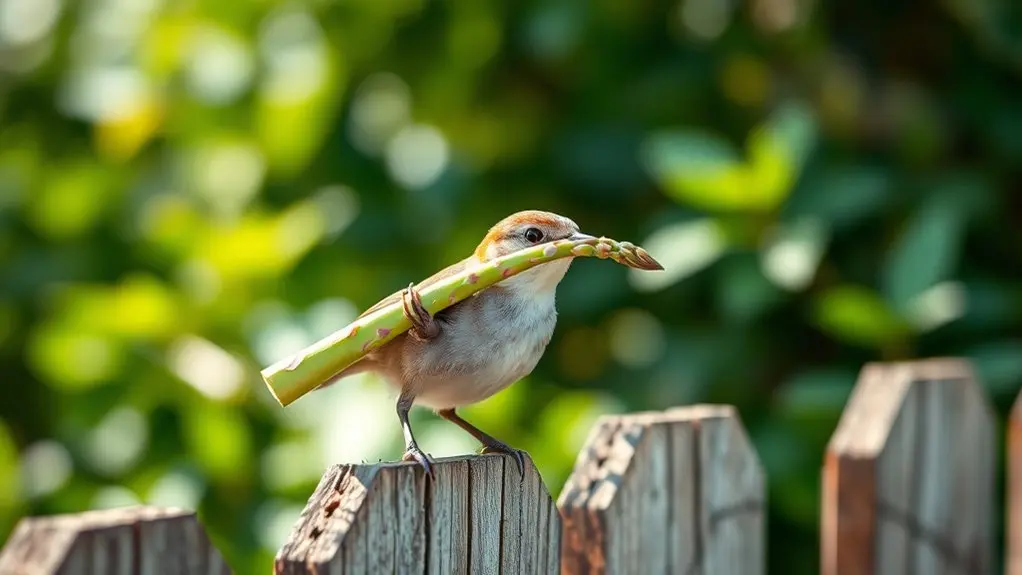
You’ll find that asparagus provides essential vitamins like folic acid and vitamin A, along with antioxidants such as vitamins C and E. These are all really important for keeping birds healthy.
They help support cell growth, boost the immune system, and maintain good vision and feather quality.
When you look at the antioxidant and mineral content, it’s easier to see why asparagus makes such a great addition to a bird’s diet.
It’s not just tasty for them—it’s packed with nutrients that keep them thriving.
Essential Vitamins Overview
Although asparagus might seem like a simple vegetable, it contains a complex array of essential vitamins that substantially benefit birds. Vitamins A, C, E, and K play pivotal roles in supporting immune function, vision, and blood clotting in avian species.
Additionally, folic acid in asparagus promotes cell division and reproductive health. When preparing asparagus for birds, consider cooking methods that preserve these vitamins, such as steaming or blanching, to maintain nutrient integrity.
Flavor pairing with mild fruits or vegetables can encourage acceptance in birds without overwhelming their palate. Incorporating asparagus thoughtfully into their diet ensures they receive these indispensable nutrients, enhancing overall health.
Antioxidant and Mineral Content
Building on the vitamin content, asparagus also offers a robust profile of antioxidants and minerals that support various physiological functions in birds. These nutrients help enhance nutrient absorption and provide antioxidant benefits that are critical for avian health.
The key components include antioxidants like vitamins C and E, which protect bird cells from oxidative stress, reduce inflammation, and support immune function. Then there are minerals such as potassium, calcium, and magnesium, which maintain muscle function and bone strength. These are essential for mobility and structural integrity.
Don’t forget about vitamin K and folate. They aid blood clotting, promote cardiovascular health, and support cellular growth. This is especially important for growing or breeding birds.
How to Prepare Asparagus for Your Bird
How should you prepare asparagus to guarantee it is safe and nutritious for your bird? Start by washing the asparagus thoroughly to eliminate pesticides and dirt. Trim off the woody ends, then use light cooking methods such as steaming or blanching to soften the stalks.
Chop the asparagus into small pieces to reduce choking risk. Serve it plain, avoiding salt or seasonings. Only offer fresh asparagus and discard any leftovers after a few hours to prevent spoilage.
| Step | Action | Purpose |
|---|---|---|
| Wash | Remove contaminants | Ensure safety |
| Cook | Steam or blanch | Soften for easy eating |
| Chop & Serve | Cut small, plain | Prevent choking, maintain safety |
Follow these cooking methods and storage tips for *best* bird health. It’s pretty simple when you keep these steps in mind!
Health Risks of Feeding Asparagus to Birds
While preparing asparagus carefully can reduce some risks, it’s important to understand that feeding asparagus to birds carries potential health hazards. Asparagus contains toxic compounds such as asparagin, which may induce severe stomach upset and toxicity in parrots.
Given the limited scientific evidence supporting its safety, you should exercise caution due to these dietary restrictions.
Key health risks include:
- Toxic compounds in asparagus can cause gastrointestinal distress and systemic toxicity.
- Domesticated birds lack natural mechanisms, like clay ingestion seen in some wild species, to neutralize toxins.
- Conflicting anecdotal reports and expert recommendations suggest avoiding asparagus to prevent adverse reactions and illness.
Considering these factors, it’s best to exclude asparagus from your bird’s diet to keep them safe and healthy.
Signs Your Bird Might Be Sensitive to Asparagus
If your bird shows signs such as vomiting, diarrhea, or lethargy shortly after eating asparagus, it may be sensitive to the vegetable’s compounds. You might also notice changes in feather grooming; birds often reduce preening when experiencing discomfort or skin irritation.
Altered perching behavior, like reluctance to perch or frequent shifting, can indicate abdominal distress or weakness. Additionally, a sudden loss of appetite, unusual quietness, or increased aggression may signal a negative reaction.
Keep an eye on droppings for abnormal color, consistency, or odor, since these can reflect gastrointestinal upset. Any abrupt decline in health following asparagus ingestion means it’s a good idea to get a vet involved.
Watching for these signs carefully helps keep your bird healthy and prevents any worsening of reactions.
How Much Asparagus Can Parrots Eat?
Recognizing signs of sensitivity to asparagus helps you gauge safe feeding limits for your parrot. To maintain digestive health and nutrient balance, you must practice strict feeding frequency and portion control.
Experts advise offering asparagus sparingly, once or twice weekly, to avoid gastrointestinal distress.
The recommended portion size is small, typically a single spear or a few bite-sized pieces per feeding. It’s important not to overdo it so your parrot stays happy and healthy.
Consider these key guidelines:
- Feeding Frequency: Limit asparagus to one or two times per week.
- Portion Control: Serve about one small spear or equivalent in pieces.
- Observation: Monitor your parrot’s reaction for any signs of intolerance or digestive upset.
Just keep an eye on how your bird responds and adjust accordingly.
Safe Vegetable Alternatives to Asparagus for Birds
You can give your bird some great nutrient-rich alternatives to asparagus, like broccoli, carrots, bell peppers, kale, romaine lettuce, and sweet potatoes. These veggies provide essential vitamins, antioxidants, and fiber that help keep your parrot healthy without the potential risks that asparagus might bring.
It’s a good idea to offer a variety of these vegetables every day. Mixing things up not only ensures your bird gets balanced nutrition but also keeps mealtime interesting and enriching for them.
Nutrient-Rich Vegetable Options
Although asparagus can pose risks for birds, several safe vegetable alternatives offer essential nutrients to support avian health. When considering cooking methods, raw or lightly steamed vegetables help preserve vitamins and minerals.
A vegetables comparison reveals distinct nutritional benefits among options. For example, broccoli provides antioxidants and vitamin C, which help boost immune function. Spinach delivers important minerals like calcium, iron, and magnesium that support bone and feather health. Sweet potatoes supply beta-carotene and fiber, aiding digestion and vision.
Serving these vegetables chopped into manageable pieces makes them easier for your bird to eat and helps with nutrient absorption. By including these nutrient-rich vegetables in their diet, you can keep your bird healthy without the potential hazards of asparagus.
Variety For Balanced Diet
When aiming to provide your bird with a balanced diet, incorporating a variety of safe vegetables is crucial to supply a broad spectrum of nutrients. Alternatives to asparagus such as broccoli, carrots, bell peppers, spinach, and sweet potatoes provide essential vitamins and minerals without toxic risks.
Including nutrient-dense options like kale, Swiss chard, and romaine lettuce regularly supports overall health. You should consider feeding frequency and seasonal availability when selecting vegetables.
Rotating these weekly prevents dietary boredom and ensures diverse nutrient intake. Prepare vegetables by washing and chopping into manageable sizes, serving them raw or lightly steamed to maximize nutrient retention and acceptance.
Incorporating leafy greens, peas, and squash further enhances dietary balance. This promotes ideal nutrition tailored to your bird’s needs. It’s all about variety and making sure your feathered friend gets the best from their meals.
Debunking Common Myths About Feeding Asparagus
While many believe asparagus is harmless for all bird species, scientific evidence about its safety is still limited and inconclusive. You should be cautious about feeding asparagus frequently because how often you feed it and its shelf life can affect its freshness and potential toxicity.
Here are three key myths debunked:
- Asparagus is universally safe: Some compounds like asparagin might cause stomach upset or toxicity in parrots.
- It provides essential nutrients: There’s no clear proof that asparagus offers important nutrients for birds.
- It can be fed regularly: Because research is limited, it’s best not to feed asparagus often without checking with your vet first.
Experts like Rosemary Low point out the lack of solid research and stress the need to be careful.
When Should You Talk to an Avian Vet About Asparagus?
Understanding the uncertainties surrounding asparagus and bird health means you should stay alert for any adverse reactions. If your bird shows signs like gastrointestinal upset, lethargy, vomiting, diarrhea, or loss of appetite after eating asparagus, contact an avian vet right away.
Before introducing asparagus or other new veggies during bird training or cage enrichment, it’s a good idea to get veterinary advice. This is especially important if your bird has any pre-existing health issues, as you want to rule out potential toxicity.
Regular check-ins with your vet help make sure your bird’s diet stays safe and prevent any problems related to asparagus consumption. If you have concerns about toxins, talk to your vet early. Catching issues sooner can stop serious illness from developing.
Keeping the lines of communication open with an avian veterinarian is key to optimizing your bird’s health as you make dietary changes.
Frequently Asked Questions
Can Asparagus Improve a Bird’s Feather Coloration?
You can improve feather pigmentation in birds by using dietary supplements like asparagus, which contains beta-carotene. However, its direct impact remains scientifically unconfirmed. So, use asparagus moderately within a balanced diet for best results.
It’s always good to remember that a bird’s overall health and nutrition play a big role in feather coloration. Just adding one thing won’t do all the work. Keep things balanced and varied for the best outcome.
Does Asparagus Affect a Bird’s Mating Behavior?
You won’t find scientific proof that asparagus directly impacts bird mating behavior. While bird dietary preferences and asparagus nutritional benefits support overall health, they don’t specifically influence reproductive actions or mating interest in birds.
Is Asparagus Safe for Baby Birds or Chicks?
Don’t count your chicks before they hatch. Avoid feeding baby birds asparagus.
Bird dietary diversity is essential. But asparagus preparation methods can’t neutralize potential toxins in chicks. This risks digestive upset and health complications during critical growth stages.
Can Asparagus Cause Allergic Reactions in Birds?
Yes, asparagus can cause allergic reactions in birds due to its nutritional content like asparagin. You should keep an eye on your bird’s dietary preferences carefully.
Individual sensitivities might trigger digestive irritation or other allergic symptoms. So, it’s always best to watch how your bird reacts when trying new foods.
How Does Asparagus Impact a Bird’s Digestive Enzyme Activity?
When it comes to digestive health, asparagus throws a wrench in the works by inhibiting enzyme activity. This disruption affects nutrient absorption in birds, potentially leading to compromised digestion and gastrointestinal distress.
How much it impacts a bird really depends on the species and their sensitivity to asparagus. Some birds might handle it better than others, but it’s definitely something to watch out for if you’re feeding them this vegetable.
Conclusion
You might think asparagus is a miracle superfood for your feathered friend, but it’s essential to proceed with caution. While many birds can safely enjoy this veggie in moderation, too much can cause digestive upset or nutrient imbalance. Always prepare it properly and watch for reactions.
If you notice any health changes, don’t hesitate to consult an avian vet. Balancing asparagus with other safe veggies guarantees your bird stays healthy and happy.