
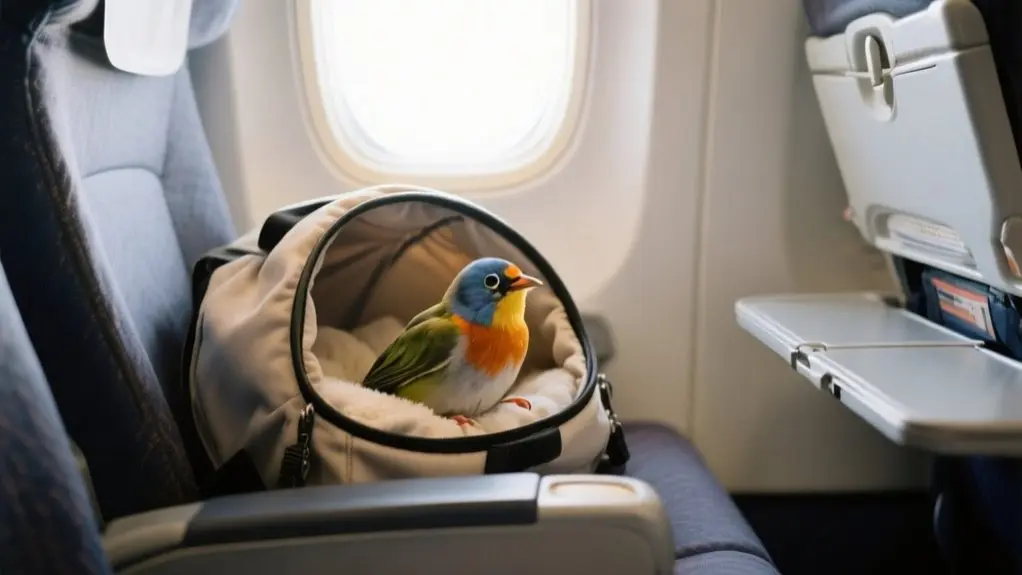
Yes, you can fly with many pet birds, but airline rules vary by species and carrier type. Small birds like parrots and finches often travel in-cabin if their carrier fits under the seat. Larger or protected species usually need cargo transport and permits.
You’ll need an IATA-compliant carrier and a recent health certificate. Sometimes, CITES permits are also required depending on the bird. Proper preparation guarantees your bird’s safety and comfort throughout the trip.
Understanding these details helps you navigate air travel with your feathered companion smoothly. It might seem like a lot at first, but once you know the rules, it gets easier. Your bird will thank you for the care!
Can You Fly With Your Pet Bird? Airlines’ Rules Explained
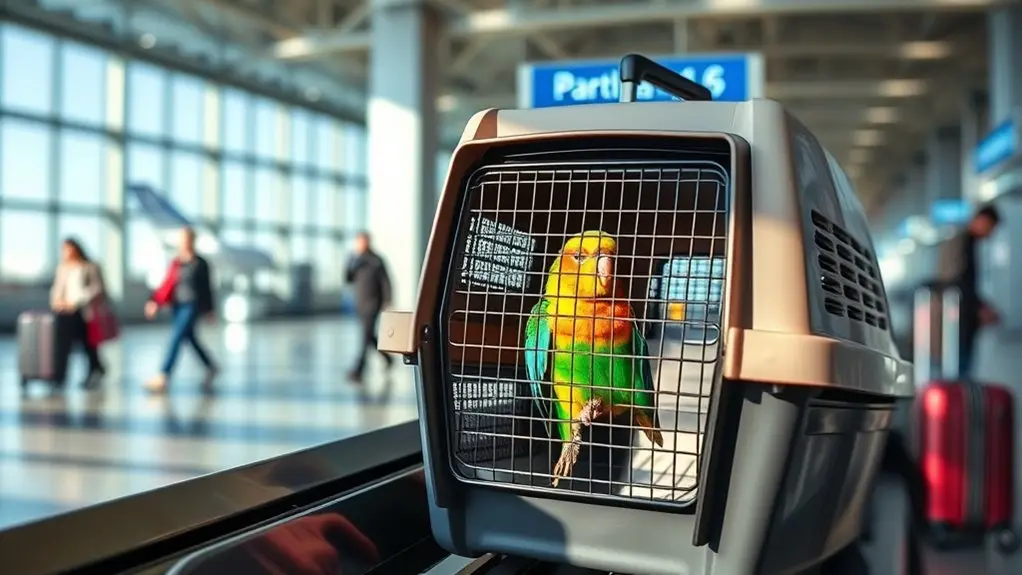
Although policies vary among carriers, you can often fly with your small pet bird in the cabin if you meet specific requirements. Airlines such as Alaska, Delta, and United permit in-cabin bird travel provided the carrier fits under the seat, is well-ventilated, and secure.
Before flying, verify your airline’s policy, prepare necessary documentation, and make certain your bird is healthy and acclimated. Pay close attention to your bird’s diet to avoid digestive issues during travel. Limit feeding before the flight to reduce stress and waste.
Maintain strict cage cleaning protocols before and after travel to prevent contamination and ensure comfort. Remember, some airlines prohibit bird travel, so confirming these details in advance is essential to avoid last-minute complications.
Which Bird Species Are Allowed on Airplanes?
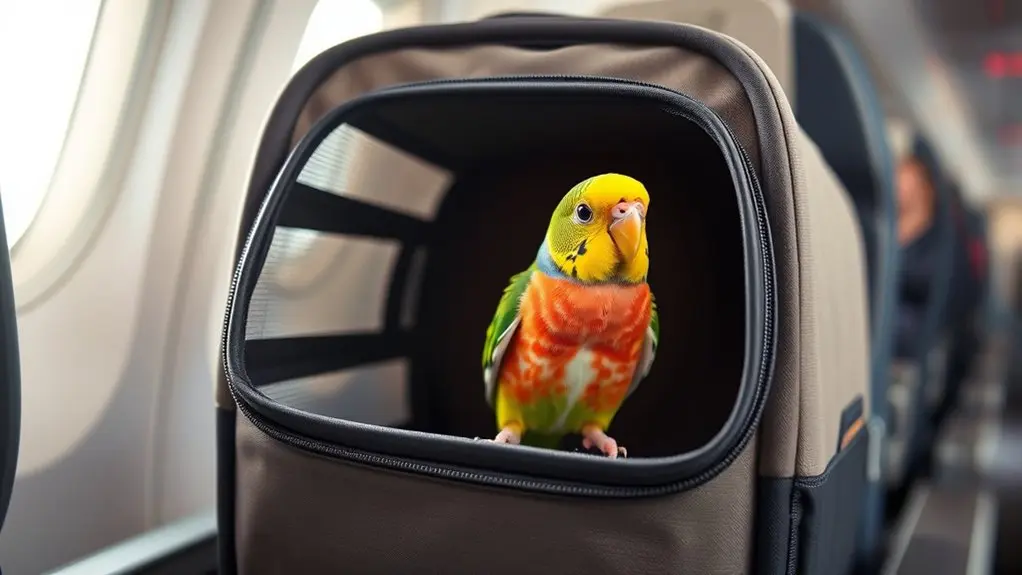
When you plan to travel with a bird, understanding which species airlines allow onboard is essential to guarantee compliance and avoid complications. Common household pet birds such as parrots, canaries, and finches typically qualify for cabin travel if you follow airline rules.
However, poultry like chickens and ducks are generally prohibited due to biosecurity risks.
Species protected under CITES, including certain macaws and cockatoos, require special permits and often must travel as cargo. Exotic or large birds may face restrictions and are usually transported in cargo compartments.
Considering bird migration patterns and avian communication behaviors, airlines and authorities regulate species to prevent disease transmission and stress.
Always verify specific airline and destination regulations before traveling to confirm your bird’s species is permitted. It’s better to check ahead so you don’t run into any surprises at the airport.
Traveling with your feathered friend can be smooth if you know the rules.
How to Choose the Right Carrier for Your Bird
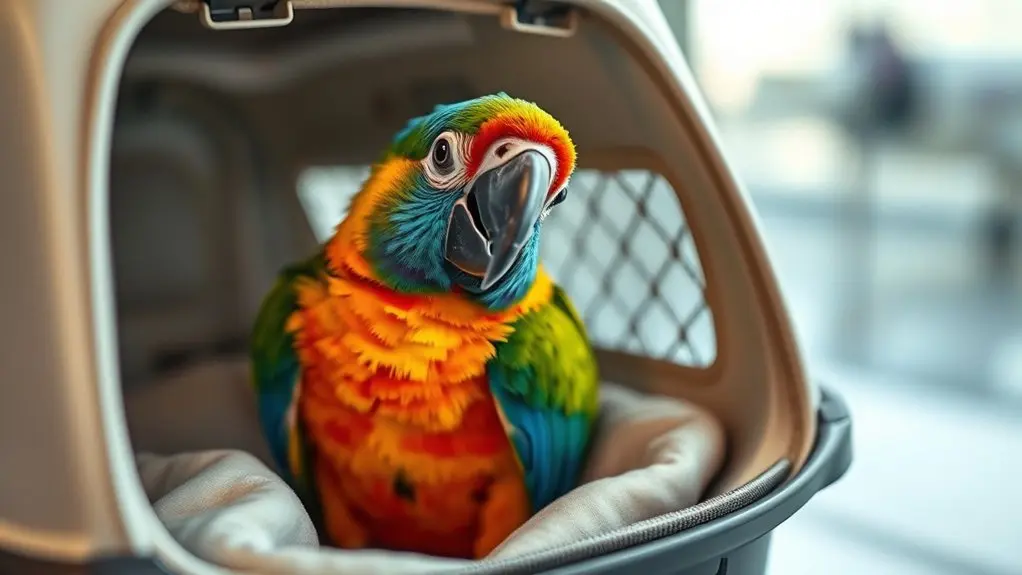
Choosing the right carrier for your bird means meeting specific airline requirements while making sure your pet is comfortable and safe. Pick a carrier that’s IATA-compliant, sturdy, and well-ventilated. It should have enough space, at least 1.5 times your bird’s wingspan, so your bird can move naturally.
Think about the materials of the carrier too. Soft-sided carriers are great for birds with calmer temperaments and work well for in-cabin travel since they fit flexibly under seats. Hard-sided carriers offer better protection, especially if your bird will be traveling in cargo.
Always include secure, leak-proof water and food dishes. Don’t forget a perch to help your bird maintain its natural posture. Adequate ventilation and proper labeling with your contact details are a must.
Match the carrier size and materials to your bird’s temperament and species. This way, you’ll make the flight as safe and comfortable as possible for your feathered friend.
Essential Documents You Need Before Flying With Your Bird
Before flying with your bird, you’ll need a recent health certificate from an accredited veterinarian. This certificate is usually valid for about 5 to 10 days.
You might also need import and export permits, especially if your bird is a species covered by CITES regulations. These permits often depend on where you’re traveling and the airline’s policies.
On top of that, many airlines require you to fill out specific forms or provide IATA documentation. This helps make sure you’re meeting all the necessary rules and regulations.
Health Certificates Required
Although air travel can be stressful for birds, obtaining a recent health certificate from an accredited veterinarian is essential to confirm your bird is fit for the journey. This certificate, usually valid for 5-10 days before travel, must verify your bird is free from contagious diseases and in excellent condition. That includes proper bird nutrition and feather health.
Airlines require this documentation to prevent in-flight health issues and comply with regulations. Depending on your destination, you might also need additional vaccination records or specific health documents. It’s a good idea to prepare all required certificates well in advance to avoid travel delays and ensure smooth boarding.
Keep in mind, proper nutrition and feather maintenance contribute considerably to your bird’s overall health. Veterinarians assess these factors before issuing the certificate. So, taking good care of your bird before the trip really helps.
Import And Export Permits
Securing the proper import and export permits plays a key role once your bird’s health certificate is in order. Permit requirements vary depending on species, especially those listed under CITES or WBCA.
You’ll need to obtain these permits from relevant authorities, such as the U.S. Fish and Wildlife Service, well ahead of your travel date, since processing can take up to 60 days.
Legal documentation, including valid health certificates and proof of legal acquisition, must accompany your permit applications.
For CITES-listed species, you must obtain both an export permit from the origin country and an import permit for your destination.
Carry all permits and supporting documents during travel, as customs officials will inspect and verify compliance at entry and exit points to ensure your bird meets all regulatory standards.
It’s always best to be prepared and have everything ready to avoid any last-minute issues.
Airline Documentation Needed
When you plan to fly with your bird, you’ll need specific documentation to meet both airline and regulatory requirements. Confirming bird safety and proper pet behavior compliance hinges on having the right paperwork.
Here are essential documents you’ll need:
- A health certificate issued by an accredited veterinarian within 5-10 days before travel, confirming your bird’s health status.
- Airline-specific forms or IATA documentation verifying adherence to carrier policies.
- Import/export permits or CITES/WBCA licenses if your bird falls under protected species regulations.
Make sure to carry all documentation during travel to guarantee smooth processing at all checkpoints.
Properly managing these documents not only safeguards your bird’s welfare but also ensures compliance with international and airline mandates. This way, you minimize travel disruptions and keep your journey stress-free.
Step-by-Step Guide to Preparing Your Bird for Air Travel
To get your bird ready for air travel, first pick a cage that meets airline standards. Make sure it’s roomy enough and has secure features to keep your bird safe.
Next, schedule a vet check to get all the necessary health certificates and make sure your bird is fit to fly.
It’s a good idea to start getting your bird used to the travel carrier a few weeks ahead of time. You can encourage your feathered friend to explore it by placing treats and toys inside.
This way, traveling won’t feel so scary when the big day comes.
Choosing The Right Cage
How do you guarantee your bird’s comfort and safety during air travel? Choosing the right bird cage is vital. First, select an airline-approved, IATA-compliant travel cage that allows your bird to stand, turn, and rest comfortably.
Second, make sure the cage includes secure, leak-proof water and food dishes plus a perch for stability throughout the flight.
Third, gradually acclimate your bird to the cage by leaving it open in its usual environment. Add familiar toys and treats to help reduce stress.
Before travel, sterilize the cage and clearly label it with your contact information. Include essential travel accessories to enhance comfort.
Practice placing your bird inside to build familiarity. This makes the journey safer and less anxious for your feathered companion.
Health Checks And Documents
Why is securing proper health checks and documentation essential before flying with your bird? A recent health certificate from an accredited vet ensures your bird is fit to fly, which helps minimize risks during travel. Be sure to confirm all vaccinations, especially avian influenza, are current and documented.
Also, check destination-specific import permits and health requirements early to avoid any delays. It’s a good idea to prepare all necessary paperwork ahead of time, including airline forms, CITES permits, and proof of legal acquisition.
Scheduling a pre-flight vet visit can help address any health concerns and provide guidance on stress reduction techniques. Maintaining excellent bird nutrition and cage hygiene before travel supports your bird’s immune system and reduces the risk of infection.
Proper documentation and health checks don’t just comply with regulations—they also keep your bird safe and healthy throughout the journey.
Acclimating Your Bird Early
Although air travel can be stressful for birds, gradually acclimating yours to the travel cage markedly reduces anxiety and behavioral issues. To prepare your bird effectively, focus on bird bonding and cage decoration to create a familiar, comforting environment. Follow these steps:
- Introduce the travel cage slowly by leaving it open in your bird’s environment, allowing exploration and positive associations.
- Decorate the cage with familiar toys, perches, and treats to reduce stress and reinforce safety signals.
- Increase the time your bird spends inside the cage incrementally over several weeks, rewarding calm behavior with gentle praise and treats.
Avoid feeding immediately before travel but guarantee water and light snacks are available during the journey to maintain hydration and energy.
This systematic approach promotes calm, confident air travel readiness.
Flying With Your Bird: Cabin vs. Cargo Options
When planning air travel with your bird, you’ll need to decide between in-cabin and cargo options based on your bird’s size, species, and airline policies. Small, quiet birds like finches or parrots can often travel in-cabin if their bird carrier fits under the seat.
Choosing in-cabin or cargo travel depends on your bird’s size, species, and the airline’s rules.
This way, you get to keep an eye on them, and they get a more comfortable cabin experience. This option usually means less handling and stress for your feathered friend.
On the other hand, larger or noisy birds generally have to fly in the cargo hold where temperature control and proper ventilation are required.
Cargo travel allows for bigger carriers and accommodates larger birds, but it does mean more handling and often longer transit times.
Since airline rules vary a lot, it’s a good idea to double-check each carrier’s policies before you book. That way, you can make sure everything’s in line and your bird stays safe and comfortable.
How to Keep Your Bird Comfortable and Safe During Flight
Choosing the right travel option for your bird is only the first step. Making sure they stay comfortable and safe throughout the flight is just as important. To help reduce stress and make the journey easier, focus on these key actions.
First, use a soft-sided, airline-approved carrier that fits under the seat. It should have enough space for your bird to stand and turn around comfortably.
Next, cover the carrier with breathable fabric. This creates a secure environment and helps reduce sensory overload.
Don’t forget to include bird comfort accessories like familiar toys, treats, and small amounts of fresh fruit or water. These help keep your bird hydrated and calm during the trip.
It’s also a good idea to acclimate your bird to the carrier well in advance using positive reinforcement. Avoid sedatives—they’re not the best choice. Instead, focus on creating a stable and familiar setting for your bird to ensure their safety and comfort while flying.
Understanding Costs and Fees for Bird Air Travel
How much should you expect to spend transporting your bird by air? Cost estimation for bird air travel varies widely based on weight, destination, and services required.
Here’s a concise fee breakdown to guide your budgeting:
| Expense Type | Estimated Cost (€/$) | Notes |
|---|---|---|
| Cargo Hold Transport | €50 – €200 | Depends on bird weight and route |
| Air Cargo Services | €200 – €500+ | For international shipments |
| IATA-Compliant Carrier | Varies | Purchase or rental required |
| Permits & Paperwork | $80 – $120 | Includes CITES/WBCA permits |
| Professional Transport Fees | ~$500 | For handling permits and logistics |
Booking Flights and Checking Airline Policies for Birds
Since airline policies for bird travel vary a lot, you should always check the specific rules before booking your flight. Airlines have different rules about in-cabin bird transport, species restrictions, and carrier size requirements.
To make sure you’re following all the rules, here’s what you should do:
- Confirm the airline’s pet bird policies, including which species are allowed and what documentation you need, like health certificates.
- Check that your bird’s carrier fits the size limits for under-seat storage and works well with your bird’s training to keep stress low during the trip.
- Let the airline know early to reserve a spot for your bird. Keep in mind there might be temperature restrictions or blackout dates that could affect travel.
Also, don’t forget to keep your bird well-fed and hydrated before and during travel to support its health. Getting everything ready ahead of time helps make the flight easier for both you and your pet bird.
Frequently Asked Questions
Can Birds Experience Jet Lag During Air Travel?
Yes, your bird can experience jet lag during air travel due to disrupted avian sleep and migratory instincts. Gradually adjusting light exposure and maintaining consistent schedules helps stabilize their circadian rhythms and reduce stress effectively.
It’s all about keeping their internal clock on track. So, try to mimic their usual environment as much as possible. That way, they’ll have a smoother transition and feel more comfortable during the trip.
Are There Quarantine Requirements for Birds Arriving Internationally?
Yes, you’ll face quarantine requirements for birds arriving internationally, ensuring avian health protocols are met. These rules take into account bird migration patterns and species risks.
Often, they mandate federal quarantine periods and proper documentation to prevent disease spread. It’s all about keeping the birds safe and healthy while protecting local wildlife too.
How Do Birds Handle Cabin Pressure Changes on Airplanes?
Birds handle cabin pressure changes through their Eustachian tubes, but effectiveness varies by species. During bird migration, larger birds typically adjust better. So you should minimize stress and abrupt movements to help manage cabin pressure effects.
It’s all about keeping things calm and steady for the birds. That way, they’re less likely to have trouble with the pressure changes while on the plane.
Can I Bring Bird Food or Treats Through Airport Security?
Like a key liberating smooth travels, you can bring bird food through security if it’s in small, clear containers.
Pack solid treats in your bird carrier or travel accessories, and always declare them for hassle-free inspection.
What Should I Do if My Bird Gets Sick Mid-Flight?
If your bird shows illness mid-flight, immediately alert flight attendants for in-flight emergencies. Keep the carrier covered to reduce stress, and avoid opening it.
Make sure you have your vet’s contact ready to manage bird health efficiently. This way, you can act quickly and calmly to help your bird.
Conclusion
So, yes, you can fly with your bird if you enjoy maneuvering a maze of airline rules, choosing the perfect carrier, and packing enough paperwork to rival a diplomat’s briefcase. But hey, who wouldn’t want their feathered friend to experience the thrill of cabin or cargo travel?
With careful preparation, your bird can take flight with you. Just remember, it’s not as simple as tossing a seed in a bag and boarding a plane.