
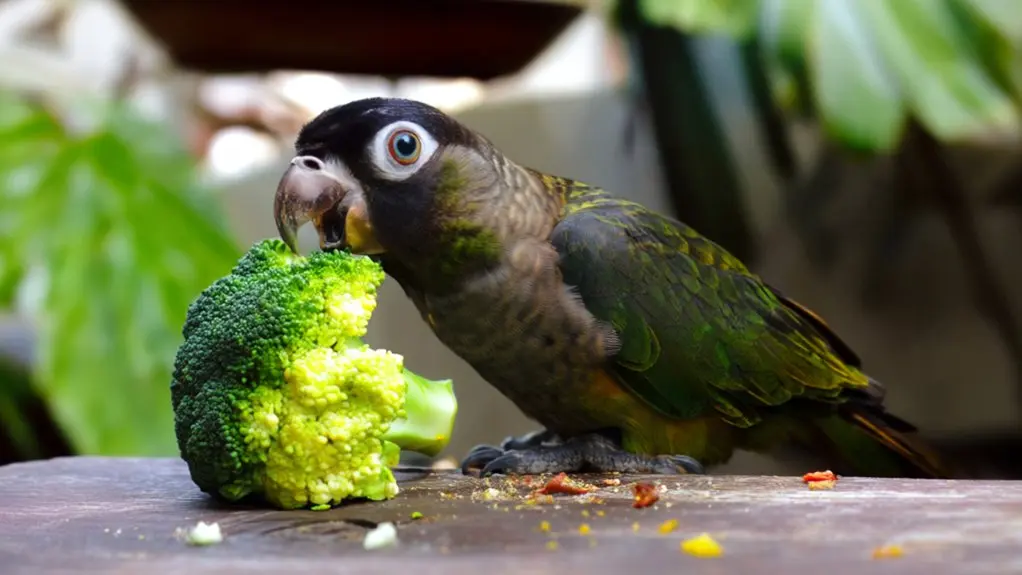
Yes, you can safely include broccoli in your bird’s diet. It provides essential vitamins A, C, and K, along with minerals like calcium and potassium that support immune function, bone health, and muscle maintenance.
Both raw and lightly cooked broccoli are suitable, though cooking can improve digestibility. Birds like parrots and finches show clear preference signs when eating broccoli.
Understanding preparation, serving frequency, and which foods to avoid will help you maximize its nutritional benefits for your feathered friend. It’s all about keeping your bird happy and healthy!
Why Is Broccoli Healthy for Birds?
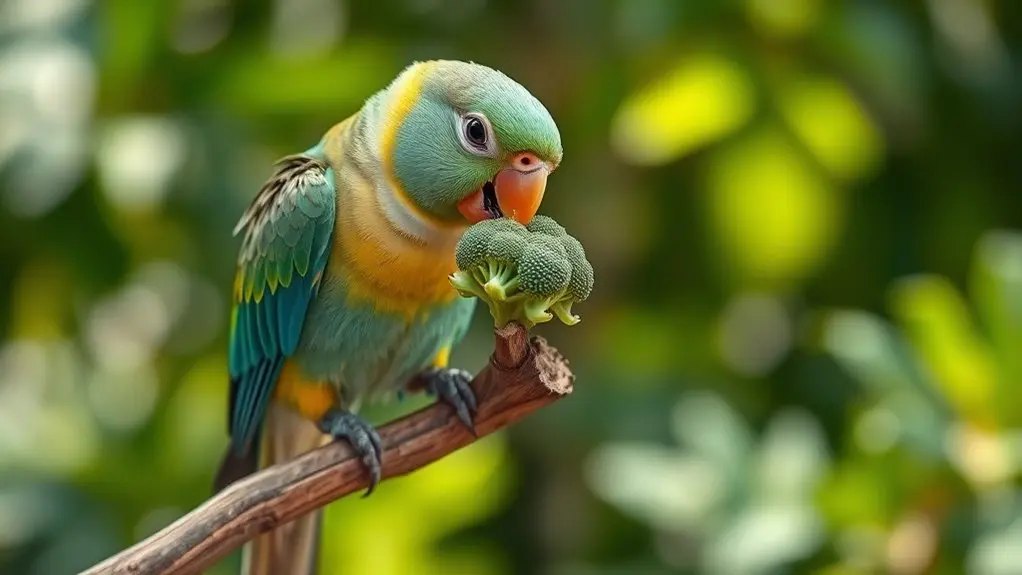
Although birds require a varied diet to thrive, including broccoli can greatly enhance their nutritional intake. Broccoli’s rich vitamin A, C, and K content supports a bird’s immune system, which is essential for health in diverse bird habitats.
Broccoli’s vitamins A, C, and K boost birds’ immune health across varied habitats.
During bird migration, the immune boost from vitamin C helps birds recover from the physical stress of long flights.
Its antioxidants and fiber improve digestive health, reducing disease risk. This is critical in both resident and migratory populations facing changing environments.
Broccoli also supplies essential minerals like calcium and potassium, which are crucial for strong bones and muscle function necessary for flight endurance.
Plus, its low-calorie, nutrient-dense profile offers hydration and balanced nutrition. So, broccoli can be a valuable dietary component that supports birds’ physiological demands related to their habitat and migratory behaviors.
Which Birds Enjoy Broccoli the Most?
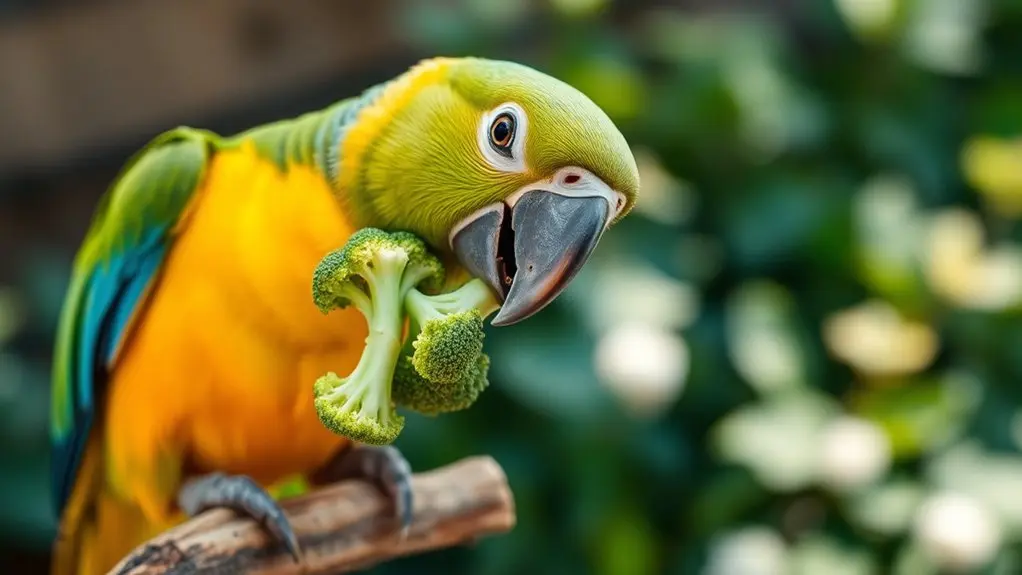
Understanding which bird species favor broccoli can help you tailor their diet to maximize nutritional benefits. Different bird species have distinct preferences for broccoli, influenced by their size and natural feeding habits.
Parrots and cockatiels usually show a lot of enthusiasm for broccoli and often include it as a staple veggie.
Budgerigars also accept broccoli readily, which shows its appeal among medium-sized birds.
Smaller bird species tend to prefer broccoli in modified forms to suit their needs.
Key bird species dietary preferences include:
- Amazon and African grey parrots eagerly consume broccoli in captivity, showing how adaptable they are.
- Lovebirds like broccoli florets, especially when raw or lightly steamed, which suggests they care about texture.
- Finches and canaries nibble on finely chopped or grated broccoli, since their smaller beaks need it that way.
Can Birds Eat Raw and Cooked Broccoli?
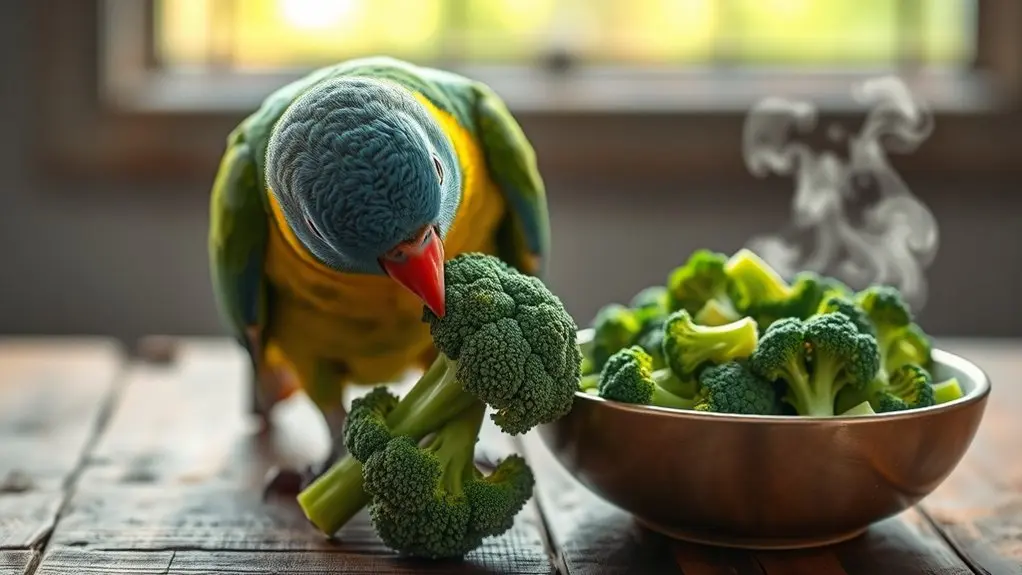
You can definitely offer birds both raw and cooked broccoli, and each has its own perks. Raw broccoli is packed with more nutrients, but sometimes it can be a bit tough for some birds to munch on.
On the other hand, cooking the broccoli softens it up, which makes it easier for birds to digest and more likely that they’ll actually eat it. Just make sure to prepare the broccoli plain—no seasoning or additives—and cut it into small, manageable pieces.
That way, it’s safe and more inviting for your feathered friends.
Raw Broccoli Benefits
When you offer birds raw broccoli, you provide them with a nutrient-rich vegetable packed with vitamins C and K. These vitamins support their immune and circulatory systems. They’re especially important during bird migration, helping maintain energy and overall health.
Vitamin K also plays a role in feather coloration because it aids blood clotting and tissue repair. Plus, raw broccoli’s crunchy texture helps hydrate birds and encourages natural foraging behaviors.
To maximize benefits, consider these tips: serve in small, manageable pieces to make it easier for birds to eat. Introduce it gradually so birds can develop a taste for it. And try to offer it consistently to support their ongoing nutritional needs.
Cooked Broccoli Safety
Although raw broccoli provides valuable nutrients, cooked broccoli can be easier for birds to digest and may increase their willingness to eat it. Cooking reduces water content, making nutrients more accessible and encouraging positive bird behavior.
You should serve broccoli plain, avoiding additives that are harmful to bird nutrition. Introducing cooked broccoli gradually in small amounts helps birds adapt to its taste and texture safely.
| Aspect | Notes |
|---|---|
| Digestibility | Cooked broccoli is easier for digestion |
| Nutrient Access | Cooking enhances nutrient availability |
| Bird Behavior | Birds may prefer cooked due to softer texture |
| Safety Tips | Serve plain; avoid salt, butter, seasonings |
This approach supports ideal bird nutrition and encourages acceptance through behavioral adaptation.
Preparing Broccoli Variations
Since birds can consume both raw and cooked broccoli, understanding how different preparations affect their digestion and nutrient intake is important.
Raw broccoli offers higher nutrient retention, supporting ideal bird nutrition. But some birds may find it tough to chew.
Cooking broccoli, especially by brief steaming, softens the texture while preserving most nutrients. This enhances digestibility and palatability.
To encourage acceptance and provide food variety, consider:
- Chopping or grating broccoli into small pieces to make it easier for your bird to eat.
- Offering lightly steamed or warmed broccoli to improve taste without significant nutrient loss.
- Observing your bird’s preferences so you can tailor broccoli preparations accordingly.
Easy Ways to Prepare Broccoli for Your Bird
You can help your bird enjoy broccoli more by steaming or blanching it just a little to soften the texture. It makes it easier for them to eat.
Then, serve the broccoli at room temperature and cut it into small, manageable pieces. This way, your bird can handle and nibble on it without any trouble.
Also, try mixing things up a bit! Changing how you present the broccoli or combining it with foods your bird already likes can encourage them to keep eating it regularly.
Little tweaks like these can make a big difference in their acceptance.
Cooking Methods To Try
When preparing broccoli for your bird, choosing the right cooking method can preserve essential nutrients while improving texture and palatability. Proper cooking achieves both flavor enhancement and texture modification, making broccoli more appealing and digestible for birds.
Consider these methods:
- Steaming: Gently cooks broccoli until tender, preserving vitamins and minerals and easing chewing.
- Sautéing: Uses a small amount of bird-safe oil to boost flavor complexity and alter texture, making it more enticing.
- Blanching: Briefly immerses broccoli in boiling water, softening it while maintaining vibrant color and nutrient content.
Each method balances nutrient retention with texture changes. To further help your bird enjoy broccoli, you can mash or grate the cooked florets, especially for smaller or picky eaters. These techniques make sure your bird gets broccoli that’s both nutritious and tasty.
Serving Temperature Tips
Although birds can eat broccoli at various temperatures, serving it warm or at room temperature often makes it more appealing. It kind of mimics the natural warmth and freshness of just-picked produce. Lightly steaming broccoli until it’s tender brings out its aroma and texture, which can encourage your bird to give it a try.
Avoid serving broccoli straight from the fridge because cold temperatures might put your bird off. If you do reheat cooked broccoli, do it gently to keep its nutritional value intact. Then let it cool down to a safe temperature before offering it.
Seasonal changes might affect how fresh broccoli is or how easy it’s to get. So, think about swapping it out with steamed cauliflower or zucchini sometimes to keep things interesting.
Cutting And Presentation
Serving broccoli at an appropriate temperature really helps make it more appealing. But how you cut and present it also plays a big part in encouraging your bird to eat.
It’s important to think about your bird’s size when choosing how to cut the broccoli. Smaller birds need finer chopping or shredding so they can handle it easily.
You want to create bite-sized pieces to reduce waste and help your bird learn to eat it.
Here are some tips to prepare broccoli effectively:
- Cut broccoli into small, manageable pieces based on your bird’s size.
- Chop or shred florets to show the nutritious parts and make it easier to get to.
- Serve raw or lightly steamed broccoli with familiar foods to help your bird accept it.
Using these cutting and presentation tricks can really boost nutrient intake and encourage positive feeding habits.
How Can You Tell If Your Bird Likes Broccoli?
You can tell if your bird likes broccoli by watching for specific behaviors like repeatedly pecking at and eating the florets and stems. Bird behavior gives clear clues about what they like.
Observe if your bird repeatedly pecks and eats broccoli florets and stems to know if it likes them.
For example, if your bird carries bits of broccoli in its beak or comes back to it after the first taste, that’s a good sign it accepts the veggie.
If you notice your bird actively looking for broccoli during foraging or when you offer it, that suggests it has a positive taste preference.
Also, if your bird eats broccoli along with other favorite foods, it means broccoli has become part of its preferred diet.
On the other hand, if your bird shows no interest or refuses to touch broccoli after several tries, it probably doesn’t like it.
Keeping an eye on these behaviors helps you figure out what your bird enjoys and lets you adjust its diet in a smart way.
How Often Should You Feed Broccoli to Birds?
When incorporating broccoli into your bird’s diet, offering it 2-3 times per week provides essential nutrients without causing over-reliance on a single vegetable. This frequency supports bird nutrition by maintaining dietary diversity, which is vital for peak health.
Feeding broccoli too often may reduce your bird’s interest in other foods, potentially limiting nutrient variety. To ensure balanced feeding practices, consider these guidelines:
- Serve small, fresh portions to encourage acceptance and prevent waste.
- Combine broccoli with other vegetables and fruits to enhance dietary diversity.
- Monitor individual preferences, as some birds may need repeated exposure before regularly accepting broccoli.
How Broccoli Stacks Up Against Other Veggies
Although many vegetables can benefit your bird’s diet, broccoli stands out due to its higher concentrations of vitamins C and K compared to alternatives like cauliflower. This nutrient density contributes notably to bird nutrition, supporting immune function and blood clotting. Birds often prefer broccoli florets over tougher vegetables like carrots because of their texture and flavor.
Offering a vegetable variety is essential, and broccoli’s versatility, served raw, steamed, or grated, makes it adaptable to different preferences.
| Vegetable | Vitamin C (mg/100g) | Vitamin K (µg/100g) |
|---|---|---|
| Broccoli | 89.2 | 101.6 |
| Cauliflower | 48.2 | 15.5 |
| Carrot | 5.9 | 13.2 |
Incorporate broccoli regularly to enhance the nutritional profile of your bird’s diet. It’s a simple way to give your feathered friend a healthy boost!
Which Foods Should You Avoid When Feeding Birds?
Because certain foods contain compounds toxic to birds, it’s essential to recognize and avoid them to guarantee their health and safety. Understanding bird dietary restrictions helps you prevent exposure to toxic food hazards that can cause severe health issues or even death.
You should never feed birds avocado, which contains persin, a toxin that can cause heart damage. Chocolate is also a no-go because it has theobromine and caffeine, which can lead to seizures and cardiac problems.
Onions, garlic, and the green parts of potatoes or eggplants all contain harmful compounds too.
Also, it’s best to avoid processed snacks high in salt, sugar, or fat. Foods with xylitol are dangerous as well since they can cause metabolic disturbances and liver damage.
Frequently Asked Questions
Can Baby Birds Safely Eat Broccoli?
Yes, you can safely feed baby birds broccoli by following proper preparation tips like steaming it. This makes the broccoli soft enough to avoid choking hazards. Plus, steaming helps keep the nutrients intact.
Broccoli provides essential vitamins that are great for baby birds. Just make sure it’s prepared correctly so your little feathered friends can enjoy it without any problems. It’s a healthy treat they can really benefit from!
Does Broccoli Cause Any Allergies in Birds?
Broccoli rarely causes allergies in birds, so you shouldn’t worry too much about bird nutrition when it comes to this vegetable.
Still, it’s a good idea to keep an eye out for any unusual symptoms. Dietary restrictions can vary from bird to bird. If your bird shows swelling or has trouble breathing after eating broccoli, definitely check with a vet.
How Should Broccoli Be Stored for Bird Feeding?
You should store broccoli in the refrigerator’s crisper drawer, loosely wrapped or in a perforated bag. This helps preserve the nutritional benefits for birds.
When you’re ready to feed it, wash the broccoli just before serving. This keeps it fresh and maintains its nutrients.
It’s a simple step, but it makes a big difference for your feathered friends!
Can Broccoli Seeds Be Harmful to Birds?
Broccoli seed toxicity is low, so you won’t harm birds if you feed seeds sparingly. Still, consider bird dietary preferences and avoid overfeeding, as excessive seeds might disrupt their nutritional balance and cause digestive issues.
It’s always good to mix things up and offer a variety of foods to keep birds healthy and happy. Just keep an eye on how much they’re eating and make sure their diet stays balanced. That way, they’ll thrive without any problems.
Is Broccoli Safe for Wild Birds to Eat?
Yes, broccoli is safe for wild birds to eat when properly prepared. You can offer raw or lightly steamed broccoli to keep those nutritional benefits intact. Just make sure it’s pesticide-free to keep the birds healthy and avoid any harmful contaminants.
It’s pretty easy to prepare, and birds usually enjoy it. Just remember to cut it into small, manageable pieces so they can eat it comfortably. This way, you’re giving them a tasty and nutritious treat without any worries.
Conclusion
You can confidently offer broccoli to your bird as a nutritious treat. It’s packed with vitamins and antioxidants that help keep them healthy and protect against disease. Just make sure to serve it fresh, either raw or lightly cooked.
Keep an eye on your bird’s preferences and reactions when you introduce broccoli. Feed it in moderation and balance it with other vegetables. Avoid any harmful foods to keep your feathered friend safe.
This thoughtful approach makes sure your bird gets the benefits of broccoli’s valuable nutrients without any risks. It’s a great way to add variety and nutrients to their diet!