
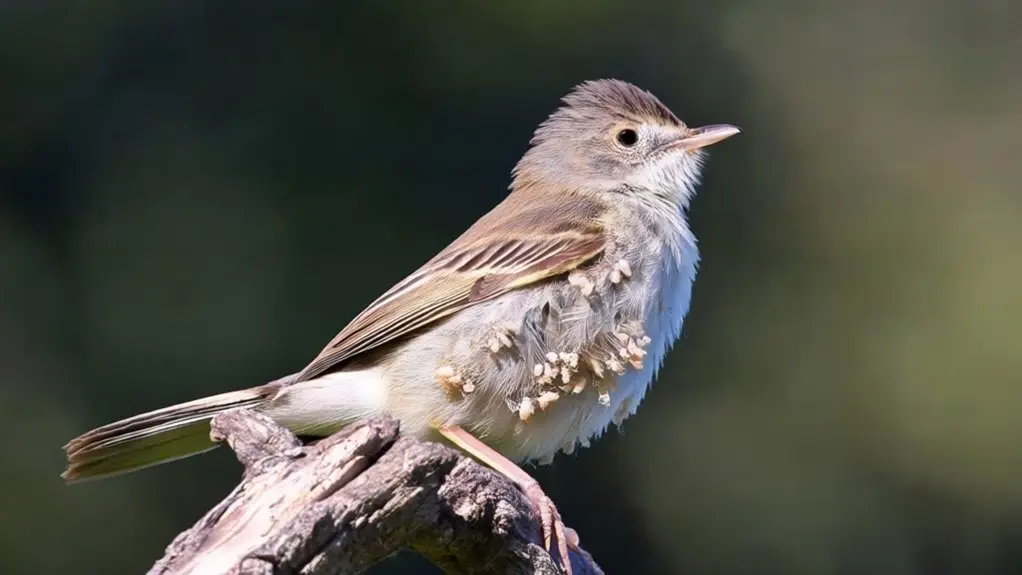
Yes, birds can have lice. These tiny, wingless parasites are specially adapted to live on their feathers and skin. They cling securely using their mouthparts and feed on feathers and skin debris.
They mostly spread through direct contact and can survive briefly off the bird, especially in dense plumage or nests. When birds get infested, it causes itching, feather damage, and changes in their behavior.
If you want to understand how these lice affect bird health and how to manage infestations effectively, there’s more to explore ahead.
What Are Bird Lice And How Do They Live
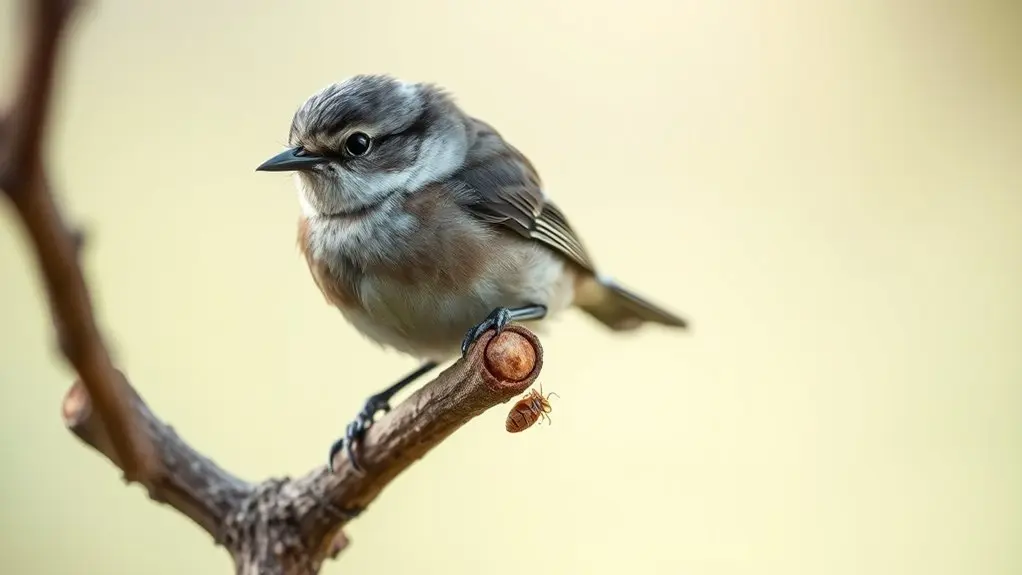
Although you mightn’t often notice them, bird lice are tiny, wingless insects that live exclusively on birds. They belong to the order Phthiraptera. You can identify lice by their specialized body shapes and mouthparts designed to cling tightly to feathers. This is vital for their survival.
They pass through three life stages: egg, nymph, and adult. The eggs hatch in about a week.
Bird lice feed primarily on feathers, skin, and shed skin. Interestingly, they play a role in maintaining feather health by removing debris.
Typically, lice stay close to their host, residing on the bird or near nests. They only leave if the nest is disturbed or the birds depart.
Knowing how to accurately identify lice is essential for understanding their impact on feather health and bird well-being.
How Bird Lice Spread And Infest New Hosts
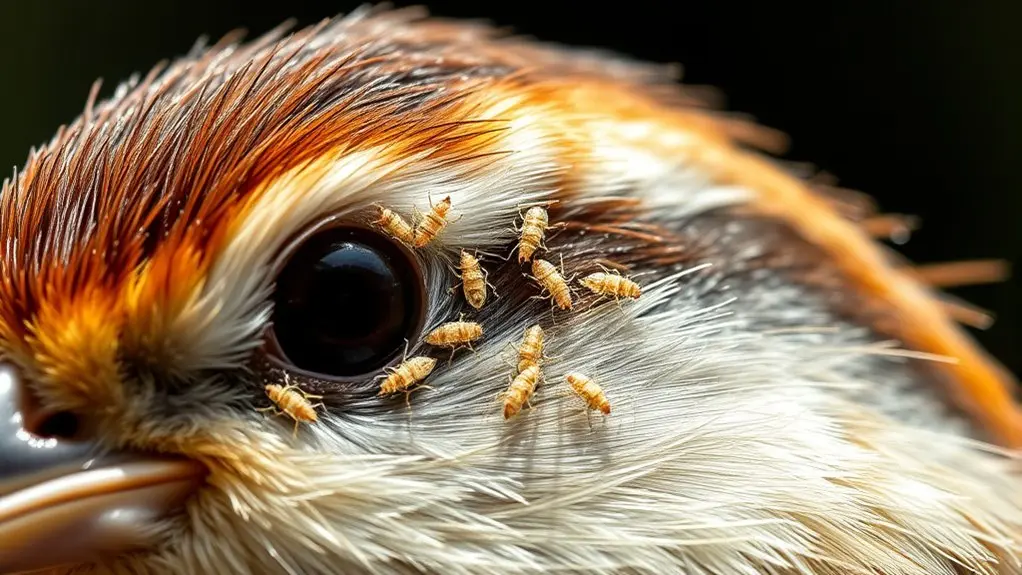
Because bird lice rely on close physical proximity to survive, they spread primarily through direct contact between birds during mating, nesting, or social interactions. You’ll notice that sharing nests, perches, or feeding sites increases the chance of lice transferring to new hosts.
Bird lice spread mainly through close contact during mating, nesting, or social interactions among birds.
Lice can survive briefly off-host, hiding in feathers, nests, or debris, which helps them infest birds indirectly.
Young birds are especially vulnerable because they spend a lot of time in the nest.
Over time, lice mutation can lead to strains that are better at evading your bird’s immune defenses. At the same time, genetic resistance in birds plays a big role in how severe an infestation gets.
Understanding these dynamics helps you anticipate infestation risks. It also shows the ongoing evolutionary arms race between lice adapting through mutation and birds developing genetic resistance to keep lice numbers down.
How Bird Lice Impact Your Bird’s Health And Behavior
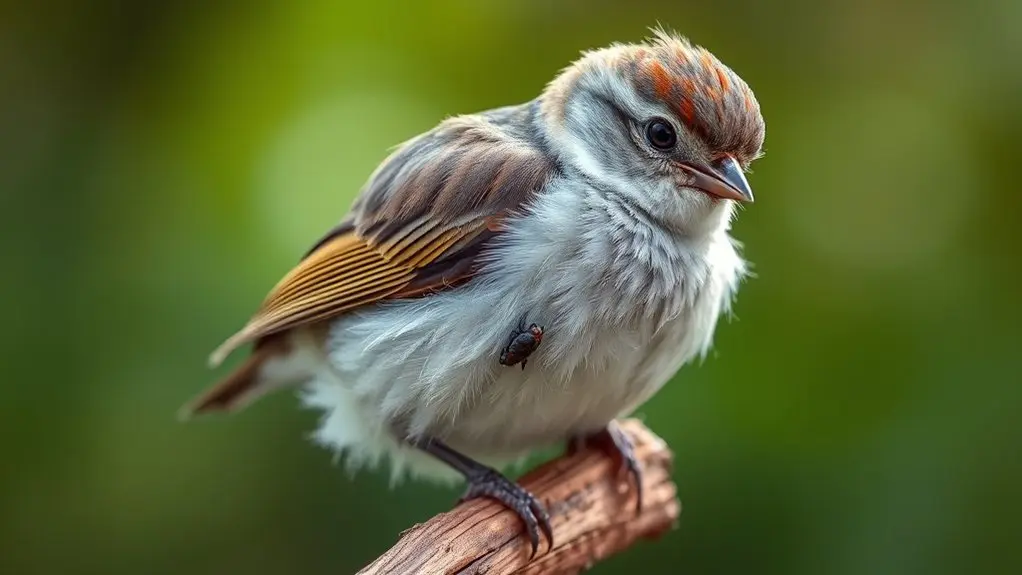
You’ll probably notice that bird lice make your bird itchy and stressed out. This can lead to feather loss and feathers that just don’t look healthy.
When the infestation is really bad, it might even weaken your bird’s immune system and cause anemia, especially if your bird is young or molting.
Because of these health problems, your bird might start acting differently—like preening way too much or getting restless.
These behavior changes are a clear sign that it’s time to treat the problem right away.
Health Effects On Birds
When bird lice infest your feathered companion, they cause more than just mild irritation. Their presence triggers itching and discomfort that lead to increased scratching and noticeable feather loss. This feather damage compromises insulation and flight efficiency, affecting your bird’s overall health.
The stress effects from constant irritation and physical harm weaken your bird’s immune system, making it more vulnerable to secondary infections. Heavy infestations impair mobility by damaging skin and feathers. This is particularly bad during molting or breeding seasons.
Young birds suffer more because lice hinder feather development and growth, which compromises their survival. So, it’s really important to address lice infestations promptly. Doing so helps prevent these health declines and keeps your bird well by reducing stress and preserving feather integrity.
Behavioral Changes From Infestation
Although bird lice primarily cause physical harm, they also trigger significant behavioral changes that can signal an infestation. You may notice your bird exhibiting decreased feather grooming, which leads to feather damage and skin irritation from excessive scratching.
These lice feed on feathers and skin, impairing your bird’s flight ability and overall health.
Behavioral symptoms include vocalization changes, often increased vocal activity as the bird responds to discomfort. Additionally, infested birds may show lethargy and reduced activity levels, which are signs of stress.
This stress weakens the immune system, making your bird more susceptible to illness.
Keeping an eye on these behavioral shifts alongside physical signs helps you spot infestations early. That way, you can get your bird prompt treatment to restore its health and normal behavior.
Birds Most Commonly Infested By Bird Lice
You’ll find bird lice infestations most common in species like songbirds, waterfowl, and parrots. Their dense feathers create the perfect habitats for these lice.
It’s also important to pay attention to their nesting environments because close contact with nesting materials often increases the risk of infestation.
Plus, seasonal patterns play a role too. Infestations tend to be higher during breeding periods when birds gather together more often.
Bird Species Prone
Because bird lice thrive in environments where feathers provide ample habitat, certain bird species are more commonly infested than others. You’ll find lice frequently on birds with dense plumage, such as crows and ravens, because their feathers offer extensive surface area for lice to inhabit.
Pigeons and parrots, especially those nesting in urban areas, also experience high lice populations due to crowded environments facilitating transmission.
Waterfowl like ducks and swans host lice adapted to aquatic habitats. These infestations can interfere with feather maintenance, causing damage that impairs insulation and flight.
Additionally, heavy lice burdens can lead to molt disruption, affecting feather replacement cycles critical for the bird’s survival.
Understanding which species are prone to lice helps you appreciate the ecological dynamics influencing parasite-host relationships. It’s pretty interesting how these tiny creatures can have such a big impact on different birds!
Nesting Habitats Impact
Bird species nesting in sheltered environments such as tree canopies, building eaves, and attics provide ideal conditions for bird lice to thrive. You’ll find that nests with dense feathers or down, especially from cavity-nesting birds and waterfowl, create abundant microhabitats favorable for lice colonization.
When you consider nest proximity, closely spaced nests increase lice transmission rates due to frequent contact among birds. Urban species like pigeons and sparrows benefit from nesting near human structures, where habitat disturbance is often minimal, allowing lice populations to persist undeterred.
If you’re studying lice infestations, note that poorly maintained nesting sites with limited habitat disturbance support higher lice densities. These conditions reduce lice mortality and facilitate their life cycle.
Understanding these habitat factors helps predict and manage lice infestations effectively.
Seasonal Infestation Patterns
When do lice infestations peak among avian populations? You’ll find that lice populations surge primarily during warmer months, coinciding with the breeding season when birds are more active and in close contact. Migration timing also influences infestation patterns, as migratory species experience peaks during breeding and nesting.
Feather molt plays a crucial role; as birds shed feathers, lice populations decline. To understand these seasonal infestation patterns, consider:
- Breeding season increases lice transmission due to close proximity.
- Warm temperatures accelerate lice life cycles, boosting infestations.
- Migration timing causes fluctuating lice levels, peaking during nesting.
- Feather molt reduces lice by removing infested feathers.
Common Bird Lice Species And Their Characteristics
Although you mightn’t easily spot them, several common lice species infest birds, each with unique adaptations that help them thrive. Species like *Menopon gallinae* (shaft louse) and various *Mallophaga* primarily munch on feathers and skin.
You’ll notice these lice are very small, under 1/8 inch, and their coloration, ranging from yellow to brown or green, provides effective camouflage against their host’s plumage.
The shaft louse has a flattened, elongated body, which is a feather adaptation that lets it move smoothly between feather shafts without being detected.
Each species tends to specialize in particular hosts, such as pigeons, chickens, or songbirds.
Their mouthparts are precisely evolved for scraping feather material and skin, which makes their parasitic lifestyle both efficient and persistent.
Understanding these characteristics can really help you spot lice infestations accurately. It’s all about knowing what to look for and where to look.
Once you get familiar with these details, identifying lice becomes a lot easier.
Effective Prevention And Control Methods For Bird Lice
Recognizing the specific traits of lice species helps you tailor prevention and control measures effectively. Since lice rely on birds’ feeding habits and the molting process to survive and reproduce, disrupting these cycles is essential.
To control bird lice, follow these steps:
- Regularly clean cages and remove old feathers to eliminate lice habitats and interrupt their molting cycle.
- Apply veterinarian-approved powders or sprays targeting lice without harming the bird’s skin or feathers.
- Maintain proper nutrition and avoid overcrowding to strengthen birds’ immune response against lice infestations.
- Frequently inspect birds for signs like excessive scratching or feather damage, enabling early intervention before lice populations escalate.
When Should You Call A Pro For Bird Lice?
If your bird keeps scratching a lot or starts losing feathers even after thorough cleaning and taking preventive steps, it’s really important to get professional help. Persistent symptoms usually mean the lice infestation is pretty bad and won’t go away with just regular bird grooming.
When lice are affecting several birds or nesting areas, especially during migration seasons when parasites spread fast, getting an expert involved is key. A pest control specialist or avian vet can identify the exact type of lice and provide the right treatment.
DIY methods often don’t completely clear lice from your bird’s environment or home, which can lead to the problem coming back. So, if you see lice on multiple birds or notice the skin irritation and feather damage getting worse, don’t wait.
Professional treatment ensures the lice are fully gone, keeping your birds healthy and helping them recover from the stress of migration.
Frequently Asked Questions
Can Bird Lice Infest Humans or Pets Other Than Birds?
You won’t experience cross-species infestations from bird lice since they can’t survive on humans or pets.
It’s more about preventing temporary hitchhikers. So, focus on minimizing contact with bird nests and keeping your environment clean. That way, you reduce the chances of any unwanted visitors tagging along.
How Long Do Bird Lice Live Without a Host?
You know ectoparasite lifecycle dictates bird lice live 2-10 days without a host. You must consider lice habitat preferences. Warm, humid environments extend survival, while cooler, dry conditions shorten it.
You see, resilience varies by life stage.
Are Bird Lice Visible to the Naked Eye?
Yes, you can see bird lice with the naked eye, especially the adults. They’re usually small but visible if you look closely.
Keeping an eye out for them is important because they can affect feather health. These lice cause discomfort and damage to the feathers, which can really impact the bird’s overall well-being.
Plus, their presence can even change nesting behavior. So, monitoring bird lice helps protect the birds and supports their reproduction.
Can Bird Lice Transmit Diseases to Birds?
You won’t find lice transmission acting like a stealthy disease courier. Bird lice cause irritation but pose minimal disease risk. Their role in spreading infections remains scientifically unproven.
Do Bird Lice Affect Wild Birds Differently Than Pet Birds?
You’ll find bird lice impact feather health and nest hygiene more severely in wild birds due to limited grooming and exposure. Wild birds don’t get the same kind of regular care that pet birds do, so the infestations can really take a toll.
On the other hand, pet birds experience less damage thanks to regular care and controlled environments. This helps minimize infestations and keeps the birds healthier overall. It’s a big difference in how lice affect them!
Conclusion
Now that you know bird lice are more than just a nuisance, you can take action swiftly. After all, prevention is better than cure.
These parasites spread easily and can impact your bird’s health and behavior. So, regular checks and proper hygiene are really important.
If infestations keep happening despite your efforts, don’t hesitate to call a professional. Staying vigilant helps your feathered friend stay healthy and comfortable, free from the harm of lice.