
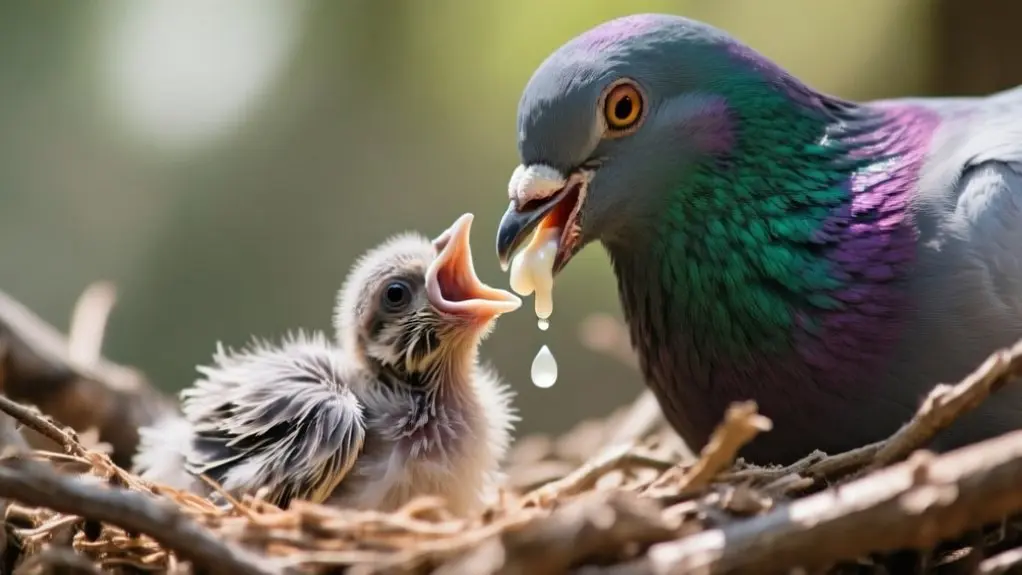
You might think birds can’t produce milk, but certain species actually secrete a nutrient-rich substance called crop milk. Unlike mammalian milk, crop milk comes from the crop lining and contains dense proteins, fats, immune factors, and antibodies. It’s crucial for feeding hatchlings in pigeons, flamingos, and emperor penguins.
This unique secretion supports early growth and immune protection. If you want to understand how it’s made and why it’s so essential, there’s much more to explore.
What Is Crop Milk?
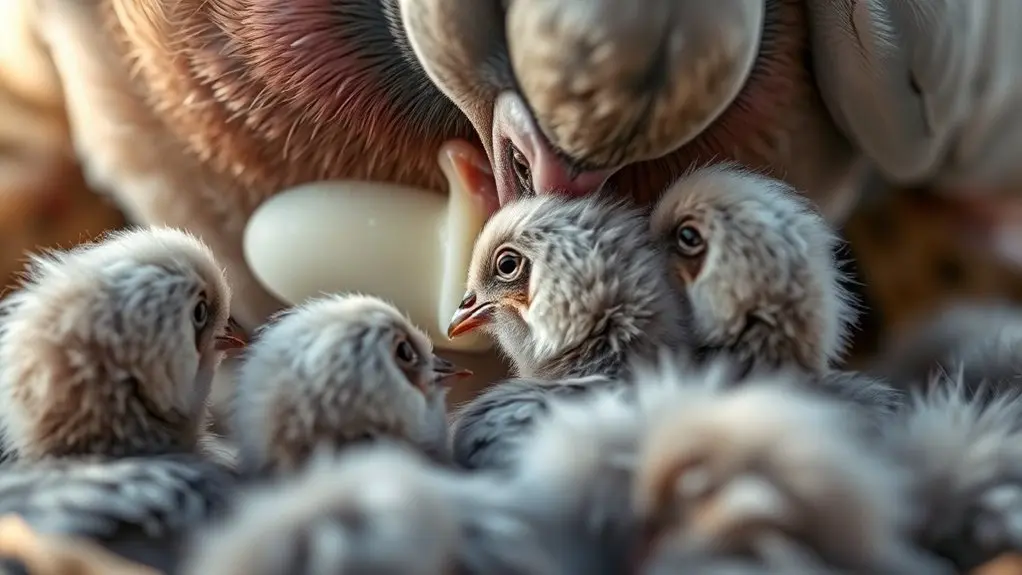
Although you might associate milk exclusively with mammals, certain bird species produce a unique substance called crop milk to nourish their young. This secretion comes from the lining of the crop, a special pouch in the bird’s digestive system. The birds regurgitate it to feed their hatchlings.
Crop milk is quite different from mammalian milk. It’s semi-solid and packed with proteins, fats, carotenoids, immune factors, and antibodies. This makes it super important for nutrition and immune protection.
Unlike mammalian milk, crop milk is semi-solid and rich in proteins, fats, and immune-boosting compounds.
This feeding strategy is an evolutionary adaptation that helps offspring survive during their early development. Both male and female pigeons and flamingos produce crop milk.
In emperor penguins, though, only the males do.
Understanding crop milk shows how birds have developed unique ways to support their young, going beyond the usual feeding methods. It’s pretty fascinating how nature works!
Which Birds Produce Crop Milk?
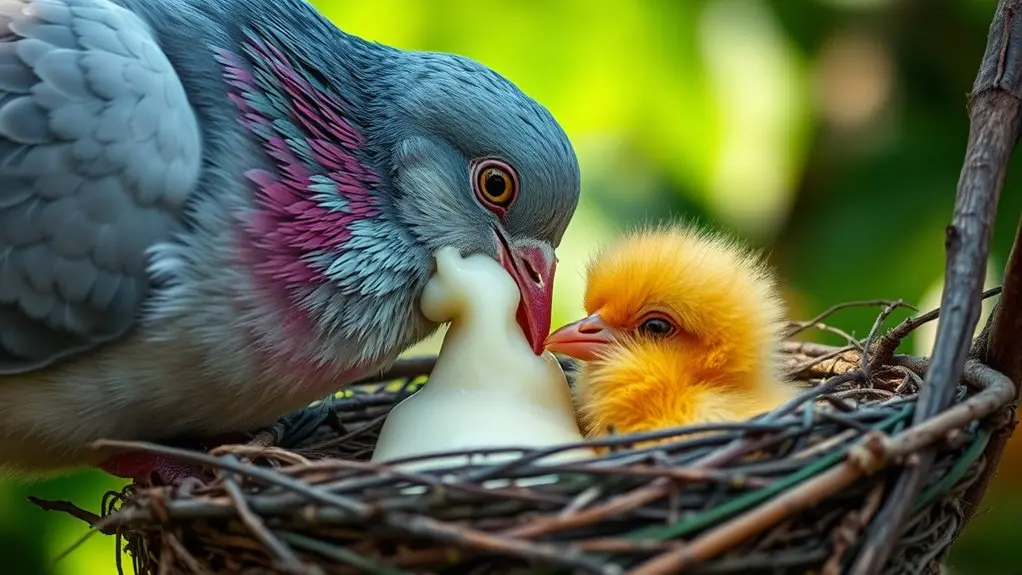
You might be surprised to learn that only certain birds produce crop milk. For example, pigeons, doves, flamingos, and male emperor penguins are the ones known for this unique ability.
In pigeons and flamingos, both the males and females produce this nutrient-rich secretion.
But when it comes to emperor penguins, it’s just the males that take on this role.
It’s pretty interesting because understanding these different gender roles helps us see how crop milk plays a crucial part in supporting the early development of hatchlings.
It’s all about specialized parental care that ensures the little ones get the best start.
Species Producing Crop Milk
When you examine which bird species produce crop milk, you’ll find that pigeons and doves stand out for generating this nutrient-rich secretion from the lining of their crop to nourish their hatchlings.
Beyond these, flamingos and emperor penguins also produce crop milk, though its evolution in these groups occurred independently. It’s actually a clear example of convergent bird evolution driven by specific dietary adaptations.
This secretion is rich in proteins, fats, and immune factors. It supports early chick growth and immunity.
Unlike mammalian milk, crop milk is a thick, non-blood red substance.
Your understanding of these species highlights how diverse feeding strategies have evolved to meet the nutritional demands of developing young. This reflects unique physiological adaptations rather than a direct lineage from mammalian lactation systems.
Gender Roles In Lactation
While both male and female pigeons and flamingos produce crop milk to nourish their young, only male emperor penguins take on this role exclusively, as females depart soon after egg-laying. This distinct pattern highlights how gender roles in lactation vary with reproductive strategies across bird species.
In pigeons and flamingos, prolactin regulates crop milk production in both sexes, reflecting shared parental investment.
Conversely, male emperor penguins uniquely synthesize crop milk, ensuring chick survival during prolonged female absence. This divergence illustrates independent evolutionary adaptations for parental care.
Crop milk secretion originates from the crop lining, which is different from mammalian mammary glands. Prolactin governs lactation-like functions across species producing crop milk.
Exclusive male lactation in emperor penguins aligns with their reproductive strategy emphasizing paternal care.
How Crop Milk Is Made and What It Contains
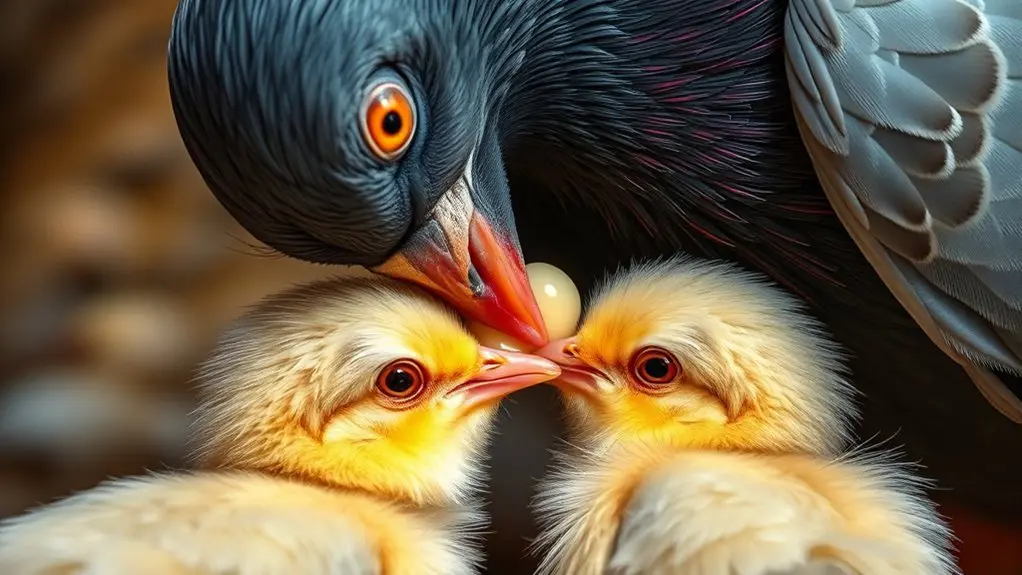
Although crop milk differs markedly from mammalian milk, it plays a crucial role in nourishing hatchlings of certain bird species. This secretion arises from the lining of the crop, where specialized epithelial cells proliferate and slough off under hormonal control, primarily prolactin. These genetic adaptations reflect the evolutionary significance of crop milk production, enabling sustained feeding beyond early development.
Crop milk contains a dense mixture of proteins, fats, antioxidants, immune factors, and IgA antibodies. These components are essential for supporting growth and immune defense.
Both male and female pigeons and flamingos, as well as male emperor penguins, produce this nutrient-rich secretion.
Unlike mammalian milk, crop milk is a thick, non-blood red substance. It can be produced for extended periods, such as up to six months in flamingos, ensuring prolonged nutritional support. This makes it a remarkable adaptation for feeding young birds over time.
Why Crop Milk Is Essential for Baby Birds’ Growth
Because baby birds of species like pigeons, flamingos, and emperor penguins lack the digestive capacity to process solid food right after hatching, crop milk is their primary source of nutrition. This evolutionary adaptation makes sure hatchlings get enough nourishment during those critical early stages of development.
Crop milk is packed with proteins, fats, immune factors, and carotenoids. These nutrients help support rapid growth and boost the immune system. By feeding crop milk, parent birds provide what solid foods just can’t offer yet.
You should recognize crop milk’s importance for accelerated tissue growth and organ development, enhanced immune protection against pathogens, and bridging the nutritional gap until chicks can digest adult food.
This adaptation shows how some birds evolved a special feeding strategy to maximize their offspring’s chances of survival.
How Crop Milk Differs From Mammalian Milk in Composition and Function
How exactly does crop milk differ from the milk produced by mammals? Crop milk, secreted from the crop lining in certain bird species, primarily consists of sloughed epithelial cells rich in proteins and lipids. This contrasts sharply with mammalian milk, which contains significant carbohydrates like lactose.
This fundamental nutritional difference reflects distinct evolutionary adaptations. Crop milk lacks carbohydrates and blood cells but includes immune factors such as IgA antibodies and carotenoids. These components help enhance chick immunity and growth.
Unlike the fluid complexity of mammalian milk, crop milk is a dense, cell-based secretion tailored for rapid chick development. These differences show how birds independently evolved a specialized nutrient source optimized for their offspring’s early needs. It really highlights the different strategies vertebrates use to nourish their young.
Common Myths About Crop Milk Debunked
Understanding the unique nature of crop milk opens the door to addressing widespread misconceptions about it. Contrary to popular belief, crop milk isn’t mammalian milk nor blood-derived. It’s a specialized secretion produced by certain birds as an evolutionary adaptation to nourish their young.
For myth clarification, consider these points:
Crop milk is a high-protein, high-fat secretion from the crop lining. It’s distinct in composition and function from mammalian milk.
Only specific bird species, like pigeons and flamingos, have independently evolved this trait. This disproves the notion that lactation is exclusive to mammals.
Crop milk supports early chick development through a unique biological process. It highlights its role as a specialized parental care mechanism rather than a mammalian analogue.
Frequently Asked Questions
Can Humans Safely Consume Bird Crop Milk?
You shouldn’t consume bird crop milk. Its composition is very different from mammalian milk because of how birds digest their food.
When you compare the nutrients, bird crop milk doesn’t have what humans need. Plus, it might contain harmful pathogens. So, eating it could be risky for your health.
Is Crop Milk Production Linked to Bird Mating Behaviors?
Yes, crop milk production influences bird behavior by promoting biparental care, which enhances offspring survival. This evolutionary purpose strengthens pair bonding and mate selection. It signals parental quality and shapes reproductive strategies in various species.
Basically, crop milk acts as more than just food. It’s a way for birds to show their commitment and fitness to their mates. This dynamic plays a big role in how they choose partners and raise their young together.
How Long Do Parent Birds Produce Crop Milk?
Imagine a Victorian tea party where parent birds produce crop milk, rich in nutritional content, for about 4 to 6 weeks during bird feeding. This period varies by species but supports chicks’ early growth precisely and effectively.
It’s pretty amazing how nature works, right? Those few weeks are crucial for the little ones to get a strong start. And all thanks to that special crop milk made just for them.
Does Crop Milk Have Any Medicinal Properties?
You’ll find crop milk’s nutritional content supports immunity and growth, reflecting its evolutionary purpose. While it contains immune factors and antioxidants, current science hasn’t confirmed direct medicinal properties beyond these protective and nutritional benefits.
Can Crop Milk Be Artificially Produced or Harvested?
You can’t artificially produce or harvest crop milk yet, as its complex composition reflects unique avian nutrition and evolutionary adaptations. Current biotech hasn’t replicated these intricate proteins and immune factors outside birds’ natural secretion processes.
It’s pretty fascinating how nature has designed this. So, for now, crop milk remains something only birds can make naturally. Hopefully, future science might find a way to mimic it, but we’re not there yet.
Conclusion
You might think birds milking their young sounds like a fairy tale, but crop milk is a marvel of nature. It’s so essential, it’s practically life or death for hatchlings. Unlike mammalian milk, it’s a unique, nutrient-packed secretion that only a few bird species produce.
Understanding this extraordinary adaptation shows just how specialized and precise evolution can be. So, next time someone doubts birds can “produce milk,” you’ll know it’s no myth, but a scientific fact.