
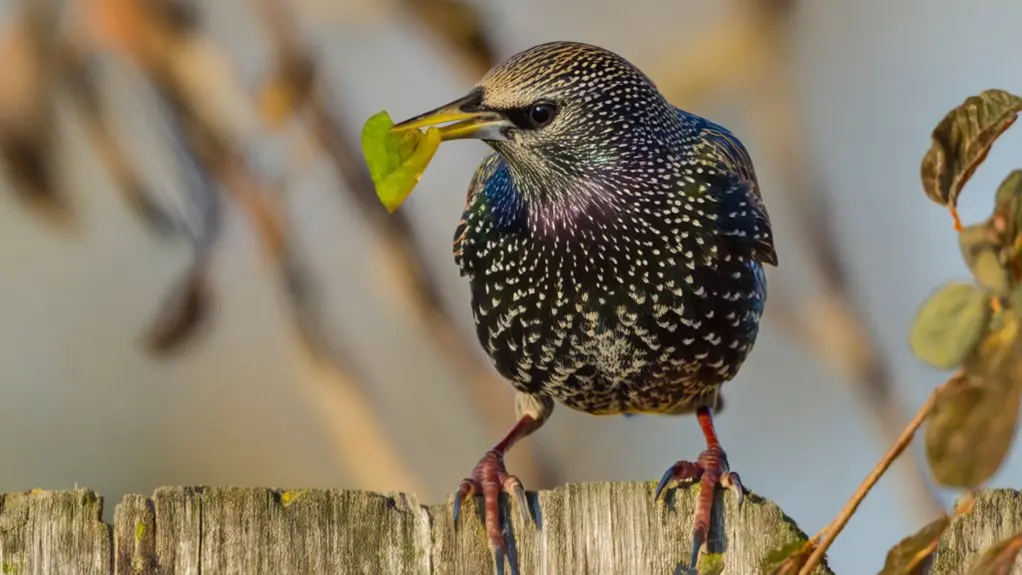
You can safely offer birds unsalted, dry-roasted pistachios in moderation. They provide healthy fats, protein, and essential minerals that support energy and immunity. Just make sure the nuts are fresh and mold-free.
Also, the shells should be partially removed or cracked to suit the bird’s size. Overfeeding pistachios or giving salted varieties can cause health issues like obesity and toxicity.
Pay attention to your bird’s foraging behavior. This helps you gauge their preference and wellbeing. Understanding these details reveals the full balance pistachios bring to avian diets.
What Nutrients Are in Pistachios for Birds?
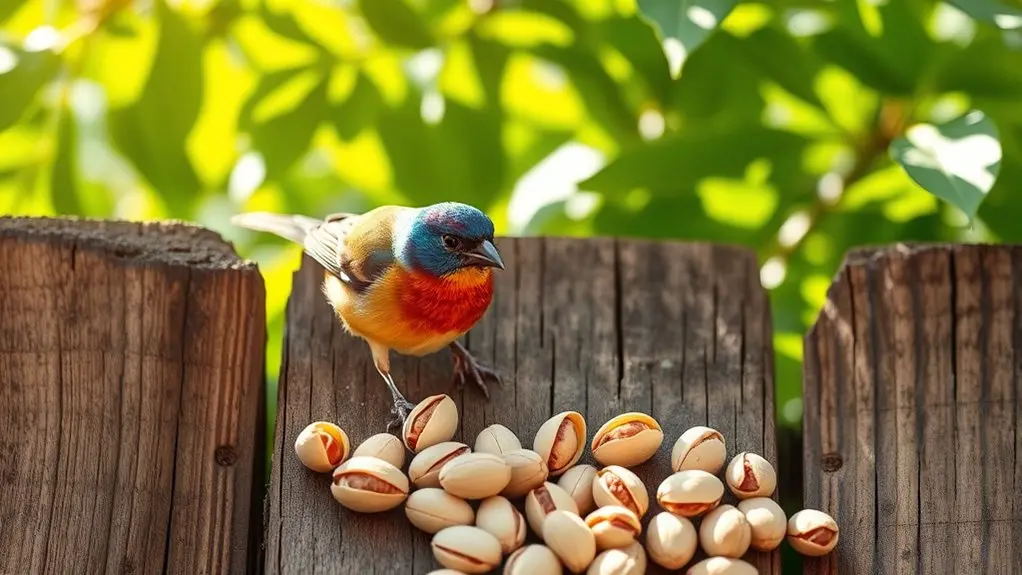
Although pistachios are often enjoyed by humans, they also provide birds with a rich source of nutrients essential for their health. When you offer pistachios to birds, you introduce a valuable energy source through their healthy fats, which supports sustained activity and metabolic processes.
These nuts deliver protein, fiber, vitamins, and minerals that enhance nutrient absorption. This helps birds efficiently use what they eat. Antioxidants in pistachios boost the avian immune system, while the calcium and magnesium support bone strength and metabolic functions.
Including pistachios in a bird’s diet promotes dietary diversity, which is important for balanced nutrition. By mixing up their food sources, you help birds stay healthy and resilient against environmental stressors. It’s a simple way to give them a little extra boost.
Are Pistachios Safe for Every Bird?
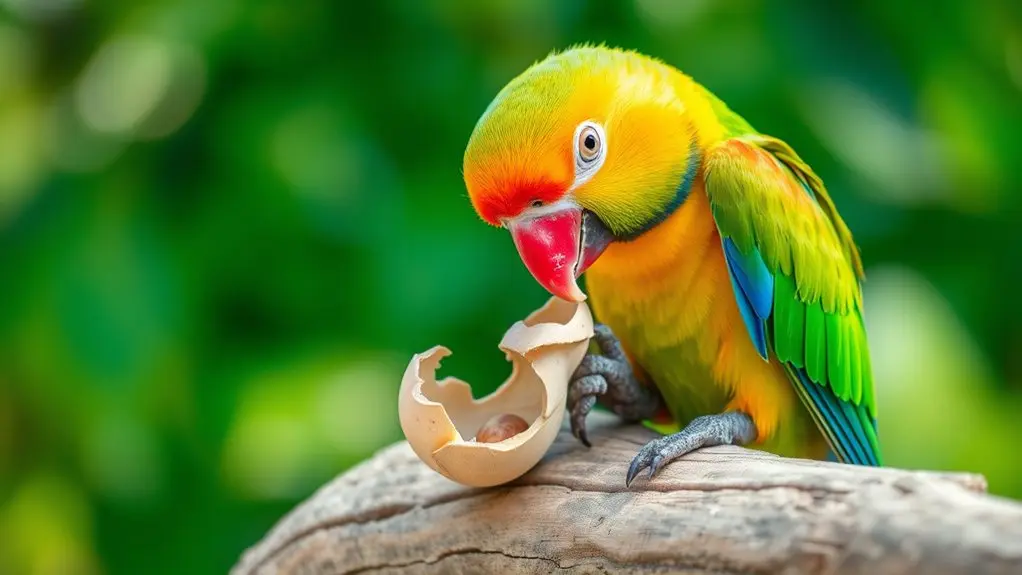
When offering pistachios to birds, you need to take into account species-specific dietary requirements and sensitivities to guarantee their safety. Not all pistachio varieties are equally suitable; unsalted, dry-roasted pistachios generally align better with bird diet compatibility. This helps avoid harmful high sodium or toxic additives found in flavored or salted types.
Some birds benefit from pistachio shells, which provide natural foraging stimulation, but you must monitor portion sizes carefully. Overfeeding pistachios or combining them with high-fat or vitamin A-rich foods can lead to nutritional imbalances, especially in sensitive species.
Always choose fresh, mold-free pistachios and tailor servings to the bird’s size and dietary needs.
Best Types of Pistachios for Birds
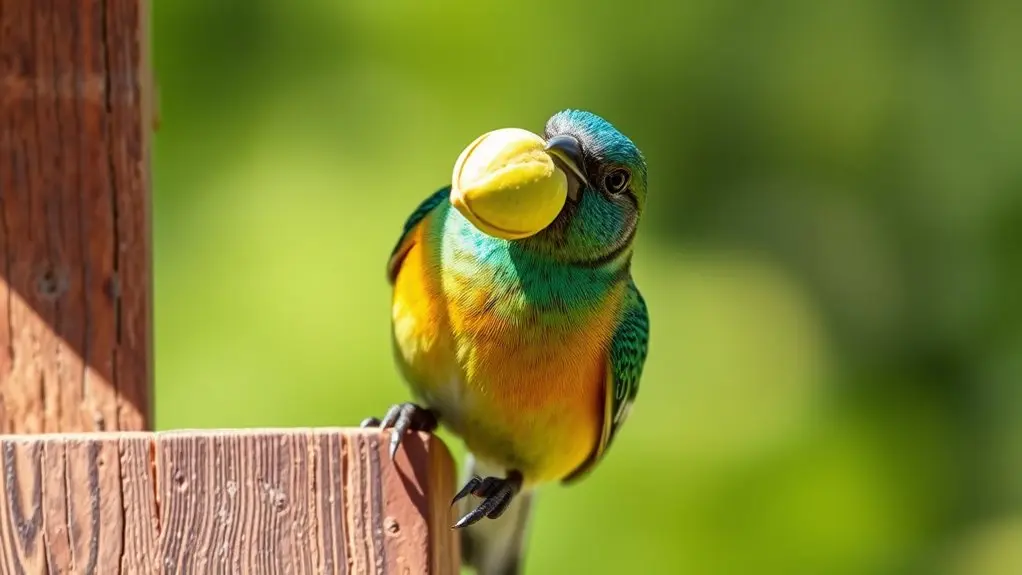
Selecting the best types of pistachios for birds requires careful attention to their preparation and condition. You should choose unsalted, dry roasted pistachios without added oils or salt. These maintain nutritional value without harmful additives often found in flavored varieties.
Fresh, plain pistachios are preferable since pistachio flavors with seasoning risk toxicity. For larger birds like parrots, pistachios in shells offer shell accessibility that encourages natural foraging and enrichment behaviors.
However, always inspect pistachios for mold, discoloration, or spoilage to prevent health risks. Consistently providing the same type of unsalted pistachios supports dietary stability and safety.
How to Feed Pistachios Safely to Birds
You should always offer unsalted, dry roasted pistachios without any added oils or seasonings to keep your bird healthy.
It’s best to feed pistachios in moderation, so keep daily portions small and try not to give them alongside other high-fat or high-vitamin A foods.
Also, make sure to prepare the pistachios by removing or partially cracking the shells, depending on what your bird can handle.
And don’t forget to store them properly to prevent spoilage.
That way, your feathered friend can enjoy their treat safely!
Pistachio Preparation Tips
Although pistachios can be a nutritious snack for birds, you must prepare them carefully to guarantee safety. After pistachio harvesting, select unsalted, dry roasted nuts without added oils or salt. These additives can harm birds.
For smaller or hesitant birds, remove shells to prevent choking. But leaving shells on offers enrichment for larger parrots capable of cracking them. It’s a nice way to keep them entertained.
Make sure to store pistachios properly by keeping them in a cool, dry place. Regularly check for mold or spoilage since that could pose health risks.
Before feeding, always verify nuts are fresh and free of contaminants.
Moderation And Frequency
When incorporating pistachios into your bird’s diet, it’s essential to offer them in moderation to prevent excessive fat and calorie intake. Limit the portion to a small handful per bird, ensuring pistachios serve as an occasional treat rather than a daily staple.
Maintaining proper feeding frequency is vital because frequent pistachio consumption can disrupt nutritional balance, especially when combined with other high-fat foods. Keep an eye on your bird’s response and adjust how often you offer pistachios to avoid dependency or overfeeding.
Avoiding Harmful Additives
Since birds are highly sensitive to additives like salt, sugar, and artificial preservatives, feeding them only unsalted, plain pistachios is essential to avoid health complications.
You should select dry roasted pistachios without added oils or seasonings. These often contain flavorings that can harm avian digestive systems.
Always check labels to verify the nuts are free from artificial preservatives, salt, and sugar.
Avoid pistachios with coatings or flavorings, which might introduce toxic substances or irritants.
Additionally, regularly inspect pistachios for freshness and discard any that show signs of mold or spoilage.
These can pose serious health risks.
How Many Pistachios Are Too Many for Birds?
If you offer birds more than a small handful of pistachios daily, you risk causing nutritional imbalances that can affect their health. Eating too many pistachios may lead to elevated fat intake, which increases the chance of obesity and other health problems.
Plus, too many pistachios can push Vitamin A levels beyond safe limits, risking toxicity.
Overfeeding can also reduce birds’ appetite for their regular diet. This means they might miss out on important nutrients, leading to dietary deficiencies.
Birds with pistachio allergies need even stricter limits because their sensitivity raises health risks.
It’s important to consider dietary restrictions specific to each bird species. Moderation is key.
Giving only a few small pieces daily helps you avoid complications while still offering nutritional benefits.
Taking this careful approach helps keep your bird healthy and happy overall.
What Happens When Birds Eat Salted Pistachios?
Although pistachios can be a healthy treat for birds in moderation, salted pistachios pose significant health risks because of their high sodium content. Birds naturally eat low-sodium diets and don’t have the tools to handle too much sodium well. That makes salted nuts pretty dangerous for them.
Salt toxicity from salted pistachios can cause some serious health problems. When birds eat salted pistachios, you might notice a few things.
Salt toxicity from salted pistachios can lead to serious health issues in birds.
First, dehydration can happen because the extra sodium messes with their fluid balance. Then, their kidneys can get strained or even fail as they try to deal with all that sodium.
You might also see neurological symptoms like lethargy or tremors, which are signs of salt poisoning.
Feeding salted pistachios to birds is risky, so it’s best to avoid them altogether. Stick to unsalted pistachios to keep your bird healthy and prevent salt toxicity from becoming a problem.
How to Tell If Your Bird Likes Pistachios
You can tell if your bird likes pistachios by paying close attention to its behavior while feeding. Notice if it pecks at the shells or tries to crack the nuts open.
Birds that enjoy pistachios often come back to them again and again.
Try doing some simple preference tests too. This can help you figure out if your bird really enjoys this tasty treat. It’s a fun way to see what your feathered friend likes best!
Observing Bird Behavior
When birds show enthusiasm for pistachios, they often peck eagerly and linger longer at the feeder, signaling genuine interest. You can observe this behavior alongside changes in bird song and nesting habits. These changes may indicate overall well-being linked to diet.
To accurately assess your bird’s response, focus on these three behaviors:
- Cracking open in-shell pistachios. This shows investigation of texture and flavor.
- Increased vocalizations or excited calls near pistachio offerings. This reflects heightened stimulation.
- Attempts to store or transport pistachios. This demonstrates recognition of the nut as a valuable resource.
Signs of Enjoyment
If a bird repeatedly returns to pistachios and spends time cracking open the shells, it signals a clear preference for this nut. You’ll notice the bird pecking zealously and consuming the nut inside with focused intent.
Increased bird song near pistachio feeders often accompanies this behavior, indicating excitement or contentment.
Additionally, birds that forage actively and linger around pistachios show clear signs of enjoyment. You might observe them carefully handling shells without hesitation, a precise behavior linked to food preference.
Sometimes, this enjoyment correlates with heightened activity in nest building, as birds fueled by nutritious snacks like pistachios exhibit more energy.
Preference Testing Methods
Although birds may show signs of enjoyment around pistachios, accurately determining their true preference requires systematic testing methods.
As you observe your bird, consider how pistachios fit into its natural behaviors tied to bird migration and nest building.
To gauge preference, try these approaches:
- Offer pistachios alongside other treats to compare interest. Notice if your bird repeatedly chooses pistachios over alternatives.
- Monitor how long your bird spends handling or cracking pistachios. Extended engagement usually suggests genuine liking.
- Keep a detailed record of feeding sessions. Track whether pistachio consumption increases during active periods like pre-migration or nest building.
These methods give you objective insight into whether pistachios are a favored food, beyond just the initial enjoyment signs.
Balancing Pistachios in Your Bird’s Diet
Because pistachios are rich in fats and nutrients, you need to offer them in moderation to keep your bird’s diet balanced. Overfeeding pistachios can mess with nutrient absorption and cause imbalances. This is especially true if your bird already eats foods high in fat or vitamin A.
To support your bird’s best health, give unsalted, dry roasted pistachios along with a variety of fruits, vegetables, and seeds. This mix helps make sure your bird gets a wide range of essential nutrients without overdoing any one thing.
Keep an eye on portion sizes and how often you feed pistachios to avoid overconsumption. By balancing pistachios with other foods, you help maintain stable nutrient absorption and promote your bird’s overall well-being.
Do Wild Birds Eat Pistachios in the Wild?
While wild birds don’t depend on pistachios as a staple food, species like crows, scrub jays, and ravens actively consume these nuts when they come across them. Their feeding behavior impacts pistachio crops, especially during specific seasons.
You’ll notice that crows and scrub jays knock pistachios from trees, exploiting their nesting habits by caching nuts for later use. Ravens skillfully remove hulls and shells, showing off some pretty advanced foraging techniques during bird migration periods when food sources vary.
Though pistachios aren’t a primary food, their availability influences local bird activity and foraging patterns, especially when natural food is scarce.
Understanding these interactions helps us see how bird migration and nesting habits affect pistachio consumption in the wild. It offers some neat insight into how birds adapt ecologically.
Where to Get Reliable Pistachio Feeding Advice
When you want to safely include pistachios in a bird’s diet, turning to reputable avian nutrition sources like Lafeber and professional bird care organizations is essential. These sources offer scientifically backed guidance, considering bird habitat and nesting habits, which influence dietary needs.
It’s a good idea to consult avian veterinarians or bird nutrition specialists too. They can provide tailored advice, especially about feeding unsalted, dry roasted pistachios in moderation. Plus, official publications and wildlife management authorities also give helpful regulations on safe feeding practices.
| Source Type | Key Benefits |
|---|---|
| Avian Nutrition Experts | Tailored pistachio serving sizes |
| Bird Care Organizations | Habitat and nesting habit insights |
| Regulatory Authorities | Safe feeding regulations |
Rely on these trusted sources to protect your birds’ health and support their natural behaviors.
Frequently Asked Questions
Can Pistachios Cause Allergies in Birds?
Pistachios rarely cause bird toxicity but can trigger allergies in sensitive birds. You should weigh their nutritional benefits against potential allergic reactions.
Offer plain pistachios in moderation while closely observing your bird’s response for safety. It’s always better to be cautious when introducing new foods. That way, you can enjoy the benefits without any worries.
Do Birds Prefer Pistachios Over Other Nuts?
You’ll notice birds’ nut preferences pivot primarily on nutrition, favoring pistachios for their plentiful, palatable fats. Bird nutrition studies reveal species-specific selections, with pistachios often topping the list due to easier shell access and energy efficiency.
It’s pretty interesting how some birds just go for pistachios more than other nuts. This usually comes down to the fact that pistachios are easier to open and give more energy per bite. So, birds aren’t just picking nuts randomly—they’re making smart choices based on what’s best for them.
How Do Birds Crack Open Pistachio Shells?
You observe birds mastering shell cracking by using their beaks and feet, applying pressure or pecking repeatedly. Their nut preference influences technique. Strong-beaked birds crush shells, while smaller ones focus on precise, persistent cracking to access pistachios.
It’s pretty interesting how they figure it out, isn’t it? They really adapt their approach depending on the size and strength of their beaks. This way, they make sure they get to the tasty nut inside without too much trouble.
Can Pistachios Help Birds During Migration?
You’ll see nutritional benefits and shell cracking techniques combine as pistachios provide energy-rich fats and proteins. These elements boost stamina and health, helping migratory birds endure long flights while sharpening their natural ability to open tough shells.
It’s pretty amazing how these nuts do double duty—fueling the birds and honing their skills at the same time. This combo really supports their long journeys and survival out there.
Are There Seasonal Effects on Birds Eating Pistachios?
You’ll notice seasonal foraging shifts as nut availability changes. Birds eat more pistachios in winter and during migration when natural nuts are scarce.
But in summer, they rely less on pistachios because insects and fruits dominate their diet. It’s all about what’s easiest to find and most nutritious at the time.
Conclusion
When offering pistachios to your bird, remember that moderation is key. Don’t put all your eggs in one basket. These nuts provide valuable nutrients but can cause issues if overfed or given improperly.
Keep an eye on your bird’s reaction and balance pistachios with a varied diet to keep them healthy. By understanding the risks and benefits, you’ll make sure your feathered friend enjoys pistachios safely and happily without compromising their well-being.