
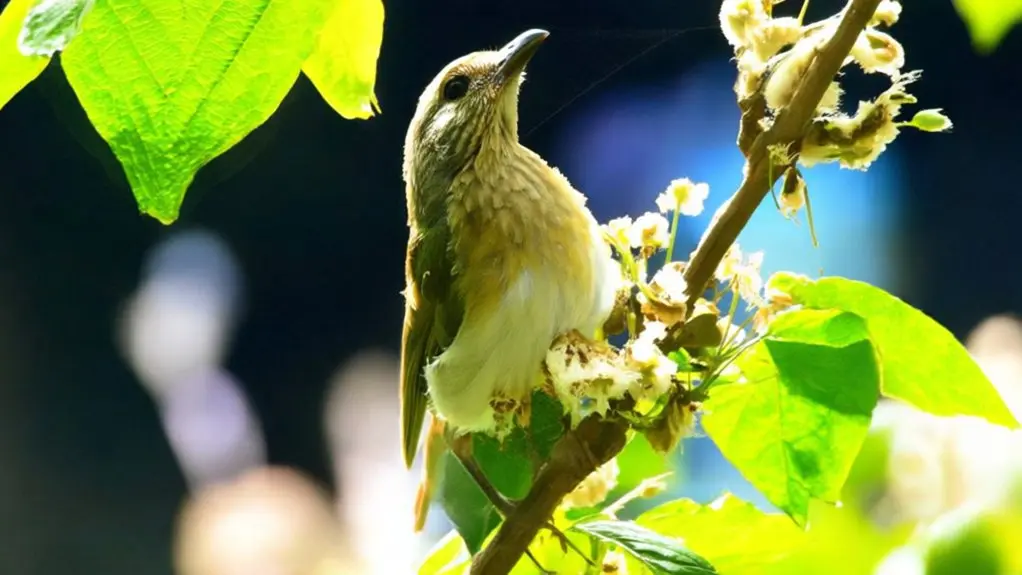
No, birds don’t have periods like mammals because their reproductive systems lack a uterus and do not shed a lining. Instead, birds ovulate and form eggs without bleeding. Hormonal cycles regulate egg development but don’t cause menstrual bleeding.
Minor spotting is rare and usually signals health issues. Environmental factors like daylight trigger reproduction, making bird egg-laying very different from mammalian menstrual cycles. Exploring these differences reveals fascinating insights into reproductive biology across species.
Do Birds Have Periods Like Mammals?
Although you might assume that birds experience periods like mammals, they don’t undergo menstrual cycles. Instead, their reproductive system operates through ovulation and egg laying, without shedding the uterine lining. Female birds typically release a single ovum per cycle, which, when fertilized, develops into an egg.
You’ll notice that hormones regulate this process, driving ovulation and egg formation, but not menstruation. Fascinatingly, hormonal fluctuations in female birds can sometimes mimic premenstrual symptoms, yet they don’t cause bleeding.
Bird migration and feather coloration are influenced by hormonal changes linked to reproduction, showing how these cycles impact behavior and physical traits without involving menstruation.
How Is Bird Reproduction Different From Mammal Menstrual Cycles?
Understanding how bird reproduction differs from mammal menstrual cycles means looking at the distinct physiological and environmental mechanisms involved. Birds don’t have menstrual cycles. Instead, their reproductive cycles are linked to egg production, which is mainly driven by environmental cues like daylight and temperature.
Unlike mammals that shed the uterine lining during menstruation, birds either reabsorb or pass unused yolk and tissues without any bleeding. This difference comes from evolutionary adaptations shaped by genetic variations. Basically, birds have evolved to be really efficient at forming and incubating eggs.
Female birds usually have just one ovary and oviduct. They produce eggs in cycles, but without the hormonal ups and downs that cause menstruation in mammals. These key differences show how genetic and environmental factors have shaped very different reproductive strategies in birds compared to mammals.
Do Birds Show Bleeding During Reproduction?
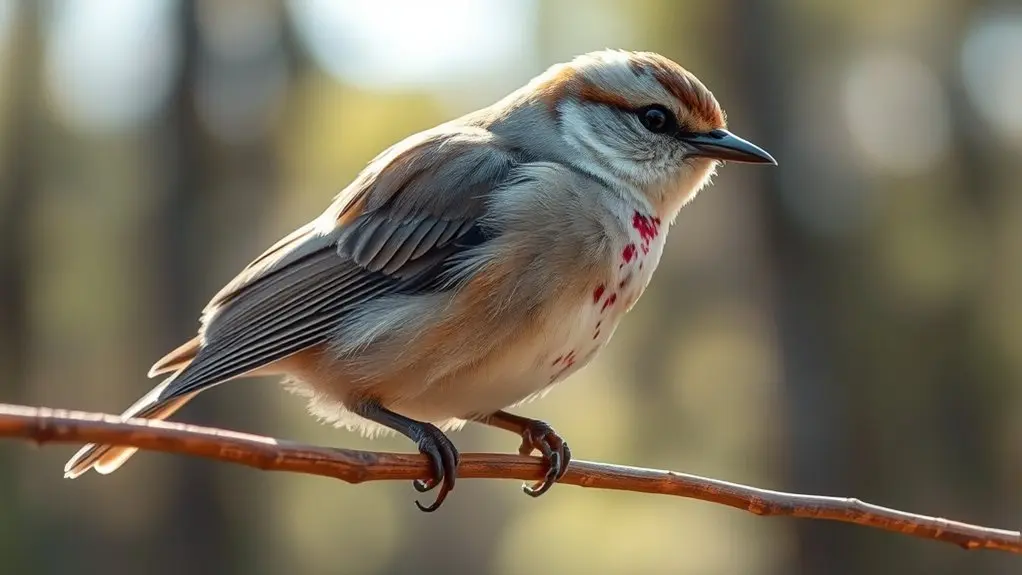
You won’t see birds experiencing menstrual bleeding like mammals do because their reproductive system doesn’t shed the uterine lining periodically. So, unlike humans and some other mammals, birds don’t have a regular cycle that involves bleeding.
While some female birds might show minor spotting around the time they lay eggs, actual visible bleeding is pretty rare. And when it does happen, it usually points to some kind of health issue rather than a normal part of reproduction.
Knowing these differences helps explain why we rarely, if ever, see signs of menstruation in birds. It’s just not part of how their bodies work.
Bleeding In Bird Reproduction
How do birds handle reproduction without the bleeding commonly seen in mammals? Birds rely on distinct avian reproductive anatomy and bird hormone regulation that promote ovulation and egg-laying without uterine lining shedding. Unlike mammals, most female birds don’t menstruate or bleed during their reproductive cycle.
Bleeding in birds usually signals injury or reproductive issues rather than a normal physiological process. Here’s a concise comparison:
| Aspect | Birds |
|---|---|
| Menstruation | Absent |
| Reproductive bleeding | Rare; linked to trauma or infection |
| Ovulation process | Egg released without uterine shedding |
| Hormonal cycle | Regulates egg production, no lining drop |
Understanding these differences clarifies why bleeding isn’t a standard reproductive feature in birds. It’s pretty interesting that their system works smoothly without that mess!
Avian Menstruation Evidence
Why don’t birds show bleeding during reproduction like mammals do? The answer lies in their reproductive anatomy and hormonal fluctuations. Unlike mammals, birds lack a uterus that sheds its lining. Instead, female birds ovulate and release eggs without the need for menstruation or bleeding.
Consider these key points regarding avian menstruation evidence:
- Birds don’t have a menstrual cycle or uterine lining to shed.
- Hormonal fluctuations occur during the laying cycle but don’t trigger bleeding.
- Eggs are either fertilized or expelled intact without blood loss.
- Scientific studies show no evidence of periodic bleeding in birds.
How Do Environmental Cues Trigger Egg Development in Birds?
You’ll find that environmental factors like daylight length and temperature play critical roles in triggering egg development in birds.
When the days get longer, it stimulates the hypothalamus to release hormones such as gonadotropin-releasing hormone (GnRH). This hormone then helps kickstart the production of other reproductive hormones.
On top of that, temperature and food availability also send important signals. They help fine-tune when and how egg formation happens, making sure everything lines up just right for the bird’s reproductive cycle.
Environmental Factors Influencing
When do birds begin the complex process of egg development? You’ll find that this process starts when environmental factors align to signal reproductive readiness. Feather molting and nest building often happen around the same time as these cues, getting birds ready both physically and behaviorally.
Key environmental factors influencing egg development include photoperiod changes, which trigger the hypothalamus to stimulate reproductive hormones like LH and FSH. Temperature variations also play a role by affecting metabolic rates and reproductive timing.
Food availability is another big one, providing the necessary nutrients for egg formation. Rainfall or other ecological signals can help synchronize breeding cycles in some species.
All these factors work together to activate hormonal pathways. This ensures egg development happens under the best conditions, maximizing reproductive success without wasting energy.
Light And Temperature Effects
Environmental cues like light and temperature play a big role in starting egg development by regulating hormonal activity in birds. Through photoperiod regulation, the hypothalamus detects lengthening daylight and triggers the release of reproductive hormones such as gonadotropins. This hormonal synchronization prompts the enlargement of ovaries, which leads to egg formation.
Temperature also influences reproductive timing by affecting resource availability and physiological readiness. This helps ensure breeding happens at the best environmental times.
Together, light and temperature cues work to time breeding seasons effectively, which maximizes chick survival rates.
What Role Do Nutrition and Season Play in Bird Egg Laying?
Although birds rely on internal hormonal signals to initiate egg laying, these signals respond directly to external factors like nutrition and seasonal changes.
Birds’ internal hormones trigger egg laying but are influenced by nutrition and seasonal changes.
Your bird’s nutritional health is vital. Adequate protein and calcium are necessary for egg production.
Seasonal cues, such as longer daylight hours and warmer temperatures, stimulate hormonal activity to trigger reproduction.
Understanding these influences helps clarify why birds time breeding to coincide with food abundance.
Consider these points:
- Nutritional deficiencies can delay or inhibit egg laying.
- Protein and calcium intake supports egg development.
- Seasonal cues regulate hormonal cycles controlling reproduction.
- Breeding aligns with periods of ideal food availability.
How Long After Mating Do Birds Lay Eggs?
Since the timing of egg laying varies a lot across bird species, understanding the interval between mating and egg laying means looking at each species’ reproductive biology. Most birds lay eggs within hours to days after mating.
For example, domestic chickens usually lay eggs about 24 to 26 hours after mating or once egg formation starts. Canaries lay eggs every other day, following their own reproductive cycle.
Pigeons are interesting because they might form the next egg before laying the current one, which causes some overlap in their reproductive events.
These differences affect nesting behaviors since birds get their nests ready based on when they expect to lay eggs. Usually, birds start incubating the eggs only after the whole clutch is laid. This helps optimize the embryos’ development.
On top of that, environmental and biological factors can change how long it takes from mating to egg laying. All in all, there’s a lot of variety in how birds time their reproduction, and mating, egg laying, and nesting are all closely connected.
What Unique Reproductive Strategies Do Birds Use?
Understanding the timing between mating and egg laying reveals just one aspect of bird reproduction. Birds use unique strategies influenced by environmental and physiological factors. This includes things like feather patterns and beak adaptations that help with reproductive success.
Think about these interesting strategies:
Some species, like pigeons, can start developing the next egg before laying the current one. This lets them reproduce quickly, one after another.
Reproductive cycles usually line up with outside cues like daylight and temperature. This helps them lay eggs at the best possible time.
Birds also have flexible strategies. They might produce multiple broods or delay egg laying depending on how much food is around. This helps make sure their offspring survive.
In some species, roles get switched up. For example, male Jacanas take care of incubating eggs and looking after the young. This shows how varied bird reproductive behaviors can be.
All these adaptations show that bird reproduction is a lot more complex than just when they lay eggs.
Why Do Bird Species’ Reproductive Timelines Vary?
When you examine different bird species, you’ll notice their reproductive timelines vary widely due to a combination of biological and environmental factors. Avian migration patterns influence when birds can reproduce, as timing must align with resource abundance. Nesting behaviors also affect reproductive pacing; species that build elaborate nests may have extended preparation phases.
Nutritional status and environmental cues like light and temperature accelerate or delay egg production. For instance, pigeons can start forming a new egg before laying the current one, shortening intervals.
| Factor | Impact on Timeline | Example Species |
|---|---|---|
| Avian migration | Synchronizes reproduction timing | Arctic Tern |
| Nesting behaviors | Lengthens preparation phase | Weaver Birds |
| Nutritional status | Accelerates egg production | Domestic Pigeons |
| Environmental cues | Modifies reproductive cycle | Songbirds |
What Bird Reproduction Teaches Us About Menstrual Differences
If you compare bird reproduction to human menstruation, you’ll see some fundamental differences that reveal how reproductive cycles can vary widely across species. Birds rely on hormonal regulation tied to egg production, not cyclical uterine lining shedding. These reproductive adaptations highlight how diverse reproductive timing can be.
Consider these key points:
- Birds don’t menstruate; their cycles focus on preparing and laying eggs rather than monthly bleeding.
- Hormonal regulation in birds responds to environmental cues, making reproductive timing flexible.
- Humans shed the uterine lining regularly, whereas birds reabsorb or retain it, showing distinct reproductive strategies.
- Studying avian adaptations reveals evolutionary pathways explaining menstrual variability among mammals.
Frequently Asked Questions
Can Male Birds Experience Hormonal Changes During Breeding Season?
Yes, you’ll notice male birds experience hormonal fluctuations during breeding season. Their bird reproductive anatomy responds to environmental cues, triggering changes like increased testosterone. This hormone boost enhances secondary sexual traits and reproductive behaviors essential for successful mating.
It’s pretty fascinating how these changes help male birds get ready for the breeding season. They basically gear up to attract mates and compete with other males. Nature really has a way of making sure the timing is just right!
How Do Birds Incubate Their Eggs After Laying?
You incubate eggs by sitting steadily, using body heat within a brood patch to maintain 99°F to 102°F. This warmth is key to making sure the embryo develops properly.
Even though birds need to fly and navigate, incubation is still super important for their reproductive success. It’s one of those essential jobs they just can’t skip.
What Happens to Unfertilized Bird Eggs?
Unfertilized bird eggs are typically laid and either discarded or consumed. You’ll notice birds maintain birdsong patterns and nest building behaviors regardless.
These activities continue to support reproduction and territory even when the eggs don’t develop. So, the birds keep up their routines as if everything is normal.
Do Birds Molt During Their Reproductive Cycle?
About 75% of bird species molt during their reproductive cycle, and this process is often timed with bird migration. You’ll notice feather coloration changes that help conserve energy and aid camouflage.
This is especially true when molting happens before or after breeding seasons. It’s pretty fascinating how birds manage their feathers to stay in top shape during these key times.
How Do Birds Care for Their Hatchlings Post-Hatching?
You’ll see parent birds use nest building techniques to protect hatchlings, often relying on feather coloration for camouflage. They frequently feed hatchlings by regurgitating food and perform distraction displays to reduce predation risk effectively.
It’s pretty amazing how they do this, right? These behaviors help keep their babies safe and well-fed during those vulnerable early days. Birds really go all out when it comes to caring for their young!
Conclusion
You might be surprised to learn that unlike mammals, birds don’t experience menstrual periods. Instead, only about 5% of bird species show any bleeding during reproduction.
This difference highlights how environmental cues, nutrition, and seasonal changes finely tune their egg-laying cycles. Understanding these unique reproductive strategies not only deepens your knowledge of avian biology but also clarifies why menstrual cycles in mammals evolved so distinctly from bird reproduction.