
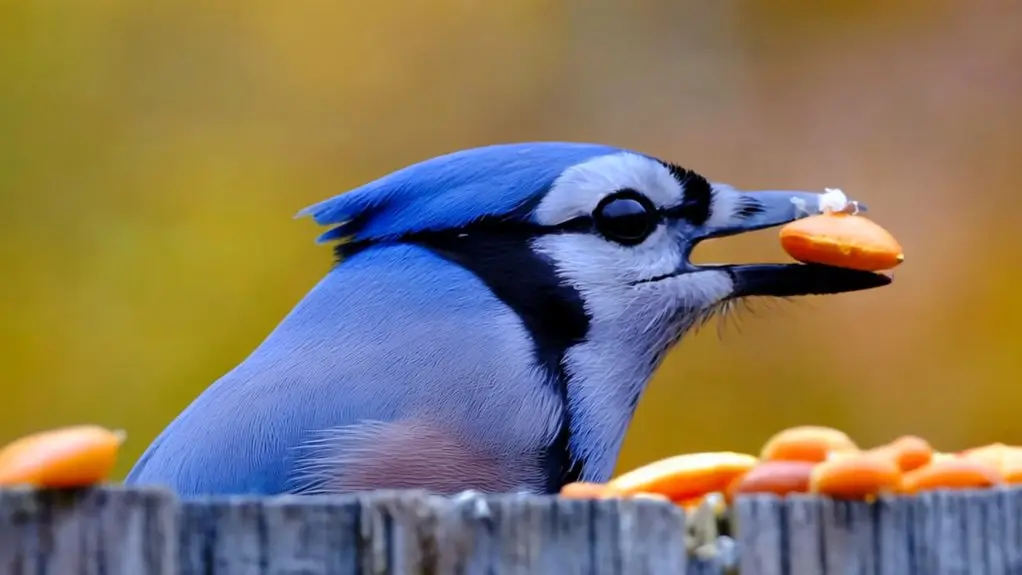
You can safely offer your bird raw, unsalted pumpkin seeds in moderation to provide essential nutrients like magnesium, zinc, and antioxidants that support immune health and feather condition. Always clean and serve seeds without shells or additives to avoid choking and health risks.
Introduce seeds gradually while keeping an eye out for any adverse reactions such as digestive upset or allergies. Proper portion control is key for balanced nutrition.
Understanding preparation and alternatives can help you optimize your bird’s diet and overall well-being. Just take it slow and enjoy seeing your feathered friend benefit!
Are Pumpkin Seeds Safe for Every Type of Bird?
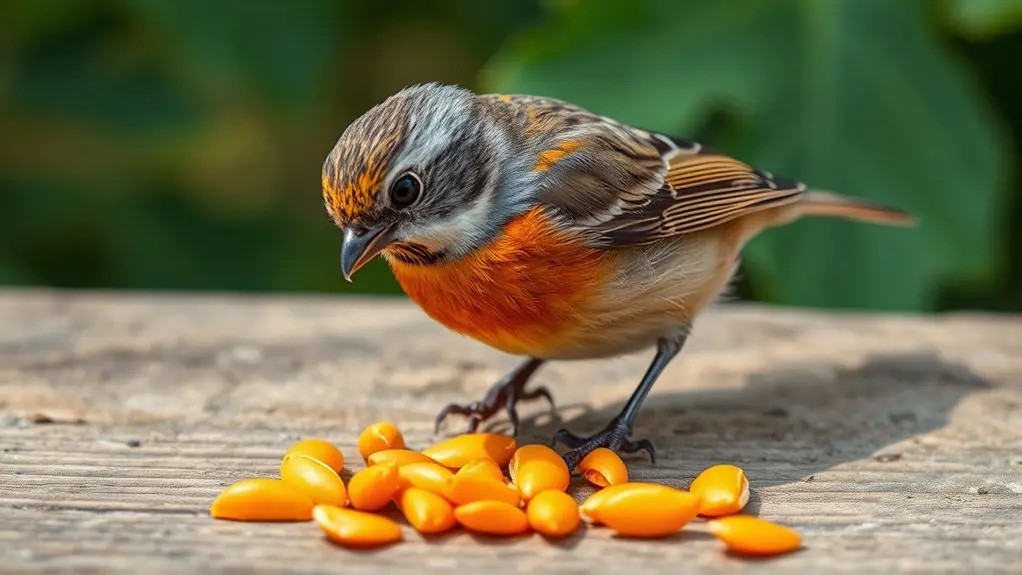
While pumpkin seeds are generally safe for most pet birds, you should always offer them in moderation and avoid any added salt or seasoning. The safety largely depends on the bird species’ digestive capability and nutrient absorption efficiency. Larger birds, like parrots, can handle raw, unsalted pumpkin seeds well, benefiting from their natural nutrient profile without risking digestive upset.
However, birds with specific dietary restrictions may not tolerate these seeds, so consulting an avian veterinarian is essential. It’s important to note that seed germination status can influence nutrient availability. Unprocessed, raw seeds maintain ideal nutrient absorption, while processed seeds might lose this advantage or introduce harmful additives.
Overfeeding can cause weight gain or digestive issues, so careful portion control ensures safety across different bird types. Just keep an eye on how your bird reacts and adjust accordingly to keep them happy and healthy!
What Nutrients Do Pumpkin Seeds Give Your Bird?
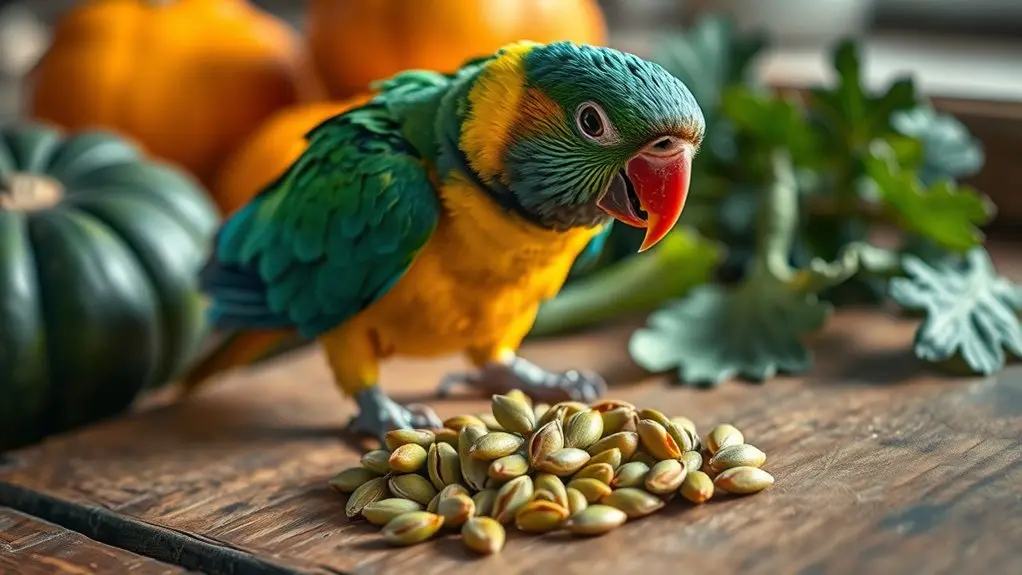
Because pumpkin seeds pack a dense array of nutrients, they can profoundly benefit your bird’s health. These seeds provide essential minerals, antioxidants, and amino acids that enhance immune function, feather quality, and energy metabolism. Proper seed storage preserves nutrient integrity, ensuring ideal nutrient absorption when fed.
Below is a summary of key nutrients pumpkin seeds offer your bird:
| Nutrient | Benefit |
|---|---|
| Magnesium, Zinc | Support immune system and energy levels |
| Vitamin E | Acts as antioxidant, reduces inflammation |
| Iron | Enhances blood health and oxygen transport |
Additionally, fiber in pumpkin seeds promotes digestive health. Including them in your bird’s diet supports overall growth and resilience. So, they really make a valuable supplement for balanced avian nutrition.
Common Risks of Feeding Pumpkin Seeds to Birds
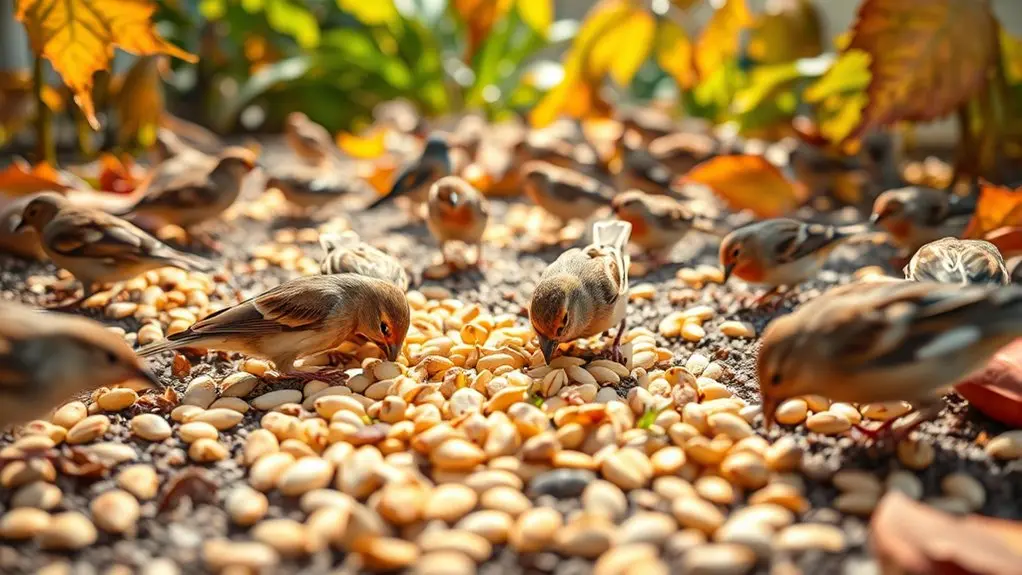
When you offer pumpkin seeds to birds, it’s good to keep in mind that some birds might have allergic reactions. These can sometimes affect their breathing or digestion.
Also, unshelled seeds can be a choking hazard, especially for smaller birds that have a harder time swallowing.
Potential Allergic Reactions
Although allergic reactions to pumpkin seeds in birds are uncommon, you should remain vigilant for symptoms like swelling, itching, or respiratory distress. These allergy symptoms indicate a sensitivity concern, as some bird species react adversely to specific proteins found in pumpkin seeds.
To minimize risks, introduce pumpkin seeds gradually while closely monitoring your bird’s response.
Early detection of any adverse reaction allows prompt intervention.
Though rare, allergic responses can be severe and require immediate attention. If you notice any signs of allergy, consult an avian veterinarian without delay.
Taking these precautions helps guarantee your bird’s safety and wellbeing when incorporating pumpkin seeds into their diet.
Choking Hazard Concerns
Beyond monitoring for allergic reactions, you should also be aware of the choking hazards pumpkin seeds can present to birds. Seeds given in large, uncut pieces pose a significant risk, especially to birds with smaller throats or those prone to choking. To mitigate this hazard, always serve pumpkin seeds cracked open or fully shelled.
Overfeeding can increase the chance of obstruction, so portion control is essential.
During bird migration periods, birds rely heavily on safe seed dispersal for energy. Choking incidents could impair their ability to feed effectively.
Supervising your bird while offering pumpkin seeds ensures they don’t swallow large pieces that could block their airway. Proper preparation and cautious feeding help maintain birds’ health and support natural behaviors like migration and seed dispersal without unnecessary risk.
How Should You Prepare Pumpkin Seeds for Your Bird?
You should thoroughly clean pumpkin seeds to get rid of any salt or coatings before giving them to your bird.
Roasting the seeds is okay, but just make sure not to add any salt, sugar, or flavorings since those can be harmful to your feathered friend.
Also, it’s best to offer pumpkin seeds in moderation so your bird doesn’t take in too much fat and stays healthy.
Cleaning And Roasting
When preparing pumpkin seeds for your bird, start by rinsing them thoroughly to remove any pulp or debris. Proper cleaning guarantees no mold or bacteria remain, promoting safe consumption.
Next, apply roasting techniques to enhance flavor and digestibility without additives. Follow these steps:
- Preheat your oven to 350°F (175°C).
- Spread the cleaned seeds on a baking sheet and roast for 10-15 minutes until lightly golden.
- Allow seeds to cool completely before serving to prevent burns or choking hazards.
For ideal seed storage, keep cooled seeds in an airtight container, away from moisture and heat. Roasting not only improves taste but also helps preserve the seeds longer.
Always serve pumpkin seeds in moderation and remove any shell fragments to protect your bird’s health.
Avoiding Added Salt
Although pumpkin seeds offer nutritional benefits, you must guarantee they contain no added salt before feeding them to your bird. Salted seeds can cause dehydration and kidney damage, especially during critical times like bird migration when birds rely on ideal hydration and organ function.
To prepare pumpkin seeds safely, rinse them thoroughly to eliminate residual salt or additives. Roasting seeds plain, without salt or seasonings, preserves their nutritional value and reduces health risks.
When purchasing, always check ingredient lists or prepare seeds yourself to ensure they’re free of added salt. During seasonal feeding, providing unsalted pumpkin seeds supports birds’ nutritional needs without introducing harmful substances.
This helps their energy demands and overall health throughout migration and other seasonal cycles.
Portion Size Guidelines
Since pumpkin seeds can pose choking hazards and digestive challenges, offering them in small, manageable portions is essential for your bird’s safety and health. Proper preparation and portion control help maintain balanced nutrition and prevent digestive issues.
When feeding pumpkin seeds, consider these guidelines:
- For small birds, provide a single crushed seed or about a teaspoon per serving. Larger birds can have slightly more, adjusted within designated Bird Feeding Zones.
- Always remove salt, seasoning, or oils before serving to avoid harmful additives.
- Store unused seeds properly in airtight containers to preserve freshness and nutrient integrity in Seed Storage.
How Many Pumpkin Seeds Can You Feed Your Bird?
Because pumpkin seeds are rich in nutrients like magnesium, zinc, and healthy fats, you can include them in your bird’s diet, but only in moderation. The number of seeds you feed depends on seed varieties and bird preferences. Larger birds can handle a few whole seeds, while smaller or delicate species require fewer seeds, ideally shelled, to prevent choking.
Always offer unsalted, unseasoned pumpkin seeds to avoid harmful additives. Feeding your bird more than a few seeds at a time risks excess fat and calorie intake, which can cause weight gain and nutritional imbalance. So, it’s best to keep portions small and safe.
Keep an eye on your bird’s response and adjust portions accordingly. Make sure pumpkin seeds complement their diet rather than take over. This balance helps maintain your bird’s overall health and follows safe feeding practices.
How to Introduce Pumpkin Seeds to Your Bird
When you start giving your bird pumpkin seeds, it’s best to do it little by little. Mix a small amount into their regular food so you can see how they react.
Keep an eye on your bird to make sure there are no tummy troubles or allergic reactions.
Taking it slow like this helps make sure the seeds are a safe and tasty treat for your feathered friend.
Gradual Feeding Approach
When introducing pumpkin seeds to your bird, start by mixing a small portion with its regular diet to help it adjust to the new texture and flavor. This gradual feeding approach supports digestive health and encourages acceptance. That’s really important for birds during periods of migration when their energy needs can change a lot.
Consider these steps: Begin with a few seeds mixed into familiar foods to reduce hesitation. Slowly increase the seed ratio over several days to prevent digestive upset.
Also, keep an eye on changes in feather coloration and overall vitality because diet actually affects these traits.
This method makes sure your bird adapts comfortably to pumpkin seeds. It helps maintain ideal nutrition, which is essential for feather coloration and migratory endurance.
Monitor Bird Reactions
After gradually incorporating pumpkin seeds into your bird’s diet, closely observing its reactions provides valuable insight into how well it adapts to the new food. Monitoring helps assess bird dietary diversity and the efficiency of seed digestion processes.
Watch for positive signs like curiosity and excitement, but also note any allergic reactions or behavioral changes. Use positive reinforcement to encourage acceptance while ensuring seeds are unsalted and clean.
| Observation | Positive Indicators | Negative Indicators |
|---|---|---|
| Behavior | Interest, active eating | Lethargy, avoidance |
| Droppings | Normal consistency | Diarrhea, unusual color |
| Physical Signs | Healthy feathers | Swelling, labored breathing |
| Appetite | Steady or increased | Refusal to eat |
| Digestive Response | Efficient seed digestion | Vomiting, indigestion |
This approach supports safe integration of pumpkin seeds into your bird’s diet. It’s a simple way to make sure your feathered friend stays happy and healthy.
Why Avoid Salted or Flavored Pumpkin Seeds
Although pumpkin seeds are a nutritious treat for birds, salted or flavored varieties pose significant health risks because of their high sodium content and added artificial additives. You should avoid these seeds since birds have a much lower tolerance for salt than humans. The excessive salt can lead to dehydration, electrolyte imbalance, and kidney damage.
Plus, artificial additives and preservatives found in flavored seeds aren’t safe for birds to eat.
Here’s why you should steer clear of salted or flavored pumpkin seeds:
- High salt content disrupts birds’ fluid balance, causing dehydration and kidney strain.
- Artificial additives may trigger toxic reactions or digestive issues.
- Excessive sodium intake can result in severe health complications, including organ damage.
Do Pumpkin Seeds Help Improve Your Bird’s Feather Health?
Because pumpkin seeds contain essential nutrients like zinc and omega-3 fatty acids, they can play a significant role in improving your bird’s feather health. Zinc is vital for feather nourishment, aiding in the maintenance and growth of healthy plumage.
The omega-3 fatty acids found in pumpkin seeds enhance feather quality, contributing to a natural shine and durability.
Additionally, antioxidants in pumpkin seeds help reduce inflammation and support feather regeneration after damage.
When you provide unsalted, raw pumpkin seeds in moderation, you deliver seed benefits that promote feather growth and repair without harmful additives.
Incorporating pumpkin seeds thoughtfully into your bird’s diet can therefore support the structural integrity and appearance of feathers. This ensures ideal feather health through targeted nutritional support.
Best Healthy Alternatives to Pumpkin Seeds for Bird Treats
When you want to diversify your bird’s diet, several healthy alternatives to pumpkin seeds can provide essential nutrients without excessive fat. Offering a seed variety ensures nutritional balance and supports overall bird health. Consider these three options:
- Safflower Seeds – High in protein and low in fat, they closely match pumpkin seeds’ nutritional profile.
- Sunflower Seeds – Rich in essential fatty acids and vitamins, but use sparingly due to their higher fat content.
- Dried Fruits (Cranberries, Apricots) – Provide natural sugars and antioxidants, enhancing dietary diversity.
Try to incorporate these alternatives in moderation, avoiding added sugars, salts, or preservatives. This approach promotes a balanced diet and prevents nutrient overload.
That way, your bird gets a varied and healthful treat selection beyond pumpkin seeds.
Signs Your Bird Might Have an Adverse Reaction to Pumpkin Seeds
Including pumpkin seeds and their alternatives in your bird’s diet can offer valuable nutrients, but it’s important to monitor how your bird responds to these treats. Be aware of bird dietary restrictions and guarantee proper seed storage to prevent contamination.
Signs of an adverse reaction include vomiting, diarrhea, lethargy, and abnormal stool consistency or increased droppings. Allergic responses may show up as swelling or hives. Respiratory distress like labored breathing or wheezing also warrants concern.
Watch for vomiting, diarrhea, lethargy, swelling, or breathing issues as signs of adverse reactions in your bird.
Immediate veterinary attention is vital if your bird exhibits tremors or seizures after consuming pumpkin seeds. Observing these symptoms promptly helps you manage your bird’s health effectively.
That way, you can adjust their diet as needed to prevent complications related to pumpkin seed consumption.
Frequently Asked Questions
Can Pumpkin Seeds Help With a Bird’s Digestive Health?
Yes, pumpkin seeds can support your bird’s digestive health by offering nutritional benefits like fiber and magnesium. Including them in bird seed varieties, in moderation, promotes regular digestion and overall gastrointestinal function effectively.
They’re a great addition to your bird’s diet because fiber helps keep things moving smoothly in the digestive tract. Plus, magnesium plays a role in muscle function, which includes the muscles in the digestive system.
Just remember, moderation is key. Too many pumpkin seeds can lead to an upset stomach or other issues, so it’s best to offer them as part of a balanced diet.
Are Pumpkin Seeds Suitable for Baby Birds or Chicks?
You can feed baby birds pumpkin seeds using careful feeding techniques. Always grind or crush the seeds for safe seed preparation. Offer them unsalted and unseasoned in moderation to avoid digestive issues or nutritional imbalance.
It’s important to be gentle and patient when introducing new foods. Remember, little ones have sensitive tummies, so keep portions small and observe how they react. This way, you help ensure they stay healthy and happy.
How Often Should Pumpkin Seeds Be Included in a Bird’s Diet?
You should include pumpkin seeds in your bird’s diet once or twice weekly as dietary supplements. This helps keep their seed variety interesting and stops them from getting too much fat.
A balanced diet supports your bird’s overall health and keeps them feeling great. So, think of pumpkin seeds as a little treat that adds nutritional value without going overboard.
Can Pumpkin Seeds Prevent Parasites in Wild Birds?
Like a natural shield, pumpkin seeds can help prevent parasites in wild birds by complementing bird seed varieties during seasonal feeding. Their cucurbitacin content supports gut health.
But you shouldn’t rely solely on them for parasite control. They work best as part of a balanced approach to feeding and caring for wild birds.
Do Pumpkin Seeds Affect a Bird’s Behavior or Energy Levels?
You’ll find that pumpkin seeds, rich in bird nutrition and seed benefits, can slightly boost energy levels if overfed.
But moderation is key to preventing hyperactivity or lethargy. This helps ensure balanced behavior and overall health in birds.
Conclusion
You might think pumpkin seeds are the ultimate bird superfood, but remember, they’re a treat, not a mainstay! Feeding your feathered friend too many could turn their feathers into a pumpkin patch disaster.
Stick to small amounts, avoid salted or flavored seeds, and watch for any adverse reactions. When done right, pumpkin seeds can boost nutrients and feather health.
But moderation and preparation are key to keeping your bird thriving scientifically and safely.