
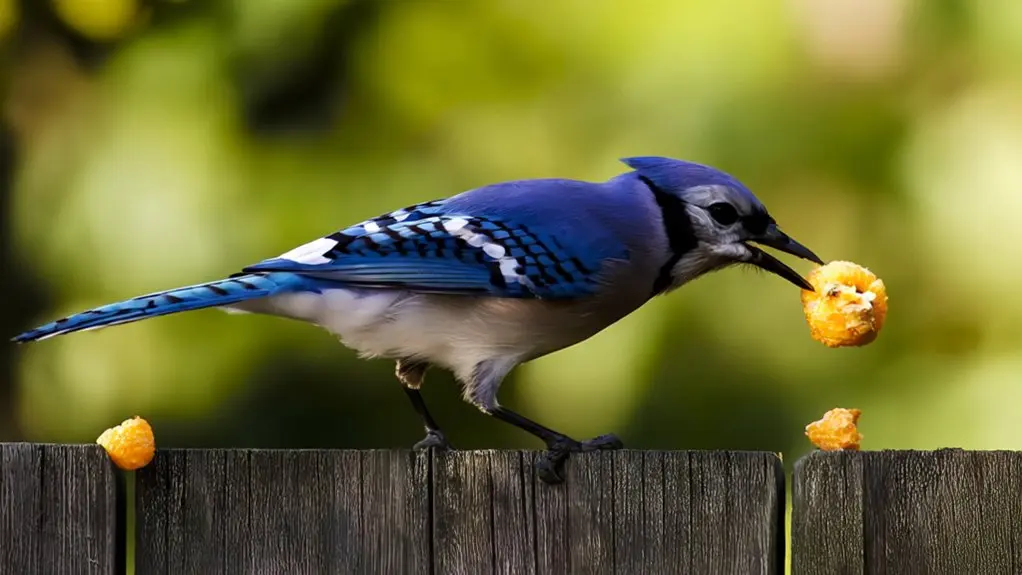
You can give your bird popcorn safely, but only plain, air-popped kernels without salt, butter, or additives. Avoid unpopped or partially popped kernels because they can be choking hazards and might damage your bird’s beak.
Popcorn offers minerals and fiber, which help support digestion and provide some enrichment when given in small amounts. Just be careful with seasoned or greasy popcorn since that can harm your bird’s health.
Managing portion size and keeping an eye out for any adverse reactions is really important. Keep exploring this guide to understand all the benefits and risks of popcorn for your feathered friend.
What Types of Popcorn Are Safe for Birds
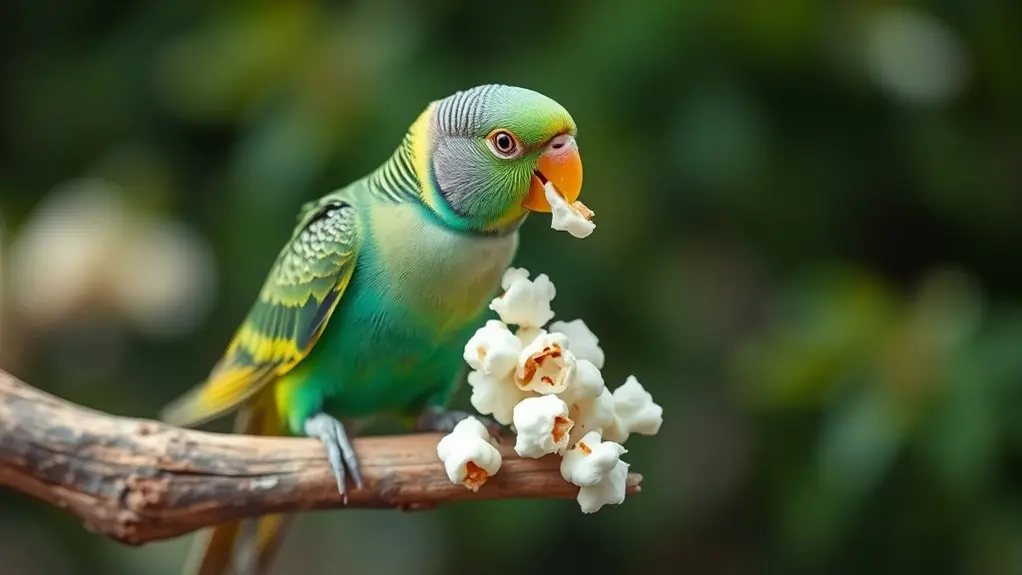
When offering popcorn to birds, you should only provide plain air-popped kernels without any added salt, butter, or flavorings. Popcorn seasoning, including salt and artificial flavorings, can be toxic or harmful to avian health.
Avoid microwave popcorn, as the popcorn packaging often contains chemicals and additives unsafe for birds.
Make certain the popcorn is fully popped, as unpopped kernels can pose choking hazards.
Plain, unsalted popcorn offers a safe treat option when given in moderation. Carefully check popcorn packaging labels to confirm no harmful ingredients are present.
By selecting only plain, air-popped popcorn and avoiding any popcorn seasoning or flavored varieties, you minimize risks and provide a safe snack that aligns with birds’ dietary needs.
It’s a simple way to treat your feathered friends without any worries.
What Risks Do Unpopped Kernels Pose to Birds
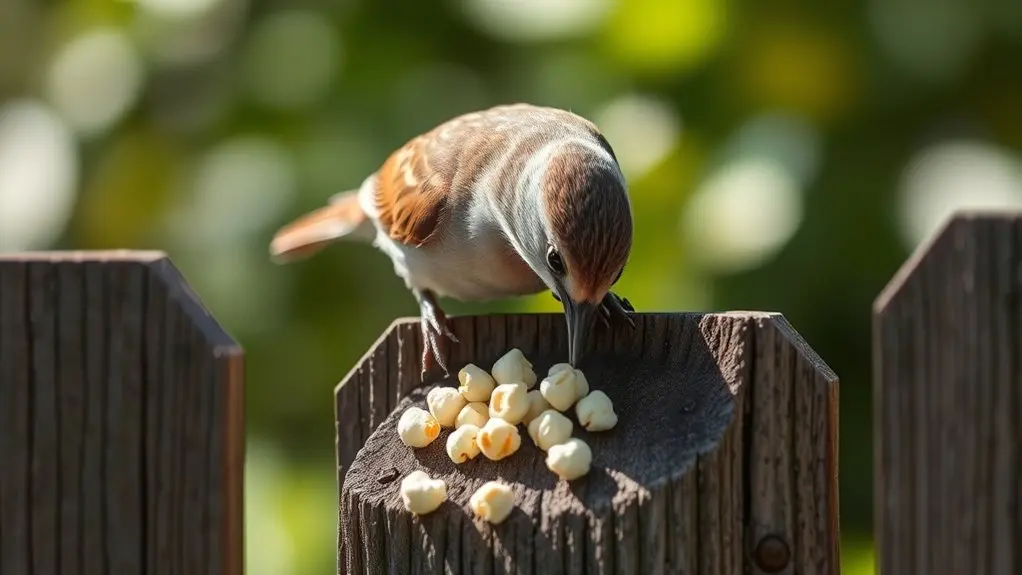
Although unpopped popcorn kernels might seem harmless, they actually pose significant risks to birds, especially smaller ones. These hard kernels can cause choking hazards and even damage a bird’s beak if bitten.
Eating them might lead to gastrointestinal blockages or injuries because of their sharp edges. This can mess with a bird’s digestion and overall health.
When birds feel uncomfortable, they might struggle to do important things like flying and grooming their feathers. Both of these are super important for their survival and well-being.
If their flight is affected, escaping from predators becomes much harder. And if grooming suffers, it can impact feather condition, insulation, and waterproofing.
Why Plain Air-Popped Popcorn Is Best for Birds
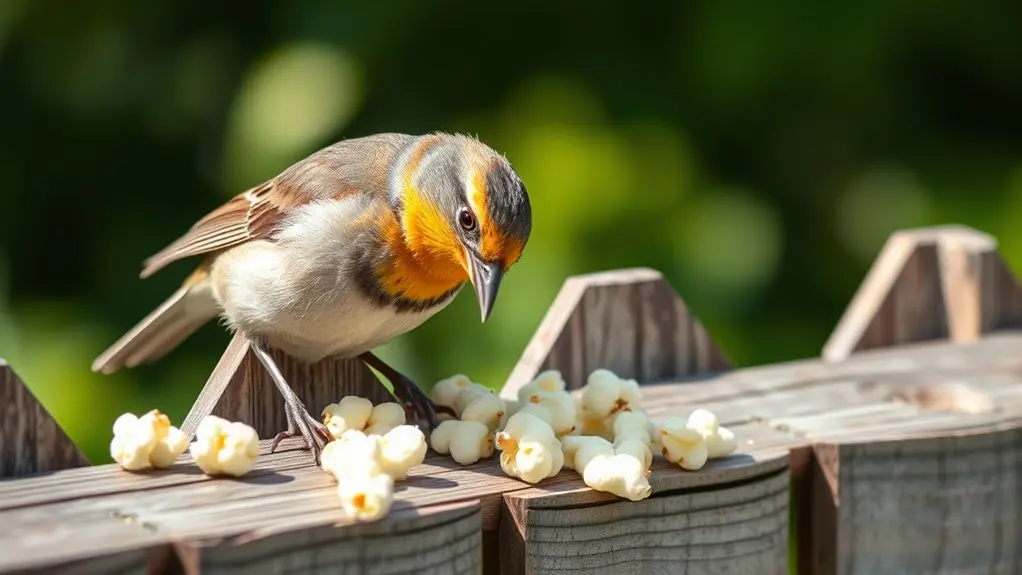
You should go for plain air-popped popcorn for your birds because it gives them important minerals like magnesium, manganese, and zinc without any added fats or salts.
Plus, skipping the butter and seasonings helps keep them safe from harmful stuff that could mess with their health.
This simple way of preparing popcorn isn’t just healthy but also offers a low-calorie treat that encourages your birds to forage naturally.
It’s a great, safe way to add some fun and nutrition to their day!
Nutritional Benefits Overview
Since birds require a balanced diet to maintain ideal health, offering plain air-popped popcorn can serve as a beneficial occasional treat. It provides essential minerals like magnesium, manganese, and zinc, along with dietary fiber that aids digestion.
Given popcorn allergies and dietary restrictions, plain air-popped popcorn minimizes health risks by avoiding additives. Its low fat and protein content makes it a light, safe enrichment option. Just be sure to avoid unpopped kernels to prevent choking hazards.
| Nutrient | Function | Benefit to Birds |
|---|---|---|
| Magnesium | Enzyme function | Supports metabolism |
| Manganese | Bone formation | Enhances skeletal health |
| Zinc | Immune response | Strengthens immunity |
| Dietary Fiber | Digestive health | Promotes gut motility |
| Low Calories | Weight management | Prevents obesity |
Avoiding Harmful Additives
When offering popcorn to birds, choosing plain air-popped varieties is essential because additives like salt, butter, and flavored coatings can cause serious health problems, including pancreatitis and sodium poisoning. You should carefully read popcorn packaging to confirm the absence of these harmful substances.
Birds have specific dietary restrictions that exclude high sodium and fat content, making plain popcorn a safer option. Also, unpopped kernels can injure a bird’s beak or pose choking hazards, so only fully popped kernels are appropriate.
Plain air-popped popcorn provides a low-calorie treat rich in minerals without introducing artificial ingredients or seasonings that could be toxic.
Why Buttered or Salted Popcorn Is Bad for Birds
Buttered or salted popcorn poses significant health risks to birds because of its high fat and sodium content. These additives can cause pancreatitis and sodium poisoning, which messes with important bodily functions.
Too much salt leads to dehydration and throws off their electrolyte balance. This makes it harder for birds to stay hydrated, which is really important for their nesting habits.
Plus, the greasy texture can cause choking or blockages in their digestive system. That can make it tough for birds to move around and socialize.
The flavorings and seasonings might irritate their digestive tract or even cause toxic reactions, which only makes things worse.
Birds need to be in good physical shape to socialize and nest successfully. So, giving them buttered or salted popcorn can really hurt those natural behaviors.
It’s best to avoid these harmful additives to keep birds healthy and happy.
How Popcorn Can Benefit Your Bird’s Health
You’ll find that plain, air-popped popcorn is a great low-calorie treat for your bird. It contains essential minerals like magnesium, manganese, and zinc, which help support your bird’s metabolic functions and overall health.
The best part? It doesn’t come with excess fat or calories. So, when you add popcorn to your bird’s diet in moderation, it can offer some nice variety without throwing off their balanced nutrition.
Nutritional Value Overview
Popcorn offers several nutritional benefits that can support your bird’s health when given appropriately. Plain air-popped popcorn is low in calories and contains dietary fiber, which aids digestive function. This is especially important during energy-intensive times like bird migration.
The fiber helps maintain gut motility, ensuring efficient nutrient absorption needed for sustained flight. Plus, popcorn provides small amounts of essential minerals such as magnesium, manganese, and zinc. These minerals contribute to metabolic processes and immune defense.
During nest building, birds need good nutrition to fuel physical activity and tissue repair. Popcorn’s trace minerals can help supplement their overall mineral intake.
When offered in moderation, popcorn makes a safe, enriching treat that supports your bird’s nutritional needs without too many calories or harmful additives.
Essential Minerals Provided
Although often overlooked as a treat, plain air-popped popcorn provides essential minerals like magnesium, manganese, and zinc that can enhance your bird’s health.
Magnesium supports bone strength and muscle function, which is crucial during bird migration when physical demands increase.
Manganese contributes to enzyme activity and metabolic processes, helping your bird efficiently convert nutrients into energy.
Zinc plays a key role in immune defense and cellular repair. This helps maintain optimal feather coloration and overall vitality.
Offering popcorn in moderation can supplement your bird’s mineral intake and support physiological functions tied to endurance and plumage quality.
While popcorn shouldn’t replace a balanced diet, its mineral content can be a beneficial addition.
This is especially true during periods requiring enhanced nutrition, like migration or molting.
Low-Calorie Treat Benefits
When offered in moderation, plain air-popped popcorn serves as a low-calorie treat that supports your bird’s health without contributing excessive calories. It contains essential minerals like magnesium, manganese, and zinc, which aid metabolic processes and immune function.
Its fiber content promotes digestion, helping maintain gut motility.
Plus, the light texture encourages natural foraging behavior, providing enrichment. However, you must avoid unpopped kernels to reduce choking hazards.
Be mindful of potential popcorn allergies; although rare, some birds may exhibit sensitivity.
Also, leaving popcorn exposed outdoors can increase pest attraction, which poses health risks to your bird’s environment. Ensuring popcorn is plain and fully popped minimizes these risks.
This way, you can safely incorporate this treat as part of a balanced diet for your feathered companion.
When Should You Avoid Giving Popcorn to Birds?
If your bird’s diet must remain strictly controlled due to health conditions, you should avoid giving it popcorn, especially varieties containing butter, salt, or seasonings. These additives can lead to pancreatitis and sodium poisoning.
You should also refrain from feeding unpopped or partially popped kernels since they pose choking hazards and may damage your bird’s beak.
Additionally, avoid popcorn if your bird is small or young because their delicate throats and digestive systems are more vulnerable.
Ensuring your bird’s diet supports ideal feather coloration and energy demands, especially during bird migration, is critical. Introducing harmful additives can impair these physiological processes.
If you’re uncertain whether popcorn is plain and air-popped, it’s safer to avoid it altogether to prevent exposure to potentially toxic substances.
How Much Popcorn Is Safe to Feed Your Bird
Because birds have sensitive digestive systems and small throats, you should limit popcorn to only a few plain, air-popped pieces at a time.
The popcorn texture must be soft enough to prevent choking but firm enough to avoid dental damage, so removing unpopped kernels is essential.
Overfeeding increases the risk of excessive salt intake, which can cause sodium poisoning.
Following proper bird feeding etiquette means treating popcorn as an occasional enrichment snack, not a dietary staple.
Avoid butter, oil, or seasoning to minimize health risks.
Temperance ensures your bird benefits from variety without compromising health.
Tips for Preparing and Offering Popcorn to Birds
Ensuring your bird’s safety and health starts with proper preparation of popcorn before offering it as a treat. Use only plain, air-popped popcorn without any butter, salt, or popcorn flavorings, as additives can harm birds. Remove unpopped kernels to prevent choking and dental damage, especially in small or young birds.
Break popcorn into small, manageable pieces to make it easier and safer for your bird to eat. This also helps reduce the risk of swallowing problems.
Store popcorn in a dry, airtight container to keep it fresh and avoid mold or pests.
Try to offer popcorn as an occasional treat rather than a regular part of your bird’s diet. This helps maintain a good nutritional balance.
How to Watch for Negative Reactions to Popcorn
You’ll want to keep a close eye on your bird after it eats popcorn, especially for any digestive problems like vomiting or diarrhea.
Also, watch out for changes in behavior—things like your bird seeming more tired than usual or showing signs of discomfort might mean it’s not reacting well.
If you do notice any physical symptoms or behavior that suggest your bird is upset, it’s best to take the popcorn away right away.
Signs Of Digestive Issues
When birds consume popcorn, they may develop digestive issues that show up through specific signs you should watch closely. These symptoms often affect their feather grooming and nesting behavior, which can be a sign they’re feeling uncomfortable or sick.
Pay attention to decreased appetite or refusal to eat, which can disrupt their normal feather grooming routines. Vomiting or regurgitation might also happen, and this can change how they behave around their nests.
Diarrhea or abnormal stool consistency is another sign, pointing to gastrointestinal distress.
You might notice lethargy or tail bobbing, both of which show the bird is uncomfortable. Bloating or abdominal swelling is a serious condition that needs veterinary care right away.
Catching these signs early helps prevent more serious health problems. And if you see symptoms sticking around or getting worse, don’t wait—get your bird to a vet for a proper diagnosis and treatment.
Keeping an eye on these signs means you can help your bird stay healthy after eating popcorn.
Behavioral Changes To Monitor
Digestive symptoms often coincide with behavioral changes that can signal negative reactions to popcorn in birds. You should closely observe your bird for vocal changes, such as unusual squawks or decreased singing, which may indicate discomfort.
Monitor its feather grooming habits; excessive feather plucking or neglect could suggest stress or underlying health issues triggered by popcorn ingestion.
Watch for increased agitation or lethargy, both potential signs of adverse reactions. Additionally, be alert to signs of choking or difficulty swallowing, especially if unpopped kernels are present.
Respiratory symptoms like sneezing or nasal discharge also warrant attention.
By systematically tracking these behavioral changes alongside digestive signs, you can more effectively identify negative responses and ascertain your bird’s safety when introducing popcorn as a treat.
Just keep an eye on your feathered friend and trust your instincts if something seems off.
Other Treats Your Bird Will Love
Although birds primarily rely on their regular diet for nutrition, offering a variety of healthy treats can enhance their well-being and provide enrichment. When introducing new foods, consider bird safety guidelines to prevent issues like popcorn allergies or digestive upset.
You can diversify your bird’s diet safely with fresh fruits such as apples and berries for natural vitamins. Leafy greens like spinach and kale are rich in minerals. Cooked whole grains or pasta provide energy without additives.
Nuts and seeds, including sunflower seeds and millet, should be given sparingly due to fat content. Fresh herbs like parsley, cilantro, and basil offer antioxidants and flavor.
These options support nutritional balance and stimulate natural foraging behaviors. This helps promote both health and mental engagement in your bird.
Frequently Asked Questions
Can Baby Birds Safely Eat Popcorn?
You shouldn’t feed baby birds popcorn because their bird nutritional needs require easily digestible food. Popcorn’s nutritional value is high in starch and can include potential additives that might harm their developing systems.
It can also pose choking risks, which is something you definitely want to avoid. So, it’s best to stick to foods that are safe and easy for baby birds to eat.
Does Popcorn Affect Bird Digestion Differently by Species?
You’ll find popcorn affects bird digestion differently by species due to varied bird nutritional needs. Unflavored popcorn poses fewer risks, but added popcorn flavoring effects can disrupt gut health, especially in sensitive or specialized dietary birds.
Different birds process popcorn in their own unique ways. Some can handle plain popcorn just fine, while others might struggle with any additives. So, it’s always a good idea to know what your bird can safely eat before sharing snacks.
How Often Can Popcorn Be Introduced to a Bird’s Diet?
Think of popcorn as a rare comet streaking across the night sky. It’s exciting but should be an infrequent treat.
For a bird’s nutritional balance and safety, introduce popcorn no more than once or twice a week. This helps avoid health risks and keeps their diet quality on point.
Can Popcorn Cause Allergies in Birds?
Yes, popcorn can cause allergies in birds because of certain additives. This can impact your bird’s nutritional health and overall well-being.
It’s best to prioritize the safety of popcorn ingredients by only offering plain, unseasoned popcorn. Always keep an eye on your bird for any signs of allergic reactions. Being cautious helps keep your feathered friend safe and happy.
Is Microwave Popcorn Ever Safe for Birds?
You shouldn’t give birds microwave popcorn. Over 90% of it contains harmful chemicals.
If you think about popcorn nutrition and what birds like to eat, it’s best to stick to plain, air-popped popcorn. No additives, no extra stuff.
That way, you can keep your feathered friends safe and make sure their diet stays natural and healthy.
Conclusion
When offering popcorn to your bird, remember that plain, air-popped kernels are the gold standard. They’re safe and can be beneficial in moderation. Avoid buttered or salted varieties, as these can harm your feathered friend.
Always watch closely for any adverse reactions. Even safe treats can upset delicate systems. Like a well-tuned instrument, your bird’s health depends on careful balance.
So, use popcorn wisely as a crunchy, occasional delight in their varied diet. It’s all about keeping things balanced and enjoyable for your bird.