
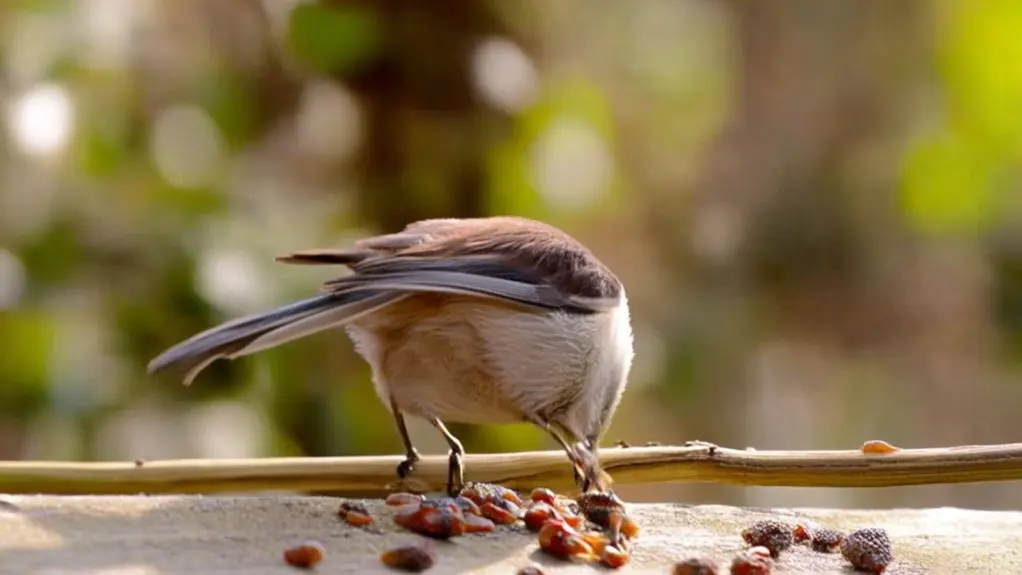
You can offer birds poppy seeds in small, controlled amounts since they’re energy-dense and favored by many seed-eating species. However, poppy seeds contain trace opiates that may cause sedation or toxicity if overfed, especially in sensitive birds like parrots or canaries.
Limit servings to occasional treats and use pesticide-free seeds to reduce risks. Understanding species tolerance, safe quantities, and alternatives can help you provide balanced nutrition while avoiding potential health issues.
What Are Poppy Seeds and Why Birds Eat Them
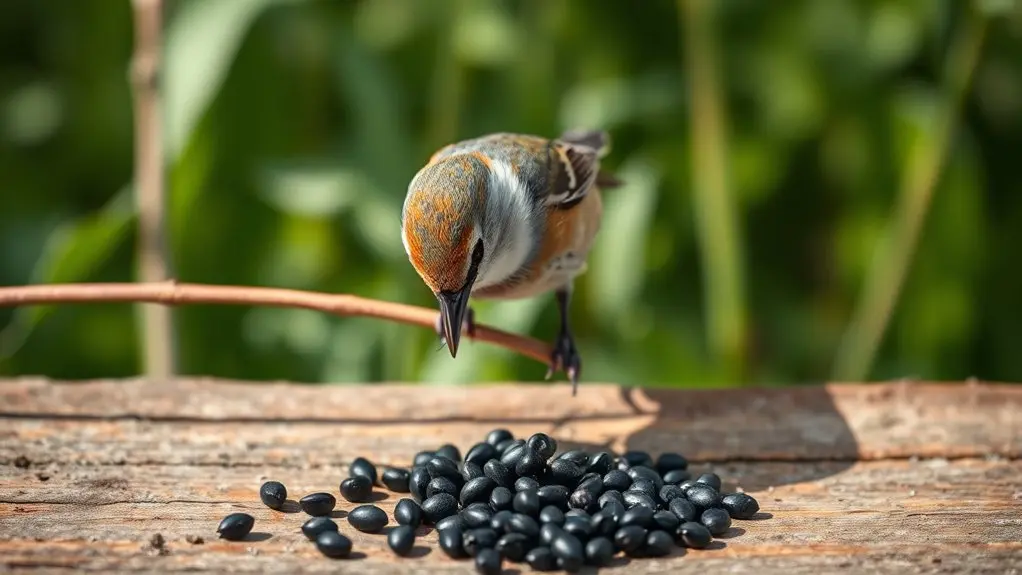
Although poppy seeds come from the opium poppy plant, Papaver somniferum, birds primarily eat them because of their high fat and oil content. This offers a quick and efficient energy source.
Birds favor poppy seeds for their rich fat content, providing a fast, efficient energy boost.
During poppy cultivation, farmers carefully monitor the development of seed pods to optimize seed harvesting. This ensures seeds retain their nutritional quality.
Poppy seeds are small, oil-rich, and naturally appealing to birds seeking energy-dense food. If you look at birdseed mixes, you’ll notice poppy seeds included as a supplement or treat. This shows their value in avian diets.
The seed harvesting process influences the seeds’ nutritional profile, making them a reliable energy source in natural and cultivated environments. Understanding this helps clarify why poppy seeds play a specific role in bird feeding ecology.
Are Poppy Seeds Safe for Birds?
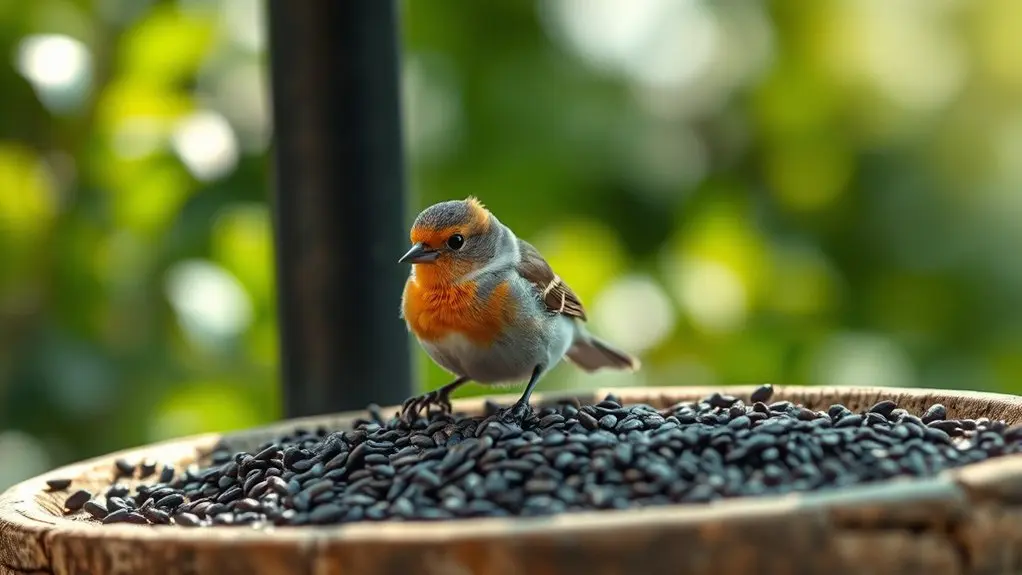
You should know that poppy seeds contain small amounts of opiates, which can be harmful if birds eat too many. So, it’s really important to offer these seeds in moderation.
It’s also a good idea to think about safer seed options to keep your birds healthy.
Poppy Seed Toxicity Risks
How do poppy seeds affect birds, and are they safe to include in their diet? Poppy seeds contain alkaloids that may cause sedation and opioid-like effects in birds, posing toxicity risks. While they play a role in seed dispersal and offer nutritional benefits to some species, their safety for birds remains uncertain due to limited research.
Eating large quantities can lead to adverse health effects, so it’s best to avoid feeding them to your birds.
| Factor | Details |
|---|---|
| Toxic Compound | Alkaloids causing sedation |
| Health Risks | Opioid-like effects at high doses |
| Seed Dispersal Role | Important in nature |
| Nutritional Benefits | Limited, overshadowed by risks |
Avoid poppy seeds to protect your bird’s health.
Safe Seed Alternatives
When considering seed options for your bird’s diet, it’s important to recognize that poppy seeds contain opium alkaloids which can be toxic in large amounts. To support your bird’s health during critical periods like bird migration and nesting habits, opt for safer seed alternatives.
Millet, sunflower seeds, and hemp seeds provide essential nutrients without the risk of toxicity or digestive complications linked to poppy seeds. These alternatives also reduce choking hazards and promote beneficial energy levels needed for migration endurance and successful nesting.
Before introducing any new seed type, consult a veterinarian or avian nutrition expert to ensure it aligns with your bird’s specific dietary needs. Prioritizing non-toxic seeds helps maintain your bird’s wellbeing throughout its natural life cycles and behavioral patterns.
Feeding Moderation Guidelines
While safer seed alternatives like millet and sunflower seeds are recommended for consistent feeding, poppy seeds can still play a role in your bird’s diet if offered with care. Due to their high oil content and trace opiates, controlling feeding frequency and portion size is essential to avoid obesity and nutritional imbalance.
Use poppy seeds sparingly as treats or supplements, ensuring they are plain and additive-free. It’s all about balance and moderation to keep your bird healthy and happy.
| Aspect | Recommendation | Reason |
|---|---|---|
| Feeding Frequency | Occasional (1-2x/week) | Prevents overconsumption |
| Portion Control | Small amounts (a pinch) | Limits oil intake |
| Seed Type | Plain poppy seeds | Avoid additives |
| Diet Balance | Mix with fruits, seeds | Ensures nutritional variety |
| Monitoring | Observe bird health | Detects adverse reactions |
What Are the Risks of Feeding Poppy Seeds to Birds?
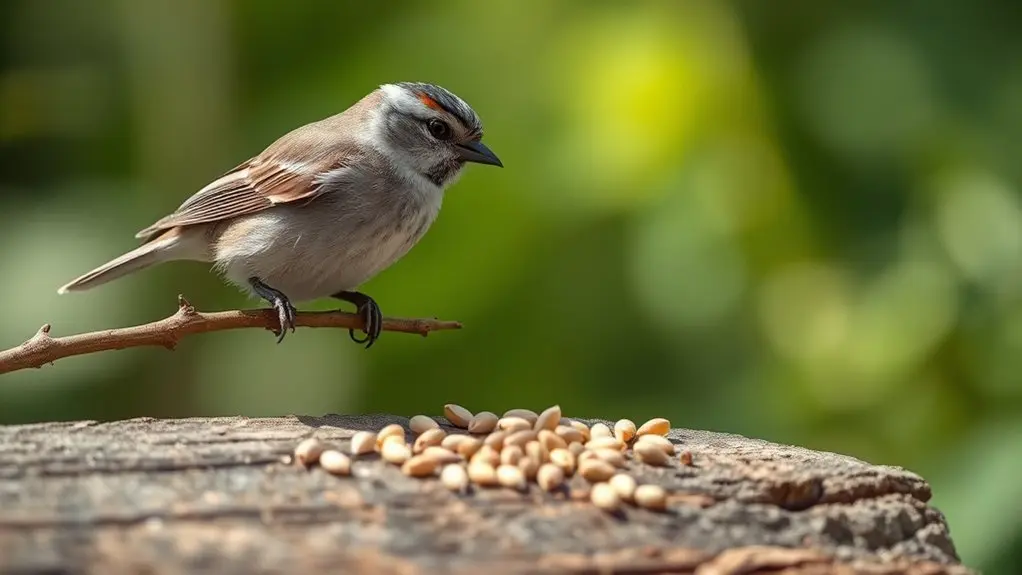
Although poppy seeds contain only trace amounts of opiates, feeding them to birds in large quantities can cause sedation or other toxic effects. When birds forage for seeds, they naturally engage in seed dispersal, which supports ecological balance.
However, introducing poppy seeds into their diet may disrupt this process due to potential health risks. Large ingestion can lead to toxicity, impairing normal behaviors such as foraging and reducing their ability to disperse seeds effectively.
Additionally, poppy seeds may carry pesticide residues from cultivation, posing further poisoning risks. While small amounts may not cause immediate harm, consistent feeding increases exposure to these dangers.
As a result, to maintain safe bird foraging habits and ensure healthy seed dispersal, it’s advisable to avoid offering poppy seeds to birds altogether. It’s better to stick with safer, natural seed options that support their health and the environment.
How Much Poppy Seed Is Safe for Birds?
Since poppy seeds contain trace amounts of opioid compounds, you should limit their use in bird diets to small quantities to prevent any adverse effects. Considering their seed size and nutritional value, poppy seeds are better served as an occasional treat rather than a staple food.
Poppy seeds contain trace opioids, so offer them sparingly as an occasional treat, not a dietary staple.
Here’s how to safely incorporate them:
- Offer only a few seeds per feeding session, adjusting the amount to your bird’s size.
- Use poppy seeds sparingly because they’ve low nutritional value and may contain opioid compounds.
- Avoid feeding them regularly to prevent sedation or digestive upset.
- It’s a good idea to consult an avian veterinarian before introducing poppy seeds, just to be safe.
Bird Species That Can Safely Eat Poppy Seeds
You can safely offer small amounts of poppy seeds to seed-eating birds like finches, doves, and canaries without much risk. These birds generally handle poppy seeds just fine.
That said, it’s a good idea to avoid giving poppy seeds to species that are sensitive to opiates or have delicate digestive systems.
Knowing which birds can tolerate these seeds helps keep them healthy and happy.
Seed-Eating Bird Species
Which bird species can safely consume poppy seeds as part of their diet? Several seed-eating birds tolerate poppy seeds well, especially when sourced from safe poppy seed cultivation free of pesticides. These species benefit from the fats and oils in poppy seeds, which provide energy essential during bird migration patterns.
Common seed-eating species include:
- Finches, known for their robust seed digestion.
- Canaries, which readily consume various small seeds.
- Sparrows, frequent foragers that include poppy seeds naturally.
- Cardinals, which supplement their diet with mixed seeds.
While poppy seeds offer nutritional value, they should complement rather than replace a balanced diet. It’s important to ensure seeds are uncontaminated to support bird health during critical migratory and feeding periods.
Birds To Avoid
While several seed-eating birds like finches and canaries can safely consume poppy seeds in moderation, not all species tolerate them well. Birds undergoing migration may experience altered metabolism, which affects how they process poppy seeds’ trace opiates.
Species with vibrant feather coloration, such as parrots, are particularly sensitive and should avoid poppy seeds unless under veterinary supervision. Wild birds like sparrows tolerate small amounts, but excessive intake risks toxicity.
| Bird Species | Tolerance Level | Notes |
|---|---|---|
| Finches | Safe in moderation | Seed-eaters, tolerate poppy seeds |
| Parrots | Low tolerance | Sensitive due to metabolism changes |
| Sparrows | Moderate tolerance | Risk increases during migration |
Always verify seeds are pesticide-free before feeding.
How to Spot Poppy Seed Poisoning in Birds
Although poppy seeds may seem harmless, they contain opiates like morphine that can poison birds if ingested in significant amounts. Because poppy seeds are grown widely, they sometimes end up in bird diets, which can affect their health and dietary variety. So, it’s important to keep an eye out for signs of poisoning since things can get serious quickly.
To spot poppy seed poisoning in birds, look for a few key signs. First, lethargy and loss of coordination, which show the nervous system is affected. You might also see tremors and dilated pupils, both common signs of opiate toxicity.
Breathing might get rapid, and birds can have gastrointestinal issues too, showing the poison is impacting their whole body. In females, you may notice a drop in egg production, which points to reproductive problems.
If you think a bird has been poisoned, getting veterinary help right away is super important. Without quick treatment, sudden death can happen, so don’t wait to act.
Birds That Should Avoid Poppy Seeds
You should be careful when giving poppy seeds to some types of birds. Certain species are more sensitive to the tiny amounts of opiates in the seeds, and they might end up feeling sick—things like being really tired or having tummy troubles.
Knowing which birds are more vulnerable can help you avoid these problems. That way, you can pick safer seed options for them.
When you understand which seeds are less risky, it’s easier to make sure your feathered friends get a healthy diet that keeps them happy and well.
Species Sensitive To Poppy
Because poppy seeds contain trace amounts of opiate alkaloids, certain bird species, including parrots and canaries, should avoid consuming them to prevent toxic effects. These alkaloids can build up over time, posing risks especially during critical periods like bird migration or nest building, when birds are already under a lot of stress.
You’ll want to be careful with species sensitive to these compounds, such as parrots, which are prone to neurological sensitivity. Canaries also need extra caution, especially during their breeding seasons.
Small songbirds with delicate metabolic rates and birds with prior neurological or health issues are also at risk.
Feeding poppy seeds to these birds might mess with their natural behaviors and physiological functions. This could make it harder for them to survive during migration or the energy-heavy process of nest building.
Toxicity Symptoms In Birds
Understanding which bird species should avoid poppy seeds naturally leads to recognizing the toxicity symptoms these seeds can cause. Poppy seeds contain opiates that can induce sedation, respiratory depression, and neurological impairments in birds. These effects can alter avian vocalization patterns and disrupt behaviors essential for bird migration.
Symptoms like vomiting, diarrhea, and weakness are clear indicators of poisoning. Avoid feeding poppy seeds to any bird species, as the risk of overdose or addiction is significant.
| Symptom | Effect on Birds |
|---|---|
| Sedation | Impaired avian vocalization |
| Respiratory depression | Difficulty during migration |
| Neurological symptoms | Disrupted coordination |
| Vomiting/Diarrhea | General weakness and dehydration |
Safer Seed Alternatives
Although poppy seeds contain alkaloids that can be toxic to certain bird species, you can provide safer alternatives that support avian health without risking poisoning. Birds that undergo long-distance bird migration require nutrient-rich, non-toxic seeds to sustain energy and avoid adverse effects.
Safer seed options promote healthy seed germination if spilled in natural settings, benefiting local ecosystems. Consider these non-toxic seeds instead of poppy seeds:
- Millet – small, easily digestible grains suitable for many species
- Sunflower seeds – high-fat content ideal for energy during migration
- Safflower seeds – bitter taste deters some pests, safe for birds
- Nyjer seeds – tiny, nutrient-dense seeds favored by finches
Always verify seed safety for the particular bird species you’re feeding to prevent toxicity and support ecological balance. It’s worth double-checking so you help, not harm, your feathered friends.
Alternatives to Poppy Seeds for Bird Treats
When selecting seeds for bird treats, you should avoid poppy seeds because they might’ve opiate residues and pose toxicity risks. Instead, go for safer options like millet, sunflower seeds, or crushed hemp seeds. These provide essential nutrients without the harmful effects.
Including bird seed blends with flax, chia, or sesame seeds is a great idea. They help support natural foraging behavior by encouraging birds to explore and enjoy a variety of foods.
Blending seeds like flax, chia, and sesame encourages birds to forage naturally and enjoy diverse foods.
Plus, seeds like safflower or flax offer beneficial oils and proteins that promote overall health.
Just make sure to check that the seeds are free from pesticides and contaminants to keep your birds safe.
Tips for Adding Poppy Seeds to Your Bird’s Diet
Since poppy seeds contain small amounts of opiate compounds, you should introduce them to your bird’s diet cautiously and in limited quantities.
To safely add poppy seeds while supporting avian dietary diversity, consider these tips:
- Use raw, uncontaminated poppy seeds without additives to guarantee safety.
- Incorporate poppy seeds sparingly into bird seed blends, enhancing texture and variety.
- Offer poppy seeds primarily to small seed-eating birds like finches and canaries.
- Monitor your bird’s health and behavior closely to detect any adverse reactions.
Just take it slow and keep an eye on your feathered friend to make sure they’re doing well with the new addition. It’s all about balance and making sure your bird stays happy and healthy!
Common Myths About Poppy Seeds and Birds
Introducing poppy seeds to your bird’s diet often raises questions driven by common misconceptions. One prevalent myth claims poppy seeds are highly toxic to birds, but scientific evidence shows they’re generally safe in small quantities.
Another false belief is that poppy seeds cause addiction or sedation; however, studies confirm no such effects occur.
Because poppy seeds are linked to opium, many assume they’re illegal or harmful. But the truth is, the negligible opiate content poses no risk when used moderately.
These misunderstandings overlook poppy seeds’ natural role in seed dispersal and their potential inclusion in bird dietary habits.
Current research supports using poppy seeds occasionally without health issues. So, the myth that they should be entirely avoided in bird nutrition just doesn’t hold up.
It’s okay to include poppy seeds now and then as part of a balanced diet for your bird.
Frequently Asked Questions
Can Feeding Poppy Seeds Affect Bird Reproduction?
Yes, feeding poppy seeds can affect bird reproduction because of poppy seed toxicity.
It’s best to avoid giving birds poppy seeds and choose safer bird seed alternatives instead.
This helps prevent hormone disruption and keeps birds’ reproductive health in good shape.
Do Poppy Seeds Influence Bird Migration Patterns?
You might wonder if poppy seed toxicity affects bird migration, but it doesn’t. Bird dietary habits rarely include poppy seeds, and these seeds don’t influence the physiological or behavioral cues guiding migration patterns.
How Do Poppy Seeds Compare Nutritionally to Other Seeds?
You’ll find poppy seeds offer high nutritional benefits with rich fats and minerals. But you shouldn’t overlook potential seed toxicity risks for birds.
Compared to others, their calorie-dense profile really stands out. So, it’s important to feed them cautiously.
Can Wild Birds Become Dependent on Poppy Seeds?
You should know wild birds can become dependent on poppy seeds if fed regularly, altering their natural seed preferences. This dependence risks nutritional imbalances, disrupting wild bird diets by reducing essential foraging behaviors necessary for health and survival.
When birds rely too much on poppy seeds, they might stop seeking out a variety of foods. That’s not great because it limits the nutrients they get. So, it’s important to offer a mix of seeds if you want to feed wild birds. This way, they stay healthy and keep their natural habits intact.
Are Poppy Seeds Safe for Baby Birds or Chicks?
You shouldn’t feed poppy seeds to baby birds or chicks, as seed toxicity risks their bird health. It can cause digestive issues and even potential opiate poisoning.
Instead, choose safer, nutrient-rich seeds like millet or sunflower. These options support proper development much better. So, stick to the good stuff for your little feathered friends!
Conclusion
You can cautiously consider poppy seeds as a small supplement in your bird’s diet, but constant care is essential. While some species safely savor these seeds, others should strictly steer clear due to potential toxicity.
Stay scientifically smart. Start small, watch for any reactions, and if you’re unsure, look for safer seed substitutes. Avoid assumptions and always aim for balanced bird benefits.
Blend knowledge with nurturing to protect your pet’s peak health and prevent possible problems.