
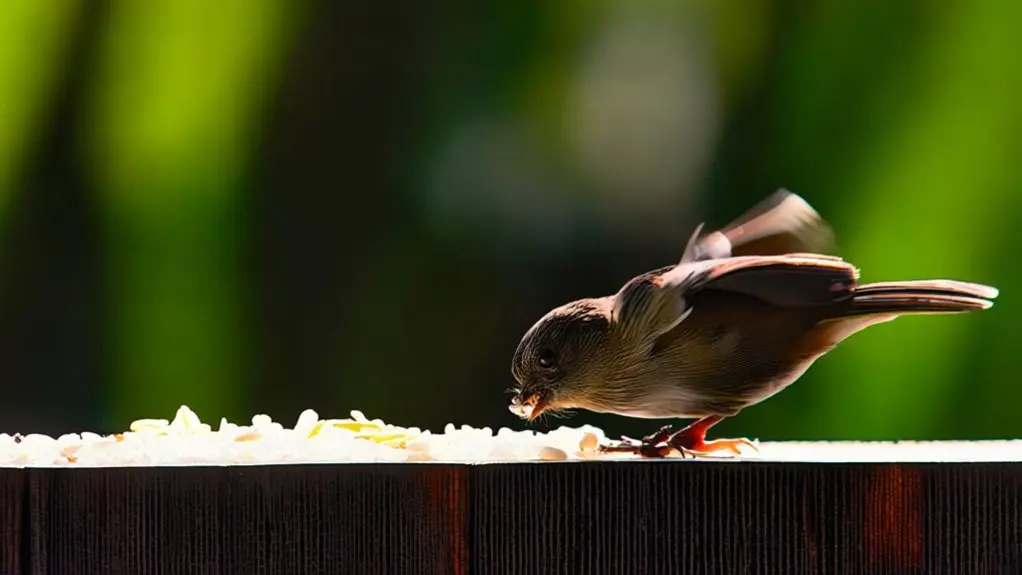
You can safely offer birds both cooked and uncooked rice without worrying about harm or the myth that it causes them to explode. That idea has no scientific basis at all. Birds actually digest rice quite efficiently, and it provides them with beneficial nutrients.
Rice also expands less than typical birdseed, so it’s not going to cause any problems in their stomachs. To keep birds healthy, it’s best to serve plain rice in small portions. Also, make sure to manage leftovers properly to avoid spoilage and pests.
By understanding how to feed rice properly and responsibly, you help guarantee the well-being of birds and the surrounding environment. It’s really about being thoughtful and careful with what you offer. That way, everyone benefits!
Can Birds Safely Eat Rice? Here’s the Science
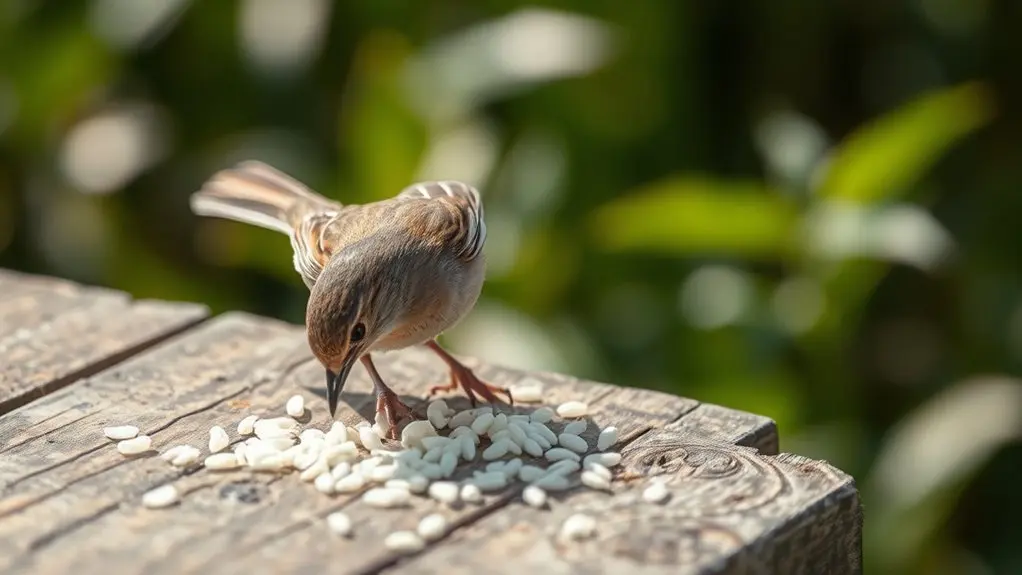
Although many believe that rice poses a danger to birds, scientific research shows that both cooked and uncooked rice are safe for them to eat.
When you consider rice nutrition, it provides carbohydrates and some nutrients beneficial to birds.
Studies reveal that soaked rice expands by about 33%, which is less than typical birdseed. So, there’s minimal risk of internal swelling.
Bird digestion efficiently processes rice because the bird’s crop grinds it without causing harm.
Ornithologists confirm that rice doesn’t obstruct or damage the digestive tract.
Wild birds naturally consume rice in paddy fields, which shows it’s a suitable food source.
The Truth About the Rice and Exploding Birds Myth
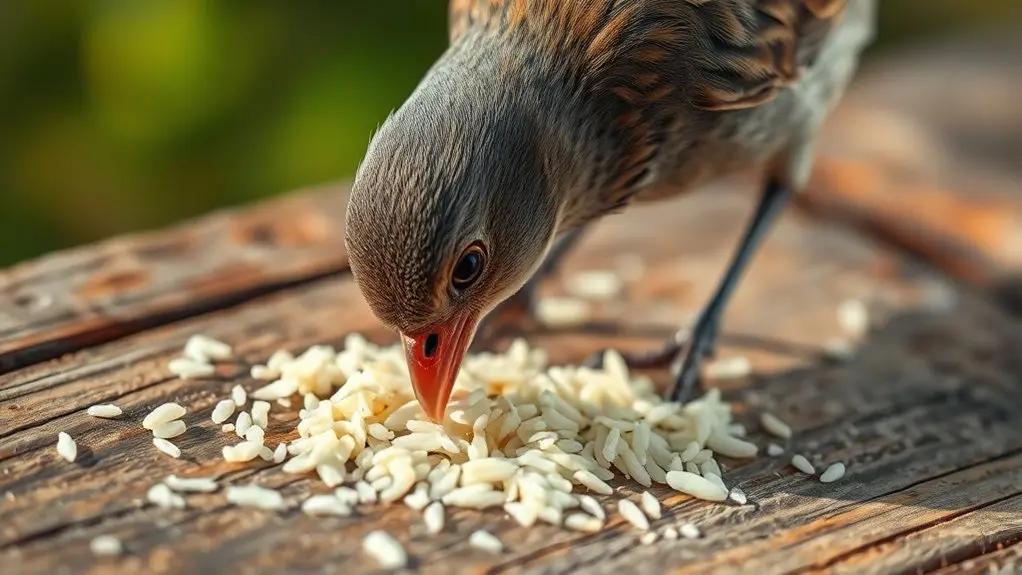
When you hear the claim that rice causes birds to explode after ingestion, it’s important to recognize that this myth lacks any scientific basis. Bird digestion efficiently processes rice without it expanding or causing harm. Rice digestion in birds occurs at body temperatures insufficient to swell or cook rice considerably.
Observations confirm birds regularly consume rice in the wild with no adverse effects.
| Myth Claim | Scientific Fact | Bird Digestion Outcome |
|---|---|---|
| Rice swells inside | Rice does not swell or heat enough | Rice passes safely through |
| Birds explode | No documented cases of exploding | Birds digest rice normally |
| Rice is harmful | Rice is part of natural diet | No harm during digestion |
| Myth origin | Ann Landers’ 1996 column | Debunked by ornithologists |
This table highlights the clear distinction between myth and reality.
How to Feed Rice to Your Bird Safely
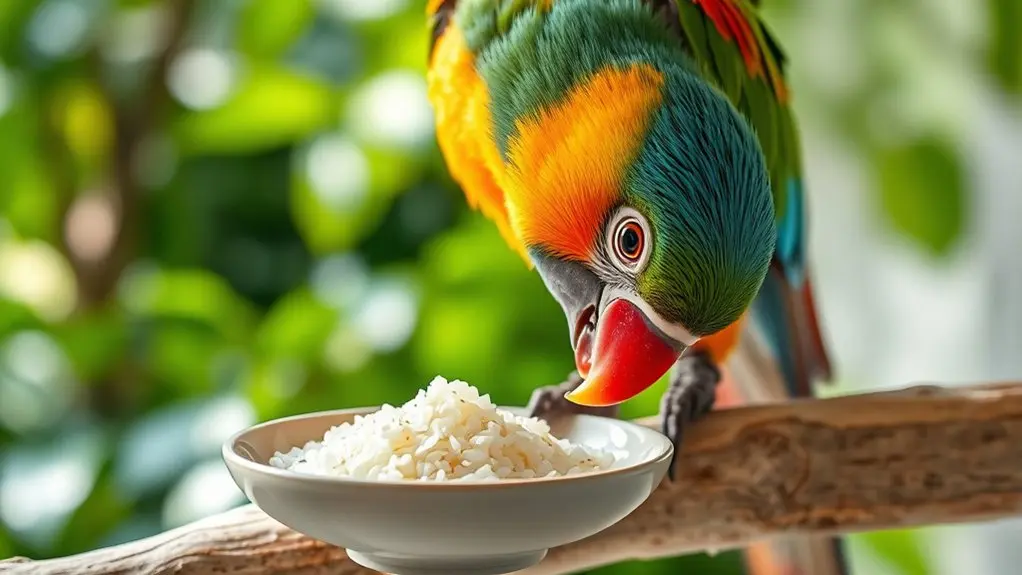
If you want to feed rice to your bird safely, start by offering small portions of plain, cooked or uncooked rice on a clean, shallow dish. Make sure the rice is free from any seasonings, salt, butter, or additives. These can violate your bird’s dietary restrictions and negatively impact bird nutrition.
After cooking, allow the rice to cool completely to prevent burns and make it easier for your bird to eat. It’s important to remove any leftover rice promptly to avoid spoilage and reduce the risk of attracting pests or wildlife.
Stick to pure, additive-free rice and avoid fried, flavored, or processed rice mixes.
Which Types of Rice Are Best for Birds: And What to Avoid
You should offer birds plain, uncooked white or brown rice.
Actually, cooking the rice can make it easier for them to digest and more appealing to eat.
Just make sure the rice doesn’t have any additives or seasonings because those can be harmful to birds.
Also, avoid rice that’s contaminated or moldy since that’s definitely bad for their health.
It’s a good idea to serve rice in small portions and put it on a clean surface to keep things safe and prevent it from spoiling.
Suitable Rice Varieties
Although many rice varieties exist, only certain types are appropriate for feeding birds, as their dietary needs require plain, unseasoned grains. You should offer plain uncooked or cooked white and brown rice, which provide essential carbohydrates and energy conducive to efficient bird digestion.
Cooked rice, when cooled and unseasoned, softens the grains, making it easier for birds to swallow and absorb nutrients. Avoid rice varieties with additives, because substances like salt, oil, and preservatives can disrupt natural digestive processes.
These additives may also inhibit beneficial rice fermentation within the bird’s gut microbiome. Moldy or processed rice products, such as cereals, can introduce toxins or reduce digestibility.
Unsafe Rice Types
Selecting the right type of rice for birds involves not only choosing suitable varieties but also avoiding unsafe options. You should avoid fried, buttery, or flavored rice, as additives and excess salt can disrupt bird digestion and pose health risks.
Rice mixes containing sauces or seasonings are also harmful and must be excluded from their diet. Additionally, moldy, dirty, or contaminated rice presents a danger due to potential toxins and bacterial growth linked to rice spoilage.
While plain uncooked rice can be offered occasionally, it must be dry and free of preservatives. To reduce rice spoilage, serve small, manageable portions on a clean dish and promptly remove leftovers.
These precautions ensure rice remains a safe food source without compromising avian health or digestion. It’s really about keeping things simple and clean to keep your birds happy and healthy.
Serving Rice Properly
When offering rice to birds, it’s essential to use plain varieties without any seasonings or additives to keep them healthy. Both uncooked white or brown rice and properly cooked rice are good options. Just avoid fried rice, sauced rice, or rice with salt or butter because those can be toxic.
When you cook the rice, make sure it’s thoroughly boiled and cooled before serving. This helps the birds digest it more easily.
Offer small portions on a clean, shallow dish to keep things neat.
Also, be sure to remove any uneaten rice quickly to prevent spoilage and bacterial growth.
While you can give uncooked rice occasionally, many birds actually prefer cooked rice because it tastes better and is safer.
Following these tips will keep the rice a safe and nutritious part of your bird’s diet.
Integrating Rice Into a Balanced Parrot Diet
How can you effectively incorporate rice into your parrot’s diet without compromising nutritional balance? To support ideal bird nutrition, you should offer rice in moderation as part of a varied diet emphasizing dietary diversity. Combining rice with other grains ensures a balanced nutrient profile and prevents deficiencies common in seed-only diets.
Cooked rice is preferable for digestion. Also, avoid any seasoning or additives to keep it safe and healthy for your bird.
| Grain | Nutritional Benefit | Feeding Recommendation |
|---|---|---|
| Rice | Carbohydrates, energy | Moderate amounts, cooked preferred |
| Barley | Fiber, vitamins | Mix with rice for balance |
| Quinoa | Protein, minerals | Include for amino acids |
| Seeds | Fats, variety | Limited quantity to avoid imbalance |
| Vegetables | Vitamins, antioxidants | Essential for complete nutrition |
This approach helps maintain nutritional adequacy and supports your parrot’s overall health. It’s all about variety and balance to keep your bird happy and thriving.
Managing Outdoor Rice Feeding to Protect Birds and Prevent Pests
Although feeding rice outdoors can benefit local bird populations, you’ve got to carefully manage portions and placement to minimize waste and keep pests away. Use small, manageable portions on washable trays or platforms instead of scattering rice on the ground.
Feeding rice outdoors helps birds—just keep portions small and use trays to avoid waste and pests.
Leaving rice on the ground can attract unwanted wildlife like raccoons or rats. Make sure to promptly remove any damp or spoiled rice to avoid creating breeding grounds for insects and rodents.
It’s also important to regularly clean up spilled rice from decks, balconies, or other outdoor surfaces to keep things hygienic.
If you’re gardening in an urban setting, these simple practices help support wildlife conservation by protecting birds without encouraging pest problems. And if you start noticing large pests or invasive species, it’s best to stop feeding rice to keep local ecosystems and your property safe.
Proper management really is about balancing bird nutrition with responsible pest control.
What to Do If Rice Attracts Unwanted Wildlife
If you notice unwanted wildlife being attracted to the rice feeding area, promptly removing any leftover rice is essential to prevent further visits by rodents, raccoons, or similar animals.
For effective pest prevention, serve rice in small, manageable portions on washable trays or dishes. This limits spillage and makes cleanup easier.
Avoid scattering rice directly on the ground or patio because this increases the risk of attracting pests.
Make sure to consistently clean the feeding area and remove any damp or spoiled rice. This helps discourage unwanted wildlife from sticking around.
If you see a rise in activity from non-target animals, consider stopping feeding temporarily.
These wildlife management strategies help minimize the unintended consequences of rice feeding. Plus, they keep the environment safe and controlled for birds and the surrounding ecosystem.
Frequently Asked Questions
Can Birds Digest Rice Faster Than Other Grains?
You’ll find bird digestion processes rice faster than many grains due to its simple carbohydrate structure. Grain comparison studies show birds’ crops and gizzards efficiently break down rice, providing quicker energy release during feeding and migration.
It’s pretty interesting how rice stands out here. Birds get energy from it more quickly than from other grains, which can be a real advantage when they’re on the move. This means rice can be a great choice for feeding birds, especially during long flights or busy feeding times.
Does Rice Provide Essential Nutrients for Bird Feather Growth?
Think of feather nutrition as a mosaic. Rice supplies some colorful tiles but not the whole picture.
You’ll face dietary deficiencies if you rely solely on rice since it lacks key proteins and vitamins essential for healthy feather growth.
How Does Rice Consumption Affect Migratory Bird Energy Levels?
You’ll find that rice digestion slows bird metabolism, providing sustained energy release. This steady glucose supply supports migratory birds’ long flights by maintaining stamina. It ensures their metabolism efficiently converts rice carbohydrates into prolonged energy during migration periods.
Are There Seasonal Differences in Birds’ Rice-Eating Habits?
You know birds eat rice like clockwork during seasonal migration, adjusting their diet based on food availability.
Following proper bird feeding etiquette guarantees rice supports their energy needs without disrupting natural habits or nutritional balance.
Can Rice-Fed Birds Develop Preferences for Other Human Foods?
Yes, you’ll find that bird behavior changes when they regularly eat rice. Their dietary preferences can shift toward other human foods, especially if those foods are more accessible or provide higher nutritional rewards.
Birds are pretty adaptable like that. If they find something tastier or easier to get, they’ll go for it. It’s all about what’s available and what benefits them the most.
Conclusion
So, unless you’re secretly hoping to witness a rice-induced avian explosion (spoiler: it’s a myth), feel free to offer birds cooked rice in moderation. Just remember, not all rice is created equal, and balance is key. Don’t turn their diet into a rice-only buffet.
Manage outdoor feeding wisely to avoid inviting uninvited furry or feathered guests. Science says birds can enjoy rice safely, so go ahead, feed smart and watch them thrive without any dramatic popcorn moments.