

You can’t get rabies from birds because they lack the receptors needed for the virus to infect them, and their higher body temperature stops the virus from surviving. Birds don’t carry or spread rabies through bites, scratches, or even their feathers.
Rabies is strictly a mammal disease, mainly passed through the saliva of infected animals like bats or raccoons. If you want to understand why mammals pose a risk while birds don’t, there’s more to explore.
Why Birds Can’t Get Rabies

Why can’t birds get rabies? The primary reason lies in their biology. Birds maintain a higher body temperature than mammals, creating an environment where the rabies virus can’t survive.
Additionally, birds lack the specific receptors necessary for the rabies virus to infect cells, making infection impossible.
Their immune system also differs markedly, providing resistance against this virus.
You might wonder about risks related to feather contamination or beak contact, but since birds can’t harbor the virus internally, they don’t pose a threat of transmitting rabies through these means.
No documented cases show rabies infection or transmission from birds, confirming their immunity.
Understanding this helps you recognize that birds aren’t a source of rabies, and you can safely interact with them without concern for this disease.
Can Birds Carry Rabies on Feathers or Beaks?

Although birds themselves can’t contract rabies due to their unique biology, you might wonder if they can carry the virus externally on their feathers or beaks.
In reality, rabies primarily infects mammals and requires specific host receptors that birds don’t have. This makes feather contamination with rabies extremely unlikely.
Similarly, beak contact doesn’t pose a rabies transmission risk because there’s no evidence that the virus can survive on a bird’s beak.
While birds can harbor other pathogens, rabies isn’t one of them. Their immune systems and lack of suitable receptors prevent them from harboring or spreading the rabies virus through surface contamination.
Are Bird Bites or Scratches a Rabies Risk?
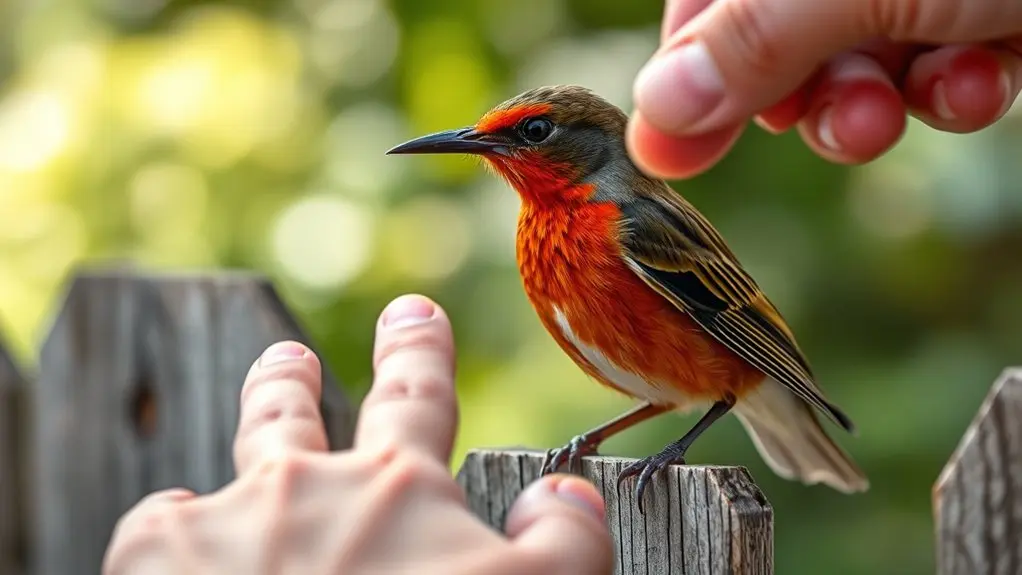
You might be wondering if bird bites or scratches can transmit rabies. Well, birds aren’t natural carriers of the virus.
Rabies mainly affects mammals and needs certain types of tissue to spread.
So, the risk from bird-inflicted wounds is practically nonexistent.
Knowing this can help you focus on the more relevant risks when it comes to rabies exposure.
Bird Bites Transmission Risk
How likely is it for bird bites or scratches to transmit rabies? The risk is extremely low because birds have avian immunity. They are not natural hosts for rabies, and there are no documented cases of transmission through bites or scratches.
Rabies mainly spreads through mammals, not birds. While feather contamination might theoretically carry virus particles, it doesn’t lead to infection. Still, it’s a good idea to clean any bird bite or scratch to prevent other infections.
| Factor | Rabies Risk from Birds | Explanation |
|---|---|---|
| Avian Immunity | Very Low | Birds resist rabies infection |
| Virus Reservoir | None | Birds aren’t reservoirs |
| Transmission Cases | None documented | No scientific evidence |
| Feather Contamination | Negligible | Doesn’t cause infection |
Rabies Potential In Birds
Since birds aren’t natural hosts for the rabies virus, they pose virtually no risk of transmitting rabies through bites or scratches. The rabies virus primarily targets mammals’ nervous systems, which birds lack. That makes feather contamination or beak contact ineffective for virus transmission.
You won’t find any documented cases of rabies passing from birds to humans or animals. While bird bites and scratches can cause other infections, rabies isn’t one of them.
So, even if a bird’s beak comes into contact with a rabies-infected surface, the virus can’t replicate within a bird’s body or spread through feather contamination.
As a result, you can consider the risk of rabies from birds negligible. It’s better to focus on other health precautions when dealing with bird bites or scratches.
How Rabies Spreads Through Mammal Bites
You should know that rabies mainly spreads through the saliva of infected mammals when they bite. So, any mammal bite can be risky.
The seriousness of the bite plays a role too—deep or untreated wounds make it more likely for the virus to be transmitted.
Bats are especially risky because their saliva can carry the virus even before they show any symptoms.
Rabies Transmission Via Bites
Although rabies primarily spreads through the saliva of infected mammals, it’s important to understand how bites serve as the main route of transmission. When an infected mammal bites, the virus enters the skin through saliva, posing a real risk of infection.
You should know that all mammal bites, no matter the size, can transmit rabies.
Bats, for example, often cause small, unnoticed wounds that still carry risk. In contrast, birds benefit from avian immunity and don’t contract rabies, even though feather contamination with saliva might occur.
This distinction highlights why rabies transmission via bites concerns mammals exclusively.
Prompt wound cleaning and post-exposure prophylaxis are vital to prevent infection after any potential rabid mammal bite. So, if you ever get bitten, don’t hesitate to act quickly to protect yourself.
Importance Of Bite Severity
When a mammal bite breaks the skin, the severity of the wound plays an essential role in determining the risk of rabies transmission. Deep punctures allow the rabies virus to enter more easily, raising your infection risk. Even minor bites pose danger if infected saliva contacts broken skin.
Unlike mammals, birds benefit from avian immunity. Feather contamination rarely leads to rabies transmission. Still, understanding bite severity is critical for mammals.
| Bite Severity | Rabies Risk Level |
|---|---|
| Deep puncture | High – virus enters deeply |
| Superficial wound | Moderate – virus exposure possible |
| No skin break | Low – minimal risk |
Prompt cleaning and post-exposure treatment are essential to prevent rabies after any suspicious mammal bite. It’s always better to act quickly and be safe!
Bat Bites And Risks
How do bat bites contribute to the spread of rabies? Bat bites, though often small and easily overlooked, pose a significant risk because bats carry a high potential for rabies transmission. In fact, about 70% of human rabies cases in the US result from bat bites.
Even tiny punctures or superficial scratches can transmit the virus if the bat is infected.
When you encounter a bat bite or scratch, you must treat it as a potential rabies exposure due to contact with the bat’s saliva. It mightn’t seem like a big deal at first, but it’s better to be safe and get checked out.
While birds’ immune response and feather contamination don’t help spread rabies, mammal bites like those from bats are a different story. Understanding this difference is key to accurately assessing rabies risks and protecting yourself effectively.
Common Mammals That Transmit Rabies to Humans
Since rabies primarily affects mammals, it’s important to understand which common species are responsible for transmitting the virus to humans. Mammals like raccoons, skunks, foxes, and bats are frequent carriers because their nervous systems support viral replication.
Rabies mainly affects mammals such as raccoons, skunks, foxes, and bats, which can transmit the virus to humans.
Unlike birds, which have no risk of feather contamination or transmitting rabies through bird flight, these mammals can pass the virus via bites or scratches. You should avoid contact with wild mammals exhibiting unusual behavior.
Remember, birds don’t carry rabies because they lack the necessary biological receptors, so you won’t get rabies from feather contamination.
When you’re outdoors, focus on preventing exposure to these common mammal vectors to reduce your risk.
Understanding these distinctions helps you stay safe while appreciating wildlife responsibly.
Why Bat Exposures Are More Dangerous Than Bird Encounters
While birds don’t carry rabies and pose no risk of transmitting the virus, bats stand out as a primary source of rabies infections in humans. Bird immunity and unique flight adaptations prevent them from being natural rabies hosts.
In contrast, bats harbor the virus in their saliva, making even minor bites or scratches dangerous. Because bat bites are often small and go unnoticed, you need to be extra vigilant after any bat encounter.
| Factor | Birds | Bats |
|---|---|---|
| Rabies Carrier | No (bird immunity) | Yes (primary reservoir) |
| Transmission Risk | None | High (bites and scratches risky) |
| Flight Adaptations | Specialized for immunity | Facilitate virus spread via saliva |
Knowing these differences can help you understand why it’s so important to get medical attention after a bat exposure.
How to Assess Rabies Risk After Animal Contact
When you’re figuring out the rabies risk after coming into contact with an animal, it’s important to know the difference between bite and nonbite exposures. Bites are usually more dangerous because they carry a higher chance of passing on the virus.
If you get bitten, the first thing to do is clean the wound really well right away.
Then, it’s a good idea to see a doctor to find out if you need post-exposure treatment.
The sooner you act, the better your chances of getting the right care and lowering the risk of infection.
Bite Versus Nonbite Exposure
Although not all animal contacts pose the same risk, you should treat every bite as a potential rabies exposure that requires prompt medical evaluation. Deep bites increase the likelihood of transmission, so evaluating wound severity is essential.
Nonbite exposures, like scratches or contact with infected saliva on mucous membranes or open wounds, can also transmit rabies and need careful consideration.
While birds generally exhibit strong avian immunity and rabies virus rarely infects them, feather contamination with saliva from rabid animals can present indirect risks.
Consequently, any contact involving saliva or tissue exposure, bite or nonbite, warrants a thorough risk assessment.
Understanding these distinctions helps you respond appropriately and seek medical advice promptly when exposed to potentially rabid animals.
Immediate Post-Exposure Steps
Since rabies can be fatal if not treated promptly, you should immediately wash any animal bite or scratch with soap and water to reduce the risk of infection.
After cleaning the wound, assess the animal involved. Try to figure out if it was a domestic or wild animal.
Also, watch for any unusual behavior that might suggest rabies, like paralysis or erratic bird flight.
If the animal’s saliva contacted your skin or eyes, consider feather contamination as a possible way the virus could have been transmitted.
Next, seek medical evaluation right away. This will help decide if post-exposure prophylaxis (PEP) is necessary based on the type of exposure and the animal’s rabies risk.
Don’t forget to contact local health authorities or animal control to report what happened and get guidance.
Make sure to keep detailed records too, like the date, location, and a description of the animal. These details can support medical and public health assessments.
What to Do If You Think You’ve Been Exposed to Rabies
If you think you’ve been exposed to rabies, act immediately by washing the wound thoroughly with soap and water to reduce the virus’s chance of entering your body.
Since bird migration can lead to feather contamination from various environments, it’s important to consider any contact with wild birds or their feathers.
After cleaning the wound, seek prompt medical attention to evaluate the need for post-exposure prophylaxis, which may include rabies immune globulin and vaccination.
Make sure to inform your healthcare provider about the animal involved, its behavior, and exposure details.
Don’t delay treatment because rabies is almost always fatal once symptoms develop.
Early intervention can prevent infection, so getting help quickly really matters.
Keep detailed records of the incident and follow all medical advice to ensure effective preventive care.
It’s always better to be safe and thorough when it comes to rabies exposure.
Differences Between Rabies Transmission in Birds and Mammals
When comparing rabies transmission between birds and mammals, you’ll find key biological differences that prevent birds from carrying or spreading the virus. Bird physiology lacks the specific neurological receptors necessary for rabies virus replication, which are present in mammals.
Birds lack the neurological receptors required for rabies virus replication, unlike mammals.
This fundamental difference means birds can’t support the virus’s survival or multiplication. Plus, the avian immune system responds differently, effectively preventing infection.
Unlike mammals, where rabies spreads primarily through bites introducing infected saliva, this transmission route doesn’t apply to birds. There are no documented cases of birds transmitting rabies, nor has the virus ever been isolated in avian species.
These distinctions in brain structure and immune response explain why rabies transmission mechanisms in birds and mammals differ markedly. It really highlights the unique role mammalian hosts play in the virus’s lifecycle.
Why Rabies Is a Mammalian Disease Only
Although rabies poses a serious threat to many mammals, it doesn’t affect birds because the virus targets specific nerve cell proteins unique to mammals. This viral host specificity means the rabies virus can only infect and replicate within mammalian nervous systems, where it travels to the brain causing neurological symptoms.
Birds’ cellular receptors differ markedly, and their avian immunity prevents the virus from establishing infection. Unlike mammals, birds lack the necessary nerve cell proteins the rabies virus requires, making them unsuitable hosts.
Scientific studies and surveillance confirm rabies cases are virtually nonexistent in birds, reinforcing that rabies remains strictly a mammalian disease. Understanding this distinction helps clarify why you don’t need to worry about rabies transmission in avian species.
Frequently Asked Questions
Can Birds Transmit Other Zoonotic Diseases Besides Rabies?
Yes, birds can transmit zoonotic diseases like avian influenza and West Nile virus. Their migration and avian behavior increase disease spread risks.
How Can I Protect My Pet Birds From Viral Infections?
You’ll want to cultivate a healthy environment by prioritizing bird nutrition and maintaining strict cage hygiene. Regularly clean their space, provide balanced food, and schedule vet visits to keep your feathered friends safe from viral threats.
Keeping things clean and feeding them right really makes a difference. Plus, those vet check-ups? Super important to catch anything early. Your birds will thank you!
Are There Vaccines Available for Viral Diseases in Birds?
You won’t find bird vaccination options for viral diseases, as avian immunity differs considerably from mammals. Instead, focus on biosecurity and preventing exposure to protect your birds, since effective vaccines for birds remain unavailable.
It’s really all about keeping your birds safe by limiting their contact with potential sources of infection. So, good hygiene, controlled environments, and monitoring are your best bets right now. Vaccines just aren’t a thing for most viral diseases in birds yet.
What Symptoms Indicate a Viral Infection in Wild Birds?
You’ll notice symptoms like tremors, paralysis, lethargy, and abnormal aggression indicating viral infection in wild birds. These signs show that the birds are having a tough time fighting off the virus. It’s a clear sign their immune system is struggling.
Also, these symptoms highlight how easily viruses can spread within bird populations. So, watching for these signs is really important to understand the risks involved.
Can Handling Bird Droppings Pose Any Health Risks?
Handling bird droppings can pose health risks from pathogens, not rabies. When caring for bird feather health and grooming, always wear gloves and practice good hygiene. This helps you avoid infections like histoplasmosis.
It’s really important to keep things clean when you’re around birds. That way, you can enjoy safe interaction and protect yourself from any potential health issues.
Conclusion
You don’t have to fear birds as carriers of rabies. They’re simply not part of this viral tale. Rabies weaves its deadly thread only through mammals, leaving feathers and beaks untouched by its grasp.
While bird bites or scratches won’t pass this threat, staying cautious around mammals is your best shield. Understanding these differences helps you navigate risks wisely. It’s all about keeping you safe in nature’s intricate dance between species and disease.