
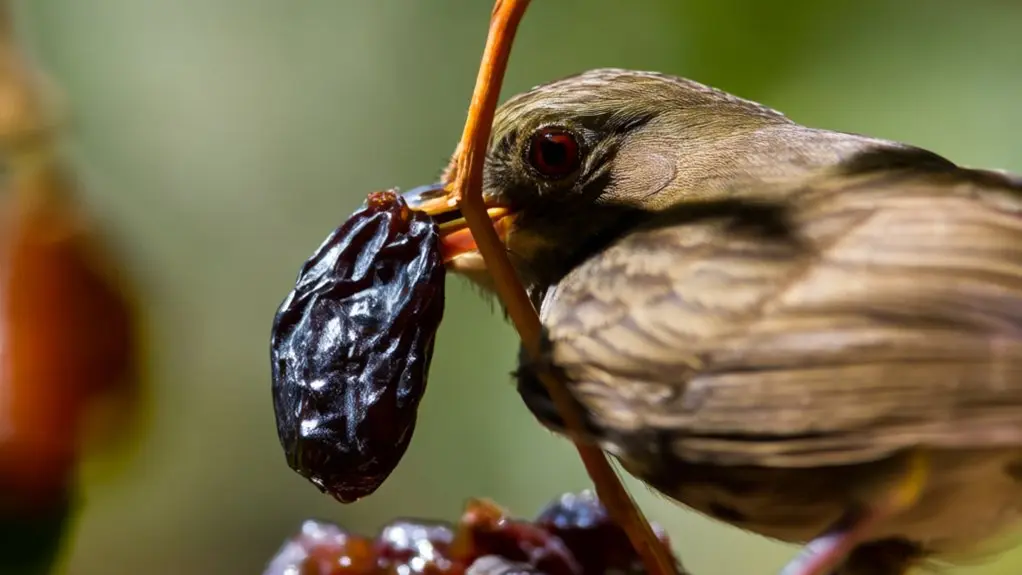
You can safely feed birds raisins if you prepare them properly by soaking overnight, draining excess water, and cutting them into smaller pieces to reduce choking and digestive risks. Use plain, unsweetened raisins and offer them sparingly, around once or twice a week, to avoid obesity or sugar-related issues.
Certain species like blackbirds and thrushes prefer raisins, especially during migration. Understanding preparation, species preferences, and feeding frequency helps guarantee bird health and enjoyment.
There are more details on best practices and alternatives ahead, so keep reading if you want to learn how to feed birds raisins the right way.
Are Raisins Safe for Birds to Eat?
How safe are raisins for birds to eat? When thinking about bird nutrition and feeding safety, raisins can be a good treat if you prepare them right and offer them in moderation.
Soaking raisins overnight makes them softer, which helps birds like blackbirds eat and digest them more easily.
Raisins do have some natural sugars and nutrients, but they shouldn’t replace a bird’s main diet. Instead, think of raisins as an occasional supplement to keep their nutrition balanced.
Feeding raisins dry can be risky since it might cause choking or stomach discomfort, so making sure they’re prepared properly is really important.
Which Bird Species Enjoy Raisins Most?
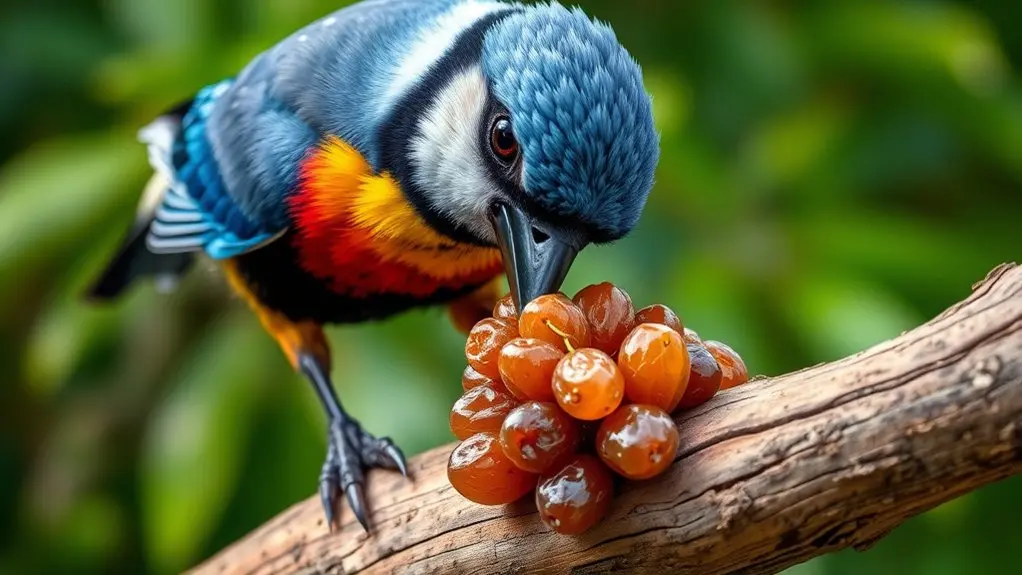
Understanding which bird species enjoy raisins most helps tailor feeding practices to their preferences and nutritional needs. Blackbirds, thrushes, and robins prominently favor raisins, especially during periods aligned with bird migration or nesting habits when energy demands increase.
These songbirds benefit from the high sugar content in raisins, which supports their metabolic needs during long flights or when feeding nestlings.
Some finch species may consume raisins occasionally, particularly when mixed with seeds, though they show less preference compared to the aforementioned species.
Recognizing these patterns allows you to provide raisins at ideal times, enhancing feeding efficiency and supporting natural behaviors.
How to Prepare Raisins for Feeding Birds
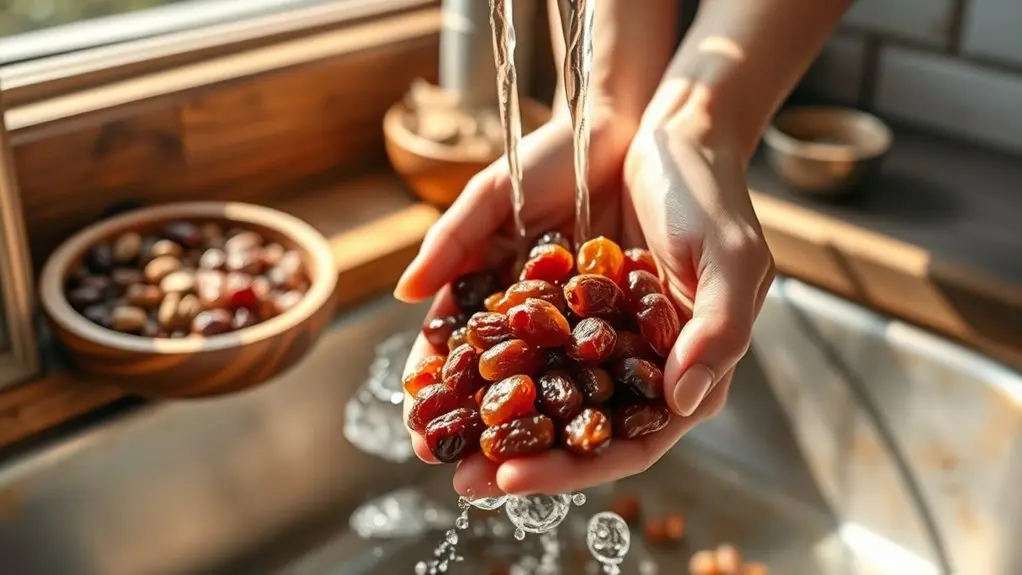
If you want to feed raisins to birds, it’s a good idea to soak them overnight in water. This softens the raisins, making them much easier for the birds to eat.
Once they’ve soaked, be sure to drain off any extra water. This helps prevent mold and keeps the raisins from getting too sticky.
When you’re ready to serve, put the raisins in a shallow dish or bird feeder. Just make sure they’re plain and unsweetened—this way, the birds can enjoy them safely.
Soaking Raisins Overnight
When you soak raisins overnight in room temperature water, they become softer and easier for birds to eat and digest. This softening process is essential because raisins, harvested and dried through raisin harvesting techniques, contain dense sugars and preservatives that can be tough on birds’ digestive systems.
Soaking for at least eight hours helps to reduce these components, lowering potential health risks during periods of bird migration when energy demands are high.
To prepare, cover the raisins completely in water and leave them to soak. Afterward, drain the excess water and serve the softened raisins promptly, either alone or mixed into bird feed.
Avoid storing soaked raisins, as they can develop mold rapidly, which poses a danger to birds’ health.
Serving Suggestions Safely
How can you safely prepare raisins to minimize health risks and improve palatability for birds? Start by soaking dried, unsweetened raisins overnight in water. This softens them and reduces choking hazards, which is important considering birds’ feeding behavior within their habitat.
After soaking, drain and rinse the raisins thoroughly. This step helps remove any preservatives or residues that could harm birds.
To make them even safer, cut the raisins into smaller pieces. This way, you accommodate birds’ natural nesting habits and feeding methods.
Offering these prepared raisins alongside other natural foods helps diversify their diet. It supports a nutritional balance within their environment.
How Soaking Raisins Helps Birds Eat Them
When you soak raisins overnight, it softens their texture, making them easier for birds to swallow and digest.
Plus, soaking helps reduce the surface sugar concentration, which means the raisins aren’t as sticky.
Because of this, soaked raisins end up being a safer and more appealing treat for all kinds of birds.
Benefits Of Soaking
Why does soaking raisins before offering them to birds make such a difference? Soaking softens raisins, making them easier for birds to chew and swallow. This reduces choking risks and digestive complications.
The process also increases bird hydration by adding water content to the fruit, supporting their fluid intake. Plus, moistening raisins enhances their aroma, making them more attractive to birds and encouraging feeding.
Soaking also cleans the raisins, removing dust and residues, which promotes safer consumption.
By improving raisin aroma and texture while boosting hydration, soaking guarantees a safer and more appealing food source for birds.
This simple step optimizes feeding safety and nutritional benefits without altering the raisin’s natural properties. It’s an easy way to help your feathered friends enjoy their treat safely and happily.
Enhanced Raisin Texture
Although raisins are naturally chewy, soaking them overnight considerably softens their texture. This makes it easier for birds to chew and swallow.
This enhanced raisin texture improves bird digestion by reducing choking hazards and dental strain, especially in small species. The moistening process also helps release natural sugars, which increases the raisins’ attractiveness and palatability.
| Benefit | Impact on Birds |
|---|---|
| Softer Raisin Texture | Easier chewing and swallowing |
| Increased Sugar Release | Higher feeding interest |
| Reduced Choking Risk | Safer consumption |
How Often Should You Feed Raisins to Birds?
Since raisins are rich in sugars but lack essential nutrients, you should feed them to birds only as an occasional treat rather than a staple in their diet.
Maintaining bird dietary diversity is vital to guarantee they receive a balanced intake of proteins, fats, vitamins, and minerals necessary for peak health.
Offering raisins once or twice a week strikes a balance between providing a tasty reward and preventing nutritional imbalances.
Seasonal feeding considerations also play a role. During breeding or migration periods, birds require nutrient-dense foods, so raisins should remain supplementary.
To improve safety and palatability, soak raisins overnight before offering them.
Always monitor birds for any adverse reactions, and discontinue feeding raisins if digestive or health issues arise.
This way, you ensure their diet supports long-term well-being.
Risks of Feeding Raisins to Birds
When you feed raisins to birds, it’s important to think about some potential health risks, like choking or exposure to mold and additives.
To make raisins safer, soaking them overnight can help reduce choking hazards and make them easier to digest.
Just be sure to prepare the raisins carefully and keep an eye on your birds to watch for any signs of trouble.
Potential Health Risks
Because raisins contain high levels of sugar, feeding them to birds requires careful moderation to prevent potential health issues. Excessive intake can lead to digestive problems or weight gain, which might affect birds’ energy reserves for migration and their efficiency in building nests.
While no conclusive evidence shows that raisins are toxic, you should still keep an eye on birds for any adverse reactions after introducing raisins to their diet.
| Potential Risk | Description |
|---|---|
| High Sugar Content | May cause weight gain and metabolic issues |
| Digestive Problems | Overconsumption can lead to upset stomachs |
| Choking Hazard | Whole raisins may pose a choking risk |
| Behavioral Changes | Excess sugar may alter natural feeding habits |
| Impact on Migration | Weight gain could impair long-distance flight |
Safe Preparation Practices
Although raisins can provide nutritional benefits to birds, you must prepare them properly to minimize health risks. Soaking raisins overnight softens them, making it easier for birds to consume and reducing choking hazards.
This practice also lowers the risk of dental issues and discourages mold growth or bacterial contamination, which can compromise a bird’s health.
Always use fresh, soaked raisins and avoid overly dried or moldy ones to maintain a safe bird diet.
Gradually introducing raisins allows you to monitor your bird’s response and adjust accordingly.
Incorporating raisins thoughtfully supports nutritional balance within their overall diet, ensuring they receive beneficial nutrients without exposure to potential toxins or digestive difficulties.
Careful preparation is essential for safe inclusion of raisins in your bird’s feeding regimen.
Alternatives to Raisins for Bird Treats
Since raisins can pose risks to some bird species, you should consider safer alternatives that still provide essential nutrients and attract a variety of birds.
Raisins may harm some birds; opt for safer, nutrient-rich alternatives to attract diverse species.
Dried fruits like sultanas, dried apricots, and unsweetened cranberries offer natural sugars that are beneficial during bird migration when energy demands increase.
Fresh fruits such as apple slices, orange segments, and berries supply hydration and vitamins that are critical for overall health and nest-building activities.
High-protein options like mealworms support insectivorous birds and help enhance muscle development necessary for flight.
Additionally, unsalted nuts and seeds, including sunflower seeds and peanuts, deliver energy-dense nourishment.
Commercial bird treats like suet cakes and seed mixes are scientifically formulated to meet dietary requirements safely.
Offering diverse, nutrient-rich alternatives supports bird well-being across seasonal behaviors without the risks associated with raisins.
Foods Birds Should Never Eat
While offering safe and nutritious alternatives to raisins benefits birds, it’s equally important to recognize foods that pose health risks. During bird migration and nesting habits, nutritional demands are critical.
Feeding harmful foods can impair their survival and reproductive success.
You should avoid these:
- Bread and processed snacks: Lack essential nutrients, causing malnutrition.
- Salty snacks: Excess salt risks kidney failure.
- Dairy products: Most birds are lactose intolerant, leading to digestive distress.
Also, chocolate is toxic because of theobromine, and raw meat can harbor bacteria or spoil quickly, which can threaten bird health.
Best Bird Feeders for Raisins
When you want to offer raisins to birds, selecting the right feeder is crucial for both accessibility and food safety. You should consider birdhouse placement and seasonal feeding patterns to maximize use.
Suet feeders securely hold soaked raisins, attracting fruit-loving species. Large-capacity seed feeders combine raisins with other dried foods, making them a versatile option.
Window feeders enable close observation, which is great if you enjoy watching birds up close. Small tube feeders suit finches and sparrows with chopped raisins.
Maintaining clean feeders prevents mold and spoilage, which is super important for safe consumption.
| Feeder Type | Suitable Raisin Form | Advantages |
|---|---|---|
| Suet Feeder | Soaked Raisins | Holds sticky foods securely |
| Large Seed Feeder | Dried Raisins | High capacity, mixed food |
| Window Feeder | Soaked or Chopped | Close birdwatching |
| Small Tube Feeder | Chopped Raisins | For small birds |
What to Do If Your Bird Eats Too Many Raisins
Offering raisins through appropriate feeders can enhance your birds’ diet, but it’s important to be aware of the risks associated with overconsumption. If your bird eats too many raisins, monitor for digestive upset or lethargy, as excessive intake may cause diarrhea or dehydration.
This is particularly vital during bird migration or nesting habits when energy demands are high.
To manage this situation effectively, provide fresh water to help alleviate dehydration. Avoid giving additional treats until your bird’s condition stabilizes.
If you notice symptoms like vomiting, weakness, or abnormal droppings, contact an avian veterinarian right away.
Prompt intervention ensures your bird maintains excellent health. This support helps with its natural behaviors such as migration and nesting, keeping disruptions to a minimum.
Frequently Asked Questions
Can Baby Birds Safely Eat Raisins?
You shouldn’t feed baby birds raisins, regardless of raisin types, during bird feeding. Their sensitive digestive systems and choking risks make dried fruits unsafe.
Instead, offer species-appropriate soft foods, and consult rehabilitation experts for guidance. It’s always better to be safe and make sure the little ones get what’s best for them.
Do Raisins Affect Bird Migration Patterns?
You might be surprised that over 90% of bird species rely on environmental cues, not diet, for migration. Raisin toxicity is rare, and bird dietary habits show raisins don’t affect migration patterns or timing.
How Do Birds Digest Raisins Compared to Fresh Fruit?
You’ll find birds digest raisins less efficiently than fresh fruit due to nutritional differences, like higher sugar concentration and lower water content. Soaking raisins improves digestive efficiency by softening them, aiding enzyme activity and nutrient absorption.
But here’s the thing—raisins are just more concentrated. That means they can be a bit tougher on a bird’s digestive system compared to juicy, fresh fruit. Soaking them helps make things easier and better for digestion.
Are Organic Raisins Better for Birds?
You won’t find conclusive evidence that organic raisins improve wild bird diets, despite their appeal. Raisin nutritional value remains consistent, so focus on preparation and moderation rather than organic labeling to benefit your birds effectively.
When it comes to feeding birds, it’s more about how you offer the raisins than whether they’re organic. Just make sure to prepare them properly and don’t overdo it. That way, your feathered friends get the best treat without any downside.
Can Raisins Help Birds During Cold Weather?
Yes, raisins offer nutritional benefits by providing quick energy from carbohydrates during cold weather. But you should soak them to reduce potential health risks like choking or digestive issues. This way, you ensure safer consumption for birds in winter.
Conclusion
When feeding birds raisins, remember “don’t put all your eggs in one basket.” Raisins can be a nutritious, occasional treat, especially for species that enjoy them. But they shouldn’t replace a balanced diet.
Always prepare raisins properly. Soaking them helps with digestion. And it’s best to feed them in moderation to avoid any health issues.
Also, consider alternatives and avoid harmful foods. By following these guidelines, you’ll support your birds’ health while offering a tasty and safe snack.