
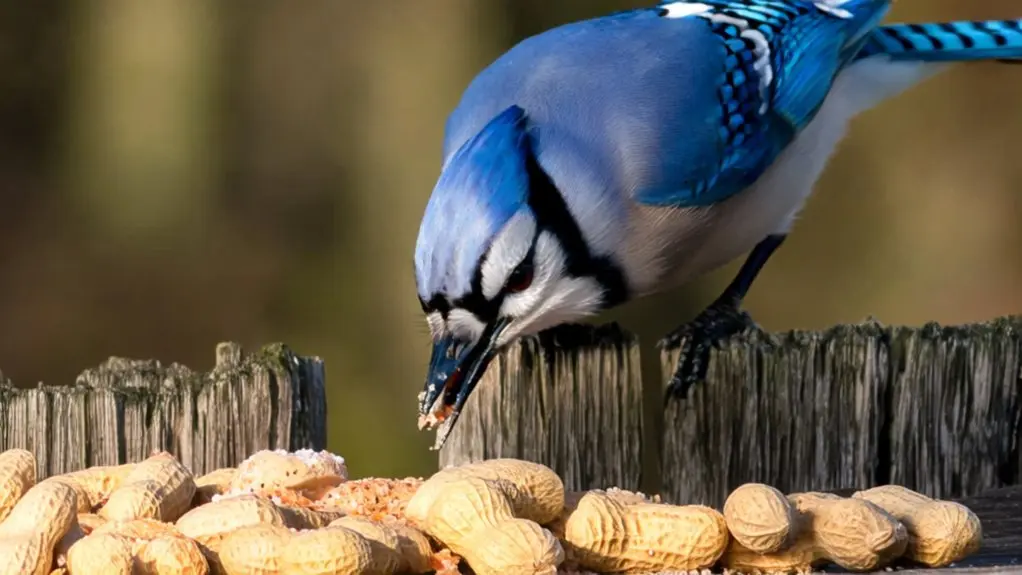
You shouldn’t feed birds salted peanuts because their kidneys aren’t built to process excess sodium. This can risk dehydration and health issues like impaired migration or duller feathers.
While occasional salted peanuts likely won’t cause immediate harm due to mild salt levels and peanut shells limiting salt exposure, regular high intake can stress birds. So, it’s better to avoid making salted peanuts a regular treat.
Instead, offer plain, unsalted peanuts that match the species’ feeding preferences. Understanding how salt affects birds and safe feeding habits helps protect their wellbeing and supports their natural behaviors.
Why Salted Peanuts Harm Birds
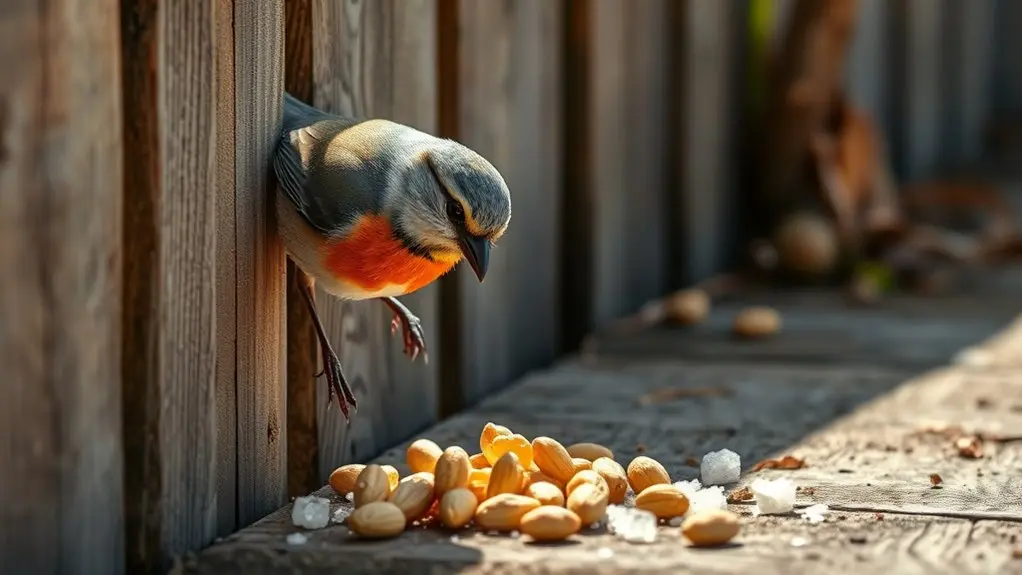
Although salted peanuts may seem like a convenient snack for birds, they contain about 1% salt, which can cause excessive sodium intake when eaten regularly. Birds have less efficient kidneys for processing salt compared to humans, so high sodium levels can disrupt their physiological balance.
This imbalance can impair critical functions, including those related to bird migration, where ideal hydration and electrolyte levels are essential for long flights. Excess salt may also affect feather coloration by stressing the bird’s system, potentially leading to duller plumage that signals poor health.
Since salted peanuts often come shelled, the risk of ingesting harmful salt increases. Understanding these effects helps explain why salted peanuts can harm birds, despite their popularity as a food source.
How Salt Affects Bird Health and Behavior
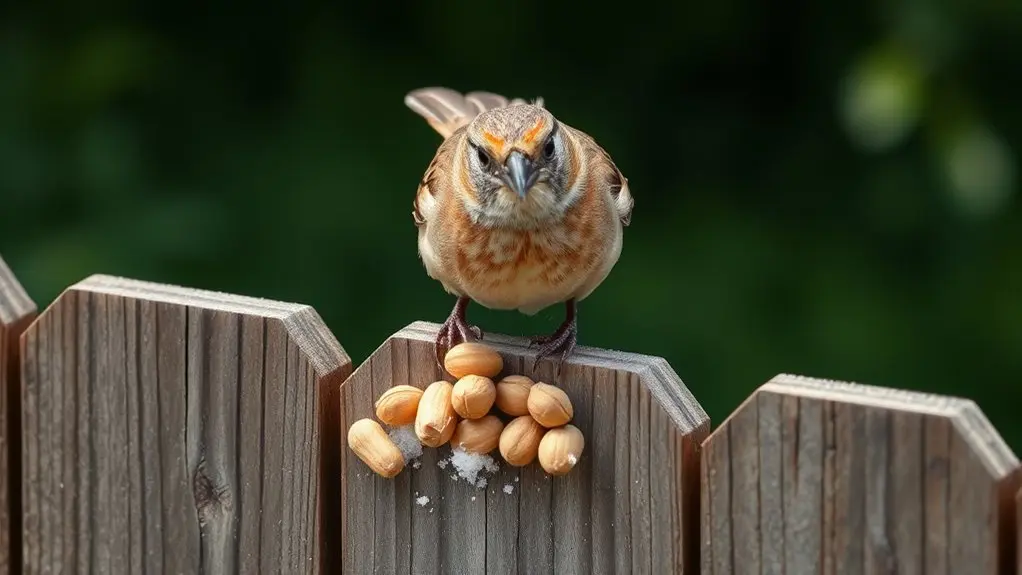
You should know that birds naturally tolerate higher salt levels than humans because their diets often include environmental sodium. That means a little extra salt isn’t usually a big deal for them.
While salted peanuts do have some sodium, the amount is generally low and unlikely to cause immediate harm.
That said, repeated exposure to added salt can affect bird health and behavior over time. So, it’s a good idea to understand these effects and be mindful of how much salt birds are getting in their diet.
Salt Impact On Birds
When birds consume salted peanuts, their bodies handle the sodium differently than humans because of their specialized kidney adaptations. Birds can tolerate salt better, but too much salt can still cause dehydration and kidney stress. This affects behaviors like how much water they drink and their foraging habits.
Salt exposure also influences things like bird migration and feather coloration. That’s because hydration levels and nutrient balance are super important for these functions. Here’s a quick overview to keep in mind:
| Effect on Birds | Cause | Result |
|---|---|---|
| Kidney stress | Excess sodium intake | Reduced filtration capacity |
| Behavioral changes | Altered salt levels | Increased water intake |
| Migration and feathers | Hydration and nutrition | Impaired endurance and color |
It’s a good idea to watch the salt in birds’ diets closely. Even though birds can handle salt in their environment pretty well, too much salt over time can still hurt their health.
Bird Salt Exposure
Because birds encounter various environmental salt sources such as road salt spray and roadkill, their overall salt intake includes more than just dietary choices like salted peanuts. Birds naturally regulate their salt consumption and tolerate moderate levels due to this exposure. This plays a role in their health, behavior, bird migration, and nesting habits.
Consider these points about bird salt exposure:
- Salted peanuts contain about 1% salt, but the shell limits salt penetration to the kernel.
- Conservation studies show moderate salted peanut consumption rarely causes harm.
- Environmental salt influences birds’ physiological adaptations during migration and nesting.
Understanding these factors helps you provide safer food options. While salted peanuts aren’t highly detrimental, unsalted alternatives remain preferable to support bird health and natural behaviors.
Safe Peanut Options: Avoiding Salted Peanuts
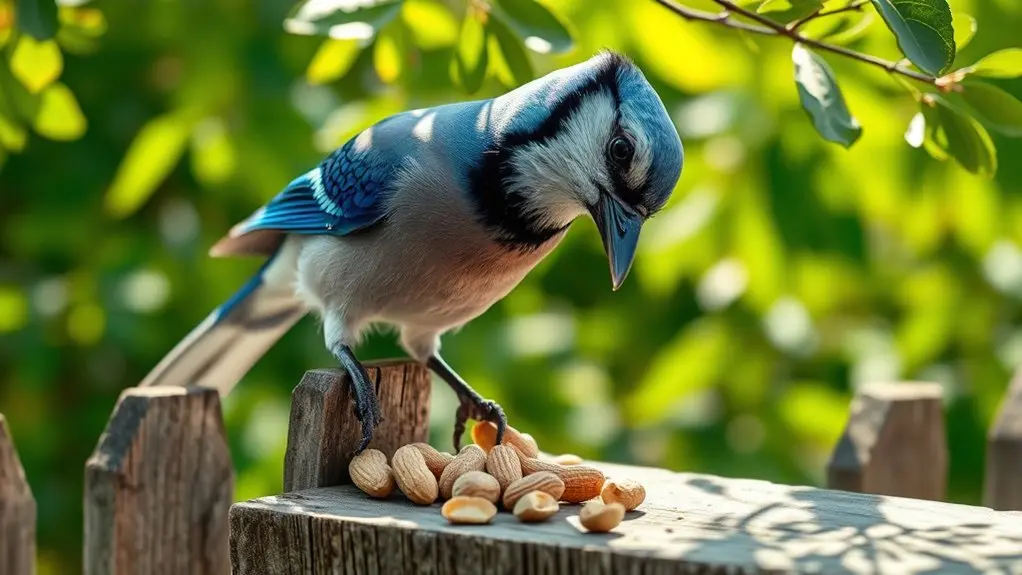
Although salted peanuts sold for human consumption contain about 1% salt, mostly sodium chloride, this salt rarely penetrates the shell to affect birds directly. However, when feeding birds in their natural habitat, it’s best to avoid salted peanuts altogether.
During nut harvesting, salted peanuts are roasted and seasoned for human taste. This introduces unnecessary additives that may harm birds over time. So, you should offer raw, unsalted peanuts to minimize health risks associated with salt intake.
Conservation groups recommend using plain peanuts because they better align with the birds’ natural diet and reduce potential disruptions to their habitat.
How to Identify Salted Peanuts in Stores
To accurately identify salted peanuts in stores, you should carefully examine product labels and packaging. Salted varieties are commonly marked as “roasted and salted” or “seasoned,” indicating flavor additives like salt.
You can also check the ingredient list for terms such as “sodium,” “salt,” or “seasoning,” which confirm added salt content.
Packaging labels for salted peanuts typically highlight these flavor additives to attract consumers seeking seasoned snacks. So, keep an eye out for these key indicators on packaging labels:
- Descriptions including “roasted and salted” or “seasoned”
- Ingredient lists mentioning “salt,” “sodium,” or other flavor additives
- Absence of terms like “raw” or “unsalted,” which usually signify no added salt
These steps help you distinguish salted peanuts from unsalted ones accurately. It’s pretty straightforward once you know what to look for!
Feeding Tips for Different Bird Species
You’ll notice that different bird species have their own peanut preferences. For example, jays and woodpeckers tend to go for whole nuts, while chickadees and titmice usually prefer peanut hearts or chips.
If you offer a variety of nut sizes and types, you’ll attract more species since birds have different feeding habits and bill sizes.
Plus, tweaking your feeding techniques can make a big difference. Try spreading peanut butter for woodpeckers or scattering whole nuts for jays. Doing this can really boost your chances of seeing a diverse group of birds at your feeder.
Bird Preferences By Species
When providing salted peanuts, understanding species-specific preferences can really boost feeding success and make the birds happier. Bird migration patterns and feather colors often link to what they like to eat, so tailoring your feeding approach works better.
Jays are known to actively seek out in-shell peanuts and stash them away for later.
Woodpeckers vary in size from downy to pileated and they eat peanuts whole, chopped, or shelled.
Smaller birds like chickadees, titmice, and nuthatches prefer smaller pieces or peanut butter. They’ve clever ways to get at the nutrients efficiently.
Northern cardinals like whole, half, or chopped peanuts and often prefer them in the shell.
Wrens and ground feeders such as sparrows and towhees usually go for shelled or chopped peanuts.
Knowing these preferences helps you feed in a way that matches their natural habits and migration needs.
Nut Size And Form
Although birds vary widely in size and feeding habits, matching the nut size and form to each species’ bill structure is crucial for effective feeding.
Larger bird species, like jays and crows, prefer whole peanuts with the peanut shell intact. This allows them to carry and open them later.
In contrast, smaller birds such as chickadees and titmice favor peanut hearts or chips, which suit their smaller bills.
Ground feeders like sparrows and doves often peck at peanut fragments on the ground.
Meanwhile, wrens and similar small songbirds handle shelled or chopped peanuts.
Considering bird size when selecting the nut form ensures safe, accessible feeding and reduces the risk of choking or waste.
Matching peanut shell presence and nut size to each species’ feeding behavior optimizes nourishment and engagement.
It really helps make feeding time better for the birds.
Feeding Techniques And Tips
Since different bird species have distinct feeding preferences, selecting the right peanut form and feeder type is essential to maximize attraction and accessibility. During bird migration and nesting habits, providing appropriate nutrition supports energy demands and reproductive success.
Jays and woodpeckers prefer whole nuts, while small songbirds favor chopped peanuts or peanut butter.
Using specialized feeders with wider mesh or holes helps accommodate these preferences and prevents larger animals from taking the food. Here are some feeding tips:
- Spread peanut butter on tree trunks or fences to attract woodpeckers and clingy birds.
- Offer peanuts in various forms to attract diverse species during migration periods.
- Regularly check and replace peanuts to avoid spoilage, especially in warm or humid conditions.
Following these techniques guarantees you support local bird populations effectively.
Preventing Pests and Spoilage in Peanut Feeders
To prevent pests and spoilage in peanut feeders, you should use physical barriers like baffles and squirrel-proof designs. These help keep out unwanted animals such as squirrels and raccoons.
How peanuts are grown and harvested also matters because it affects their quality and moisture content, which in turn influences how likely they’re to spoil. It’s best to store peanuts in a cool, dry place to keep moisture away since moisture attracts insects and mold.
Try not to overfill feeders. Leftover peanuts can cause pest infestations and decay. Make sure to clean feeders regularly and get rid of any spoiled peanuts to keep things hygienic and discourage pests.
You can also add natural deterrents like cayenne pepper. This is a safe way to keep pests away without hurting the birds.
Following these tips will help keep your peanuts safe and nutritious for your feathered friends while cutting down on pest problems.
Debunking Myths About Feeding Salted Peanuts
When you consider feeding salted peanuts to birds, it’s important to understand the facts behind common beliefs. Birds can tolerate small amounts of salt, as their exposure to environmental salt from sources like road spray is similar to the salt content in salted peanuts. This challenges the idea that salted peanuts are universally harmful.
Birds can handle small salt amounts, making salted peanuts less harmful than commonly believed.
Also, long-term health impacts from salted peanuts haven’t been conclusively proven, though conservationists still advise caution.
Keep these points in mind:
- Salt content in salted peanuts (~1%) is comparable to natural environmental salt.
- Bird migration and nesting behavior don’t seem adversely affected by occasional salted peanuts.
- Raw, unsalted peanuts remain the safest option to minimize any potential risks.
Understanding these facts helps you make informed feeding choices without falling for myths.
Best Practices for Feeding Peanuts Safely
Although peanuts can provide valuable nutrients to birds, you should always choose plain, unsalted varieties to minimize sodium intake. Roasted, unsalted peanuts are preferable. Processing for human taste often adds salt, which can disrupt bird migration patterns and impair feather health.
Store peanuts in a cool, dry place to prevent mold, which can be toxic. Avoid flavored, seasoned, or candy-coated peanuts since additives may harm birds.
Regularly inspect peanuts for freshness, replacing any that show signs of spoilage or mold.
By following these best practices, you support birds’ nutritional needs safely. This helps maintain their energy during migration and promotes healthy feather development.
Taking care this way guarantees you provide a beneficial food source without risking their well-being.
Frequently Asked Questions
Can Baby Birds Eat Peanuts Safely?
You shouldn’t feed baby birds peanuts, as their bird nutrition needs require softer, natural foods. Their feeding habits aren’t suited for hard or salted peanuts, which can cause choking or digestive problems before they mature.
It’s best to stick with foods that are easy for them to eat and digest. Think about things like soft fruits, insects, or specially formulated bird food. These options help ensure they get the nutrients they need without any risks.
Are Peanut Shells Harmful to Birds?
Peanut shell ingestion poses minimal bird shell toxicity risk since shells are inert and non-toxic. You should verify shells are mold-free and chemical-free, as contaminated shells could harm birds. But clean shells are generally safe for perching and nesting.
How Often Can Birds Have Peanuts?
You should offer peanuts, focusing on unsalted varieties, sparingly to support bird nutrition. Limiting salted peanuts to occasional treats prevents excess salt intake. This way, birds get balanced, safe nutrition from different kinds of peanuts without health risks.
Just remember, variety is key. Birds enjoy a mix of foods, so don’t rely only on peanuts. Keep it as a special treat rather than a daily snack.
Do Birds Prefer Peanuts Over Other Nuts?
You’ll find that bird taste preferences clearly favor peanuts over other nuts. Their nut choice preferences lean toward peanuts due to size, ease of handling, and high fat content. This makes peanuts a preferred, energy-rich option.
Birds seem to like peanuts because they’re just the right size and easy to manage. Plus, the high fat content gives them plenty of energy. So, it’s no surprise peanuts top the list!
Can Salted Peanuts Affect Wild Bird Populations?
Salt intake from salted peanuts rarely disrupts wild bird populations’ nutritional balance, as environmental salt exposure is higher.
However, you should prioritize unsalted peanuts to maintain ideal health and avoid potential long-term risks.
It’s just a safer choice overall when feeding wild birds.
Conclusion
You might be surprised to learn that even small amounts of salt can harm birds. Their kidneys aren’t adapted to process excess sodium, which makes salted peanuts risky for them. Studies show that feeding salted peanuts increases the risk of dehydration in wild birds and can affect their survival.
To protect their health, always choose unsalted peanuts and check the labels carefully. Feeding peanuts safely supports bird well-being and helps avoid unintended harm. This way, you make your backyard a safer haven for our feathered friends.