
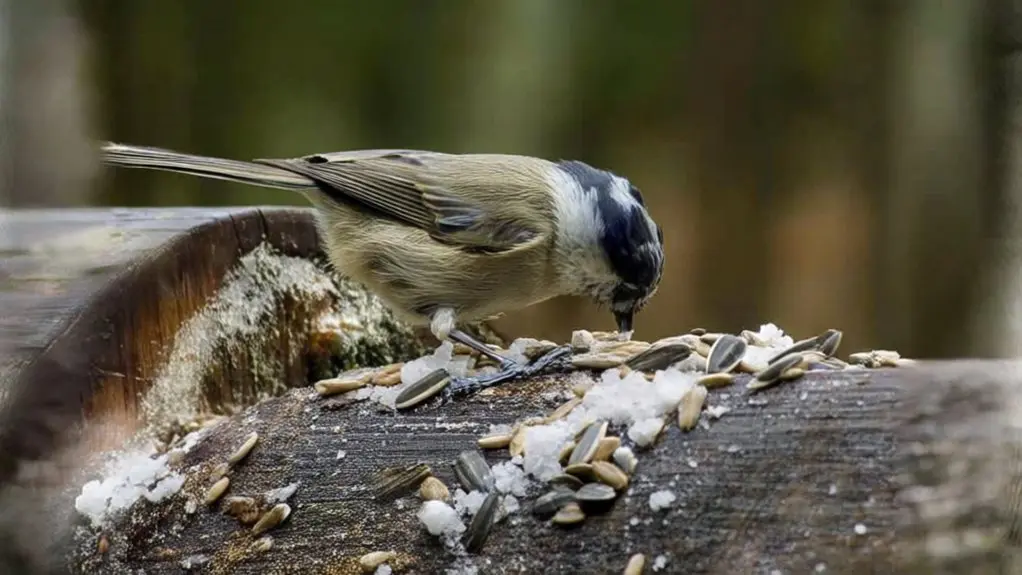
You shouldn’t give birds salted sunflower seeds because the high sodium content disrupts their hydration and kidney function. This can cause dehydration, electrolyte imbalances, and even potentially fatal salt poisoning.
Birds naturally get enough minerals from their diet, so added salt doesn’t offer any benefits. In fact, it just increases health risks like neurological distress and organ damage.
Choosing unsalted seeds is a much better option since it supports their physiology and energy needs. If you want to learn more, explore how salt affects birds and the best feeding practices to keep them healthy.
Why Salted Sunflower Seeds Are Harmful to Birds
Although salted sunflower seeds might seem like a tasty treat, they pose serious health risks to birds because of their high sodium content. Birds don’t have the right systems to process and get rid of extra salt, which can lead to dehydration and kidney damage.
Salted sunflower seeds can harm birds due to their inability to handle high sodium levels.
This overload of sodium throws off their electrolyte balance and causes heart problems that mess with important body functions. These health issues can even affect bird migration by lowering their endurance and energy levels, which they really need for long trips.
On top of that, too much salt might change the color of their feathers by weakening their overall health and messing with how pigments are deposited. Feather coloration is important for recognizing species and attracting mates.
Since salted sunflower seeds aren’t natural for birds to eat, it’s best to avoid giving them to birds. This helps keep their bodies healthy and supports the vital processes they need to survive.
How Salt in Sunflower Seeds Harms Bird Health
You mightn’t realize it, but the high sodium content in salted sunflower seeds can really throw off a bird’s fluid balance. This disruption often leads to dehydration and electrolyte imbalances.
On top of that, the extra salt puts a lot of stress on their kidneys, which aren’t designed to handle such heavy loads. Over time, this can cause serious organ damage.
All these health issues can shorten their lifespan and make them more prone to diseases.
Salt Effects On Birds
When birds consume salted sunflower seeds, the high sodium content disrupts their delicate electrolyte balance and can quickly lead to dehydration. This imbalance impairs physiological functions critical for bird migration, as dehydration reduces endurance and navigation ability.
Elevated salt intake also stresses kidneys, which in birds have limited capacity to excrete excess sodium. This further worsens dehydration and adds metabolic strain.
Over time, these effects can alter feather coloration by affecting pigment deposition and molting processes. That might impact mate selection and camouflage.
You should understand that salted seeds impose a physiological burden birds aren’t adapted to handle, leading to symptoms like weakness and lethargy.
Health Risks From Salt
Since birds have evolved to consume diets naturally low in sodium, ingesting salted sunflower seeds introduces excessive salt that disrupts their internal mineral balance. This imbalance can lead to dehydration and electrolyte disturbances, impairing their physiological functions.
High sodium intake stresses kidneys and can cause cardiovascular issues, undermining the bird’s ability to sustain energy during critical periods such as bird migration.
Moreover, salt toxicity may cause digestive upset and reduce appetite, which compromises nutrition essential for successful nesting behaviors. Consuming salted seeds repeatedly increases the risk of fatal salt poisoning, especially in young or vulnerable birds.
To protect bird health and support essential activities like migration and nesting, it’s important to avoid offering salted sunflower seeds and instead provide natural, low-sodium food sources. It really makes a difference in keeping our feathered friends healthy and strong.
Signs of Salt Poisoning From Sunflower Seeds in Birds
You’ll notice signs of salt toxicity in birds after they consume salted sunflower seeds. These signs include excessive thirst, lethargy, and diarrhea.
Sometimes, you might also see behavioral changes like disorientation, tremors, or even seizures. These symptoms often point to neurological distress caused by salt poisoning.
If you spot any of these symptoms, it’s really important to take them seriously. They could be warning signs of kidney failure or severe dehydration.
Symptoms Of Salt Toxicity
Although birds may enjoy sunflower seeds as a treat, consuming salted varieties can lead to salt toxicity. This shows up through a range of clinical signs you might notice.
If you see symptoms like diarrhea, dehydration, weakness, or neurological issues such as tremors and seizures, these are signs of elevated sodium levels stressing the kidneys. Excess salt throws off the electrolyte balance, causing the bird to drink and urinate a lot as it tries to cope.
You might also spot lethargy, loss of appetite, and uncoordinated movements. These symptoms can mess with important things like bird migration, where staying hydrated and energized is key.
Salt toxicity can even affect feather coloring by messing with nutrient absorption.
If it’s not treated, severe salt toxicity can lead to sudden organ failure and death. So, it’s really important to avoid giving birds salted sunflower seeds in their diet.
Behavioral Changes In Birds
Beyond physical symptoms, salt poisoning from salted sunflower seeds also shows up through distinct behavioral changes in birds. You might notice lethargy, disorientation, or tremors, which signal neurological distress from too much sodium. Birds may also drink more water and breathe rapidly.
Swelling near the eyes and legs is common too. These signs often come with altered nesting behavior, where affected birds become less active or even abandon their nests. Salt toxicity can also dull feather colors because of poor hydration and overall stress.
You may spot unusual postures or birds avoiding feeders, which usually means they’re uncomfortable or weak. If these behavioral changes aren’t addressed, kidney failure and death might happen.
Do Birds Really Need Salt? Common Myths Explained
While many people believe that birds need salt in their diet, scientific evidence shows otherwise. Birds naturally obtain sufficient minerals from their food and water, supporting proper bird hydration without added salt.
Unlike humans, birds have limited ability to process excess salt, which can disrupt their fluid balance, causing dehydration and kidney damage.
Salted seeds, often stored improperly, may also attract pests or spoil faster, negatively impacting seed storage quality.
The myth that salt is essential ignores that birds thrive on natural diets of seeds, insects, fruits, and clean water. Providing unsalted, natural foods ensures they receive appropriate nutrients safely, avoiding the risks of salt toxicity.
Understanding these facts helps you support bird health without introducing unnecessary dietary salt. It’s better to stick with what nature provides and keep things simple for our feathered friends.
Why Natural Minerals Differ From Added Salt in Seeds
You’ll find that natural sunflower seeds have essential minerals like magnesium and potassium. These minerals support bird health without adding extra sodium.
On the other hand, when salt is added, it brings in high levels of sodium. Birds’ kidneys can have a hard time processing all that sodium, which might lead to dehydration and electrolyte imbalances.
Natural Minerals Versus Sodium
Although natural sunflower seeds contain essential minerals like magnesium, phosphorus, and potassium that support birds’ health, added salt in salted seeds introduces excessive sodium that can harm them.
Natural minerals contribute to metabolic functions and maintain electrolyte balance, promoting overall health and efficient bird hydration.
In contrast, sodium from added salt primarily serves seed preservation by preventing spoilage but offers no nutritional benefit.
Your bird’s kidneys struggle to process this surplus sodium, risking dehydration and electrolyte imbalance.
While natural minerals assist in regulating fluids and supporting physiological processes, excessive sodium disrupts these systems, potentially leading to adverse health effects.
Understanding this distinction helps you make informed choices about feeding birds, emphasizing natural mineral content over salted additives for their wellbeing.
It’s really about choosing what’s best for your feathered friends.
Effects Of Added Salt
Because birds’ kidneys cannot efficiently process high levels of sodium, consuming salted sunflower seeds introduces a significant health risk. Unlike natural minerals found in seeds that are essential for seed preservation and balanced nutrition, added salt disrupts birds’ electrolyte balance, causing dehydration.
Observing proper bird feeding etiquette means offering low-sodium natural seeds that support their physiological needs.
| Aspect | Natural Seeds |
|---|---|
| Sodium Content | Minimal, naturally occurring |
| Impact on Hydration | Maintains electrolyte balance |
| Seed Preservation | Natural mineral composition aids |
Added salt artificially inflates sodium levels, which poses toxicity risks and impairs hydration. So, you should avoid salted seeds to keep birds healthy and promote ethical feeding practices.
Bird Health Considerations
How do natural minerals in seeds support bird health differently than added salt? Natural minerals provide essential nutrients that help with important body functions birds need for migration and building nests. These minerals keep electrolytes balanced and support hydration without causing harm.
On the other hand, added salt in sunflower seeds means extra sodium that birds aren’t used to handling. Too much sodium can cause dehydration, stress on the kidneys, and upset the electrolyte balance. This can make it harder for birds to survive when they need energy the most, like during migration.
Unlike natural minerals, salted seeds don’t offer helpful nutrients and can actually harm birds by messing up their natural diet. Since birds usually eat very little salt, adding salt to seeds isn’t necessary and could hurt their health during important times such as migration and nest building.
Why Unsalted Sunflower Seeds Are Safer and Healthier
When you provide birds with unsalted sunflower seeds, you eliminate the risks associated with added sodium, such as dehydration and high blood pressure. Salted seeds disrupt bird dietary needs by causing electrolyte imbalances and kidney stress, since birds cannot regulate high salt intake.
Unsalted seeds, through minimal seed processing, closely mimic natural diets. This ensures essential nutrients without harmful additives. It supports ideal bird health and reduces salt-related illnesses.
| Aspect | Unsalted Seeds | Salted Seeds |
|---|---|---|
| Sodium Content | None | High |
| Health Impact | Supports hydration, kidney health | Causes dehydration, kidney stress |
| Dietary Alignment | Matches natural bird diet | Artificial, potentially toxic |
How to Choose the Best Sunflower Seeds for Wild Birds
Selecting the best sunflower seeds for wild birds involves checking out factors like seed type, freshness, and whether they suit the local bird species.
Go for black oil sunflower seeds because they’ve high oil content, shells that are easy to crack, and lots of birds love them.
If you want a no-mess option, hulled seeds or sunflower seed chips are great, especially for smaller birds.
Make sure the seeds are stored in airtight containers to keep them fresh and stop mold from forming. Poor storage can reduce nutritional value and cause spoilage.
Also, steer clear of seeds that have added salt, preservatives, or flavorings since those can be harmful to birds.
Think about the species that visit your area so you can pick seeds that match their dietary needs.
Following these tips helps you provide nutritious, safe food that supports local wildlife and keeps the birds coming back.
Tips to Avoid Salt and Harmful Additives When Feeding Birds
After choosing the right type of sunflower seeds for your local birds, the next step is making sure those seeds are free from salt and harmful additives. Salt can cause dehydration and kidney problems in birds, so it’s really important to avoid it.
To keep the seeds fresh and support natural bird foraging behaviors, here are some tips to follow:
Check ingredient labels carefully for sodium content and preservatives. Opt for raw, unsalted sunflower seeds that don’t have any flavorings.
Store seeds in airtight containers to prevent contamination and spoilage.
Buy from reputable suppliers who specialize in natural bird feed. Also, make sure to clean feeding stations regularly to avoid any cross-contamination with salted or treated seeds.
Proper seed storage and selection help promote healthy bird foraging and reduce the risk of salt-related health issues. This way, both wild and pet birds get the nutrition they need without harmful additives.
Safe Alternatives to Salted Seeds That Attract Birds
Although salted sunflower seeds may seem appealing, they pose serious health risks to birds because of their high sodium content. Instead, you should offer unsalted, raw sunflower seeds or those labeled as bird-safe to support peak health.
These safe alternatives help prevent dehydration and kidney damage, which can impair critical functions like bird migration. Choosing seeds free from added salts, flavorings, or preservatives ensures birds maintain their physiological balance.
Proper nutrition directly influences feather coloration, an important factor in mate selection and survival. Commercial bird seed mixes often include unsalted options, making it easy for you to provide a safe, attractive food source.
How to Encourage Birds to Eat Healthy Seeds Year-Round
When you provide a consistent supply of fresh, unsalted seeds such as black oil sunflower seeds and sunflower hearts, you encourage birds to establish regular feeding habits throughout the year. Proper seed storage guarantees the seeds remain nutritious and free from mold, supporting healthy bird behavior.
To promote year-round healthy seed consumption, consider these steps:
Store seeds in airtight containers away from moisture and sunlight. Refill feeders regularly with fresh, unsalted seeds. Place feeders in sheltered locations to protect from harsh weather. Clean feeders frequently to prevent disease. Supplement diets with natural foods like fresh fruits or mealworms.
These practices create a reliable food source, attract diverse species, and maintain birds’ nutritional balance. That way, you encourage consistent visits and help birds stay in peak health.
Frequently Asked Questions
Can Salted Sunflower Seeds Affect Different Bird Species Differently?
Yes, seed salt affects bird health differently. Smaller species are more sensitive to high salt levels, which can lead to dehydration and illness. On the other hand, larger birds tend to tolerate it better.
How Should Salted Seeds Be Disposed of if Accidentally Bought?
Like discarding a contaminated sample in a lab, you should seal salted seeds in a plastic bag to prevent seed contamination.
Dispose of them in regular trash promptly, avoiding compost or feeders. This helps reduce the risks that come with salted seeds.
It’s best to act quickly and keep those seeds away from places where they could cause harm.
Are There Specific Brands Known for Avoiding Salt in Bird Seeds?
You’ll find Wild Birds Unlimited and Duncraft avoid salt in their seeds, enhancing seed nutritional value for ideal bird dietary health.
Always check labels to guarantee the seed meets safe dietary standards for your birds. It’s a good habit to make sure your feathered friends get only the best.
Choosing brands that focus on salt-free options can really make a difference in their overall well-being. So, keep an eye out for those trusted names!
Can Pets or Other Animals Eat Salted Sunflower Seeds Safely?
You might think salted sunflower seeds are harmless treats, but pets can’t safely handle bird seed additives like salt.
Ignoring bird dietary restrictions risks dehydration and kidney damage, so always avoid feeding salted seeds to animals.
It’s better to stick with plain, unsalted seeds if you want to share some sunflower seeds with your furry friends.
How Long Can Unsalted Sunflower Seeds Be Stored for Bird Feeding?
You can store unsalted sunflower seeds for bird feeding 6 to 12 months using proper seed preservation. Follow storage tips: keep seeds in airtight, cool, dry containers below 70°F, and check regularly for spoilage signs.
Just make sure to keep them in a spot that’s not too warm or humid. That way, your seeds stay fresh and tasty for the birds. Regularly checking helps catch any issues early.
Conclusion
Choosing carefully and consistently can keep your feathered friends flourishing. Salted sunflower seeds, though seemingly simple snacks, silently sabotage bird health by causing salt poisoning and other serious issues. Instead, opt for safe, salt-free seeds to support sustainable, strong avian systems.
By avoiding additives and embracing natural nutrition, you guarantee your backyard birds thrive through thoughtful, toxin-free treats. Prioritize pure, plant-based provisions for persistent, positive bird well-being year-round. It’s really about making small changes for big benefits. Your birds will thank you!