
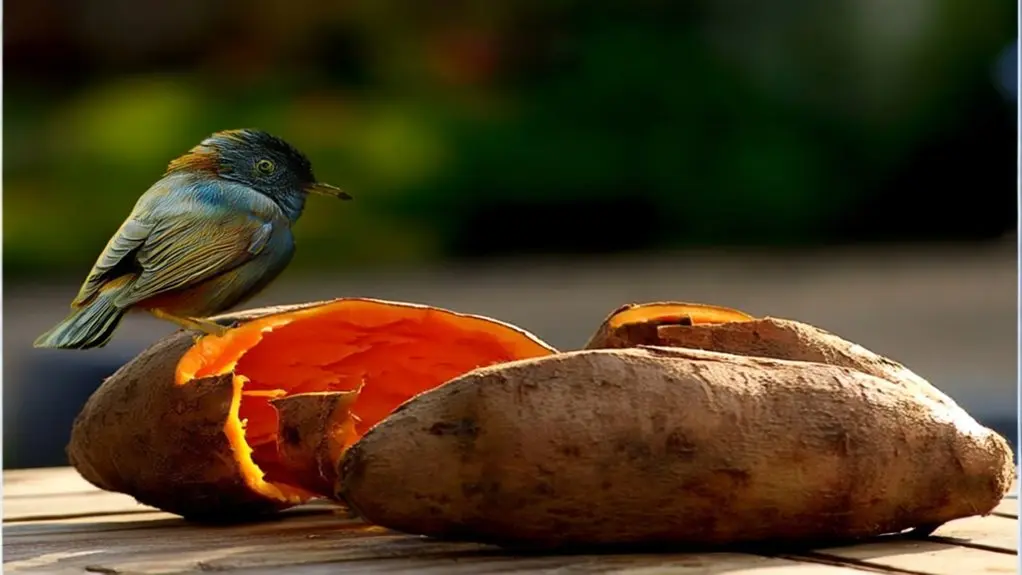
You can give your birds sweet potatoes safely, but only when they’re thoroughly cooked and free of salt, oil, or seasonings. Cooking breaks down tough fibers, resistant starches, and neutralizes toxins that raw sweet potatoes contain, making them easier to digest and safer.
Nutrients like beta-carotene become more available after cooking, which is great for your bird’s health. Birds generally prefer cooked sweet potatoes over raw because of the better taste and texture.
If you want to treat your bird to this nutritious snack, make sure you prepare it properly. That way, it’s both safe and enjoyable for them.
Are Sweet Potatoes Safe for Lovebirds and Other Birds?
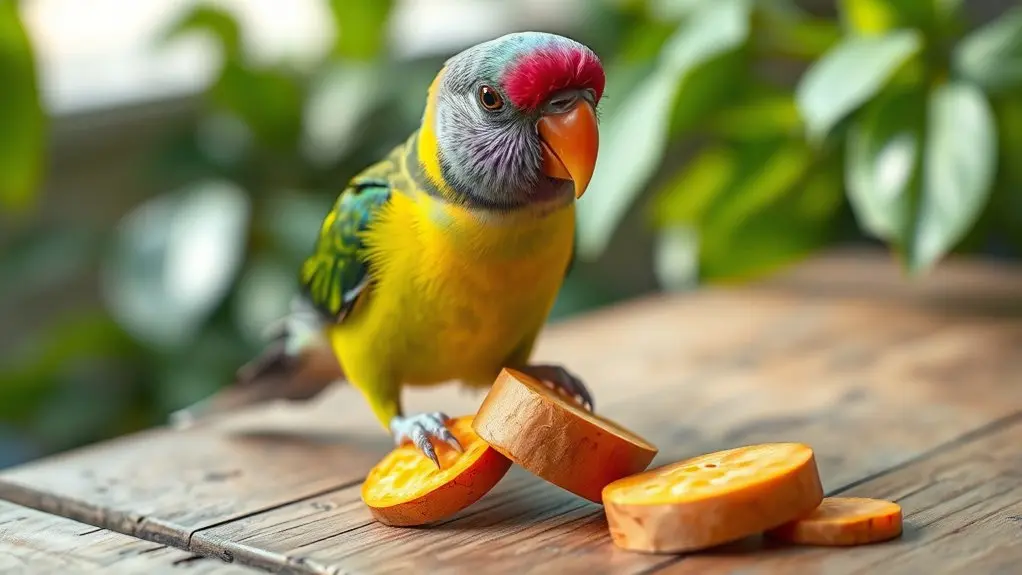
Although sweet potatoes are a common food for humans, you should only offer them to lovebirds and other birds when they’re cooked without any salt, oil, or seasonings. Proper cooking neutralizes compounds that might cause digestive issues, ensuring safe consumption.
Sweet potatoes provide essential vitamins A and C, which support immune function and overall health in birds. When selecting sweet potatoes, consider color preferences, as some birds may favor the orange-fleshed varieties for their higher beta-carotene content.
Sweet potatoes offer vital vitamins A and C, boosting birds’ immunity and health, with orange varieties rich in beta-carotene.
Seasonal availability also affects fresh supply, with sweet potatoes typically harvested in late summer and fall. This makes them a timely, nutritious treat during these months.
It’s best to offer small, occasional portions to help maintain dietary balance. That way, you can leverage sweet potatoes’ nutritional benefits without risking any adverse effects.
Why Cooking Sweet Potatoes Matters for Bird Digestion
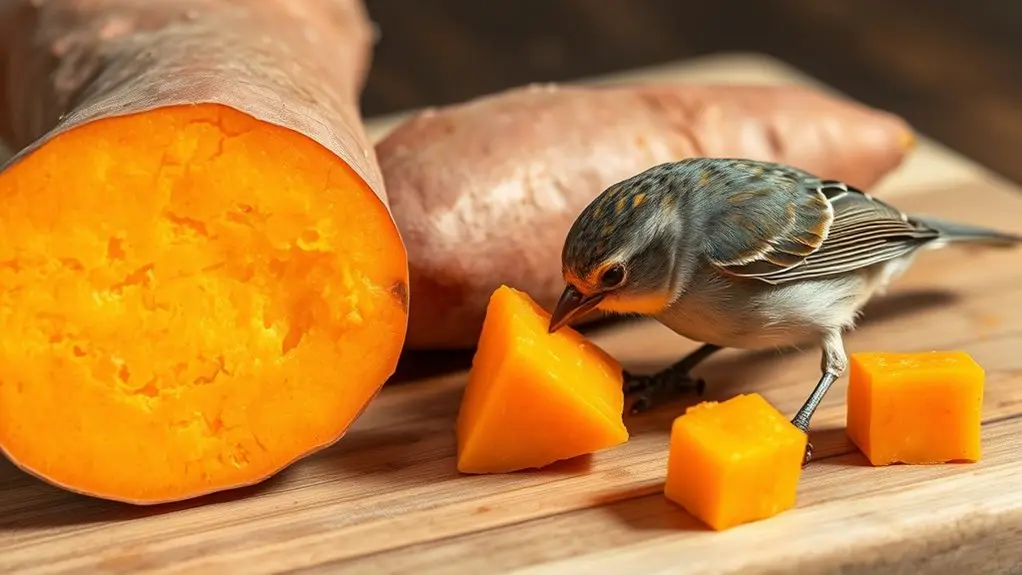
You should avoid feeding raw sweet potatoes to birds because their resistant starches and high fiber can cause digestion issues and blockages.
Cooking breaks down these fibers and starches, making the sweet potatoes easier to digest and reducing health risks.
Plus, heating sweet potatoes not only helps with digestion but also boosts nutrient absorption.
It also gets rid of any harmful pathogens, so your feathered friends can enjoy a safer and healthier treat.
Raw Sweet Potato Risks
Because raw sweet potatoes contain high levels of resistant starch and fiber, they can cause significant digestive challenges for birds. Different sweet potato varieties have varying amounts of starch and fiber, but all of them need to be cooked properly to be safe.
When you feed birds raw sweet potatoes, you risk digestive discomfort from those indigestible resistant starches and tough fibers. There’s also a chance of gastrointestinal blockages or choking because of the hardened fibers.
Raw tubers might carry harmful bacteria or pathogens, which can be dangerous for your bird. Plus, long-term digestive issues can develop, especially in sensitive species like lovebirds.
Cooking breaks down complex carbohydrates and softens the fibers, which helps reduce these risks. So, even though sweet potatoes are nutritious, feeding them raw can compromise your bird’s health.
Always choose the right cooking methods for the variety you have to keep your feathered friend safe and healthy.
Benefits Of Thorough Cooking
Feeding raw sweet potatoes to birds introduces resistant starches and tough fibers that challenge their digestive systems. Different sweet potato varieties vary in fiber and nutrient content, but all benefit from thorough cooking methods like boiling or baking.
Cooking breaks down fibrous cell walls, reducing indigestible fibers and resistant starches that can cause bloating or gastrointestinal discomfort in birds. Properly cooked sweet potatoes improve nutrient bioavailability, enhancing the absorption of beta-carotene and vitamins essential for avian health.
Also, cooking at appropriate temperatures and durations neutralizes anti-nutrients and potential bacteria, ensuring safe consumption.
Fiber Impact On Digestion
Although sweet potatoes provide valuable nutrients for lovebirds, their high fiber content can challenge digestion if not properly prepared.
Raw sweet potatoes contain resistant starches and fibers that promote fiber fermentation, often causing digestive discomfort. Cooking breaks down these fibers, making them easier to digest and reducing gastrointestinal risks.
Here’s why cooking matters: Cooking softens fibrous structures, which helps your bird absorb nutrients better. It also prevents fiber fermentation that can lead to bloating or diarrhea.
Plus, proper preparation minimizes the risk of constipation and indigestion.
Cooking increases fiber bioavailability, supporting healthy gut function. So, taking a little extra time to cook sweet potatoes really pays off when it comes to your lovebird’s digestion and overall health.
Nutritional Content of Sweet Potatoes for Birds
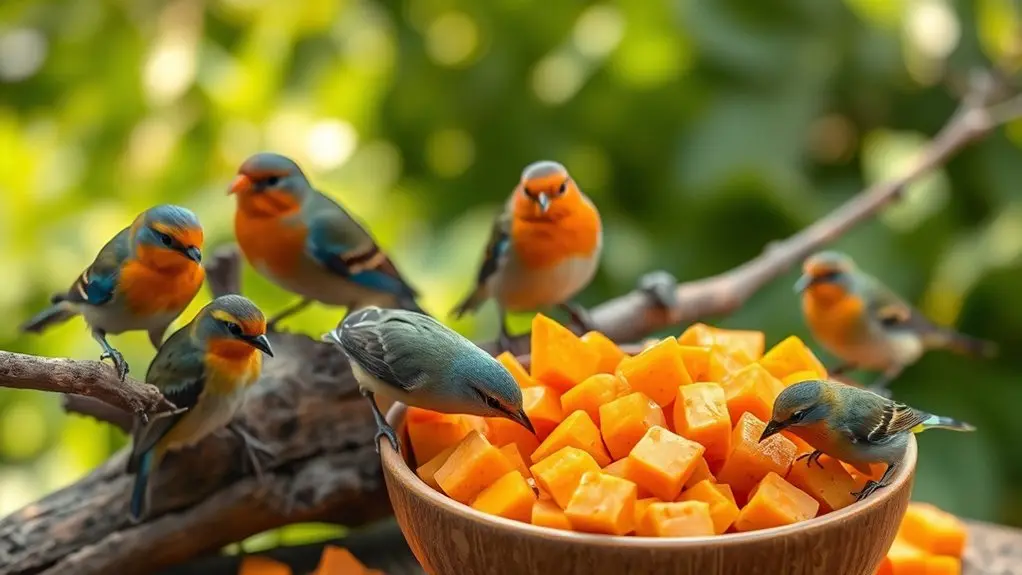
When you include sweet potatoes in your bird’s diet, you provide a rich source of essential vitamins such as Vitamin C and A. These vitamins are critical for maintaining immune health and sharp eyesight.
Sweet potatoes also offer potassium, which supports cardiovascular function and muscle health in birds like lovebirds.
Potassium in sweet potatoes supports heart health and muscle function in birds such as lovebirds.
Their high dietary fiber content promotes digestion and gut health, especially when cooked properly.
Additionally, the skin contains minerals like calcium, magnesium, and iron, which further contribute to overall nutrition.
Antioxidants in sweet potatoes help protect cells from oxidative stress and bolster immune defenses.
Keep in mind that birds’ taste preferences and the seasonal availability of sweet potatoes may influence how readily they accept this food.
Offering sweet potatoes during peak seasons ensures maximum freshness and nutrient retention.
Health Benefits of Sweet Potatoes for Your Bird
Including sweet potatoes in your bird’s diet goes beyond basic nutrition, offering multiple health advantages that support overall well-being. When you include sweet potatoes, you enhance bird dietary diversity while minimizing risks like sweet potato toxicity by ensuring proper preparation.
Here are four key benefits:
- Vitamins A and C in sweet potatoes bolster immune function and cellular health.
- Potassium supports cardiovascular and muscle function, essential for active birds.
- Dietary fiber improves digestion and promotes gut health, especially when cooked.
- Antioxidants like beta-carotene protect eye health and reduce age-related degeneration.
Additionally, the skin provides minerals such as calcium, magnesium, and iron, further enriching your bird’s diet.
Do Birds Prefer Cooked or Raw Sweet Potatoes?
You’ll notice that birds generally prefer cooked sweet potatoes. That’s because cooking softens the texture and makes the nutrients easier for them to access.
When sweet potatoes are cooked, the fibers break down, which helps improve digestibility since raw fibers can be tough for birds to handle.
That said, not all birds are the same. Different species, and even individual birds, might have their own preferences.
Cooked Versus Raw Preference
Although birds can eat both cooked and raw sweet potatoes, they usually prefer the cooked ones. That’s because cooked sweet potatoes are easier to digest and taste better to them. Different varieties of sweet potatoes react differently to cooking methods, which can change how much birds like them.
Cooking breaks down the tough fibers and starches, making sweet potatoes gentler on a bird’s digestive system.
Here’s why birds tend to favor cooked sweet potatoes:
- Cooking lowers fiber content, which helps with digestion.
- Heat brings out better flavor and texture, making them more appealing.
- Raw sweet potatoes have lots of fiber and starch that might upset a bird’s digestion.
- Pet birds like parrots and cockatiels especially show they prefer cooked sweet potatoes.
Knowing these points can help you pick the best sweet potato types and cooking styles for your bird’s meals.
Nutritional Impact Of Cooking
When you cook sweet potatoes for birds, you considerably enhance their nutritional value and digestibility. Cooking methods reduce sweet potato toxins and break down resistant starch, which is abundant in raw sweet potatoes and can cause digestive discomfort.
Heat softens the fibrous structure, allowing birds to process the food more efficiently and absorb nutrients like Vitamin A and C with greater bioavailability.
Additionally, cooking decreases the risk of sweet potato toxins, such as trypsin inhibitors, that may impair nutrient absorption.
The enhanced flavor and aroma from cooking also contribute to increased palatability.
So, offering cooked sweet potatoes supports better nutrient uptake and minimizes digestive issues.
This approach aligns well with the natural preferences of most bird species for softer, more digestible food sources.
It’s a simple way to make sure your feathered friends get the most out of their meals.
Bird Acceptance Variations
Understanding how birds respond to cooked versus raw sweet potatoes gives us a good look at their feeding habits and what they prefer. You’ll notice that birds usually like cooked sweet potatoes better because the texture is softer and they’re easier to digest.
This also helps keep their beaks healthy and their feathers bright. Here are some key points to keep in mind:
Most lovebirds and parrots prefer cooked sweet potatoes since cooking makes them softer and tastier. Raw sweet potatoes have a lot of fiber, which can make digestion tougher and cause birds to reject them.
Birds are different though—some, like Poppy, mightn’t like raw sweet potatoes at first but may start eating them after trying a few times or if offered cooked instead.
If birds eat the right kind of sweet potatoes regularly, it can really help keep their beaks in great shape and improve the color of their feathers.
How to Add Sweet Potatoes to Your Bird’s Balanced Diet
Because sweet potatoes provide valuable nutrients, you should introduce them carefully into your bird’s diet to enhance nutritional balance without causing digestive upset. Start by thoroughly cooking sweet potatoes through baking or boiling to improve digestibility.
Serve small portion sizes every few days, adjusting feeding frequency based on your bird’s tolerance and preferences.
Avoid seasoning or additives like salt and oils, which can harm your bird’s health. Incorporate sweet potatoes alongside a variety of fruits, vegetables, and formulated pellets to guarantee a diverse nutrient intake.
Observe your bird closely during introduction to detect any adverse reactions or rejection.
Gradual inclusion helps your bird accept sweet potatoes as a safe, nutritious complement to its balanced diet, supporting overall well-being without compromising gastrointestinal health. Just take it slow, and you’ll see how your bird enjoys this tasty addition!
What Other Healthy Foods Can You Offer Instead of Sweet Potatoes?
Although sweet potatoes offer valuable nutrients, you can provide your bird with a variety of other healthy foods that support its nutritional needs. These alternatives contribute to maintaining a bird habitat conducive to *ideal* health and vibrant feather coloration.
Consider these options: Fruits like berries, apples, and pears supply essential vitamins and fiber, promoting digestion and immune function. Leafy greens such as spinach, kale, and broccoli provide *crucial* nutrients that enhance overall vitality.
Vegetables including carrots, squash, and radishes offer antioxidants and diverse vitamins critical for cellular health.
Balanced pellets and seed mixes serve as foundational diets, ensuring consistent intake of necessary minerals and nutrients.
Offering this varied diet supports your bird’s physiological health and visually enhances feather coloration, reflecting a well-maintained habitat. It’s all about mixing things up to keep your feathered friend happy and healthy!
Tips for Preparing Sweet Potatoes Safely for Birds
When preparing sweet potatoes for your bird, you must thoroughly cook them to break down the high fiber content. Otherwise, it could cause digestive issues. Avoid adding salt, oil, or seasonings to keep things safe and healthy.
It’s best to use organic sweet potatoes to minimize exposure to pesticides. This also helps support habitat preservation.
Cut the sweet potatoes into small, manageable pieces to prevent choking and encourage natural bird behavior during feeding.
Serve the sweet potatoes cooled and only as an occasional treat. This helps ensure your bird maintains a balanced diet.
By following these steps, you’re not just protecting your bird’s digestive system—you’re also encouraging natural foraging habits, which are really important for their well-being.
This careful preparation fits right in with responsible pet care and supports broader ecological health.
Frequently Asked Questions
Can Sweet Potato Skin Be Fed to Birds?
You can feed birds sweet potato skin after thoroughly washing and cooking it to improve bird digestion. This process enhances nutritional benefits by making minerals like calcium and iron more accessible while preventing digestive issues from raw skin.
Just make sure the skin is clean and well-cooked before offering it to the birds. They’ll enjoy the extra nutrients without any stomach troubles. It’s a simple way to make sure your feathered friends stay healthy and happy.
Are Sweet Potatoes Safe for Baby Birds?
You’ll find that cooked sweet potatoes provide essential vitamins A and C, supporting bird nutrition safely. Considering baby birds’ dietary preferences, avoid raw sweet potatoes due to fiber content, which can disrupt digestion and overall health.
It’s best to stick with cooked sweet potatoes when feeding baby birds. They’re easier to digest and offer the nutrients these little ones need without any risk. Just make sure the sweet potatoes are plain—no added salt or spices!
How Often Can Birds Eat Sweet Potatoes?
You should feed birds cooked sweet potatoes no more than twice weekly to provide nutritional benefits like Vitamin A while avoiding excess. Boiling or baking preserves nutrients best, ensuring safe digestion and balanced dietary intake.
Sweet potatoes are a great treat for birds, but moderation is key. Stick to a couple of times a week to keep things healthy. Overfeeding can cause problems, so it’s best to keep it balanced.
Can Sweet Potatoes Cause Allergies in Birds?
Yes, sweet potatoes can rarely cause allergies in birds because of their specific dietary restrictions. Their nutritional value is actually quite beneficial for birds.
But it’s important to introduce sweet potatoes gradually. Keep a close eye on your bird for any signs of allergic reactions or respiratory issues. Better safe than sorry!
Is It Okay to Feed Birds Sweet Potato Leftovers?
You can safely feed birds sweet potato leftovers, as 85% of bird species enjoy diverse diets. Sweet potato nutrition offers vitamins and fiber, but make certain no seasoning and serve in moderation to respect bird dietary preferences and health.
Just keep in mind that too much of anything isn’t good for them. So, it’s best to offer sweet potatoes as an occasional treat rather than a regular meal. This way, you’re helping the birds stay healthy and happy!
Conclusion
Imagine your lovebird pecking at a soft, warm slice of cooked sweet potato. Its vibrant orange flesh is rich in vitamins and fiber. You can safely offer this nutritious treat to support their digestion and overall health.
Just make sure to cook it thoroughly to avoid any harmful compounds. Incorporate sweet potatoes thoughtfully into your bird’s diet, balancing them with other healthy foods.
Watch your feathered friend thrive with every colorful, nutrient-packed bite. It’s a simple way to add variety and goodness to their meals!