
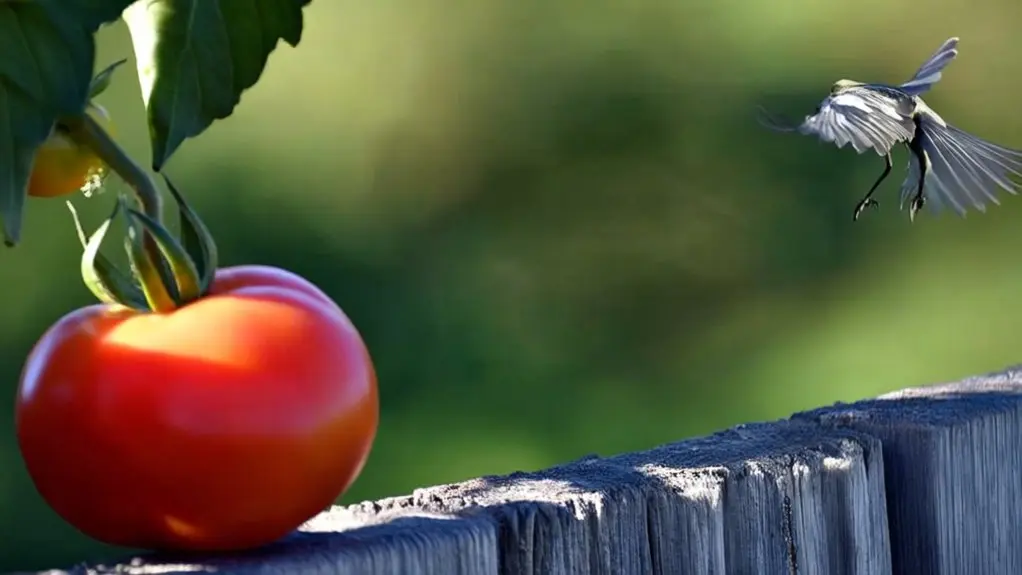
You can safely offer ripe tomatoes to your backyard birds in moderation, as they provide vitamins and hydration. Avoid green tomatoes entirely since they contain solanine, a toxic compound that harms birds’ digestive and nervous systems. Always remove leaves and stems, wash tomatoes thoroughly, and cut them into small pieces to prevent choking.
Overfeeding tomatoes can negatively impact bird health. If you want to understand how to prepare tomatoes properly and protect your plants, keep exploring these guidelines.
Are Tomatoes Safe for Birds to Eat?
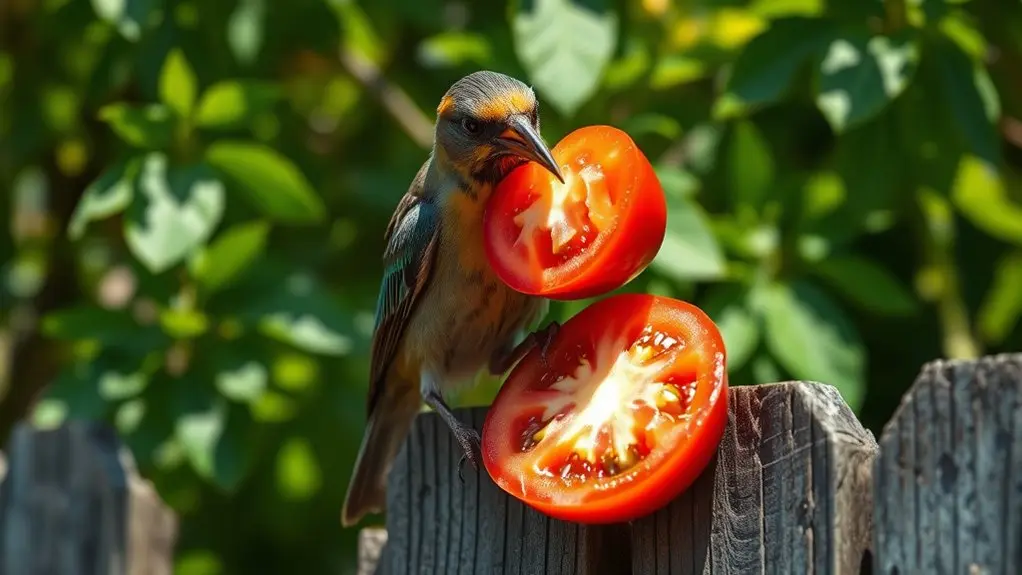
How safe are tomatoes for your bird to eat? Ripe tomatoes from careful tomato cultivation are generally safe for birds when offered in moderation. These fruits provide beneficial nutrients, including vitamins A and C, as well as antioxidants that support avian health.
However, unripe green tomatoes and other parts of the tomato plant, such as leaves, stems, and roots, contain solanine, a toxic compound harmful to birds. When considering bird migration patterns, it’s important to note that wild birds encounter various fruits.
But feeding captive or local birds requires caution. To guarantee safety, only fully ripened red or yellow tomatoes should be given, with all green parts removed.
Offering small amounts of ripe tomatoes can be a nutritious treat, but excessive consumption must be avoided to maintain ideal bird health.
Why Green Tomatoes Can Be Harmful to Birds
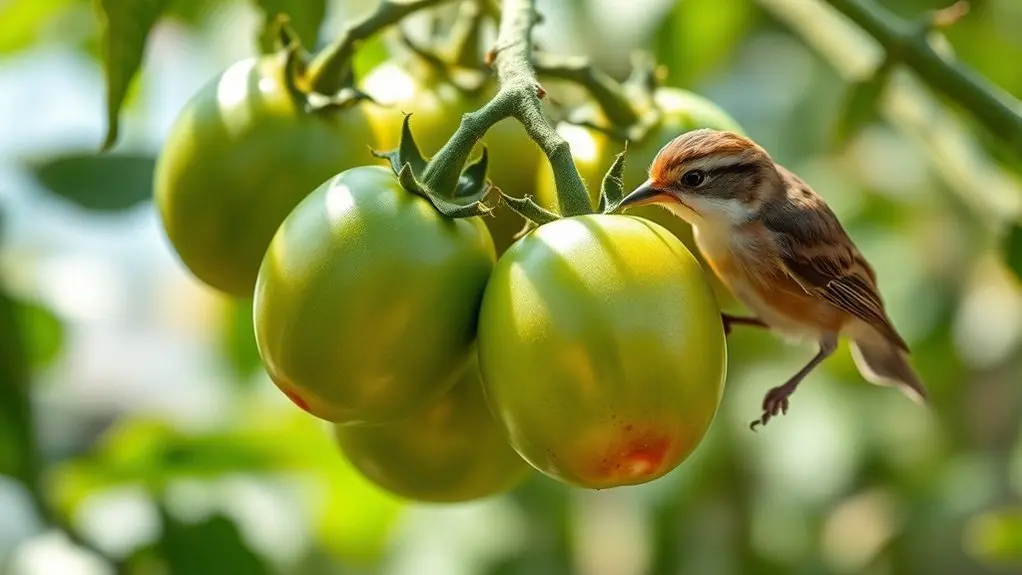
Although tomatoes are generally safe for birds when fully ripe, green tomatoes pose significant health risks due to their high solanine content. Green tomato toxins can adversely affect birds by interfering with their digestive and nervous systems.
Considering bird foraging habits, it’s crucial to note the following:
- Solanine concentration peaks in unripe green tomatoes, making them toxic.
- Birds consuming green tomatoes may experience vomiting, diarrhea, and lethargy.
- Neurological impairment can result from ingesting these toxins.
- Feeding green tomatoes to birds increases poisoning risks and should be avoided.
Understanding these factors helps you prevent exposing birds to harmful substances while respecting their natural foraging preferences for safer, ripe fruits. It’s really about keeping them safe and healthy by sticking to what’s best for them!
Why Birds Prefer Ripe Tomatoes
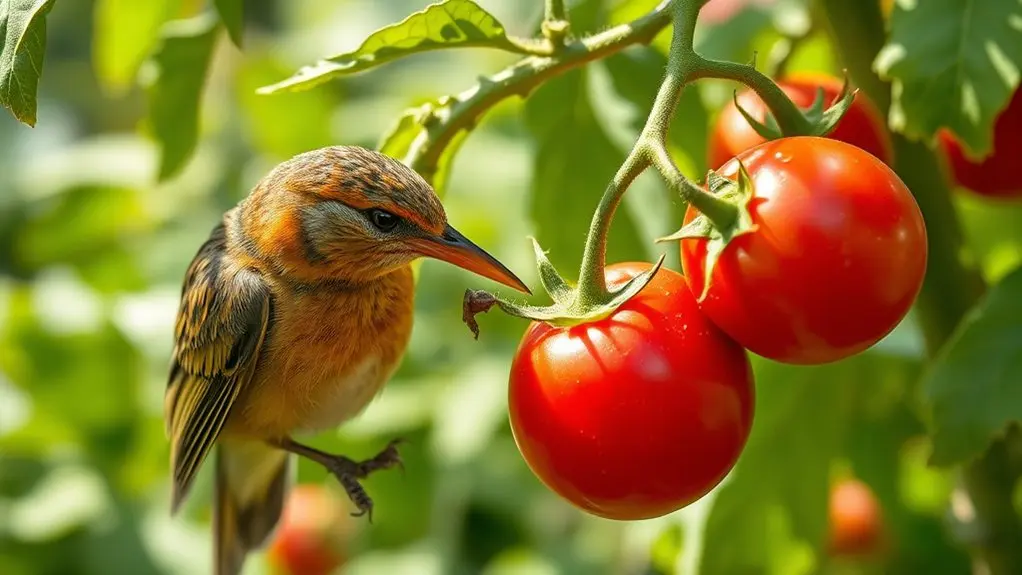
Why do birds consistently choose ripe tomatoes over unripe ones? The tomato ripening process plays a critical role in bird attraction.
As tomatoes ripen, they soften, making them easier for birds to consume and digest.
Additionally, ripe tomatoes display bright red or orange colors, visually signaling birds that the fruit is ready to eat.
Ripe tomatoes flaunt vibrant reds and oranges, clearly signaling birds that they’re perfectly ready to enjoy.
The ripening process also increases sugar content, providing birds with a quick energy source.
Moreover, ripe tomatoes emit stronger aromas, which enhance their appeal to birds.
Compared to unripe tomatoes, ripe ones have lower acidity levels, minimizing potential harm to birds.
These combined factors explain why birds exhibit a clear preference for ripe tomatoes rather than unripe ones during feeding.
It all just makes sense when you think about it!
Nutritional Benefits of Tomatoes for Birds
Beyond their appeal, ripe tomatoes offer several nutritional benefits that support bird health. When engaging in tomato cultivation for bird feeding, understanding these benefits helps maintain proper bird feeding etiquette.
Vitamins A, C, and K in tomatoes enhance bird immune functions and overall health. Lycopene, an antioxidant in tomatoes, may reduce oxidative stress in birds. High water content aids hydration, which is essential during hot weather.
Natural sugars and carbohydrates provide quick energy for active birds. So, including tomatoes in bird diets can be a tasty and healthy choice. Just keep in mind the right way to offer them!
How to Prepare Tomatoes Safely for Backyard Birds
When preparing tomatoes for backyard birds, you must first remove the stems and leaves, as they contain toxins harmful to avian health.
Next, wash the ripe, red or yellow tomatoes thoroughly to eliminate pesticides, chemicals, and residues left by tomato plant pests common in backyard gardening.
Cut the fruit into small, manageable pieces to reduce choking risks.
Avoid feeding birds cooked, salted, or seasoned tomatoes, as these additives can adversely affect their health.
Present fresh tomato pieces on a clean feeder or tray to minimize contamination, and remove any uneaten portions after a few hours to prevent spoilage or attracting pests.
These steps guarantee tomatoes are a safe, beneficial treat for birds in your backyard garden environment.
Which Bird Species Eat Tomatoes
Although not all birds are attracted to tomatoes, several species actively feed on the fruit in gardens and orchards. During bird migration, these species may exploit tomato cultivation areas as food sources. You’ll often see thrushes drawn to ripe tomatoes by their bright color and sweet aroma.
Orioles are known to peck at soft tomato flesh during migration stopovers. Tanagers consume small pieces, benefiting from tomato nutrients. Small songbirds like finches and sparrows occasionally nibble on accessible tomato skins.
These birds typically consume soft, ripe fruit rather than green parts, which contain toxic solanine. If you’re involved in tomato cultivation, understanding these species’ feeding habits helps you anticipate their impact on your crops during migration periods.
How to Tell If Birds Enjoy Tomatoes
Identifying whether birds enjoy tomatoes involves careful observation of their feeding behavior. You can determine their preference by noting if they repeatedly peck at or consume the ripe, soft parts of tomatoes.
Brightly colored tomatoes often attract birds, signaling that they recognize the fruit as a food source.
Bright tomatoes naturally draw birds, indicating their awareness of the fruit as a valuable food source.
Persistent visits to tomato plants and consistent feeding suggest enjoyment. During bird migration, when energy demands increase, you might observe heightened interest in nutrient-rich foods like tomatoes.
Additionally, birds may use tomatoes as a convenient resource near nesting sites, supporting nest protection by ensuring food availability close to their young.
Monitoring these behaviors objectively helps you understand birds’ dietary choices and their interaction with tomato plants in their environment.
Health Risks of Overfeeding Tomatoes to Birds
Because tomatoes contain high acidity and solanine, especially in unripe fruit, overfeeding them to birds can cause digestive distress and toxicity. You need to be cautious, as eating too many tomatoes might disrupt bird migration patterns and nest building behaviors. This happens because it weakens their overall health.
Consider these risks:
- High acidity and solanine can cause vomiting, diarrhea, and lethargy.
- Nutritional imbalances arise when tomatoes replace essential natural foods.
- Some species are more sensitive to solanine toxicity, which can be deadly.
- Digestive distress lowers energy levels, affecting migration endurance and reproductive activities.
To protect bird populations, avoid overfeeding tomatoes. Instead, keep their diet balanced to support their physiological needs and natural behaviors. It’s really important for their wellbeing.
Fruit Alternatives to Tomatoes for Backyard Birds
If you’re looking to treat your backyard birds to something other than tomatoes, there are plenty of great fruit options to consider. Berries, apples, and melons are all safe choices that provide essential nutrients for your feathered friends.
Just remember, when you’re feeding them, always use fresh fruit that’s free of pesticides. Cutting the fruit into manageable pieces is a good idea too, as it helps prevent any choking hazards.
Also, be careful to avoid any parts of the fruit that might be toxic.
And to keep things interesting and healthy for the birds, try rotating the different fruits you offer so they get a balanced diet.
Suitable Fruit Choices
How can you diversify the fruit offerings to attract a wider variety of backyard birds? Considering bird migration patterns and nesting habits, providing multiple fruit options guarantees nutritional needs across seasons.
Here are four suitable fruit choices:
- Berries – Rich in antioxidants, ideal during migration for energy.
- Apples – Provide hydration and vitamins, supporting nesting birds.
- Melons – High water content aids hydration, essential during breeding.
- Bananas and grapes – Supply essential nutrients and sugars for active birds.
These fruits, when sliced or chopped, become more accessible and encourage consumption.
Fully ripe tomatoes are safe, but you should avoid seeds and green parts because they contain toxins.
Incorporating diverse fruits supports bird health and attracts varied species throughout their annual cycles.
It’s a simple way to make your backyard more inviting to feathered friends all year round.
Safe Feeding Practices
When selecting fruits for backyard birds, which options provide the safest and most nutritious alternatives to tomatoes? Berries, apples, and melons serve as excellent choices. They promote healthy bird behavior without the risks tied to tomatoes.
Unlike tomatoes, these fruits lack toxic compounds found in unripe tomato parts, which means less potential harm for the birds. To practice safe feeding, offer small, chopped pieces. This helps prevent choking and discourages garden pests attracted by excess fruit.
Also, avoid processed tomato products since additives may negatively impact bird health. Keep an eye on bird behavior during feeding—it helps you spot their preferences and any potential issues.
How to Protect Your Tomato Plants From Birds
Why do birds frequently target tomato plants? During bird migration, many species seek high-energy foods, and ripe tomatoes provide an accessible source.
Birds often target tomato plants during migration as they seek high-energy, easily accessible ripe fruits.
Also, concerns about pesticide use may reduce natural predators, which can indirectly increase bird activity near crops.
To protect your tomato plants effectively, follow these strategies:
- Cover plants with bird netting to physically block access to fruits.
- Harvest tomatoes promptly at full size and color change to minimize exposure time.
- Use box traps to remove problematic birds like starlings or blackbirds safely.
- Install reflective objects or scare devices near plants to deter birds visually.
Using these methods can really cut down on damage.
Plus, they take into account the ecological factors influencing bird behavior around your tomato plants.
Frequently Asked Questions
Can Bird Feeders Be Used to Serve Tomatoes Safely?
You can safely use bird feeders for tomatoes if you avoid tomato plant toxicity by removing stems and green parts.
Considering bird dietary preferences, serve ripe, pesticide-free slices in moderation. Keep an eye on the birds to make sure they’re safe and healthy. It’s all about watching and adjusting as needed.
Do Tomatoes Affect Bird Droppings or Behavior?
Like a gentle ripple in a pond, tomatoes don’t disrupt bird droppings or behavior. You won’t see changes because bird dietary preferences avoid tomato toxicity. This ensures their digestive systems handle ripe tomatoes efficiently and safely.
How Do Wild Birds Find Tomato Plants Naturally?
You’ll find that wild birds locate tomato plants through avian diet preferences, guided by bright fruit colors during bird migration. Their keen eyesight and natural foraging instincts help them identify ripe tomatoes within diverse habitats efficiently.
It’s pretty interesting how their eyes pick up on those vibrant reds and oranges. Birds are naturally drawn to colors that signal food, so tomatoes are like a beacon for them. Plus, their migration patterns bring them through areas where tomato plants are common, making it easier to spot these tasty treats.
Are Canned or Processed Tomatoes Safe for Birds?
You shouldn’t offer canned or processed tomatoes to birds, as their nutritional value is compromised by added salt and preservatives. Different bird species have different preferences, but these additives can harm most birds’ health and hydration levels.
It’s best to stick with fresh tomatoes if you want to share this treat with your feathered friends. They’ll get the benefits without the risks that come with processed versions. So, fresh is definitely the way to go!
Can Tomato Seeds Sprout After Passing Through Birds?
Yes, tomato seeds can sprout after passing through a bird’s digestive system. The process of digestion actually helps by scarifying the seed coats, which can improve the chances of germination.
That said, how well the seeds do depends on a few things. The seed’s condition and the environment after they’re excreted play big roles in whether they’ll grow successfully. So, it’s not guaranteed, but definitely possible!
Conclusion
You can safely offer ripe tomatoes to birds, but avoid green ones because they contain toxins that can harm your feathered friends. Tomatoes provide valuable nutrients, but it’s important to give them in moderation to prevent health risks.
Preparing tomatoes properly makes sure they become a nutritious treat that birds enjoy. When you balance care with caution, you create a garden where birds thrive and nibble happily. At the same time, your tomato plants stay protected.
Science helps guide your nurturing hand with clarity and precision, so you can feel confident about what’s best for your birds and garden.