
Yes, certain birds like cassowaries can seriously injure or even kill you if provoked. They have powerful legs capable of sprinting up to 31 mph and sharp talons that can cause deep wounds. Most attacks happen when humans threaten their nests or feed them, disrupting natural behavior.
Staying calm, giving them space, and avoiding sudden moves are key to safety. Understanding their physical traits, behavior, and how to coexist can provide deeper insights. It’s all about respecting their space and knowing what to expect.
What Makes Cassowaries So Dangerous?
While cassowaries usually avoid human contact, you should be aware that their powerful legs and sharp talons make them capable of delivering kicks strong enough to break bones and cause internal injuries.
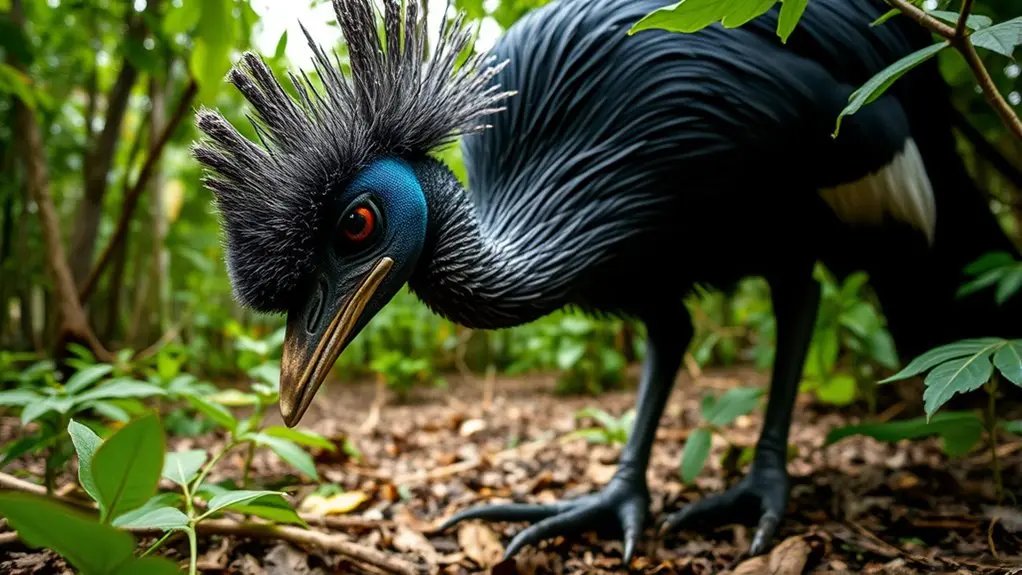
Their striking feather coloration, with vibrant blues and blacks, signals territorial and mating status. It also serves as a warning when they feel threatened.
You need to understand their nesting habits as well. During breeding season, males incubate eggs and fiercely defend their nests and chicks. This defensive behavior increases their danger level if you come too close.
Although naturally shy, cassowaries’ aggression mainly comes from protecting food sources, eggs, or young. Their large talons, extending up to five inches, combined with strong legs, make them one of the deadliest birds when provoked.
How Often Do Cassowary Attacks Occur?
Understanding the cassowary’s defensive nature helps clarify how often attacks on humans actually happen. Cassowary attacks are extremely rare, with only two recorded fatalities in history, occurring in 1926 and 2019. Most incidents involve humans who provoke the bird, often by feeding or approaching it, which disrupts natural avian communication and triggers defensive behavior.
About 75% of attacks relate to prior human interaction, showing that the bird really prefers to avoid unnecessary confrontation. Cassowaries play an essential ecological role in their environments, contributing to seed dispersal and forest health.
Despite their formidable appearance, they rarely attack unprovoked. Their shy, curious nature actually reduces the risk of encounters. Overall, cassowary attacks are infrequent, making them one of the less lethal large bird species to humans.
Why Do Cassowary Attacks Happen?
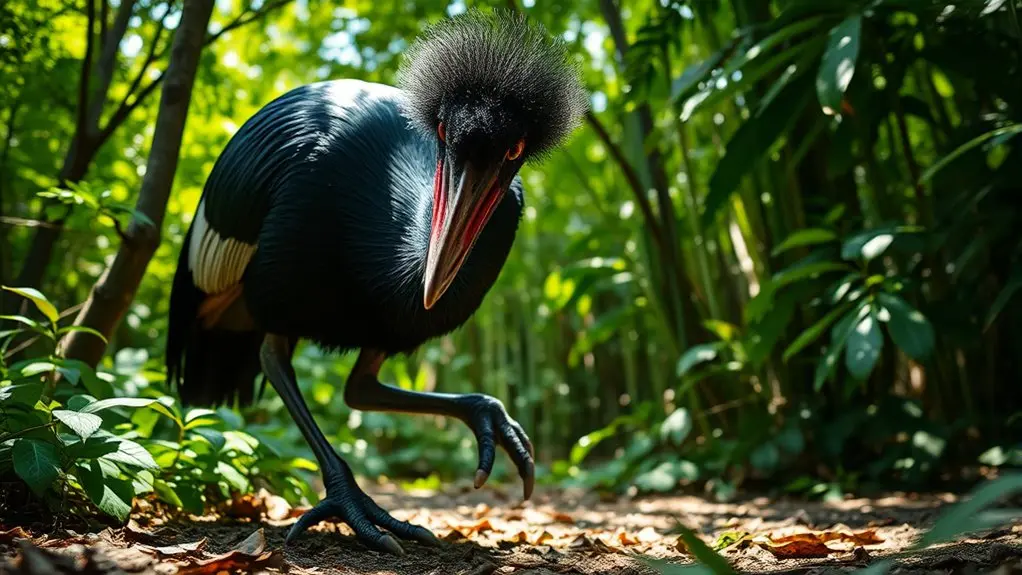
You’ll notice that most cassowary attacks happen when the bird feels threatened. This is especially true if it’s protecting its food, chicks, or eggs.
Human interaction is a big factor too. In fact, about 75% of attacks involve people who’ve fed cassowaries. Feeding them can actually make the bird more aggressive.
Reasons Behind Attacks
Because cassowaries typically attack when they feel threatened or are defending their territory, humans often provoke these incidents by approaching their food, chicks, or eggs. Their natural behavior changes when they’re fed by people, which makes them less cautious.
Unlike bird migration patterns that involve seasonal movement, cassowaries stay territorial all year round. Their striking feather colors actually signal dominance, not aggression.
Here are some key reasons behind attacks:
- Feeling cornered or threatened by humans getting too close.
- Defending nests with chicks or eggs.
- Behavior changes from being fed by people before.
- Defensive curiosity, not hunting or predatory aggression.
Knowing these triggers helps explain why attacks, though rare, can be serious because cassowaries have powerful talons.
Human Interaction Impact
When humans feed or approach cassowaries, they disrupt the birds’ natural shyness. This often triggers aggressive responses. About 75% of attacks involve birds that have been fed before, which shows how changed feeding habits increase the risk.
Cassowaries usually attack when they feel cornered or are defending food, chicks, or eggs. It’s not because they’re naturally aggressive. Habitat disturbance and sudden human presence make them stressed, which leads to defensive behavior.
Knowing these things can help us reduce conflicts.
| Factor | Impact on Behavior | Resulting Risk |
|---|---|---|
| Feeding habits | Loss of natural fear | Increased aggression |
| Habitat disturbance | Stress and displacement | Defensive attacks |
| Human proximity | Perceived threat | Startle response |
Respecting cassowaries’ space and natural habits keeps attack chances low.
Cassowaries’ Powerful Physical Traits
Although cassowaries may appear strikingly prehistoric with their helmet-like casque, their physical attributes are what make them truly formidable. Unlike many birds whose feather coloration aids in bird migration, cassowaries rely on strength and agility rather than flight.
Cassowaries look prehistoric, but it’s their strength and agility—not flight—that make them truly formidable.
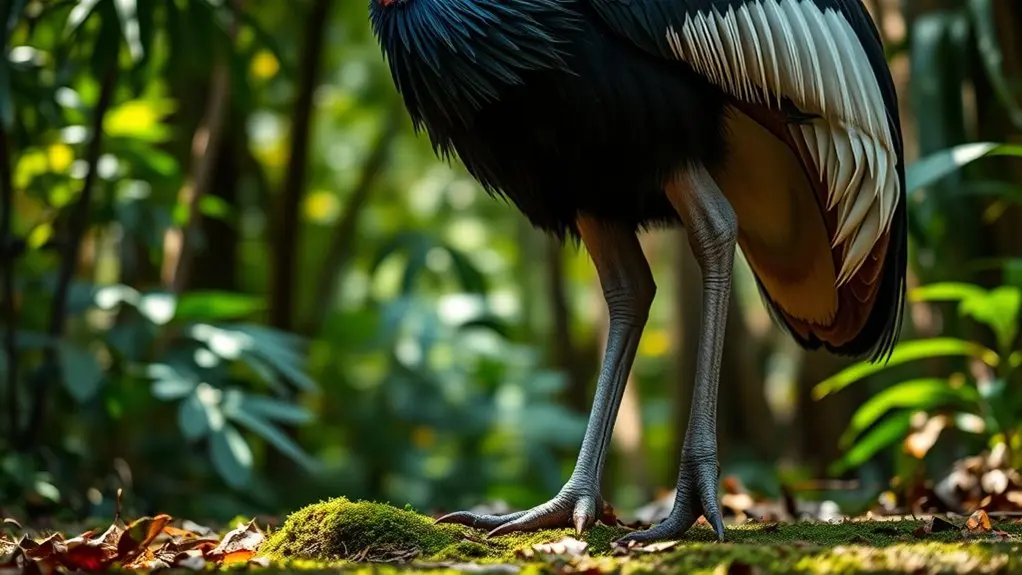
You should understand these key traits: They stand about five and a half feet tall and weigh up to 175 pounds, giving them a powerful presence. Their inner toes have long, sharp talons up to five inches, capable of inflicting serious injuries.
Their muscular legs allow sprints up to 31 miles per hour and leaps up to seven feet.
The casque functions as a thermal radiator, regulating body temperature efficiently. These adaptations make cassowaries among the most physically dangerous birds.
It’s pretty impressive how nature equips them, right?
How Do Cassowaries Act Around Humans?
You’ll notice cassowaries are naturally curious, but they usually steer clear of humans unless they feel threatened or are guarding their territory. It’s kind of like they’re watching you, but don’t want to get too close.
Now, if humans start feeding them, that changes things. Their usual cautious behavior can shift, which might lead to more aggressive encounters.
Cassowary Behavior Explained
Because cassowaries are naturally curious yet shy, they often observe humans without displaying hostility. Their striking feather coloration aids in camouflage within dense forests. Their nesting behavior involves solitary, ground-based nests where females lay eggs and leave males to incubate.
You’ll notice these birds avoid confrontation unless provoked.
- Cassowaries generally don’t attack unless threatened or defending offspring.
- Most attacks occur when humans interfere with food, chicks, or eggs.
- Prior feeding by humans reduces cassowaries’ natural wariness, increasing risk.
- Their powerful legs and five-inch talons serve as defensive weapons, causing serious injuries when necessary.
Understanding these behaviors helps you respect cassowaries’ natural caution and avoid provoking them. It’s really about giving them space and not getting too close. Just appreciate them from afar, and you’ll both be safe.
Human Interaction Risks
When you encounter cassowaries in the wild, their natural curiosity may lead them to observe you closely. But they rarely show aggression unless provoked or cornered. Their habitat preferences in dense tropical forests support shy, cautious behavior.
Plus, they focus on feeding on fallen fruit rather than interacting with humans.
Most attacks happen when humans disrupt this natural behavior. This especially occurs when people feed or approach the birds too closely, which changes cassowaries’ natural avoidance instincts. In fact, about 75% of attacks involve individuals who’d previously fed the birds. This feeding increases the birds’ perceived threats.
Cassowaries may also attack defensively if they sense danger to their eggs or chicks. Despite having powerful kicks and sharp claws, these birds generally avoid conflict. They only act aggressively in self-defense when their natural behaviors are threatened by human interference.
Cassowaries’ Role in Their Ecosystems
Although cassowaries are often recognized for their intimidating presence, their ecological role as keystone seed dispersers is essential for rainforest health. You mightn’t realize that despite their limited flight abilities, these birds navigate dense undergrowth beneath the rainforest canopy and effectively spread seeds.
Their role includes dispersing seeds of numerous plant species, including rare and endangered ones, over extensive areas. They also enhance germination rates through nutrient-rich droppings that promote rainforest regeneration.
Cassowaries help maintain biodiversity by supporting plant community structures essential for ecosystem stability. Plus, their critical seed dispersal activities help preserve habitat integrity, a contribution acknowledged by UNESCO.
Threats Facing Cassowaries and Why They Matter
Cassowaries play an essential role in maintaining rainforest ecosystems, but their survival is under serious threat. You should understand that habitat fragmentation disrupts their natural range, limiting access to food and mates. This reduces genetic diversity and reproductive success.
Human activities like road construction increase car strikes, while domestic dogs pose predation risks. These threats, combined with altered behavior due to human feeding, escalate conflicts. That can result in injury or death for both cassowaries and people.
Given their ecological importance as seed dispersers, a decline in cassowary populations undermines rainforest regeneration and biodiversity. Recognizing these threats is critical because preserving cassowaries helps maintain ecosystem balance.
Without addressing habitat fragmentation and human-related dangers, these indispensable birds face ongoing population declines with broader environmental consequences.
Conservation Efforts to Protect Cassowaries
Because habitat fragmentation and human activities pose significant risks to cassowary populations, conservation efforts focus on mitigating these threats through targeted actions. You can see these initiatives emphasizing habitat restoration and community engagement to protect these endangered birds effectively.
Key measures include installing road signs and education programs to reduce vehicle collisions and dog attacks. Supporting organizations like Rainforest Rescue helps restore and reconnect fragmented habitats.
Plus, monitoring populations and developing recovery strategies are done through the Cassowary Recovery Team.
Local groups such as Community for Coastal and Cassowary Conservation get involved in land rehabilitation, too. These coordinated efforts aim to stabilize cassowary numbers and ensure their survival by addressing direct human impacts.
They also promote safer, connected environments where cassowaries can thrive.
How to Stay Safe Around Cassowaries
When you find yourself in areas inhabited by cassowaries, it’s really important to keep a safe distance of at least 10 feet. This helps prevent provoking an attack. These birds are easy to spot because of their striking feather colors.
They can get more aggressive if you disturb them, especially during their nesting period. So, avoid feeding or touching them. Doing so can mess with their natural behavior and increase the risk of an attack.
Be extra careful when walking near dense forests, which are common cassowary habitats. You don’t want to be caught off guard by a sudden encounter.
And whatever you do, never corner or block their path.
Cassowaries defend themselves with powerful kicks, so it’s best to give them space. If one approaches you, try to stay calm. Back away slowly and avoid making any sudden movements.
Understanding their behavior, especially during nesting times, really helps reduce dangerous interactions. It’s all about promoting peaceful coexistence in areas where cassowaries live.
Frequently Asked Questions
Can Other Bird Species Kill Humans?
You’ll find that, aside from rare avian aggression cases like cassowaries, other bird species rarely kill humans. Many bird attack myths exaggerate danger. Most injuries stem from defensive actions, not lethal intent or capability.
Are There Any Recorded Bird Attacks on Pets?
When it comes to bird attack statistics, you’ll find recorded cases are few and far between. Still, it’s a good idea to keep pet safety tips in mind, especially around large or territorial birds. That way, you can avoid any unexpected encounters.
Being cautious doesn’t mean you have to worry all the time. Just stay aware of your surroundings when your pet is outside. It’s better to be safe than sorry!
How Do Birds Typically Defend Themselves From Predators?
You’ll see birds defend themselves using avian camouflage to blend in and predator mimicry to deceive threats. They also use vocalizations, physical attacks, and distraction displays to protect themselves and their offspring effectively.
Birds have some clever tricks up their feathers, right? Using camouflage helps them disappear into their surroundings, which is pretty handy when a predator is nearby. And mimicking predators can really throw off the bad guys.
Plus, they’re not shy about making noise or even getting physical if they have to. Sometimes, they’ll put on a whole distraction show to keep their babies safe. It’s all about doing what works best to stay alive!
Can Bird Attacks Cause Long-Term Health Issues?
Yes, bird attacks can cause long-term health issues, including infections from avian diseases and severe allergic reactions. You might also face chronic wounds or psychological trauma.
These problems often require medical treatment to prevent lasting complications. So, it’s important to take any bird attack seriously and seek help if needed.
What Should You Do if Attacked by a Bird Other Than a Cassowary?
If attacked by a bird, stay calm and try to read the bird’s behavior to avoid making things worse.
Protect your face as best you can, then slowly back away from the bird. It’s important not to run, as sudden movements might provoke it more.
Once you’re safe, clean any wounds right away to prevent infection.
To avoid bird attacks in the first place, don’t feed or get too close to aggressive birds. Just give them space and respect their boundaries.
Conclusion
You might think a bird couldn’t pose a real threat, but cassowaries prove otherwise with their lethal power and unpredictable behavior. Understanding their role in the ecosystem and respecting their space isn’t just wise—it’s crucial for your safety and their survival.
Remember, these birds aren’t villains but indispensable creatures facing serious threats. So, tread carefully, because in their world, one wrong move can tip the balance between life and death.