
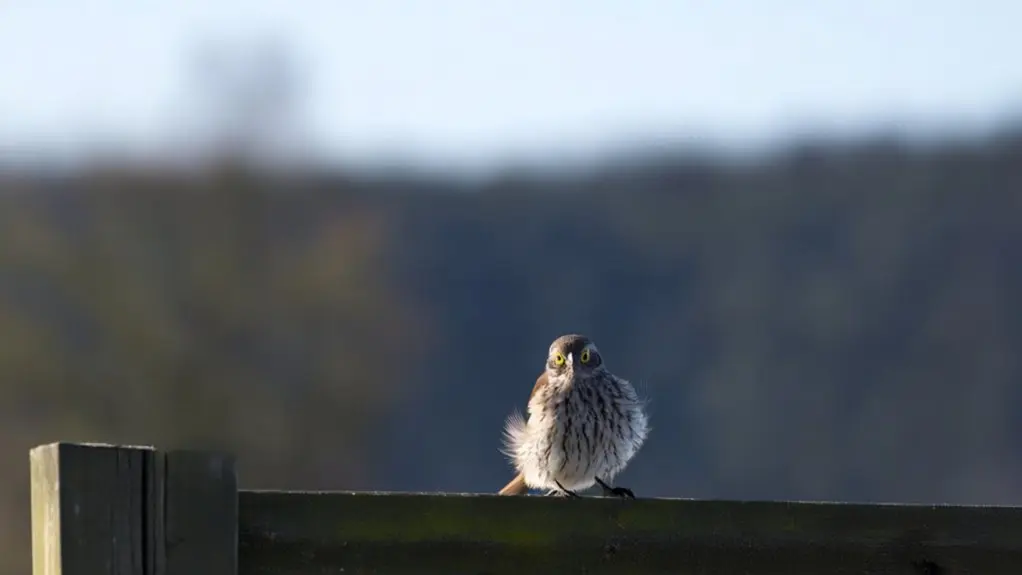
You might wonder if birds can kill themselves, but they don’t have the cognitive ability or intent to do so. Most bird deaths labeled as suicide actually stem from accidents, environmental stress, or instinctual behaviors like collisions or disorientation. Birds lack self-awareness of mortality, and their risky actions serve survival or reproductive purposes.
Misinterpreting these behaviors fuels myths, but understanding the true causes reveals much about bird behavior and ecology you might find intriguing. It’s fascinating how what seems like intentional harm is really just nature at work. So, next time you see a bird acting oddly, remember there’s usually a logical explanation behind it.
Do Birds Really Commit Suicide?
How do birds engage with the concept of suicide? Birds lack the bird cognition necessary to comprehend or intentionally commit suicide. Their evolutionary instincts prioritize survival and reproduction, which contradict any self-destructive intent.
Behaviors that some interpret as suicide, like collisions or self-injury, actually arise from environmental hazards or accidental circumstances rather than deliberate choices. Stress, illness, or threats may trigger self-destructive actions in certain species, but these responses don’t reflect conscious intent to die.
Scientific consensus confirms that birds don’t possess the mental capacity for intentional self-harm. Instead, what might appear as suicidal acts result from instinctual reactions to external stressors or impaired conditions. Understanding bird cognition and evolutionary instincts clarifies that genuine suicide in birds is highly improbable and unsupported by evidence.
What Science Says About Bird Suicide
Although birds don’t have the cognitive ability to intentionally harm themselves, scientific research has looked into cases that some people interpret as suicide. These instances are really rare and hard to prove.
Most bird deaths come from accidents, environmental stress, or instinctual behaviors—not deliberate acts. Studies show that behaviors that look like suicide, such as mass drownings or collisions, usually happen because of panic or disorientation.
Some species do show stress-related behaviors linked to genetics, but that doesn’t mean they’re trying to destroy themselves on purpose. Evolution favors survival, so true suicide would go against that instinct in birds.
Can Birds Understand Death or Self-Harm?
While birds exhibit complex behaviors, they don’t have the cognitive capacity to grasp the concepts of death or self-harm like humans do. Their awareness is limited and doesn’t include the self-reflective understanding needed to really comprehend mortality or intentional self-injury.
Some birds, like ravens and magpies, show what looks like mourning behaviors. But these actions seem to reflect an emotional response to loss rather than a true understanding of death.
When birds react to injury or stress, it’s usually instinctive behavior, not a deliberate act of self-harm.
Unlike certain primates or cetaceans, which show signs of self-awareness in mirror tests, birds generally don’t reach that level of cognitive sophistication.
Why Birds Take Risks: Instincts and Behavior
Because birds rely heavily on instinctual drives to survive and reproduce, they often engage in behaviors that seem risky to us. You’ll observe that mating rituals frequently involve high-speed flights or elaborate displays in precarious locations, increasing vulnerability to predators or accidents.
Territory defense also compels birds to confront intruders aggressively, sometimes resulting in dangerous chases or collisions.
These risk-taking behaviors represent adaptive strategies to secure essential resources like mates, nesting sites, and food. For example, cliff-nesting species instinctively perform risky dives to feed or protect offspring.
While these actions may occasionally cause harm, they aren’t conscious attempts at self-injury but rather survival-driven behaviors shaped by evolutionary pressures.
Understanding these instincts helps clarify why birds take risks despite potential dangers. It’s all about survival and making sure their genes get passed on.
Common Bird Deaths Mistaken for Suicide
When you observe a bird suddenly crashing into a window or wall, it’s easy to assume the bird intended to harm itself. But most of these deaths happen because of accidental collisions triggered by panic or environmental hazards.
Birds often react to sudden stimuli, like loud noises or predation attempts, with rapid, uncontrolled flight. This can lead to fatal impacts.
Also, variations in feather coloration can affect how visible birds are. This sometimes causes them to misinterpret reflective surfaces, which increases the risk of collision.
Migratory patterns play a role too. During long-distance flights, disoriented or inexperienced birds might collide with obstacles because of fatigue or unfamiliar environments.
Young birds are especially vulnerable during their first flights. These incidents often get mistaken for deliberate self-harm. But scientific evidence shows that accidental trauma, environmental challenges, and stress responses are the main reasons behind these common bird deaths.
Stress-Related Self-Destructive Behaviors in Birds
Accidental collisions explain many sudden bird deaths, but some behaviors reflect deeper psychological distress. When birds face chronic stress, due to captivity, environmental changes, or social conflicts, they may develop anxiety behaviors such as repetitive pacing or head-bobbing.
You might observe feather plucking, where birds pull out their own feathers. This leads to skin damage and increased vulnerability to infection. These self-destructive actions stem from psychological disturbances rather than intentional self-harm.
Birds experiencing grief, like losing a mate, can show apathy, decreased appetite, and engage in excessive self-biting or self-mutilation. While these behaviors can be fatal, they’re symptoms of distress caused by environmental or emotional factors, not evidence of conscious suicidal intent.
Understanding these stress-related responses helps clarify the true nature of self-harm in birds. It’s important to remember that these behaviors are signs of suffering, not deliberate actions.
Notable Examples of Self-Harming Bird Behaviors
Although self-harming behaviors in birds are often linked to stress or environmental factors, several notable examples illustrate the range and complexity of these actions. You may observe parrots engaging in feather plucking, a form of self mutilation where birds remove their own feathers, sometimes causing severe injury or death.
In captivity, repetitive behaviors like head-banging can escalate to self mutilation, posing serious health risks.
Some species, such as the Philippine tarsier, have anecdotal reports of fatal leaps, though evidence lacks scientific confirmation.
Additionally, birds may accidentally harm themselves during panic-induced collisions with windows, which isn’t intentional self-harm.
Parasite-induced behavioral changes also provoke risky actions leading to death but are externally driven rather than deliberate self-destructive acts.
Understanding these examples helps clarify the biological and environmental factors behind self-harming bird behaviors.
Media Myths About Bird Suicide
You’ve probably heard stories about lemmings mass drowning or penguins walking to their deaths. But here’s the thing—these tales mostly come from misunderstandings and even some staged footage, not real science.
The media tends to blow these behaviors out of proportion, which only adds to the myth that birds intentionally commit suicide. When you look closer, what seems like self-destructive acts are usually accidental or caused by stress.
Lemming Suicide Myth
Why do so many people believe that lemmings commit mass suicide by jumping off cliffs? This myth actually started from a staged scene in Disney’s 1958 documentary “White Wilderness.” That scene misrepresented what lemmings really do in nature.
In truth, lemmings don’t purposely kill themselves. Their mass movements happen because of things like food shortages and overpopulation. Scientists have studied these migrations and found they’re all about survival, not self-harm.
This misunderstanding is kind of like how people sometimes get bird behavior wrong. Just like how birds travel long distances guided by instinct and environmental cues, lemmings react to their surroundings in smart ways.
Understanding these natural behaviors helps clear up false stories and gives you a better picture of how animals really live and survive.
Penguin Behavior Misinterpretations
When you look at how the media shows penguin behavior, you’ll notice that sensational stories often get it wrong. They sometimes portray natural penguin actions as if the birds are suicidal. Documentaries have helped spread myths about penguin mass suicide, often by using staged or out-of-context clips.
In reality, when penguins move inland, it’s usually because of environmental stress or threats from predators—not because they want to harm themselves. Scientists have observed that penguins use communication and social cues to guide their movements. These help them deal with changing conditions.
Also, changes in penguin feather colors serve important ecological purposes. They’re not signs of distress or suicidal intent.
Unfortunately, cultural stories and media hype twist these behaviors, leading to misunderstandings.
How You Can Help Protect Birds From Accidents
Although birds are naturally agile, they can still get hurt in both indoor and outdoor spaces. To keep their feathers healthy and support their natural nesting habits, make sure birdcages and living areas don’t have sharp edges or dangerous objects that could cause injury.
It’s also a good idea to provide a quiet environment. This helps reduce stress and sudden movements that might startle birds, lowering the chances of accidents.
Clipping their wings properly lets them move safely while preventing risky flight mishaps.
When you let birds fly outdoors or freely indoors, keep a close eye on them. This helps avoid collisions with windows, walls, or other obstacles.
Installing bird-proof window decals or screens makes glass surfaces easier for birds to see, which prevents impact injuries.
All these steps work together to boost bird safety by tackling environmental risks and supporting their natural behaviors, which is super important for their well-being.
Frequently Asked Questions
How Do Birds Navigate to Avoid Collisions With Windows?
You rely on bird vision, including UV detection, to navigate and avoid glass reflections. This helps you differentiate real openings from reflections.
What Are Common Signs of Stress in Pet Birds?
You’ll notice stress in pet birds through changes in feather health, like plucking or dullness, and altered vocalization patterns, such as excessive screaming or distress calls.
Alongside this, you might see lethargy, aggression, or disrupted eating and sleeping habits. These signs often come together and can be a clear signal your bird is feeling stressed.
Pay close attention to these behaviors to help your pet feel more comfortable and secure.
Can Environmental Changes Impact Bird Flight Safety?
Yes, environmental changes like urban light pollution disrupt bird migration patterns, causing disorientation. You’ll see impaired navigation and increased collision risks, which compromise flight safety.
These factors elevate stress and negatively affect birds’ survival during migration. It’s a tough situation for them, and it really shows how much our environment can impact wildlife.
How Do Birds Recover From Injuries Caused by Accidents?
You’d think birds heal instantly, but feather regeneration and injury treatment take time.
You can support recovery by providing rest, nutrition, and a stress-free environment. This helps natural tissue repair work better. Sometimes, a vet’s help is needed for the best healing results.
Are Certain Bird Species More Prone to Accidental Deaths?
Yes, you’ll find species vulnerability varies due to avian behavior. Agile, high-speed fliers and stress-prone birds exhibit higher accidental death risks. This is influenced by flight patterns, habitat, and environmental familiarity.
Conclusion
While birds don’t truly commit suicide, studies show that up to 70% of bird deaths from window collisions are mistaken for self-harm. You should understand that these incidents stem from instinctual behaviors, not an awareness of death.
Recognizing this helps you see how stress and environmental factors play roles in bird mortality. By reducing hazards, you actively protect birds, supporting their survival rather than attributing tragedy to misunderstood motives.