
Yes, birds in your attic can make you sick by introducing harmful pathogens like Histoplasma capsulatum, Cryptococcus neoformans, Salmonella, and E. coli through droppings and feathers. These droppings release airborne fungal spores that cause respiratory illnesses and carry parasites such as bird mites, which bite and trigger allergic reactions.
There’s also the risk of structural damage and fire hazards from nesting materials. It’s important to understand how birds get into your attic, the diseases they can carry, and the best ways to prevent them.
Taking these steps is essential for protecting both your health and the safety of your home.
Why Birds in Your Attic Are a Health and Structural Risk
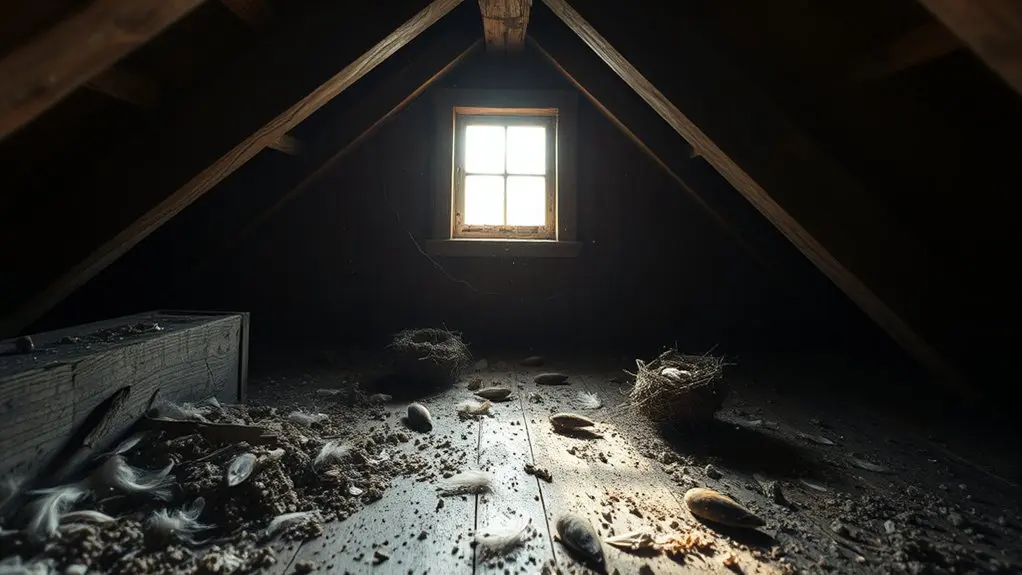
Although birds might seem harmless, having them nest in your attic poses serious health and structural risks. The bird habitat created by their nesting behavior introduces pathogens such as histoplasmosis, cryptococcosis, and salmonellosis through droppings and feathers, exposing you to disease.
Birds nesting in your attic can introduce harmful pathogens, posing serious health and structural risks.
Their droppings are acidic, corroding building surfaces and obstructing ventilation systems, which degrades indoor air quality. Nests composed of flammable materials increase fire hazards considerably.
Plus, accumulated droppings and nesting debris attract parasites like mites and ticks, which further endanger your health. These combined factors lead to ongoing maintenance expenses due to structural damage and pest control needs.
Understanding how bird habitat and nesting behavior impact your attic really highlights why it’s so important to address these infestations promptly. That way, you can protect both your health and property.
How Birds Get Into Your Attic
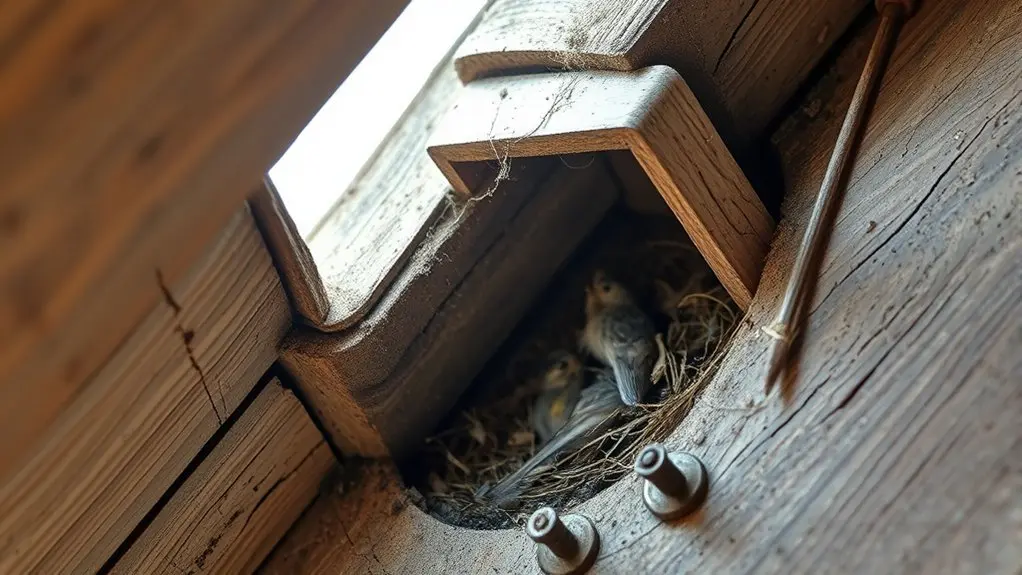
You’ll notice that birds often get into your attic through tiny openings, like gaps around vents, eaves, or even damaged roofing materials. These little weak spots in your home’s structure are easy to miss but give birds a perfect way inside.
Once they find these cozy spots, they’re more than happy to make a nest.
If you understand where they’re sneaking in and what attracts them, it’s a lot easier to spot and seal up those access points. That way, you can keep your attic bird-free and avoid any unwanted surprises.
Common Entry Points
Where do birds typically find their way into your attic? They often enter through small gaps around attic ventilation, eaves, soffits, and roof vents. Even openings as small as a quarter-inch can provide access for bird nesting.
Damaged or missing roof shingles and loose flashing create additional entry points. Birds exploit structural weaknesses such as cracked siding or poorly sealed chimney areas to reach your attic’s interior. These access points are critical because they offer shelter and nesting sites.
To prevent infestations, you need to regularly inspect and seal all potential openings, paying close attention to attic ventilation components. Addressing these vulnerabilities promptly reduces the risk of birds entering and nesting in your attic.
This is essential for maintaining a safe, contaminant-free environment.
Attracting Factors
Because birds seek safe and sheltered nesting sites, your attic can become an attractive refuge when small openings around vents, eaves, and roof components remain unsealed. Various bird species exploit gaps or damaged roofing materials and soffits to gain entry. Once inside, they use nesting materials like twigs and feathers, which are flammable and increase fire risk.
The presence of droppings and feathers often signals these entry points, enticing more birds to enter. Understanding these attracting factors is essential for prevention.
| Attracting Factor | Description |
|---|---|
| Bird Species | Varied species prefer sheltered spaces for nesting |
| Nesting Materials | Twigs, feathers, and flammable debris used in nests |
| Structural Gaps | Openings around vents, eaves, roofing facilitate access |
| Signs of Occupancy | Bird droppings and feathers near entry points |
Signs You Have Bird Mites or Bird-Related Illnesses
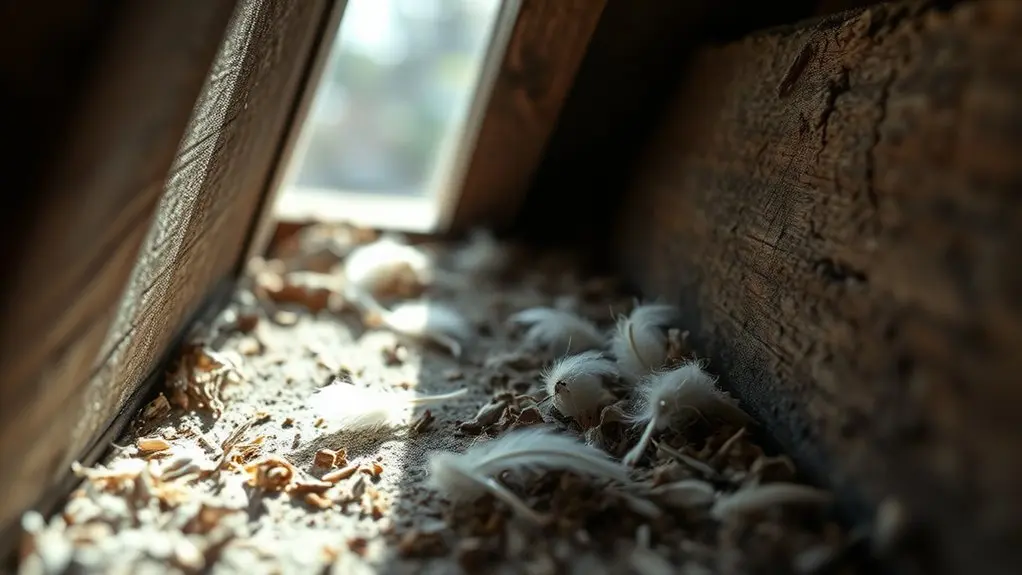
Although bird mites are microscopic, their presence in your attic can lead to noticeable skin irritation, including itching and rashes, as they bite humans. Identifying a bird mite infestation or bird-related illness requires careful observation of your bird habitat and effective nest management.
Look for these signs:
- Tiny crawling mites on bedding, furniture, or walls near bird nests indicate active infestation.
- Accumulation of bird feathers, droppings, or nests in the attic suggests a suitable environment for mites and related pathogens.
- Persistent respiratory symptoms like coughing or wheezing may point to fungal infections from spores in contaminated droppings.
Monitoring these indicators helps you address infestations promptly and maintain a safe living space. It’s always better to catch these issues early before they become a bigger problem.
Overview of Diseases Carried by Attic Birds
You should know that birds nesting in your attic can carry diseases like histoplasmosis, cryptococcosis, and salmonellosis. These illnesses are mainly spread through their droppings.
When the droppings dry out, they can release fungal spores and bacteria into the air, which can cause respiratory problems and infections.
On top of that, feathers and nesting materials might also harbor parasites and other germs. This means the overall health risks in an attic with bird infestations can be pretty significant.
Common Attic Bird Diseases
How do birds nesting in your attic pose health risks? Their migration patterns and nesting habits can introduce pathogens that affect your health. Attic birds, like pigeons, often carry diseases through direct contact or airborne spores.
Common diseases include:
- Histoplasmosis: This is caused by fungal spores found in droppings, which you might inhale if the area gets disturbed.
- Cryptococcosis: Another fungal infection linked to pigeon droppings, and it can lead to severe meningitis.
- Salmonellosis: A bacterial infection you can get from touching contaminated droppings, causing symptoms similar to food poisoning.
There’s also candidiasis, which can spread through feathers or droppings. Plus, parasites and viruses like West Nile Virus might be around too.
Knowing these risks helps you take the right precautions against illnesses related to attic birds. So, it’s good to stay informed and handle any bird issues carefully.
Transmission Through Droppings
Bird droppings found in attics serve as a primary vehicle for transmitting various pathogens that threaten human health. When birds nest in your attic, droppings accumulate, contaminating attic insulation and creating a hazardous environment. Fungal spores like Histoplasma capsulatum and Cryptococcus neoformans can become airborne, leading to respiratory infections upon inhalation.
Additionally, bacterial agents such as Salmonella and E. coli present risks through contact or inhalation of dust contaminated by droppings. Parasites like mites also thrive in these conditions, further increasing disease transmission potential.
| Pathogen | Source Species | Health Risk |
|---|---|---|
| Histoplasma capsulatum | Various birds | Histoplasmosis (lung infection) |
| Cryptococcus neoformans | Pigeons, starlings | Cryptococcal meningitis |
| Salmonella | Multiple birds | Gastrointestinal illness |
| E. coli | Multiple birds | Gastrointestinal illness |
| Mites | Bird nesting debris | Skin irritation, disease vector |
Health Risks From Nests
What health risks do nests hidden in your attic pose? The avian behavior and nesting habits of birds create environments that can harbor harmful pathogens. These nests often contain fungi, bacteria, and parasites that impact human health.
Specifically, you should be aware of diseases such as histoplasmosis, cryptococcosis, and salmonellosis, which are transmitted through contact with contaminated nesting materials. Parasites like bird mites and ticks can also bite humans and may spread infections.
Airborne fungal spores from decaying nests can elevate the risk of respiratory illnesses. Understanding the risks associated with attic bird nests is vital.
Prolonged exposure can lead to severe health problems, especially in vulnerable groups like children and the elderly.
What Is Histoplasmosis and Its Effects?
Why should you be concerned about histoplasmosis when dealing with bird droppings in your attic? This fungal infection comes from inhaling spores found in droppings, especially from pigeons and starlings. During bird migration and feather grooming, spores build up in moist droppings and become airborne when disturbed.
| Aspect | Details |
|---|---|
| Source | Spores in bird droppings, particularly pigeons, starlings |
| Symptoms | Mild flu-like to severe lung or systemic infections |
| Risk Factors | Weakened immunity, elderly, children |
You’re at risk if you breathe in these spores, especially if your immunity is compromised. That’s why it’s important to properly remove nesting sites and droppings. Taking these steps helps prevent exposure and serious health effects.
Why Pigeon Droppings Can Cause Cryptococcosis
Although pigeon droppings may seem harmless, they often harbor the yeast Cryptococcus neoformans, which can cause cryptococcosis in humans. This fungus thrives in droppings accumulated in attics and ledges. It’s favored by pigeons’ nesting behaviors during bird migration seasons. You can be exposed by inhaling airborne spores from dried droppings.
Here’s why pigeon droppings pose a risk:
- Pigeons’ nesting behaviors in confined spaces like attics create concentrated fungal growth.
- Bird migration brings repeated contamination as pigeons roost seasonally.
- Spores become aerosolized when droppings dry, increasing inhalation risk.
Understanding these factors helps you appreciate how pigeon droppings in your attic can lead to cryptococcosis, especially in vulnerable individuals exposed to contaminated environments. It’s important to be aware and take precautions if you suspect pigeon infestations.
Other Serious Illnesses From Attic Bird Droppings
Beyond the risks posed by Cryptococcus neoformans, bird droppings in attics can carry several other pathogens that threaten human health. Histoplasma capsulatum, a fungus found in contaminated droppings, causes histoplasmosis, a severe respiratory disease.
Bird droppings in attics harbor dangerous pathogens like Histoplasma capsulatum, causing serious respiratory diseases.
Bacterial infections such as salmonellosis and paratyphoid may result from inhaling or ingesting dust contaminated with bird feces.
Additionally, long-term exposure to fungal spores and dust mites in attic nests can trigger allergic and respiratory issues.
Bird migration increases the likelihood of pathogen introduction, making timely and professional nest removal essential to reduce health risks.
Moreover, certain bird-associated parasites can transmit viral illnesses like encephalitis.
Proper attic inspection and controlled nest removal during non-migratory seasons help minimize these serious health hazards linked to attic bird droppings.
How Bird Mites and Parasites Infest Your Home
When bird mites, such as *Dermanyssus gallinae*, feed on nesting birds in your attic, they can easily migrate into your living spaces. These parasites exploit bird behavior and nest construction to establish themselves close to humans.
You should understand how infestations develop:
Bird behavior drives frequent nest visits, providing mites repeated feeding opportunities. Nest construction materials harbor mites, allowing them to thrive in protected environments. Once the young birds leave, mites seek alternative hosts, often migrating into your home’s walls and rooms.
Because these mites are less than 1mm, detecting them requires careful inspection. Their bites cause itching and allergic reactions, making infestations a health concern.
Controlling bird nests and using professional pest removal is critical for eliminating these parasites and protecting your indoor environment.
Simple Ways to Prevent Birds From Roosting in Your Attic
You can keep birds from roosting in your attic by sealing up all the small openings and vents. Using copper or steel mesh works really well to block their entry points.
Another trick is to hang some reflective tape or wind chimes near those spots. The shiny reflections and sounds tend to scare birds away.
Also, make it a habit to check your attic regularly. If you find any nests, remove them quickly to keep the space bird-free.
Effective Bird Deterrents
Although birds can enter your attic through small openings, you can effectively prevent them from roosting by using targeted deterrents. Different bird species use various nest materials, so disrupting their access is key to prevention.
Here are three effective deterrents:
- Install reflective tape or shiny objects near entry points. These create visual disturbances that discourage birds from settling.
- Hang wind chimes or noise-making devices by eaves. The irregular sounds frighten birds and reduce the likelihood of nesting.
- Place bird spikes or wire barriers on ledges and rooflines. These physical obstacles prevent birds from landing and building nests.
Using these deterrents disrupts birds’ natural behaviors and helps keep your attic free from unwanted avian visitors. It’s a simple way to protect your home without causing harm.
Sealing Entry Points
How do birds find their way into your attic despite limited openings? Birds exploit tiny gaps around vents, pipes, eaves, soffits, fascia, and damaged roof tiles as access points. Understanding bird habitat preferences and nesting behavior is essential to preventing infestations.
You can seal small openings with copper or steel mesh to block entry and reduce nesting opportunities. Applying caulking around vulnerable gaps further secures your attic. Installing bird-proof vents and screens creates effective physical barriers.
Regularly inspect and repair structural damage to minimize potential entry sites. Additionally, hanging reflective tape or wind chimes near these areas deters birds by disrupting their approach.
When Should You Call a Pro to Remove Birds?
Whenever bird droppings, nests, or feathers show up in your attic, it’s a good idea to call a professional. This helps prevent disease and stops the problem from getting worse. A pro can check out the bird habitat and make sure any nests that need to be saved are handled properly. This way, the environment stays protected too.
Spotting bird droppings or nests in your attic? Call a pro to protect your home and the environment.
You should call a pro to remove birds if:
- Birds are actively nesting or roosting, and you need safe, humane eviction that doesn’t harm the nest structure.
- You notice bird mites or parasites, which can be a health risk and need special treatment.
- There’s structural damage or bad smells from droppings that affect your attic’s condition and the air inside your home.
If you’re not sure about the health risks or how to get rid of the birds, it’s best to ask an expert.
Professionals have the right tools and know-how to handle the problem while keeping your home and the birds safe.
Frequently Asked Questions
Can Bird Droppings Damage My Home’s Exterior Surfaces?
Yes, bird droppings can damage your home’s exterior surfaces by eroding paint and wood. This can lead to costly repairs if not addressed in time.
If birds nest in your attic, their droppings can contaminate the insulation. This causes moisture buildup, which accelerates structural deterioration. So, it’s important to keep an eye out for any signs of nesting.
Are Certain Bird Species More Likely to Infest Attics?
You’ll find pigeons and starlings are over 70% more likely to infest attics due to their nesting preferences for sheltered, accessible spaces. Their adaptability makes them prime attic invaders compared to other birds like sparrows.
These species just seem to make themselves right at home in those cozy spots. It’s not surprising they show up more often in attics than others. So, if you’re dealing with an attic infestation, chances are it’s one of these guys.
How Quickly Do Bird Mites Spread Throughout a House?
Bird mite behavior causes rapid spread. Within days, they infest wall voids and insulation.
If you notice attic infestation signs like tiny bites or mites, act quickly. Their population can double every few days, making the problem worse. So, don’t wait around!
What Are the Legal Regulations About Removing Birds From Attics?
Removing birds from your attic isn’t a free-for-all. It’s a tightrope walk balancing bird conservation and legal permits. You must follow strict laws, often needing permits, especially during nesting.
This ensures the process is humane and lawful. So, before you start, know the rules and get the right permissions. It’s all about protecting the birds while keeping your home safe.
Can Home Air Filters Reduce Airborne Bird-Related Allergens?
Yes, you can improve air purifier effectiveness using advanced allergen removal techniques like HEPA filters. They trap bird dander and spores efficiently, reducing airborne bird-related allergens and enhancing your indoor air quality considerably.
It’s pretty straightforward—these filters catch tiny particles that other filters might miss. So if you’re dealing with bird allergens, upgrading to a HEPA filter can make a noticeable difference in how clean your air feels.
Conclusion
Think of your attic as a fortress. Inviting birds inside is like opening the gates to hidden enemies. These feathered invaders bring more than noise; they carry mites, parasites, and diseases like histoplasmosis.
These health risks can threaten both you and your home’s structure. Just like a vigilant guard protects a castle, you need to act quickly to stop infestations. When you notice signs of birds, don’t hesitate to call a professional.
Protecting your sanctuary is important and often requires expert help. So, take action early to keep your home safe and healthy.