
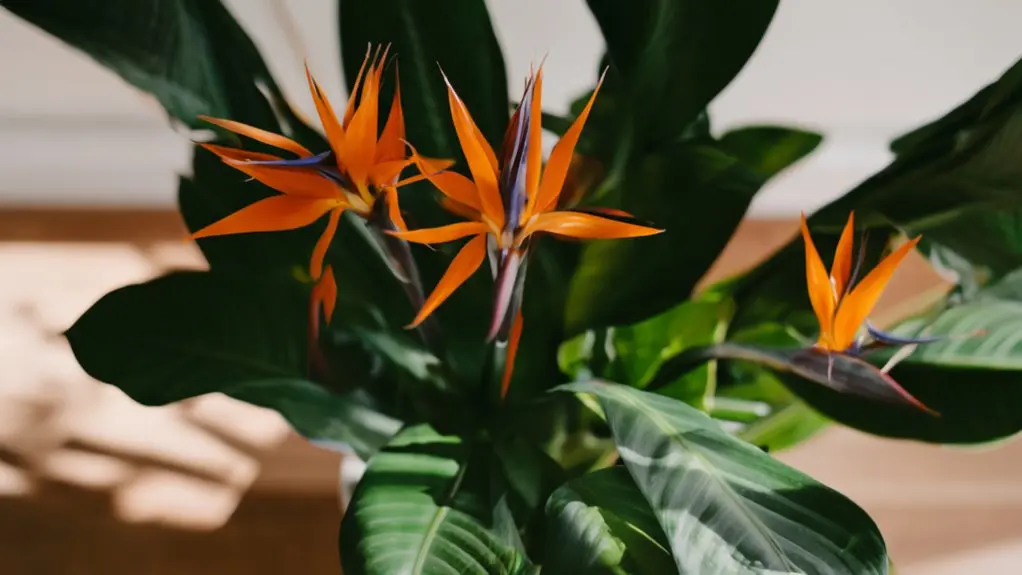
Yes, you can grow a Bird of Paradise indoors by providing 4-6 hours of direct sunlight near south- or west-facing windows or supplementing with grow lights. Use large, heavy pots with good drainage, ideally terra cotta or ceramic.
Maintain temperatures between 18°C-24°C (65°F-75°F) and humidity around 60-70%. Water when the top 1-2 inches of soil dry out, and fertilize regularly during the growing season. Proper care supports healthy growth and occasional blooming indoors.
To guarantee success, further guidance on care specifics is helpful. It’s not too complicated once you get the hang of it!
Can You Grow a Bird of Paradise Indoors?
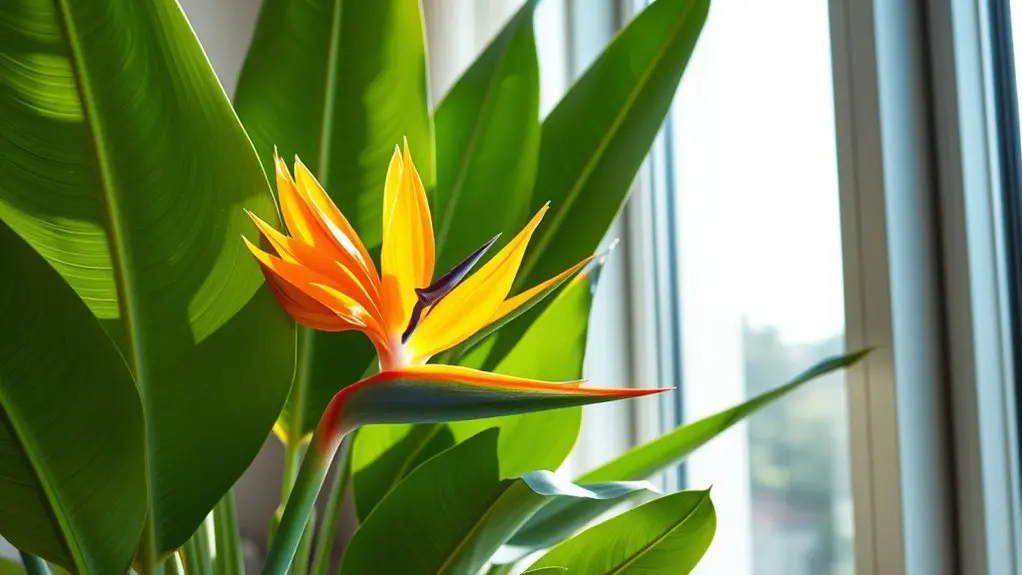
How well can you grow a Bird of Paradise indoors? You can successfully cultivate this plant indoors by providing a large, heavy pot with excellent drainage to support its extensive root system.
Maintain warm temperatures between 18°C-24°C (65°F-75°F) and guarantee adequate humidity for ideal growth.
Regular watering is essential. Water when the top inch of soil feels dry and fertilize during the growing season to encourage development.
Implement precise pruning techniques to remove dead or damaged leaves, which promotes airflow and reduces pest infestations.
Effective pest management is vital. Inspect your plant frequently for common indoor pests like spider mites or scale and address any issues promptly with appropriate treatments.
While indoor flowering is rare and takes years, proper care will keep your Bird of Paradise healthy and thriving.
How Much Light Does a Bird of Paradise Need Indoors?
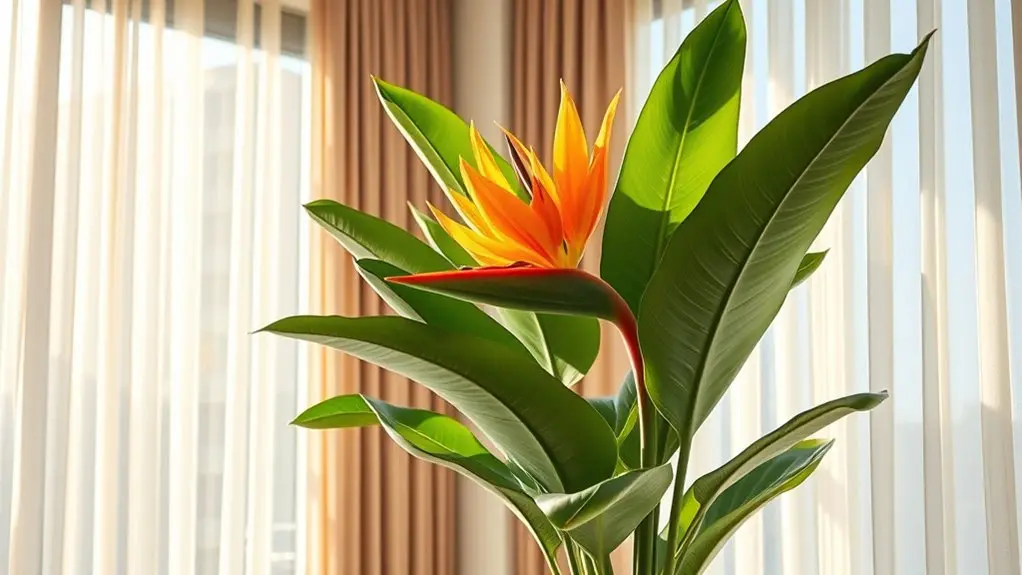
Although Bird of Paradise plants can tolerate medium or indirect light, they need several hours of direct, bright sunlight every day to really thrive indoors.
For the best results, place your Bird of Paradise near south- or west-facing windows where it can soak up at least 4-6 hours of full sun.
This kind of indoor lighting helps the plant grow strong and makes it more likely to flower.
If it doesn’t get enough light, you’ll notice slower growth, leaf drop, and fewer blooms.
While the plant can adjust to lower light, don’t expect it to be as vigorous.
To keep your Bird of Paradise healthy and looking its best, make sure it gets plenty of direct sunlight on a regular basis.
Good indoor lighting is key to keeping its leaves vibrant and the plant full of life.
How Often Should You Water Your Indoor Bird of Paradise?
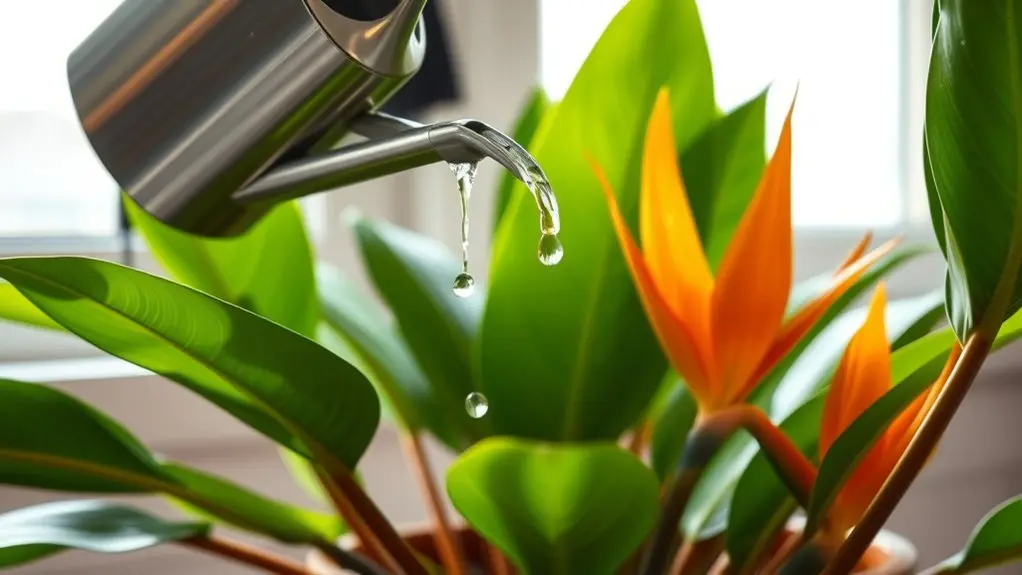
When the top 1-2 inches of soil feel dry, it’s time to water your indoor Bird of Paradise.
In summer, water every 1-2 weeks, but be sure to adjust the frequency based on your indoor environment. During winter, cut back to watering every 2-3 weeks, keeping indoor humidity levels in mind.
Always water thoroughly until excess drains from the pot’s bottom. Then, discard any standing water to prevent root rot.
Water deeply and remove excess to protect roots from rot and keep your plant healthy.
It’s important to keep an eye on soil moisture to avoid overwatering, which can harm your plant and attract pests.
Proper watering helps keep pests away by maintaining a balanced moisture level that they don’t like.
What Temperature and Humidity Do Birds of Paradise Like Indoors?
Maintaining proper watering schedules supports your Bird of Paradise’s overall health, but controlling the indoor climate is equally important for its growth. The plant’s temperature preferences range between 18°C and 24°C (65°F to 75°F), providing ideal conditions. Avoid exposing it to temperatures below 10°C (50°F), as this can cause stress and damage.
When it comes to humidity, Birds of Paradise thrive in higher levels, ideally around 60 to 70%. To keep this up, you can mist the plant regularly or place a water tray nearby to boost moisture in the air.
Also, try to keep the environment free from sudden temperature fluctuations and drafts because those can really affect the plant’s health.
Where Should You Place Your Bird of Paradise for Best Indoor Growth?
You should place your Bird of Paradise near south- or west-facing windows so it can soak up several hours of direct sunlight each day. It really thrives with plenty of light, so try to avoid low-light spots—those just won’t do if you want it to grow and flower well.
Also, make sure to keep it in a warm and bright area, but away from drafts or vents that could stress the plant.
And a little tip: rotate your Bird of Paradise regularly to help it get even light exposure all around. That way, it’ll stay healthy and balanced.
Optimal Light Conditions
Because Bird of Paradise plants require bright, intense light to thrive indoors, placing them near a south- or west-facing window is crucial for ideal growth. Your lighting setup should guarantee the plant receives at least 4-6 hours of direct sunlight daily to support vigorous growth and flowering.
Insufficient sunlight duration results in slowed development, leaf drop, and diminished bloom potential. Avoid shaded or dim corners, as these conditions undermine the plant’s health.
If natural sunlight is inadequate, supplement with artificial grow lights designed to replicate the intensity and spectrum of direct sunlight. By optimizing your lighting setup and maintaining proper sunlight duration, you’ll create an environment that maximizes your Bird of Paradise’s photosynthesis, growth rate, and overall vitality indoors.
Ideal Room Placement
Ensuring your Bird of Paradise receives sufficient light is only part of creating the ideal indoor environment. For best plant placement, position it near a south- or west-facing window to provide several hours of direct, bright light exposure daily.
Choose a spacious spot that accommodates its potential height of up to 5 feet and broad foliage spread.
Avoid locations near drafts, heating vents, or air conditioning units to prevent environmental stress that can hinder growth.
Use a heavy, well-draining pot to stabilize the plant, especially as it grows taller.
To promote uniform growth, rotate your Bird of Paradise periodically, ensuring all sides receive balanced light exposure.
Thoughtful plant placement is essential for maintaining vigor and encouraging healthy indoor development. Taking these simple steps will help your plant thrive and brighten up your space.
When Does a Bird of Paradise Bloom Indoors?
You can expect your indoor Bird of Paradise to bloom after about 4 to 5 years, as long as you give it proper care. It really needs several hours of direct sunlight each day to thrive.
If you want to encourage it to flower, try keeping it a bit crowded in its pot.
Also, giving it a cool, dry rest period during winter can make a big difference.
Knowing these little tricks will help you create the perfect conditions for your Bird of Paradise to bloom beautifully indoors.
Blooming Timeline Expectations
While growing a Bird of Paradise indoors can be rewarding, it typically requires 4 to 5 years before the plant blooms under ideal conditions. To maximize blooming potential, maintain a well-draining soil composition rich in organic matter and guarantee consistent pest management to prevent stress that inhibits flowering.
Slightly crowded pots encourage root competition, which can stimulate bloom development. Additionally, a cool, dry winter rest period supports the plant’s natural cycle.
Although indoor blooming remains rare and somewhat unpredictable, mature plants that have reached 4 to 5 years of age are more likely to flower.
Light Requirements For Bloom
Achieving blooming in your Bird of Paradise indoors hinges considerably on meeting its light requirements. While the plant exhibits some shade tolerance, it needs several hours of direct sunlight daily to trigger flower production. Blooming typically starts after 4-5 years when light conditions and soil composition align favorably.
Position your plant near a bright, south-facing window to maximize sunlight exposure. Without enough light, the plant prioritizes leaf growth over flowers.
Key considerations for light and growth include:
- Several hours of direct sunlight daily
- Bright location with limited shade tolerance
- Slightly crowded pot with nutrient-rich soil composition
Indoor blooms appearing after 4-5 years of excellent care.
These factors guarantee your Bird of Paradise receives the energy necessary for indoor blooming.
Encouraging Flower Development
Although Bird of Paradise plants typically take 4-5 years to bloom indoors, you can encourage flower development by maximizing light exposure, pot conditions, and seasonal care.
Guarantee your plant receives several hours of direct sunlight daily to promote bud formation and enhance blooming frequency.
Use slightly crowded pots to induce mild root stress, which stimulates flower initiation.
During winter, provide a cool, dry rest period to trigger flowering signals.
Consistent fertilization throughout the growing season supplies essential nutrients, supporting vibrant flower color and overall bloom quality.
Remember, mature plants under these ideal conditions are more likely to produce the characteristic bright orange and blue flowers indoors.
By controlling these factors precisely, you can reliably encourage your Bird of Paradise to bloom with striking flower color and increased blooming frequency.
It’s all about giving your plant what it needs, when it needs it.
How to Choose the Right Pot for Indoor Bird of Paradise Growth
Because your Bird of Paradise will develop an extensive root system, you’ll need to choose a pot that’s at least 2 inches wider in diameter than the root ball and deep enough, ideally 12 to 14 inches, to provide adequate space for growth and stability. Proper pot selection directly supports root growth and overall plant health indoors.
Select a heavy, durable container with drainage holes to prevent waterlogging and support the plant’s increasing weight. Lightweight, breathable materials like terra cotta or ceramic help regulate soil moisture and reduce root rot risk.
Also, make sure the pot includes a saucer or tray to catch excess water while maintaining proper moisture levels.
- Diameter 2 inches wider than root ball
- Depth of 12-14 inches for mature plants
- Heavy, durable with drainage holes
- Terra cotta or ceramic material with saucer
How Can You Propagate Birds of Paradise at Home?
When you want to propagate Birds of Paradise indoors, division of the root clump is the most effective method, as leaf cuttings won’t root successfully. Start by carefully unpotting the mature plant, then use a sterilized serrated knife to section the rhizome.
For indoor propagation, divide the root clump—leaf cuttings won’t root—using a sterilized serrated knife.
Each division must include a portion of roots and at least one leaf fan to ensure viability. Plant each section in a pot approximately two inches wider than its root ball, using well-draining soil. Maintain consistent moisture until the divisions establish.
Although root division may stress the plant and slow growth for up to a year, it remains the most reliable propagation method indoors. For best results, perform division in late spring or early summer to stimulate new growth and eventual flowering. This timing really helps give your new plants a good start.
Just be patient, and soon you’ll have thriving Birds of Paradise growing inside your home.
Are Birds of Paradise Safe Around Pets Indoors?
If you have pets at home, you should know that Birds of Paradise (Strelitzia reginae) are mildly toxic to cats and dogs. It’s important to understand which parts of the plant pose the biggest risk. The seeds and fruit have the highest toxicity levels, but indoor plants rarely have these.
The leaves are less toxic, but they can still cause some stomach upset if your pet chews on them. So, it’s best to keep an eye on your furry friends around the plant.
To keep your pets safe indoors, here are a few simple tips: Avoid letting pets chew on the leaves. Watch your pets closely when they’re near the plant. And if you notice symptoms like nausea, vomiting, or drowsiness, don’t wait—contact your vet right away.
Frequently Asked Questions
What Type of Fertilizer Is Best for Indoor Birds of Paradise?
You should use balanced fertilizer types like 10-10-10 or 20-20-20 for indoor plant nutrition. Applying diluted liquid or slow-release granular forms every 2-4 weeks during growth works best. Just be careful not to over-fertilize in winter to protect the roots.
It’s pretty simple but really important for keeping your Birds of Paradise happy indoors. Regular feeding during the growing season helps them thrive, but giving them a break in the colder months keeps things safe and healthy.
How Can You Prevent Pests on Indoor Birds of Paradise?
Like guarding a precious jewel, you prevent pests on your indoor Birds of Paradise by regularly inspecting for infestations. Using organic treatments like neem oil is a great way to keep those pesky bugs at bay. Also, removing damaged leaves helps maintain the plant’s health and discourages pests.
Don’t forget to quarantine new plants before introducing them to your collection. This step is super important for effective pest prevention. Taking these simple actions makes a big difference in keeping your Birds of Paradise happy and pest-free.
Can Birds of Paradise Survive Low Light Conditions Temporarily?
Yes, your Bird of Paradise can adapt to low light and tolerate temporary shading. This means it can survive in reduced light for a short time without too much trouble.
That said, if it stays in low light for too long, its growth will slow way down. You’ll also notice fewer flowers, which is a bummer if you want that tropical look.
How Do You Prune an Indoor Bird of Paradise Plant?
You prune an indoor Bird of Paradise by using sharp, clean shears to cut dead leaves at the base. You also remove spent flower stalks and trim leggy stems in spring. This helps promote growth maintenance and encourages bushier growth.
Using proper pruning techniques is key to keeping your plant healthy. It’s a simple process that makes a big difference in how your Bird of Paradise looks and grows. Just remember to prune regularly and carefully!
What Common Diseases Affect Indoor Birds of Paradise?
You’ll often face bird disease issues like fungal leaf spot and root rot in indoor Birds of Paradise.
Plant pests such as scale insects and mealybugs also cause damage. So, it’s a good idea to monitor your plant regularly to prevent infestations and the spread of disease.
Conclusion
You might wonder if birds of paradise can truly thrive indoors, but with the right light, temperature, and care, they absolutely can. Don’t fall for the myth that they need outdoor conditions to bloom. They just need consistent bright light and proper humidity.
By choosing the right pot and watering schedule, you’ll see healthy growth and even flowers. So, yes, you can successfully grow these stunning plants indoors with precise attention to their needs.