
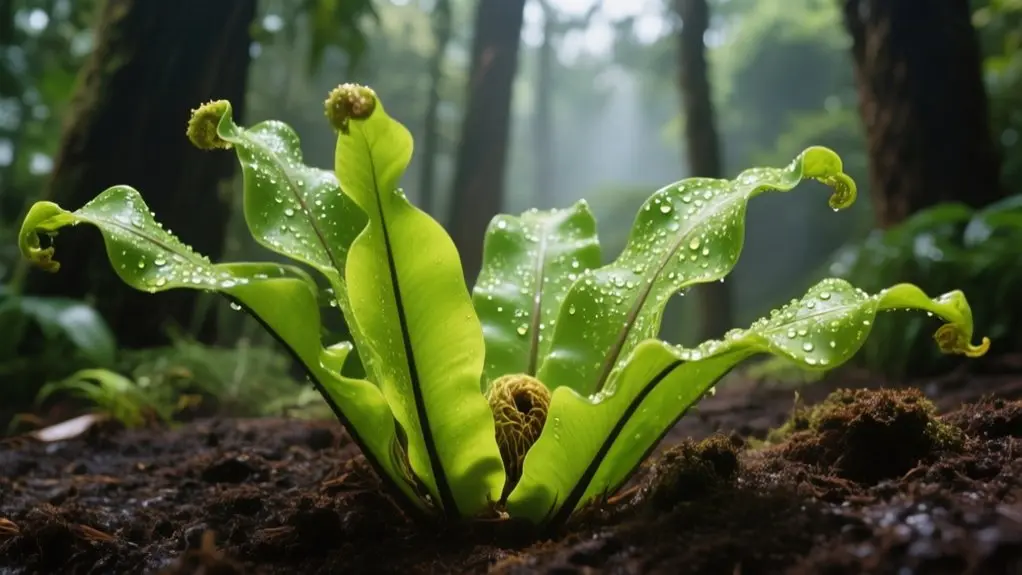
You can grow Bird’s Nest Fern outside if you live in warm, humid areas like USDA zones 10-11, with shaded, protected spots. It needs indirect sunlight, well-draining organic soil, and consistent moisture without waterlogging. High humidity and shelter from cold below 50°F (10°C) are critical to avoid damage.
Outdoors, you’ll benefit from natural airflow and nutrient-rich conditions. If you want to optimize its health and understand maintenance challenges, there’s more to explore about its care. Just keep in mind it’s a bit sensitive, so giving it the right environment really pays off.
What Is a Bird’s Nest Fern and Where Does It Grow Naturally?
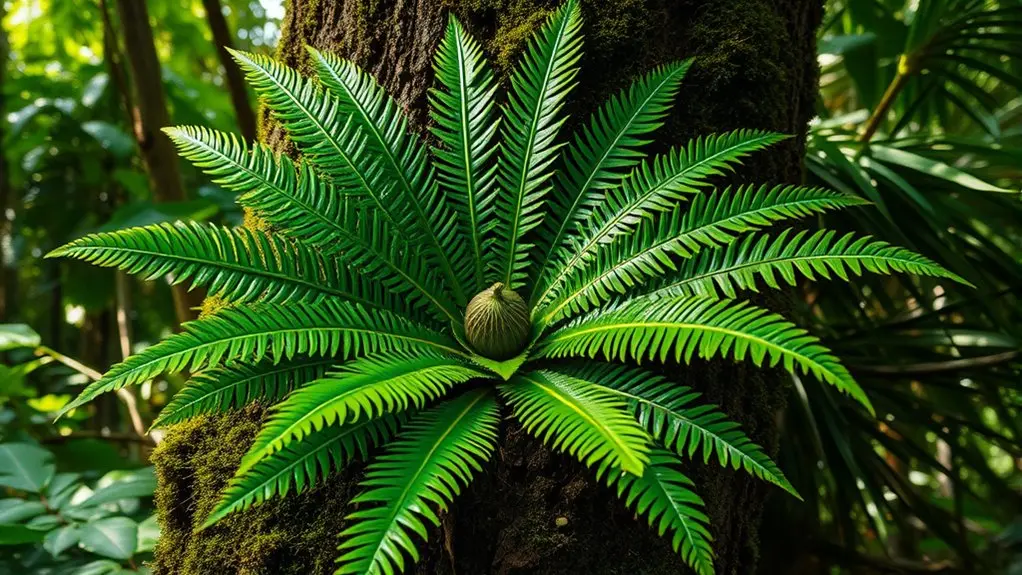
Where does the Bird’s Nest Fern naturally thrive? You’ll find this tropical evergreen fern primarily in Hawaii and the Pacific Basin. It grows in humid, shaded rainforests where the climate is just right for tropical plants.
Its distinctive fern foliage consists of large, strap-shaped fronds arranged in overlapping rosettes. These form a nest-like center that efficiently traps organic debris, providing extra nutrients.
The Bird’s Nest Fern adapts to both terrestrial and epiphytic lifestyles. It can grow on rainforest soil or anchor itself to tree branches.
In these environments, it depends on well-draining, organic-rich substrates and consistent moisture from rainwater. You’ll notice the fern’s natural habitat demands high humidity and steady warmth.
These are essential factors that support its healthy tropical growth and characteristic fern foliage development.
Can Bird’s Nest Fern Thrive Outdoors in Your Climate?
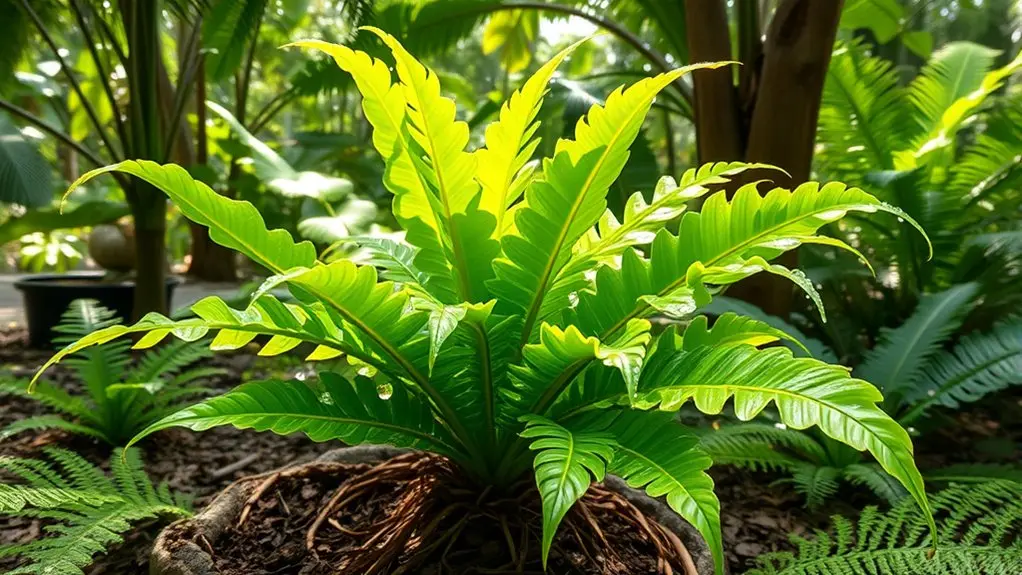
Although Bird’s Nest Ferns are native to tropical regions, you can successfully cultivate them outdoors if your climate provides consistent warmth, high humidity, and protection from direct sunlight.
Bird’s Nest Ferns thrive outdoors where warmth, humidity, and shade create ideal growing conditions.
In USDA zones 10-11, they survive year-round when shaded and kept moist.
In cooler climates, you can grow them outdoors only during summer, but you’ll need to bring them indoors before the cold sets in.
Their epiphytic nature means they can attach to trees or structures, which helps mimic their natural rainforest environment.
You’ll find various color varieties suited for outdoor display, ranging from deep green to variegated patterns.
Propagation methods include division or spores, both good options for expanding your outdoor collection.
To help them thrive, keep them in indirect shade with organic-rich, well-draining soil, and maintain stable humidity to avoid root rot and stress.
It’s a good idea to check your local microclimate before planting outdoors to make sure conditions are right.
Best Outdoor Conditions for Bird’s Nest Fern
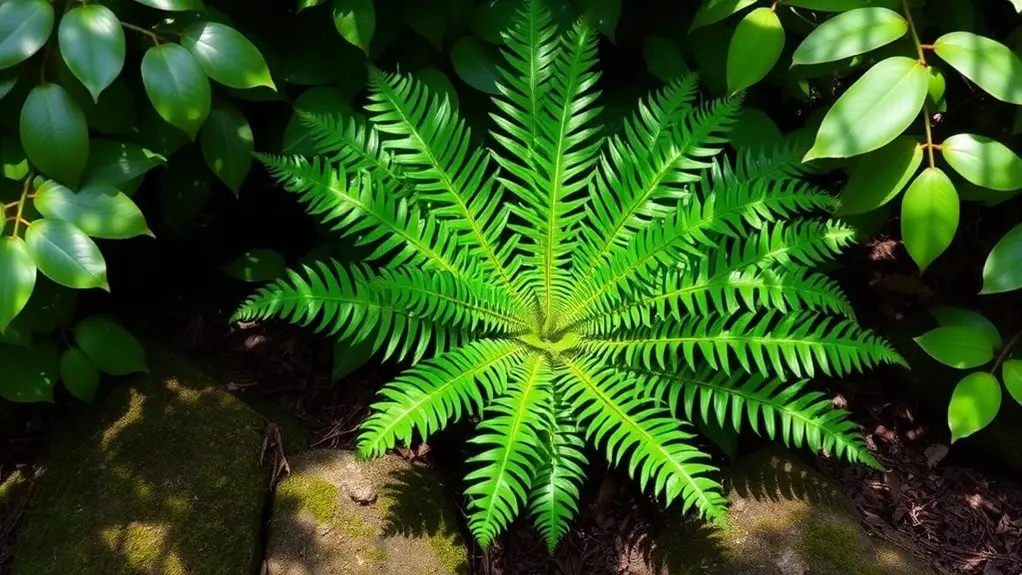
When you grow Bird’s Nest Ferns outdoors, it’s essential to provide shaded areas with indirect sunlight. This helps replicate their natural rainforest environment and prevents the fronds from scorching.
Ideal outdoor conditions not only support healthy fern growth but also enhance how well they fit into your garden design.
Make sure you consider using consistently moist, well-draining soil that’s enriched with organic matter like composted leaf litter. These ferns do best in USDA zones 10-11, but if you live in cooler zones, you’ll need to provide winter protection.
High humidity levels between 60-80% are important too. You can achieve this by misting the ferns regularly or placing them near water features.
Avoid direct sunlight since it can damage the fronds.
Lastly, look for microclimates in your garden that offer stable temperature and moisture conditions. These spots will help your Bird’s Nest Fern thrive and stay healthy throughout the seasons.
Preparing Your Garden for Bird’s Nest Fern Planting
You’ll want to start by picking a shady spot in your garden where the humidity stays pretty consistent—this helps mimic the fern’s natural environment.
Then, focus on getting the soil just right. It should drain well but still be rich in organic matter, and a little on the acidic side to keep those roots happy.
Choosing the right spot and prepping the soil properly are key steps if you want your Bird’s Nest Fern to thrive outdoors.
It’s all about creating a comfy home for the plant from the very beginning.
Soil Preparation Essentials
Since Bird’s Nest Ferns thrive in tropical rainforest conditions, preparing soil that replicates their natural environment is essential for successful outdoor planting. Use well-draining, organic-rich soil to support healthy root development and maximize nutrient uptake.
Consider these essentials: mix peat moss, vermiculite, and perlite to create a lightweight, moisture-retentive medium. Add orchid bark or charcoal to enhance aeration and prevent waterlogging.
Adjust soil pH to slightly acidic (5.0–6.0) for ideal nutrient availability. Make sure to keep moisture consistent but not soggy to avoid root rot.
Incorporate fertilizer types suitable for ferns, balancing nitrogen and potassium for growth. Apply it according to pruning techniques to help your plant recover.
Proper soil preparation sets the foundation for vigorous Bird’s Nest Fern growth outdoors. It really makes a difference!
Ideal Planting Locations
Although Bird’s Nest Ferns can tolerate some indirect sunlight, selecting a location with consistent shade and high humidity is crucial to replicating their native rainforest environment. Choose planting sites under large trees or shaded garden beds where moisture is reliably maintained.
Confirm the soil is well-draining and rich in organic matter to prevent root rot and leaf scorch. Incorporate moss and organic debris around the base to enhance moisture retention.
Protect the plant from harsh afternoon sun and strong winds to preserve frond health. Adhere to a consistent fertilizer schedule, applying balanced nutrients during the growing season to support robust foliage.
Regular pruning techniques, including removing damaged fronds, will encourage healthy growth and prevent disease. Proper site selection combined with these maintenance practices ensures ideal outdoor growth for your Bird’s Nest Fern.
Soil and Light Requirements for Outdoor Bird’s Nest Fern
When cultivating Bird’s Nest Fern outdoors, selecting the right soil and light conditions is crucial to guarantee healthy growth. You’ll want to provide well-draining, organic-rich soil with a pH of 5.0 to 6.0 for ideal nutrient uptake.
Shaded or dappled sunlight exposure is best, so avoid direct sun to prevent leaf scorch.
Provide shaded or dappled sunlight to protect Bird’s Nest Fern leaves from scorching and ensure healthy growth.
It’s also important to protect your fern from strong winds and extreme weather to keep those fronds intact.
Consistent moisture is key, but be careful not to overwater—it should mimic its natural rainforest habitat.
Fertilizer schedules aligned with growth cycles and careful pruning techniques help promote healthy frond development.
Making sure you get these conditions right supports your Bird’s Nest Fern’s resilience and vigor outdoors.
Proper soil composition and light exposure directly influence nutrient absorption and photosynthesis efficiency.
Both are critical for sustaining vibrant foliage and robust plant health.
Watering and Humidity Tips for Outdoor Bird’s Nest Fern
You’ll want to keep the soil consistently moist, but make sure it drains well so the roots don’t end up sitting in water and rotting.
It’s important to maintain outdoor humidity somewhere between 60-80%. You can do this by misting the leaves regularly or even placing a water feature nearby to boost the moisture in the air.
If you’re dealing with dry or low-humidity conditions, don’t worry — using a pebble tray can really help keep those humidity levels just right for your Bird’s Nest Fern.
It’s a simple trick that makes a big difference!
Maintaining Consistent Moisture
Since Bird’s Nest Ferns depend on consistently moist conditions, you need to keep an eye on soil moisture carefully to avoid dehydration and leaf damage. Keeping the right hydration level helps your plant stay healthy and supports propagation. It also works well with proper fertilizer schedules to encourage growth.
To make sure your fern stays moist outdoors, try these tips:
- Use organic, well-draining soil that holds moisture but doesn’t get soggy.
- Water more often when it’s hot or windy to stop the fronds from drying out.
- Misting the fronds regularly can help keep their surface moist.
Also, place your fern on a humidity tray filled with water and pebbles to keep the nearby air humid.
Check the soil moisture every day and adjust how often you water based on the weather and environment.
Enhancing Outdoor Humidity
Although Bird’s Nest Ferns naturally thrive in humid environments with 60-80% humidity, maintaining these levels outdoors requires deliberate actions. To enhance outdoor humidity, regularly mist the fronds to compensate for dry or breezy conditions, but avoid excessive moisture that promotes fungal infections.
Position the fern in shaded areas or under a canopy to reduce evaporation rates.
You can also use a pebble tray filled with water beneath the plant to increase localized humidity through evaporation. Keep the soil consistently moist without waterlogging to sustain ideal humidity while preventing root rot.
Make sure to monitor for fungal infections and pests since high humidity can encourage their development. If you spot any issues, integrate pest control measures promptly to keep your plant healthy.
These techniques will help your Bird’s Nest Fern grow well outdoors by stabilizing humidity and reducing stress.
Common Pests, Diseases, and Challenges Outdoors
When grown outdoors, Bird’s Nest Ferns face several challenges including infestations by scale insects, mealybugs, and spider mites that can compromise their health. You’ll need effective pest control and fungal prevention measures to keep them healthy and vigorous.
Key outdoor challenges include scale insect, mealybug, and spider mite infestations, so regular inspection is a must. Excess moisture and poor drainage can cause root rot and leaf spot fungal diseases, which are common problems.
Strong wind exposure can damage the fronds and cause dehydration. Direct sunlight often leads to browning and stress for your fern. Also, fluctuating temperatures make the plant more vulnerable to pests and diseases.
It’s best to address these factors proactively. Use appropriate treatments and manage the environment well to ensure your Bird’s Nest Fern thrives outdoors without falling prey to common pests and diseases.
How to Protect Your Bird’s Nest Fern From Cold Weather
How can you effectively protect your Bird’s Nest Fern from cold weather? Since this fern is sensitive to temperatures below 50°F (10°C), you should prioritize frost protection as temperatures drop.
Move your plant indoors or to a sheltered location during winter to prevent leaf browning and root damage.
Relocate your Bird’s Nest Fern indoors or to a protected spot in winter to avoid leaf browning and root harm.
Apply mulching techniques by placing a 2-3 inch layer of organic mulch around the base. This insulates roots and retains soil warmth.
Additionally, use frost cloths or breathable outdoor plant covers to shield the fern from frost and freezing winds while maintaining air circulation.
To counteract dry, cold air, increase humidity by misting the fronds or using a humidity tray.
These combined measures will minimize cold stress and promote your fern’s survival during chilly periods.
Taking these steps helps keep your Bird’s Nest Fern healthy all winter long.
Benefits of Growing Bird’s Nest Fern Outdoors vs. Indoors
Because Bird’s Nest Ferns thrive in consistently warm, frost-free environments, growing them outdoors in USDA hardiness zones 10-11 offers distinct advantages. You get natural humidity and filtered sunlight, which mimic their native rainforest conditions. Outdoors, the fern can grow larger thanks to more space and access to rainwater and organic debris.
Maintenance also becomes simpler since watering and humidity control demands go down. When managing your fern, keep these benefits in mind:
- Enhanced growth from natural fertilizer options like decomposed organic matter
- Reduced need for artificial fertilizers because the soil is nutrient-rich
- Better air circulation that helps minimize fungal issues
- Easier pruning to remove damaged fronds
- Lower risk of overwatering compared to indoor pots
All these factors usually make outdoor cultivation more efficient and beneficial if your climate allows it.
Where to Find Healthy Bird’s Nest Ferns for Outdoor Planting
Taking advantage of outdoor conditions to grow Bird’s Nest Ferns means you need to start with healthy specimens that are suited for exterior environments. You’ll find these at garden centers, nurseries, or specialty plant shops focusing on tropical and epiphytic plants.
Look for ferns with vibrant green fronds, no browning, and visible new growth to make sure they’ll be resilient outdoors.
Online retailers also offer well-established ferns that are acclimated for outdoor settings. Just avoid plants with wilted or yellowing fronds, as they mightn’t adapt well to the outdoor environment.
Choose ferns that have robust root systems in moist, well-draining soil. That will really boost their chances of survival once you plant them.
After planting, use appropriate fertilizer techniques to support their growth, and prune regularly to maintain their shape and remove any damaged fronds.
This will keep your fern looking great and healthy in your outdoor space.
Frequently Asked Questions
How Fast Does a Bird’s Nest Fern Grow Outdoors?
You’ll see Bird’s Nest Fern grow slowly outdoors, about 1-2 inches annually. Its foliage color stays vibrant green, while root development strengthens gradually.
This happens especially in warm, humid conditions with consistent moisture and shade. These factors really help the fern thrive. So, patience is key when growing this plant outside.
Can Bird’s Nest Fern Be Propagated Outdoors Easily?
Like nurturing a delicate treasure in a shaded oasis, you can propagate Bird’s Nest Fern outdoors with ease. Just make sure you guarantee frost tolerance and suitable outdoor planting conditions.
Keep the moisture consistent and avoid direct sunlight for ideal growth. It’s really about creating the right environment for your fern to thrive. With a little care, you’ll see it flourish beautifully.
Does Bird’s Nest Fern Attract Wildlife or Pollinators?
You won’t find Bird’s Nest Fern offering significant wildlife attraction or pollinator support since it lacks flowers and nectar.
However, it does provide essential shelter for small insects and some animals. This helps add to habitat complexity, even though it doesn’t actively support pollination.
Are Bird’s Nest Fern Fronds Safe for Pets?
Bird’s Nest Fern fronds pose minimal toxicity concerns and are generally safe for pets. You should still monitor your animals to make certain of pet safety, as large ingestion might cause mild gastrointestinal upset.
If that happens, a visit to the vet might be needed. It’s always better to be cautious when it comes to your furry friends!
How Often Should Bird’s Nest Fern Be Fertilized Outside?
Don’t put all your eggs in one basket. Fertilize your Bird’s Nest Fern once a month during spring and summer, keeping in mind proper lighting conditions and soil needs.
Use half-strength balanced fertilizer to avoid nutrient overload and damage. It’s all about giving your fern just enough to thrive without going overboard.
Conclusion
Think of your bird’s nest fern like a delicate treasure. It thrives outdoors only when conditions mimic its natural tropical home. Just like a skilled sailor reads the winds, you’ll need to understand your climate’s temperature, humidity, and light to keep it alive.
With the right soil, shade, and frost protection, this fern can flourish outside. It can turn your garden into a living sanctuary. The key is matching nature’s blueprint exactly.
So, keep an eye on the environment and adjust as needed. That’s how you make sure your bird’s nest fern stays happy and healthy outdoors.