
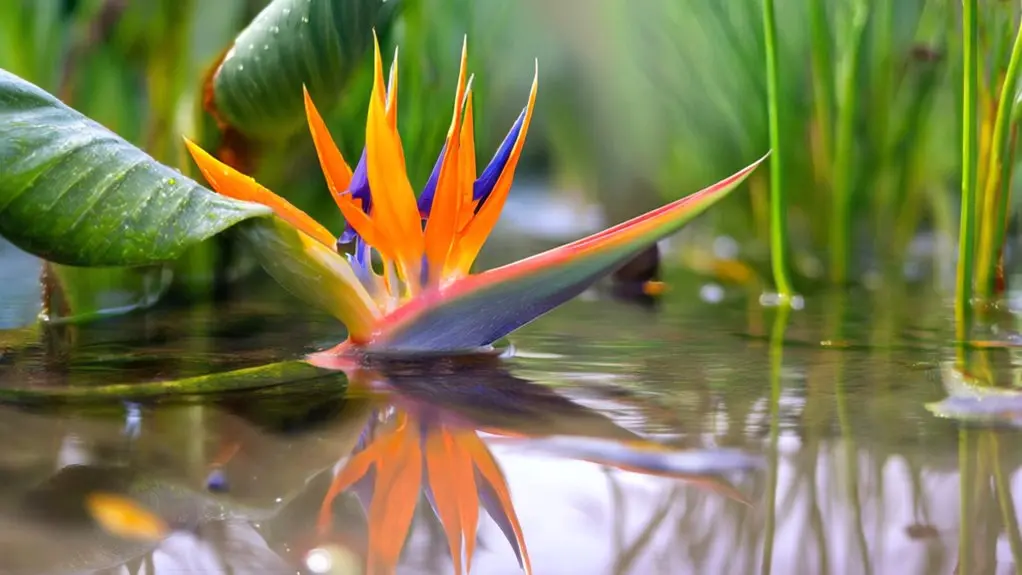
You can’t successfully grow Birds of Paradise solely in water because they depend on well-draining soil for oxygen, nutrients, and stable root development. Water propagation often leads to weak roots that are prone to rot. Soil, on the other hand, supports strong rhizomes and helps with nutrient uptake.
Overwatering or poor drainage can cause root suffocation and disease. So, proper soil and watering practices are really important for healthy growth and flowering.
If you want to get the best out of your plant, keep exploring the essentials of their care. Understanding how to optimize conditions will help you avoid common problems and keep your Bird of Paradise thriving.
Why Birds of Paradise Need Soil, Not Water
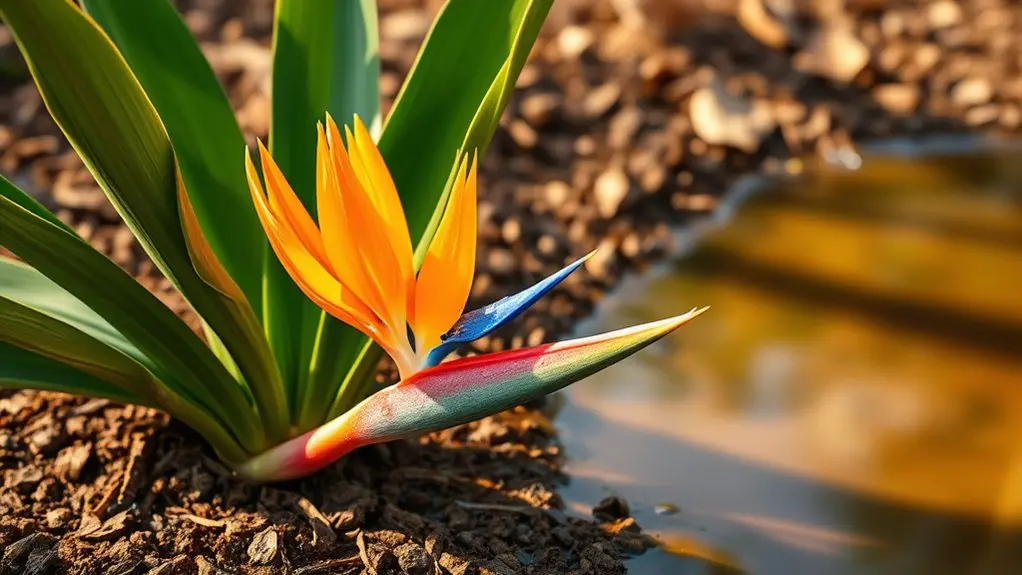
Although you might be tempted to grow Birds of Paradise in water, these plants actually need well-draining soil to keep their roots stable and absorb nutrients properly. The soil has to be just right to allow air to get to the roots and stop water from pooling around them, which can cause problems.
See, soil lets oxygen reach the roots, which is super important for the plant to breathe and carry out its metabolic processes. Water alone doesn’t do this well, and if the roots don’t get enough air, they can start to rot. That rot messes up how the plant takes in nutrients and can really hurt its health.
Plus, soil isn’t just about holding the plant up — it also provides a mix of minerals and organic matter that water just can’t offer. This helps the plant grow strong over time.
How Birds of Paradise Naturally Grow in Soil
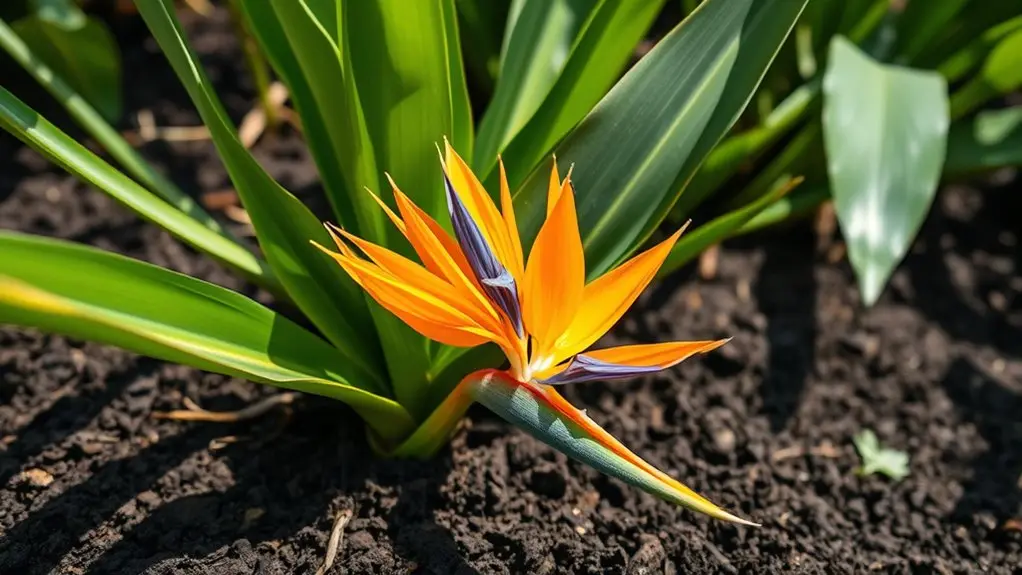
When you observe Birds of Paradise in their natural environment, you’ll find them rooted in well-draining, sandy or loamy soils that support their extensive root systems. The soil composition is critical, providing aeration and preventing waterlogging, which can cause root rot.
These plants develop dense, fleshy rhizomes that function both as anchors and nutrient reservoirs.
Dense, fleshy rhizomes anchor Birds of Paradise while storing essential nutrients for growth and resilience.
Their root depth is considerable, enabling efficient absorption of nutrients and moisture from deeper soil layers. Soil rich in organic matter maintains consistent moisture without saturation, aligning with the plant’s physiological needs.
This balance in soil composition and root depth sustains the tall, flowering stalks characteristic of Birds of Paradise.
Understanding these soil-root dynamics clarifies why Birds of Paradise depend on soil environments rather than water for natural growth. It’s pretty fascinating how the right soil can make such a difference in their health and beauty.
Propagating Birds of Paradise: Water vs. Soil?
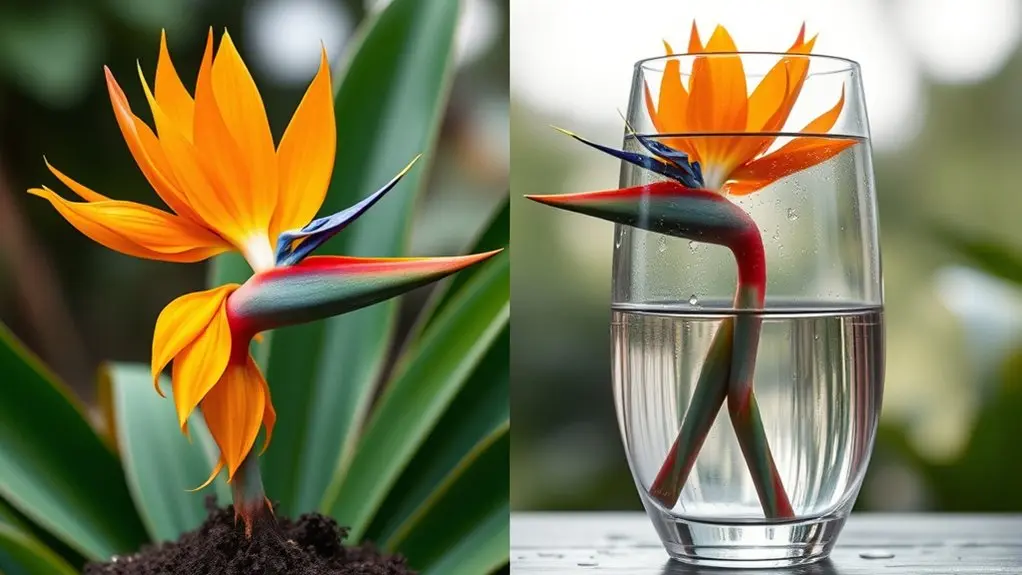
When you propagate Birds of Paradise, water propagation can be a bit tricky. It often leads to root rot because the roots don’t get enough air.
On the other hand, dividing the plant and placing it in well-draining soil usually works better. This method helps the roots grow strong and keeps the plant less stressed.
Water Propagation Challenges
Since Birds of Paradise develop thick, fleshy roots adapted to stable soil environments, propagating them in water presents significant challenges. Their root development relies on a substrate that provides aeration and essential nutrients. These are conditions water alone just can’t replicate.
You might see roots forming in water, but those roots often lack the strength needed for successful transplantation into soil. Plus, the plant’s roots are prone to rotting if submerged too long, which hurts water absorption and overall plant health.
Water propagation doesn’t support the natural needs of Birds of Paradise roots. They thrive best in a medium that balances moisture with enough oxygen.
Soil Division Benefits
Understanding the limitations of water propagation for Birds of Paradise shows why soil division is the preferred method. When you divide these plants in soil, you promote root health and give them essential soil nutrients that water alone just can’t supply.
Thick, fleshy roots need stable, nutrient-rich substrates to grow properly, which water propagation doesn’t provide. Plus, soil division helps reduce the risk of root rot, which is common when roots stay submerged too long.
Some key benefits include encouraging robust root growth and plant stability. It also supplies crucial soil nutrients for ideal development.
Another big plus is preventing root rot by avoiding prolonged water exposure. And it supports mature, flowering plants by naturally separating root clumps.
Watering and Humidity: Best Practices for Healthy Growth
You’ll want to water your Birds of Paradise once the top inch of soil feels dry. This helps keep the roots moist without soaking them too much. It’s a bit of a balance, but getting it right means your plant stays happy and healthy.
Also, try to keep the indoor humidity around 50-60%. This range is just right for your plant’s leaves to grow strong without giving any chance for fungal problems to pop up.
Keep an eye out for yellowing leaves or a soggy base. These are signs you might be overwatering, which can lead to root rot. If you see those, it’s a good idea to adjust your watering routine.
Optimal Watering Frequency
Although Birds of Paradise thrive in consistently moist soil, you should water them deeply only every 2 to 3 weeks during the growing season to prevent overwatering. Maintaining the ideal watering frequency is critical for root health and depends heavily on soil composition. Well-draining soil prevents waterlogging, ensuring roots receive oxygen and reducing disease risk.
Overwatering leads to root rot, while underwatering stresses the plant. So, it’s really about finding the right balance.
Keep these guidelines in mind:
- Allow the top inch of soil to dry out between waterings, especially in cooler months.
- Use soil rich in organic matter with good drainage.
- Water deeply to encourage strong root development.
- Avoid standing water to maintain oxygen availability for roots.
Following this regimen supports vigorous growth and flowering without compromising root health. It’s all about keeping your plant happy and healthy!
Humidity Requirements Indoors
How does indoor humidity influence the health of your Birds of Paradise? Maintaining 60-80% humidity indoors fosters ideal leaf hydration and photosynthesis, especially under controlled indoor lighting. When humidity is too low, the plant gets stressed, which reduces its vigor and makes it more prone to pests. That, in turn, can make pest control more challenging.
| Humidity Level | Plant Response | Emotional Impact |
|---|---|---|
| Below 40% | Leaf browning, stress | Frustration, worry |
| 60-80% | Lush foliage, growth | Satisfaction, pride |
| Above 85% | Fungal risk, rot | Concern, vigilance |
Regular misting can help raise humidity, but it’s important to pair that with proper watering. Overwatering or submerging the roots can cause stress and lead to root rot. Using distilled or rainwater is a smart move because it cuts down on mineral buildup. This supports healthy growth and makes managing pests a bit easier.
Signs Of Overwatering
Maintaining proper humidity levels supports your Bird of Paradise’s leaf hydration and overall vigor, but it’s equally important to monitor watering practices closely.
Overwatering can cause root rot, which leads to yellowing, curling, or mushy leaves. You should watch for these precise signs of excess water:
- Waterlogged soil that stays soggy for days after watering
- Drooping or browning leaf tips indicating poor drainage
- Brown or black, mushy roots instead of firm white ones
- Fungal infections like black spots or mold at the plant’s base
Implementing pruning techniques helps remove damaged foliage and improves air circulation. This also aids in pest prevention.
Overwatering and Drainage Risks for Bird of Paradise
If you overwater your Bird of Paradise or fail to provide adequate drainage, you risk causing root rot and fungal infections that can quickly kill the plant. Root rot develops when the roots remain in waterlogged soil, depriving them of oxygen and promoting decay. This environment fosters fungal pathogens that compromise root integrity and function.
Although these plants tolerate moist soil, they rely on well-draining substrates to prevent water accumulation. Continuous waterlogging suffocates roots, impairing nutrient uptake and leading to systemic decline. Proper drainage ensures excess water exits the pot, maintaining an aerobic root zone essential for health.
Neglecting drainage increases susceptibility to pests and diseases, which only adds to the plant’s stress. So, understanding and controlling watering and drainage is really important to avoid root rot and keep your Bird of Paradise thriving.
How to Tell If Your Bird of Paradise Is Suffering From Too Much Water
When your Bird of Paradise experiences excessive water exposure, it shows distinct physiological and visual symptoms that signal distress. Overwatering myths often overlook how waterlogged soil affects nutrients and root health.
Excess water harms Bird of Paradise by disrupting nutrient uptake and damaging roots, despite common overwatering misconceptions.
You’ll notice yellowing or browning leaf tips, which indicate nutrient deficiencies caused by poor drainage.
Another sign is black, mushy roots that smell foul—a clear indicator of root rot from too much moisture. You might also find the soil stays soggy even days after watering, confirming water saturation.
On top of that, stunted growth or curled leaves with fungal spots can appear because the roots aren’t getting enough oxygen.
Recognizing these symptoms helps you tell the difference between watering myths and real water stress. This way, you can maintain the right soil nutrient balance and avoid irreversible damage to your Bird of Paradise.
Frequently Asked Questions
What Are the Ideal Temperature Ranges for Birds of Paradise?
You should keep Birds of Paradise between 65°F and 80°F to thrive. In tropical climates, avoid temperature fluctuations below 50°F. Cold stress harms growth and foliage, while consistent warmth supports ideal flowering and energy.
Can Birds of Paradise Survive Indoors Without Natural Sunlight?
You can keep Birds of Paradise indoors without natural sunlight, but you’ll need to meet their lighting requirements using grow lights.
It’s important to maintain proper indoor humidity to support ideal photosynthesis and growth. This helps prevent stress-related decline in the plant.
With the right care, your Birds of Paradise can thrive even without direct sunlight. Just make sure to keep an eye on their environment and adjust as needed!
How Long Does It Take for Birds of Paradise to Bloom?
Bird care demands diligent devotion; blooming timelines typically take 3 to 5 years from seed. With division, you’ll see flowers faster, often 1 to 2 years.
Ideal sunlight, warmth, and nutrients accelerate this analytical growth process. So, giving your plant the right conditions really helps it bloom sooner. Just be patient and consistent with care!
Are Birds of Paradise Toxic to Pets or Children?
Yes, Birds of Paradise pose toxicity concerns for pet safety. If ingested, they can cause irritation, nausea, or vomiting in pets and children.
You should keep them out of reach to prevent accidental poisoning. It’s better to be safe than sorry when it comes to curious pets and little ones.
What Are Common Pests Affecting Birds of Paradise?
You’ll find mealybugs, scale insects, spider mites, and aphids commonly affect Birds of Paradise.
It’s a good idea to regularly inspect your plants to catch any problems early. Using natural treatments like neem oil or hose sprays can help control infestations effectively.
Keeping an eye on your plants and acting quickly makes a big difference in preventing pests and diseases.
Conclusion
You can’t teach an old dog new tricks, and Birds of Paradise thrive in soil, not water. While they need consistent moisture and high humidity, their roots require well-draining soil to avoid rot. Propagating in water might work briefly, but long-term health demands proper soil conditions.
Overwatering can drown their growth potential, so monitor drainage carefully. By understanding their natural habitat and needs, you’ll guarantee your Bird of Paradise flourishes scientifically and sustainably. Just remember, keeping the right balance is key to helping your plant grow strong and healthy.