
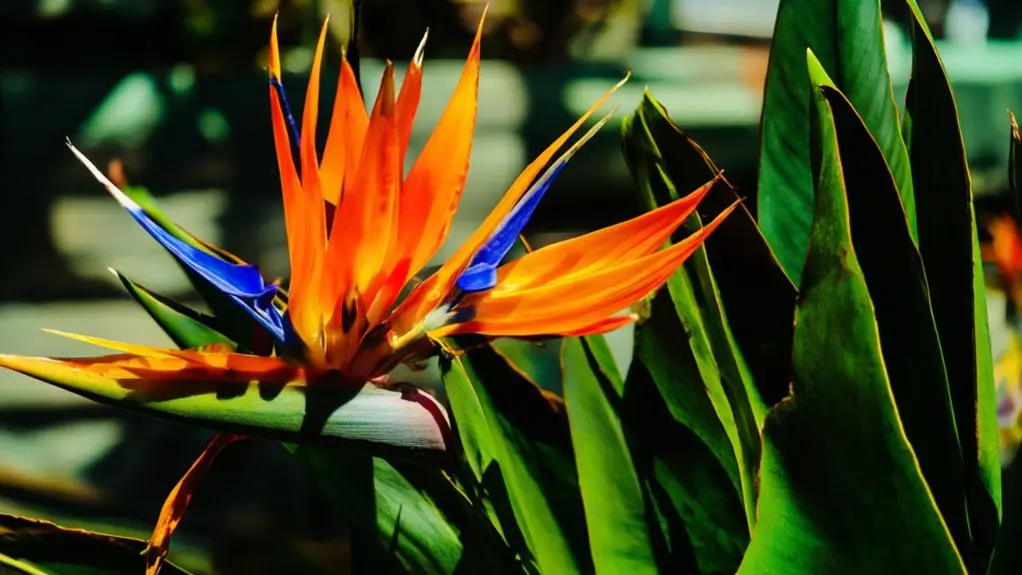
You can grow Birds of Paradise in full sun by making sure they get at least 6-8 hours of direct sunlight every day. Start slow by gradually increasing their exposure to avoid leaf scorch and heat stress.
Make sure to use well-draining soil, keep watering consistent, and prune occasionally to help your plant stay healthy and bloom beautifully. Some species handle full sun better than others, so keep that in mind.
If you’re growing them indoors, they might need some extra lighting to thrive. Keep exploring these care tips to master the best way to keep your Birds of Paradise happy and vibrant.
Why Full Sun Is Essential for Bird of Paradise Growth
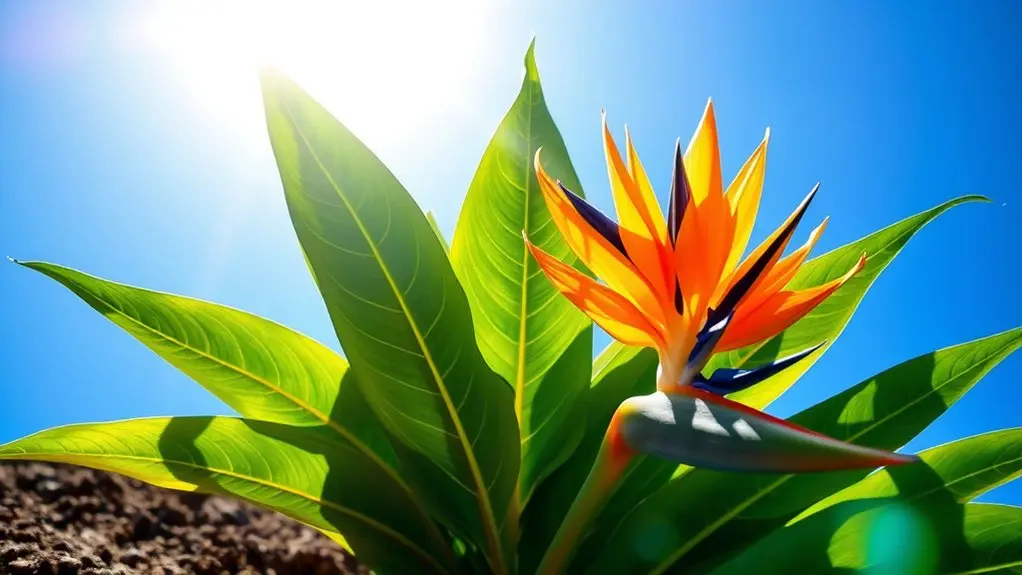
Because Birds of Paradise require at least 6-8 hours of direct sunlight daily, providing full sun is essential to their growth and flowering. Without enough light, your plant can end up with weak, leggy stems and sparse blooms.
Birds of Paradise need 6-8 hours of direct sunlight daily for strong growth and vibrant blooms.
Full sun exposure helps the stems grow strong and also triggers the flowering cycle, which might otherwise be delayed.
To get the best growth, combine good pruning techniques with soil amendments. Adding rich organic matter and balanced nutrients boosts root efficiency, which supports the plant’s higher energy needs under full sun conditions.
Regular pruning gets rid of dead or overcrowded growth, improving air circulation and letting more light in. This helps the plant develop vigorously.
When you put these practices together, you’re basically recreating the plant’s native tropical environment, making sure it thrives with vibrant leaves and plenty of flowers.
How to Provide Full Sun Safely to Your Plant
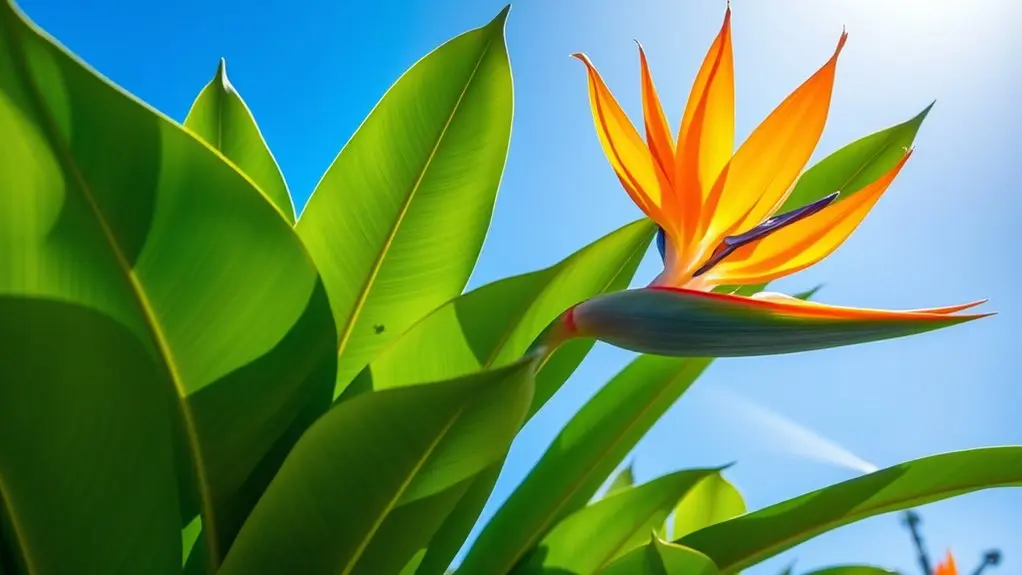
You’ll want to introduce your Bird of Paradise to full sun gradually. Try increasing its exposure over several days to help minimize leaf scorch.
If you’re in a hotter climate, it’s a good idea to provide some protective shade during the peak afternoon hours. You can use sheer curtains or a translucent cloth to help reduce heat stress.
Also, keep an eye on the leaves for any signs of wilting or browning. That way, you can adjust the sunlight levels as needed and make sure your plant stays healthy and happy.
Gradual Sunlight Exposure
When introducing your Bird of Paradise to full sun, gradually increasing its exposure over 2 to 4 weeks prevents leaf scorch and stress. Begin by placing your plant in bright, indirect light, then slowly add morning or late afternoon sun, avoiding harsh midday rays initially.
Use sheer curtains or shade cloth to filter intense light during this acclimation phase, reducing shading as the plant adapts.
Keep an eye on the leaves for signs of sunburn like browning and adjust exposure promptly. Supporting this changeover by applying soil amendments can improve moisture retention and nutrient availability, which helps healthy growth under increased light.
Also, try precise pruning techniques to remove damaged or shaded leaves, which enhances light penetration and airflow.
Once your Bird of Paradise is acclimated, make sure it gets at least 6 hours of direct sunlight daily to optimize flowering and vigor. This steady exposure will keep your plant thriving and looking its best.
Protective Shade Strategies
Although Birds of Paradise thrive in full sun, providing protective shade strategies guarantees they receive intense light without suffering leaf scorch or stress. Use a sheer shade cloth or a semi-transparent curtain to filter sunlight, allowing full sun exposure while diffusing harsh rays. Installing a trellis with climbing plants can also create a natural light barrier.
Gradually acclimate your plant to full sun over a week to reduce stress. Incorporate reflective surfaces such as white walls or reflective mulch nearby; these enhance light intensity indirectly, boosting photosynthesis without direct heat damage. Position your plant to catch morning sun and afternoon shade, minimizing exposure to scorching midday light.
These techniques ensure your Bird of Paradise enjoys ideal sunlight safely, promoting robust growth and vibrant foliage. Give it some time, and you’ll see how well your plant responds to this balanced sunlight approach.
Monitoring Leaf Health
How can you guarantee your Bird of Paradise thrives under full sun without suffering leaf damage? Start by gradually acclimating your plant to intense light over a week. Keep an eye on leaf health closely. Look for yellowing, browning, or scorched edges, which are signs of too much sunlight or dehydration.
Use pruning techniques to remove damaged leaves quickly. This helps promote new growth. Also, try adding soil amendments to improve moisture retention and nutrient availability. This supports leaf resilience.
During peak summer, give your plant filtered sunlight or some afternoon shade. This protects the leaves while still letting your Bird of Paradise grow strong.
| Leaf Condition | What It Means |
|---|---|
| Yellowing | Possible dehydration |
| Browning edges | Sun scorch or nutrient loss |
| Scorched leaves | Excessive direct sunlight |
Make sure to check your plant regularly and adjust its placement as needed. This will keep your Bird of Paradise vibrant and healthy.
Preventing Leaf Scorch and Heat Damage
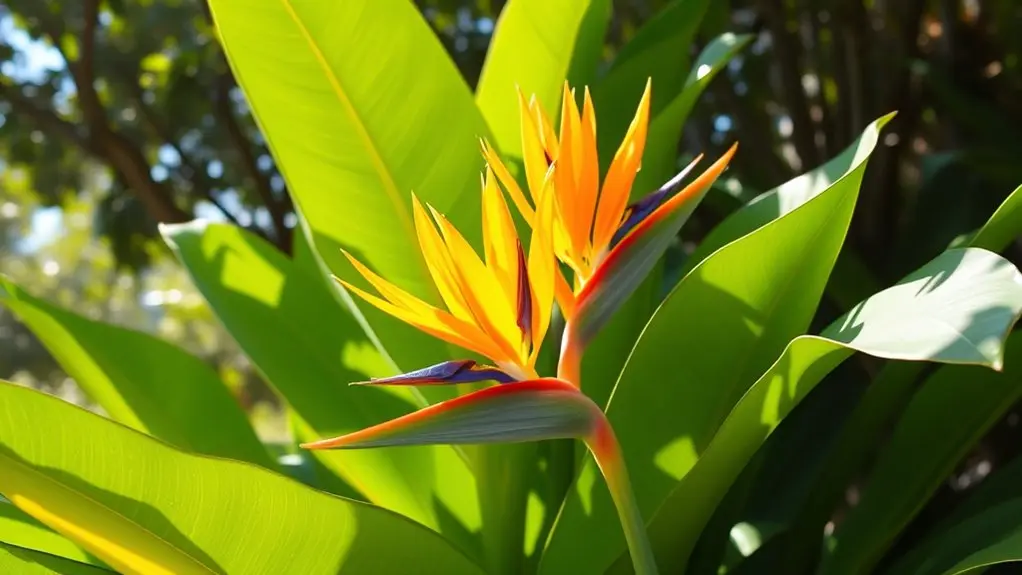
You’ll know leaf scorch when you see brown, crispy edges and leaves that look faded—it’s a clear sign the plant is stressed from too much sun.
To keep things balanced, try increasing the light a little at a time instead of all at once. And when the afternoon heat is at its worst, giving your plants some shade can really help.
Another great way to keep your plants happy is by using cooling tricks like mulching and misting. These methods help keep the soil moist and stop the leaves from drying out too much.
It’s all about keeping your plants comfortable during those hot days!
Identifying Leaf Scorch
When you notice browning or yellowing at the tips and edges of your Birds of Paradise leaves, especially on the oldest foliage, you’re likely seeing signs of leaf scorch. This leaf discoloration results from excessive dehydration caused by intense sunlight and heat stress.
Alongside discoloration, observe for leaf curling, which indicates cellular moisture loss and impending tissue damage.
These symptoms often develop during peak sun hours when leaf tissues dry out faster than the plant can replenish moisture. Identifying leaf scorch promptly allows you to adjust care routines, such as modifying watering schedules or providing shade.
Early morning watering and mulching can help reduce heat absorption in the soil, which lowers stress on the leaves.
Keeping an eye on these signs helps you maintain healthy foliage and prevents irreversible damage to your Birds of Paradise. So, don’t wait until the problem worsens—acting early makes all the difference!
Optimal Sun Exposure
Although Birds of Paradise plants need at least 6 to 8 hours of direct sunlight every day to thrive and bloom, exposing them to intense midday sun without protection can cause leaf scorch and heat stress. To avoid this, gradually get your plant used to full sun. You might also want to provide some filtered shade during the hottest part of the day.
Adding the right soil amendments helps too. Using organic matter improves water retention, which makes it easier for the plant to handle heat. On top of that, keeping up with pest control is super important because stressed plants tend to attract more bugs.
| Factor | Recommendation |
|---|---|
| Sunlight Exposure | 6-8 hours, avoid intense midday sun |
| Soil Amendments | Use organic matter to retain moisture |
| Pest Control | Regular inspection and early treatment |
Cooling Techniques
Exposing your Bird of Paradise to full sun demands careful management to prevent leaf scorch and heat damage. You can install shade cloths or position tall plants to diffuse intense sunlight, protecting the colorful foliage from sunburn.
Mulching around the base retains soil moisture and keeps roots cool, which is essential in high temperatures.
Misting leaves during peak heat lowers temperature stress and increases humidity. This supports overall plant vigor and helps keep pests away.
Watering early in the day ensures the plant is hydrated before the heat intensifies, reducing dehydration risks.
These cooling techniques work together to maintain leaf integrity and promote vibrant, healthy growth. They also minimize damage caused by prolonged sun exposure.
Using them will help your Bird of Paradise flourish despite the challenges of full sun.
Adjusting Watering and Soil for Full Sun
Since Birds of Paradise demand at least 6-8 hours of direct sunlight daily, you’ll need to adjust your watering schedule to prevent the soil from drying out completely during hot periods. Effective water management means increasing watering frequency while avoiding waterlogging.
Use well-draining sandy or loamy soil amended with organic matter to promote healthy root development. Also, try adding soil amendments like perlite or coarse sand to enhance drainage. This helps prevent root rot caused by excess moisture.
Choose well-draining soil with organic matter and additives like perlite to prevent root rot and support healthy growth.
Mulching around the plant’s base conserves moisture, keeps roots cool, and reduces evaporation under intense sunlight.
Make sure to monitor soil moisture regularly to balance hydration and aeration. This way, your plant can thrive in full sun conditions without stress.
Properly adjusting watering and soil composition is key to supporting vigorous growth and long-term health.
Supporting Flowering With Proper Light and Care
Managing light exposure goes hand in hand with watering and soil adjustments when growing Birds of Paradise. To support flowering, provide at least 6-8 hours of direct sunlight daily. This kind of light really helps stimulate bloom development, which usually happens after 3-5 years.
If natural light is limited, you can use grow lights for about 6 hours a day. Along with light, make sure to keep the soil properly fertilized to supply the essential nutrients your plant needs. Also, don’t forget about pest control—it’s important to prevent infestations that can get in the way of flower production.
| Care Aspect | Recommendation | Impact on Flowering |
|---|---|---|
| Light Exposure | 6-8 hours direct sunlight daily | Promotes flower bud initiation |
| Grow Lights | 6 hours daily (indoor/shaded) | Compensates for low sunlight |
| Soil Fertilization | Balanced NPK fertilizer monthly | Enhances bloom size and number |
| Pest Control | Regular inspection and treatment | Prevents flower damage |
| Watering | Consistent, well-drained soil | Supports overall plant health |
Best Light Conditions for Bird of Paradise Indoors and Outdoors
Although Birds of Paradise can tolerate some filtered light, they thrive best when given 6-8 hours of direct sunlight daily, whether indoors or outdoors. To optimize growth and flowering, follow these guidelines:
Indoors, position your plant near south or west-facing windows to maximize natural light. You can also supplement with grow lights during low-light winter months. This helps keep your plant happy and healthy.
Outdoors, pick a spot with unobstructed sunlight. This will promote vibrant blooms and robust foliage, making your Bird of Paradise really stand out.
Make sure to prune your plant to remove leggy growth caused by inadequate light. This not only improves air circulation but also boosts overall plant health.
Also, keep up with regular pest management. Plants that get plenty of light tend to resist infestations better, so your Bird of Paradise stays vigorous and strong.
Bird of Paradise Species Best Suited for Full Sun
When selecting a Bird of Paradise for full sun exposure, you’ll want to focus on species that not only tolerate but thrive under intense sunlight. Strelitzia reginae stands out as the best choice, requiring at least six hours of direct sunlight daily to optimize bird health and robust root development. Its vibrant flowers and lush foliage directly result from ample solar exposure during spring and summer growth phases.
Strelitzia nicolai, the giant bird of paradise, also performs well in full sun but benefits from some afternoon shade in extreme heat to prevent stress that could impair root function and overall vigor.
Avoid species like Strelitzia alba if you’re aiming for full sun, as they prefer partial shade and may suffer compromised bird health and weaker root systems under harsh sunlight.
When and How to Use Grow Lights Effectively
If your Birds of Paradise don’t get enough natural sunlight, using grow lights is super important to keep them healthy and help them bloom. Full-spectrum LED grow lights work best, and you should place them about 12-24 inches above the plant to mimic natural sunlight well.
Try to give your plant about 6 hours of steady light every day, especially during those shorter winter days. Keep an eye on how your plant reacts—if the leaves start to burn or don’t seem to be getting enough light, just adjust the height of the light.
Provide around 6 hours of steady light daily and adjust the light height as needed to prevent leaf burn.
It also helps to prune dead leaves regularly. This not only improves how the light gets through but also boosts airflow around your plant.
Plus, adding balanced nutrients to the soil supports strong growth when using artificial light.
Taking all these steps together will make sure your Birds of Paradise thrives indoors. It’s a great way to make up for less natural sunlight while encouraging flowering and overall health.
Tips for Transitioning Your Bird of Paradise to Full Sun
Since Birds of Paradise are sensitive to sudden changes in light intensity, you should shift them to full sun gradually over two weeks by increasing outdoor exposure in short intervals. Begin in spring, aligning with their natural growth cycle, and monitor closely for leaf browning or wilting.
If you notice any damaged or overcrowded foliage, prune it using precise pruning techniques. This helps improve airflow and reduces places where pests like to hide.
Keep watering consistent and mulch the base to preserve soil moisture and protect the roots during this adjustment.
Once your plant is fully acclimated, make sure it gets 6-8 hours of direct sunlight daily to encourage vigorous growth and flowering.
Also, keep an eye out for pests by regularly inspecting your plant. Address any infestations promptly and maintain overall plant health to reduce vulnerability as it transitions to more light.
Frequently Asked Questions
Can Birds of Paradise Survive Frost or Cold Temperatures?
You shouldn’t expect birds of paradise to have frost tolerance; they thrive only in tropical climates. Exposure to frost or temperatures below 32°F damages them severely. So, protect or move them indoors when cold threatens.
These plants just aren’t built for the cold. If you live somewhere with chilly winters, it’s best to keep an eye on the forecast. Moving your bird of paradise to a warmer spot can save it from serious damage.
How Often Should I Repot My Bird of Paradise Plant?
Like clockwork, repot your Bird of Paradise every 2-3 years during spring.
Adjust watering frequency and fertilizer needs after repotting to match its growth stage. This helps ensure roots aren’t cramped and nutrient uptake stays ideal.
Keeping an eye on your plant’s space and nutrition will keep it thriving.
What Pests Commonly Affect Bird of Paradise Plants?
You’ll commonly face spider mites, aphids, and mealybugs on your Bird of Paradise. These pests disrupt bird pollination by damaging flowers and affect seed dispersal by weakening plant health. Treat promptly with insecticidal soap.
Keeping an eye out for these bugs is key. The sooner you catch them, the easier it is to protect your plant and keep it thriving. Just a little care goes a long way!
Can Birds of Paradise Be Propagated From Cuttings?
Yes, you can propagate Birds of Paradise using cutting techniques. For successful bird propagation, select healthy stems with nodes. Then, apply rooting hormone to help encourage root growth.
Make sure to keep the cuttings in warm, humid conditions with indirect light. This environment helps the roots establish properly. It usually takes several weeks for roots to develop. Just be patient and keep an eye on them!
Are Bird of Paradise Plants Toxic to Pets?
Yes, Bird of Paradise plants pose toxicity concerns because they contain compounds that can be harmful to pets. These compounds may cause symptoms like nausea and vomiting.
If you want pet-friendly plants, it’s best to avoid Bird of Paradise altogether. Or, at the very least, keep them well out of your pets’ reach to guarantee their safety.
Conclusion
Think of full sun as the powerhouse that fuels your Bird of Paradise’s vibrant bloom and lush growth. While the bright light can be intense, with careful watering, soil adjustment, and a gradual shift, you’ll shield your plant from scorching harm.
Whether indoors or out, mastering these techniques guarantees your Bird of Paradise thrives like a tropical flame. It turns every leaf and petal into proof of radiant health and stunning beauty under the sun’s nurturing gaze.