
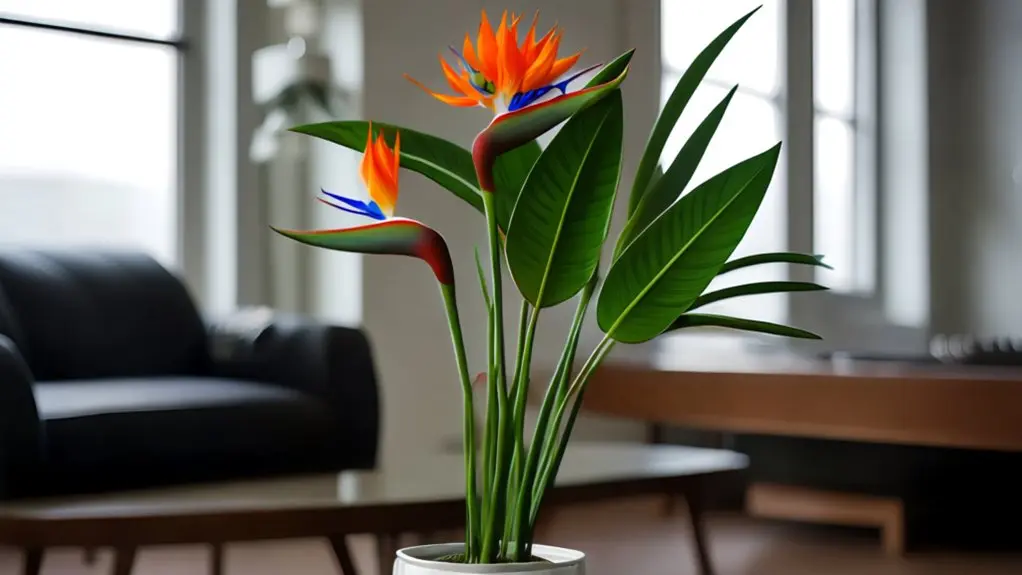
You can successfully grow Birds of Paradise indoors by providing bright, indirect light. Ideally, place them near south or west-facing windows where they get filtered sun. Keep the temperatures stable between 65-85°F and humidity around 60-80%.
Water your plant when the topsoil feels dry to avoid root rot. Make sure to use well-draining, nutrient-rich soil for the best results. Regular fertilization and careful pruning help promote healthy growth and blooming.
Managing these conditions carefully supports vibrant indoor plants. If you want to learn more, there are detailed care strategies and troubleshooting tips to explore.
What Light Conditions Does an Indoor Bird of Paradise Need?
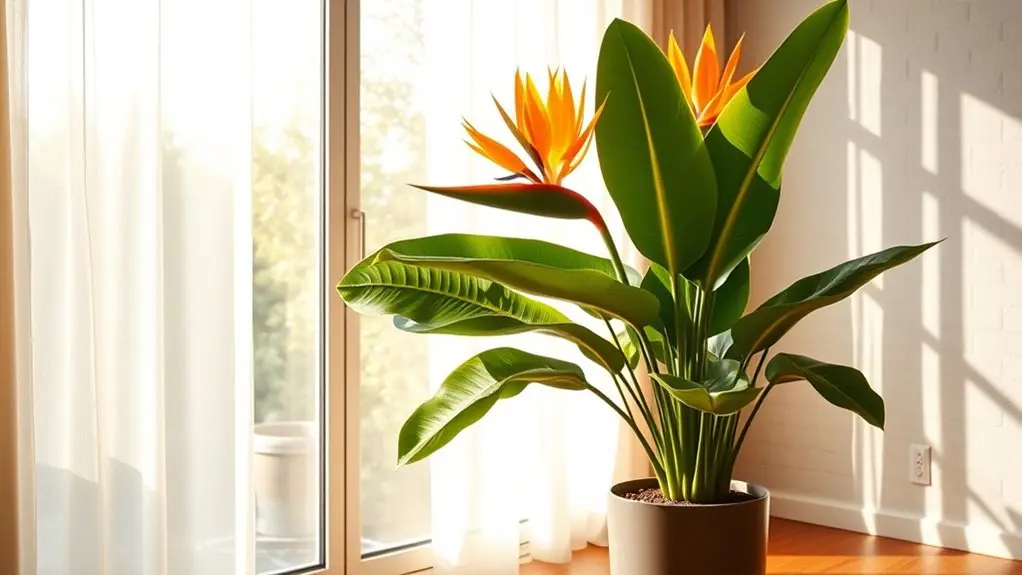
Although Birds of Paradise are native to bright, sunny environments, when grown indoors they thrive best in bright, indirect light that closely mimics their natural habitat. You should provide moderate lighting intensity by placing the plant near south or west-facing windows, where filtered sun exposure prevents leaf scorching.
While the plant tolerates some direct sunlight, prolonged exposure to intense sun can damage its foliage. Maintaining ideal lighting intensity ensures healthy growth and vibrant flowering, as insufficient light limits bloom production.
Avoid low-light conditions, which reduce photosynthetic efficiency and stunt development. By carefully managing sun exposure and selecting appropriate indoor locations, you support your Bird of Paradise’s physiological needs, promoting robust growth and preserving its characteristic, colorful flowers.
How to Acclimate Your Bird of Paradise to Indoor Sunlight
You’ll want to gradually increase your Bird of Paradise’s exposure to bright indoor light over one to two weeks. This helps prevent leaf scorch.
Try positioning it near a south or east-facing window where it can get filtered sunlight for most of the day.
Keep an eye on the leaves for any signs of stress, like browning or curling.
If you notice any issues, just adjust the plant’s location or how long it gets light.
This way, you can make sure it acclimates perfectly.
Gradual Sunlight Exposure
When acclimating your Bird of Paradise to indoor sunlight, gradually increasing its exposure over 2 to 4 weeks prevents leaf scorch and stress. Begin by placing your plant in bright, indirect light, then slowly move it closer to a sunny window daily.
This careful sunlight progression reduces the risk of leaf scorch and allows the plant to adapt physiologically. Keep an eye out for stress signs like leaf curling or browning. If you notice any, adjust the exposure as needed.
This gradual process strengthens your Bird of Paradise, ensuring it becomes resilient to brighter conditions without damage.
| Day Range | Light Exposure | Plant Response |
|---|---|---|
| 1–7 | Bright, indirect light | Stable, no stress signs |
| 8–14 | Partial direct sunlight | Mild leaf curling possible |
| 15–21 | Increasing direct sunlight | Adaptation visible, healthy |
| 22–28 | Full direct sunlight | Stronger, vibrant leaves |
Monitor Leaf Health
Since adapting your Bird of Paradise to indoor sunlight involves gradual exposure, closely monitoring leaf health becomes essential to prevent stress or damage. Regularly inspect leaf color and texture; yellowing or browning edges signal excessive direct sunlight or insufficient light.
If leaves curl or develop brown tips, promptly adjust light exposure and perform humidity adjustment to maintain optimal moisture levels. Make sure your plant gets bright, indirect light for about 4 to 6 hours daily. Using sheer curtains can help diffuse those harsh rays.
You can use a light meter or just observe changes in leaf color as a handy indicator to fine-tune indoor lighting conditions. Keeping humidity balanced and light appropriate prevents physiological stress. This supports healthy photosynthesis and keeps your foliage vibrant while your plant acclimates.
Optimal Light Duration
Although Birds of Paradise thrive in bright, indirect light, gradually increasing their exposure to sunlight over several weeks is essential to prevent leaf scorch and physiological stress. Start by placing your Bird of Paradise near a south or west-facing window. This gives it bright light but limits direct sun at first.
Use sheer curtains during peak sunlight hours to soften those intense rays and minimize damage. Aim for about 4 to 6 hours of sunlight daily, mixing direct and indirect light. This helps the plant photosynthesize well and encourages flowering indoors.
Keep an eye on the leaves during this time. If you notice any browning or curling, just cut back on the light for a bit. Taking it slow like this makes sure your Bird of Paradise adjusts well to indoor life, growing strong and looking vibrant.
How to Maintain Humidity and Temperature for Indoor Growth
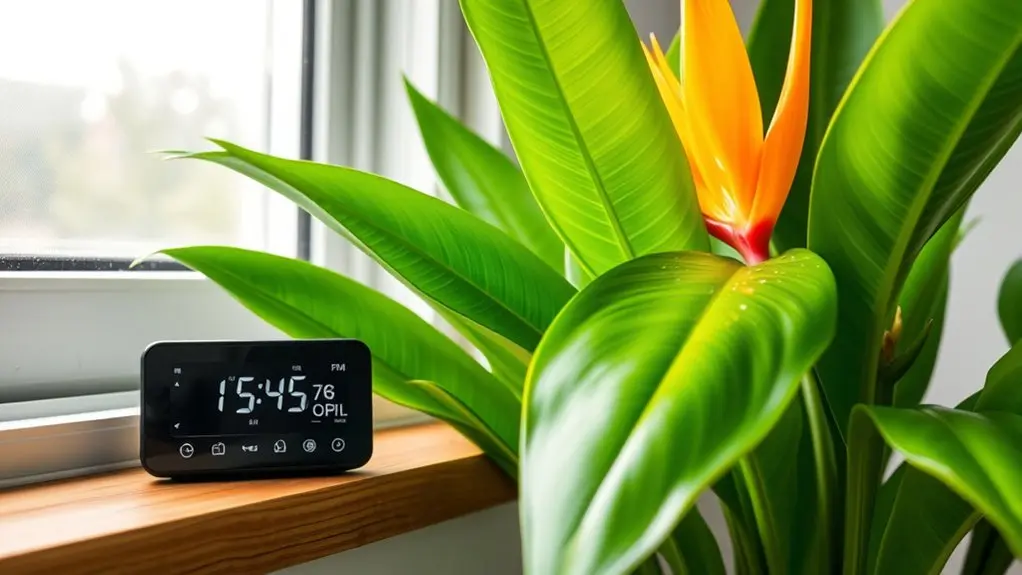
Because Birds of Paradise require consistently high humidity levels between 60-80%, you’ll need to actively manage the indoor environment by misting regularly or using a humidifier. Temperature regulation is just as important. Keep it stable between 65-85°F (18-29°C) and avoid cold drafts or sudden fluctuations.
Try to position the plant away from air conditioning vents and open windows during cold weather. Using a pebble tray with water beneath the pot can help boost humidity by increasing moisture near the roots and foliage.
| Parameter | Ideal Range/Practice |
|---|---|
| Humidity Level | 60-80% |
| Temperature Range | 65-85°F (18-29°C) |
| Airflow | Avoid cold drafts, vents |
| Humidity Control | Misting, humidifier, pebble tray |
| Stability | Minimize sudden changes |
How Often Should You Water Your Indoor Bird of Paradise
You should water your indoor Bird of Paradise about once a week during the spring and summer.
When fall and winter roll around, you can cut back to watering every 10 to 14 days, but it really depends on how moist the soil feels.
Keep an eye out for signs that you might be overwatering, like yellowing leaves or soil that stays soggy for too long. Those issues can lead to root rot, which you definitely want to avoid.
A handy tip is to use a moisture meter. It helps you know exactly when your plant needs water, so you don’t end up giving it too much or too little.
This way, your Bird of Paradise stays happy and healthy!
Seasonal Watering Frequency
When caring for an indoor Bird of Paradise, adjusting your watering schedule according to seasonal changes is essential for ideal growth. During spring and summer, water once a week when the top 2 inches of soil are dry. Make sure the soil drains well to prevent root rot.
In fall and winter, cut back watering to every 10-14 days. You’ll want to adjust how often based on the indoor humidity and temperature.
Bottom watering is a great way to deliver moisture straight to the roots, which helps the plant grow strong.
Using a moisture meter can really help you nail the watering schedule. It prevents you from under- or overwatering your plant.
Plus, proper watering supports pest control by avoiding stagnant moisture that attracts bugs.
Signs of Overwatering
Adjusting your watering schedule seasonally helps maintain a healthy Bird of Paradise, but paying close attention to signs of overwatering is equally important. Overwatering leads to root rot by causing roots to sit in water, depriving them of oxygen and promoting fungal infections.
Use a moisture meter to verify the top 2 inches of soil are dry before watering. Typically, this means watering once a week in spring and summer. Watch for these signs:
| Sign | Description |
|---|---|
| Yellowing leaves | Indicates stress from excess moisture |
| Soggy soil | Soil remains wet beyond watering time |
| Wilting | Leaves droop despite moist soil |
| Musty smell | Fungal growth causing odor |
| Root rot | Dark, mushy roots harming plant health |
Keep an eye on these indicators to prevent overwatering and help your plant thrive. It’s all about balance!
Which Soil Mix Works Best for Indoor Birds of Paradise
Although Birds of Paradise thrive in a variety of conditions, selecting the right soil mix is vital for their growth indoors. You should use a well-draining, nutrient-rich medium combining potting soil with soil amendments like perlite, sand, or orchid bark to enhance aeration and prevent water retention.
Choosing a well-draining, nutrient-rich soil mix with amendments ensures healthy growth for indoor Birds of Paradise.
This light, airy mix supports robust root development and healthy foliage.
Maintaining a soil pH between 5.5 and 7.5 is important because pH adjustment ensures peak nutrient availability for your plant. Incorporating coarse materials such as perlite or pumice improves drainage and helps reduce the risk of root rot.
During active growth phases, repotting with fresh, organic-rich soil replenishes nutrients and promotes vigorous growth.
How to Fertilize Birds of Paradise for Healthy Growth
To promote vigorous growth in your Birds of Paradise, you should feed it with a balanced 20-20-20 liquid fertilizer twice a month during the spring and summer. This fertilizer schedule guarantees the plant receives equal proportions of nitrogen, phosphorus, and potassium, supporting healthy foliage and robust flowering.
Apply fertilizer to moist soil to prevent root burn and maximize nutrient uptake.
In fall and winter, reduce or pause fertilization to avoid overfeeding, as the plant’s growth naturally slows.
Additionally, incorporate organic nutrients annually by mixing compost into the soil. This supplies slow-release elements that enhance soil fertility and plant health.
Avoid excessive fertilization to prevent leaf burn and excessive foliage growth at the expense of blooms.
Sticking to this precise regimen promotes balanced, healthy development in your indoor Birds of Paradise.
When and How to Prune Your Indoor Bird of Paradise
Proper pruning complements a well-managed fertilization routine by directing your Bird of Paradise’s energy towards healthy growth and flowering. Use precise pruning techniques in early spring to remove dead or damaged leaves and spent flower stalks. Avoid pruning during dormancy in winter to prevent stress.
For plant rejuvenation, cut back overgrown plants to one-third size in late winter or early spring. Always use sharp, clean shears to make clean cuts just above leaf nodes or branch junctions.
| Timing | Purpose |
|---|---|
| Early Spring | Remove dead leaves, promote new growth |
| Late Winter/Early Spring | Plant rejuvenation by cutting back |
| Throughout growing season | Trim spent flower stalks to boost blooms |
How to Fix Curling, Brown, and Yellow Leaves
If your Bird of Paradise develops curling, brown, or yellow leaves, these symptoms usually indicate specific watering or humidity issues that need correction.
Curling leaves often signal underwatering. Make sure you deeply water the plant and maintain evenly moist soil.
Curling leaves usually mean your Bird of Paradise needs deeper watering and consistently moist soil.
Brown edges typically result from low humidity or underwatering. So, increase watering frequency and mist regularly to help your plant feel better.
Yellow leaves usually indicate overwatering. Check soil drainage to prevent waterlogging and root rot. Improve drainage by using well-aerated soil and pots with drainage holes.
Prune damaged or browning leaves to encourage healthy growth. Also, keep an eye out for pests because infestations can make leaf damage worse.
Try to maintain consistent watering and high humidity. Doing this will help your Bird of Paradise thrive indoors without unnecessary stress or decline.
How to Encourage Your Indoor Bird of Paradise to Bloom
After addressing leaf health issues, focusing on bloom encouragement becomes a key step in caring for your indoor Bird of Paradise. To stimulate flowering, you need to optimize environmental and maintenance factors precisely. Follow these three steps:
First, provide bright, indirect sunlight or some partial direct sun daily. Keep temperatures between 65-85°F with high humidity. This mimics natural conditions that help your plant bloom.
Next, fertilize biweekly during spring and summer. Use a balanced, water-soluble fertilizer to supply essential nutrients for flower development.
Also, prune spent flowers and damaged leaves regularly. This promotes new growth and reduces susceptibility to Bird of Paradise pests. It helps keep your plant vigorous as part of your indoor decor.
Additionally, allow a winter dormancy period by reducing fertilization while maintaining warmth. This triggers the flowering cycle and gets your plant ready for the next bloom season.
Frequently Asked Questions
Can Birds of Paradise Tolerate Low Light Conditions Indoors?
Birds of Paradise don’t tolerate low indoor lighting well; their growth slows and flowers rarely bloom. You’ll need strong indoor lighting or grow lights to keep them happy.
Just make sure to keep pet safety in mind. Avoid using toxic fertilizers or hazardous lamps near your animals. It’s all about creating a safe and bright environment for your plant and pets alike.
Are Birds of Paradise Toxic to Pets?
Yes, Birds of Paradise pose toxicity concerns due to tannins causing gastrointestinal upset in pets. For pet safety, you should keep the plant out of reach and consult a vet if your pet shows poisoning symptoms.
It’s always better to be safe than sorry. If you notice your pet acting unusual after being near this plant, don’t hesitate to get professional help. Keeping an eye on what your pets chew is a smart move!
How Large Do Indoor Birds of Paradise Typically Grow?
Think of your indoor Bird of Paradise as a growing sun, reaching 3 to 6 feet tall with a 4 to 5 feet spread.
Master tropical plant care and indoor gardening tips to keep it thriving and well-sized.
It’s all about giving it the right light, water, and love to watch it flourish indoors.
Can Birds of Paradise Be Propagated Indoors?
Yes, you can propagate Birds of Paradise indoors by division or seed. Maintaining bird health and understanding pollination methods helps guarantee successful growth.
Make sure to provide bright, warm conditions for your plant. And be patient—seed propagation takes longer to bloom indoors. Just give it time, and you’ll see results!
What Pests Commonly Affect Indoor Birds of Paradise?
You’ll encounter pests like aphids, scale insects, spider mites, whiteflies, and mealybugs on indoor Birds of Paradise. Effective pest identification helps you implement pest prevention, protecting your plant’s health and ensuring vigorous growth.
Knowing what to look for makes all the difference. Catching these pests early means you can treat your plant before any serious damage happens. Keeping an eye out regularly is key to a happy, thriving Bird of Paradise.
Conclusion
Caring for your indoor Bird of Paradise requires precise attention, much like tuning a delicate instrument. Maintain ideal light, humidity, and temperature while watering and fertilizing consistently. Use well-draining soil and prune thoughtfully to promote healthy growth.
Make sure to address leaf issues promptly to prevent stress. With these detailed steps, you’ll create an environment where your plant thrives indoors. And eventually, it’ll reward you with its stunning blooms, just as nature intended.