
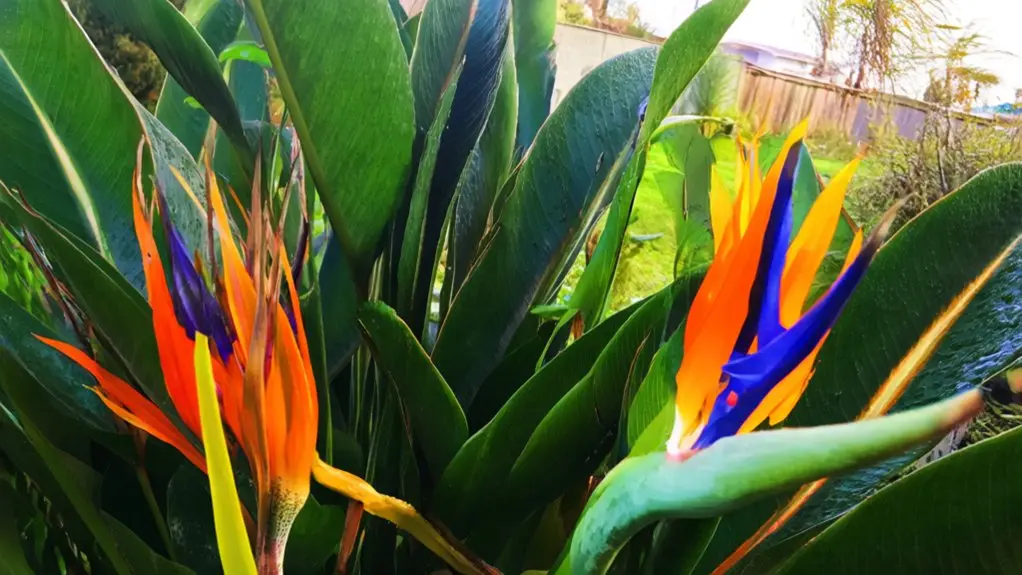
You can grow Birds of Paradise outside if you provide USDA zones 10-12 or zone 9 with strong frost protection. They need at least six hours of direct sun daily, well-draining, nutrient-rich soil, and controlled watering to avoid root rot.
Protect them from cold by mulching, covering, or moving pots indoors during frost. Proper pruning and pest control help maintain health and flowering. Understanding these essentials guarantees successful outdoor growth and vibrant blooms ahead.
Best USDA Zones for Growing Birds of Paradise
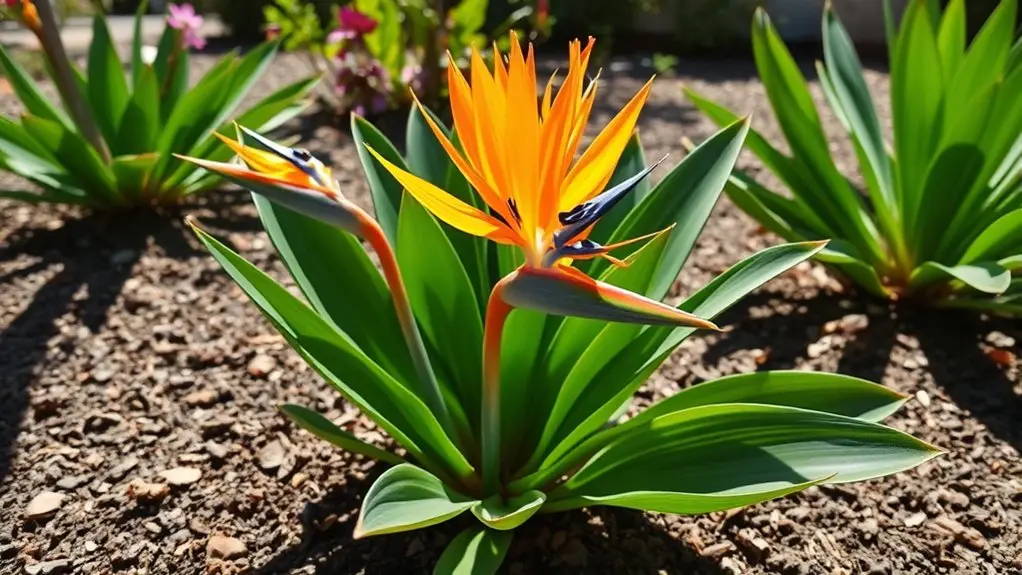
Although Birds of Paradise thrive best in USDA zones 10 through 12, where temperatures rarely drop below 30°F, you can successfully grow them outdoors in zone 9 if you provide adequate winter protection. Things like mulching or covering during cold spells can make a big difference.
These plants naturally grow in coastal and warmer inland regions where temperatures stay between 25-30°F, which helps them survive. They’ve some bird-related adaptations, like tolerance to moderate cold, but they’re vulnerable to frost.
That’s why they don’t do well in zones colder than 9.
When growing Birds of Paradise outside, you’ll want to think about microclimate factors and picking the right spot to mimic their natural conditions. Understanding these temperature limits and how to protect your plants can really help you extend their growing range beyond the usual zones.
Sunlight Requirements for Outdoor Birds of Paradise
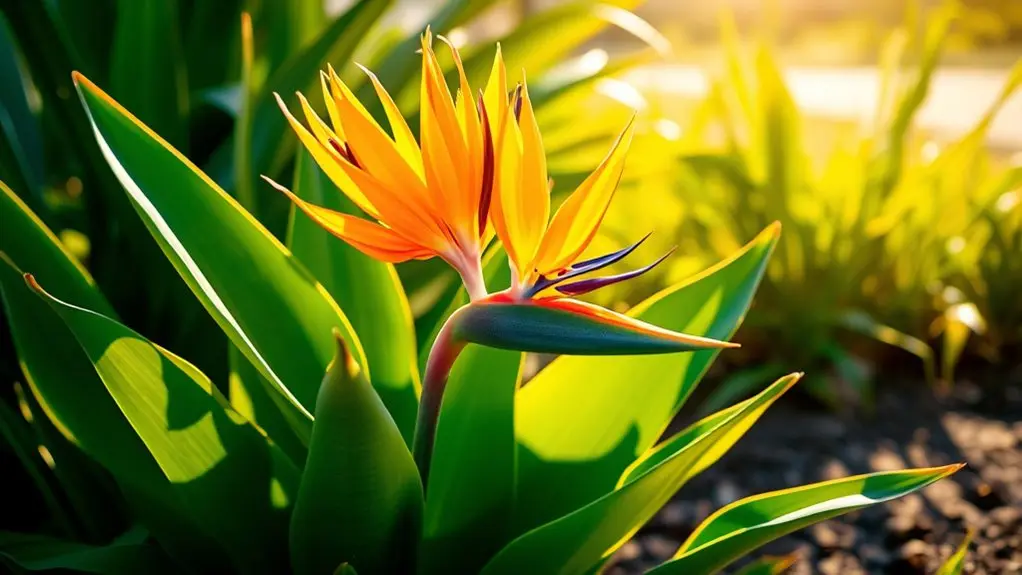
You should give your Birds of Paradise at least 6 hours of direct sunlight each day to help it grow and flower beautifully. It really thrives with plenty of sun.
That said, if you’re in a hot climate, a little light afternoon shade can be a good idea to keep the leaves from getting scorched.
Just keep in mind, less sunlight usually means fewer flowers and weaker leaves. So, try to find a spot where your plant gets consistent sunshine—it’ll reward you with more vigor and better blooms.
Optimal Light Exposure
Birds of Paradise plants need at least six hours of direct sunlight every day to grow and flower well when they are outside. Light intensity and how long the plant gets sunlight play a big role in how it develops.
If you live in USDA zones 10-12, put your plant somewhere with bright, unobstructed sunlight. This helps the plant photosynthesize better and produce more beautiful blooms. Without enough light, the leaves might be smaller, the stems weaker, and you’ll see fewer flowers.
| Light Intensity | Sunlight Duration (hours) | Growth Outcome |
|---|---|---|
| Full sun (direct) | 6+ | Most favorable growth & blooms |
| Partial shade | 3-5 | Reduced flowering |
| Low light (shaded) | <3 | Poor growth, no blooms |
| Morning sun only | 4-6 | Moderate growth |
Try to get your plant exposed to sunlight in the morning and early afternoon for the best results. That way, it gets the perfect amount of light to thrive.
Shade Tolerance Effects
While full sun exposure supports the healthiest growth and most vibrant blooms, Birds of Paradise plants can tolerate partial shade, though this comes with noticeable effects.
Shade impact primarily shows up as reduced leaf size and diminished flowering. In shaded conditions, leaves tend to be smaller, and flowers are fewer and less vibrant. This happens because there’s less photosynthetic activity going on.
Prolonged shade also leads to leggy, sparse growth and can delay or even stop flowering altogether.
Although these plants can survive with as little as 4 to 6 hours of direct sunlight, their overall health and flowering potential get way better with at least 6 hours of full sun daily.
To get the best outdoor performance, try not to plant Birds of Paradise in heavily shaded areas. Doing so compromises both their foliage development and the intensity of their blooms.
Watering and Humidity Needs for Birds of Paradise
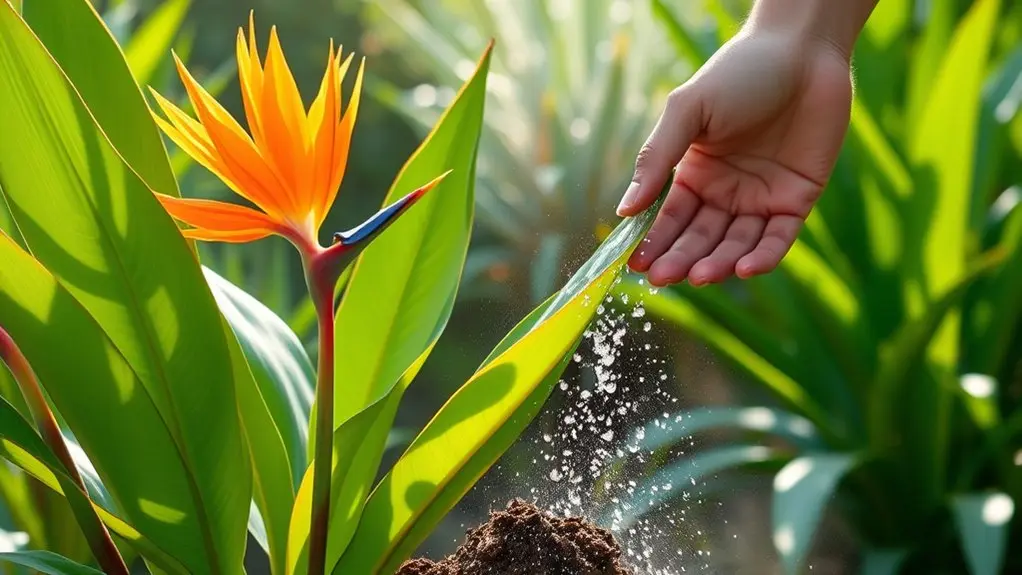
Although thriving in warm seasons requires consistent soil moisture, Birds of Paradise plants demand deep watering every two to three weeks to maintain ideal hydration. Establishing a proper watering schedule is vital, as overwatering can cause root rot.
Deep watering every two to three weeks prevents root rot and keeps Birds of Paradise thriving in warm seasons.
During cooler months or in dry climates, reduce watering frequency to prevent stress.
These plants also require effective humidity control, thriving in environments with high humidity to minimize leaf browning and curling. Indoors, you can enhance humidity by misting leaves or using humidifiers, which supports healthy foliage vibrancy.
Maintaining balanced moisture and humidity levels ensures excellent physiological function, preventing dehydration and environmental stress.
Soil and Drainage Tips for Healthy Growth
You’ll want to use a loamy soil mix that’s enriched with pumice or organic compost. This helps make sure the soil drains well and provides plenty of nutrients.
Try to avoid heavy, waterlogged soil because it can cause root rot by suffocating the roots and encouraging fungal growth.
Keeping the soil well-aerated and fast-draining is really important for healthy root development and the overall vitality of your plant.
Soil Composition Essentials
Because Bird of Paradise plants require well-aerated roots to thrive, selecting loamy, well-draining soil is essential to prevent water accumulation. You should aim for soil with a pH between 6.0 and 7.5, as this range optimizes nutrient availability and uptake.
Incorporating organic amendments such as compost and pumice not only enhances soil fertility but also improves aeration and drainage, reducing the risk of root rot. These amendments increase porosity, allowing excess water to escape while retaining adequate moisture.
When preparing soil, mix organic matter thoroughly to create a balanced structure that supports healthy root development. Maintaining this soil composition guarantees your Bird of Paradise receives adequate nutrients and oxygen.
This promotes vigorous growth and resilience in various outdoor conditions.
Drainage Importance Explained
When soil drains properly, Bird of Paradise plants develop strong root systems that resist rot and disease. Proper drainage guarantees soil stability and maximizes nutrient retention, which is vital for vigorous growth.
You need well-draining soil with organic matter mixed with pumice or coarse sand to increase porosity. Avoid waterlogged conditions that suffocate roots and promote fungal infections.
To maintain ideal moisture levels, check that water flows quickly through soil without pooling. Amend soil regularly with organic compost and use drainage-enhancing materials like coarse sand.
Also, monitor soil moisture to prevent sogginess. Make sure the soil structure supports root aeration and nutrient uptake.
Keeping these points in mind will help your Bird of Paradise thrive.
Preventing Root Rot
Although Bird of Paradise plants thrive in moist environments, maintaining well-draining soil is essential to prevent root rot. This condition is common and can be fatal, caused by prolonged water exposure.
To keep root rot at bay, amend the soil with organic matter like pumice or sand. This helps improve drainage and stops water from sitting around the roots. Also, make sure to use pots with good drainage holes. Avoid shallow or compacted containers that trap moisture.
Water your plant deeply but not too often. Let the top inch of soil dry out between waterings, especially during cooler months when the plant’s growth slows down.
Keep an eye out for signs of poor drainage like yellowing leaves or a foul smell from the soil. If you notice these, adjust your soil mix or watering routine to keep your plant healthy and prevent root decay.
How to Protect Your Birds of Paradise From Frost
How should you safeguard your Birds of Paradise from frost damage as temperatures decline? Implementing effective frost protection is vital since these plants suffer when exposed to temperatures below 50°F.
To ensure winter insulation and prevent cellular damage, consider these measures:
Cover your plant with frost cloth, burlap, or blankets during cold snaps to shield foliage. Apply a thick layer of mulch around the base to insulate roots and stabilize soil temperature. Relocate potted Birds of Paradise indoors or to a heated greenhouse to maintain warmth.
Avoid wetting leaves before frost events, as moisture makes freezing injury worse. Also, keep an eye on weather forecasts so you can anticipate and prepare for sudden temperature drops.
Taking these steps can really help your Birds of Paradise stay healthy through chilly weather.
Pruning and Maintaining Your Outdoor Birds of Paradise
To maintain vigorous growth and enhance flowering, you should regularly prune dead or damaged leaves and stems from your outdoor Birds of Paradise.
Effective pruning techniques include cutting back overgrown or crowded areas to improve air circulation, which reduces moisture buildup and helps prevent pests.
Removing old flower stalks after blooming stops seed formation and keeps the plant looking tidy.
For a fresh start, prune large or aged plants down to about one foot above the ground in early spring. This encourages new growth.
Always use sharp, clean tools to make precise cuts. This minimizes the risk of introducing infections or pests.
Keeping up with these maintenance steps will help your Birds of Paradise stay healthy, vibrant, and able to produce beautiful blooms all season long.
Managing Pests and Diseases on Birds of Paradise
Keeping your Birds of Paradise healthy involves more than just pruning. Managing pests and diseases plays a big role in keeping your plant vigorous. Common pests like mealybugs, scale, and spider mites can cause leaf curling and damage, so it’s important to keep an eye out for them.
When it comes to disease, the main concern is fungal infections, like black spots on flower pods. These often happen because of poor drainage and high humidity. So, prevention is really about creating the right environment for your plant.
To protect your plant, start by regularly inspecting it for pests and early signs of disease. You can use neem oil or insecticidal soap as natural treatments if you spot any problems. Also, make sure there’s good airflow around your plant.
Avoid overwatering since that can increase the risk of fungal infections. And if you notice any infected or damaged foliage, remove it promptly to stop the problem from spreading.
Taking these steps will help keep your Birds of Paradise thriving.
Repotting and Transplanting Birds of Paradise Outdoors
Although Birds of Paradise are hardy plants, repotting or transplanting them outdoors requires careful timing and technique to minimize stress and guarantee successful establishment. You should perform these tasks in spring or early summer, avoiding active growth periods that increase vulnerability.
When transplanting, dig carefully around the root ball to preserve as much root mass as possible.
Root pruning can be employed but must be done judiciously to avoid excessive damage. Use well-draining, nutrient-rich soil amended with compost to encourage root development.
Space the plants 4 to 6 feet apart to accommodate mature growth and prevent competition.
After transplanting, water thoroughly and maintain consistent moisture until the Birds of Paradise fully establish in their new outdoor environment. This will help ensure ideal recovery and growth.
Just keep an eye on them and they’ll be thriving in no time!
Outdoor Bird of Paradise Flowering Expectations
Successfully repotting or transplanting your Birds of Paradise outdoors sets the stage for their flowering potential. Outdoor plants thrive in full sun, with peak blooms from fall through spring. Expect flowering to take up to five years from seed, but mature, less crowded plants flower more frequently.
To optimize blooms, stick to precise fertilizer schedules and think about natural pollination strategies to boost reproductive success. Keep in mind, cooler climates may limit flowering unless you provide winter protection or find a favorable microclimate.
Key factors for vibrant flowering include consistent full sun exposure, adequate and regular watering, and timely fertilizer applications that match growth phases.
Also, support pollination strategically, either naturally or manually, and avoid overcrowding to reduce stress and encourage blooms.
Frequently Asked Questions
Can Birds of Paradise Attract Specific Wildlife or Pollinators Outdoors?
Yes, you’ll notice Bird of Paradise plants excel at pollinator attraction, especially hummingbirds. Their vibrant flowers promote wildlife interactions by providing nectar, encouraging local pollinators and insects.
This, in turn, supports biodiversity efficiently in outdoor environments. It’s pretty amazing how these plants can draw in specific types of wildlife just by their bright colors and sweet nectar. You’ll often see hummingbirds fluttering around them, making your garden feel alive and buzzing with activity.
Do Birds of Paradise Have Any Toxic Properties to Pets or Children?
You should be mindful of toxicity concerns since Birds of Paradise can cause mild gastrointestinal upset in pets and children.
For pet safety, keep these plants out of reach to prevent potential nausea, vomiting, or diarrhea.
It’s better to be safe than sorry when it comes to curious little ones and furry friends around these plants.
How Long Does It Take for Birds of Paradise to Mature Outdoors?
You’ll see your Bird of Paradise mature outdoors in about 3 to 5 years. Proper bird care and plant maintenance, like giving it full sun and well-draining soil, can really help. Regular fertilization also plays a big part.
All these things combined can speed up the growth process effectively. So, keep an eye on your plant and give it what it needs!
Are There Different Varieties of Birds of Paradise Suitable for Outdoor Growth?
Imagine a bird choosing its habitat by flight behavior; similarly, you’ll find *Strelitzia reginae* and *S. nicolai* adapt to outdoor growth differently.
Each variety suits specific climates, mimicking natural bird habitat preferences scientifically. It’s pretty interesting how these plants know where they thrive best, right? Just like birds picking their perfect spot!
Can Birds of Paradise Be Grown Successfully in Containers Outside?
Yes, you can grow Birds of Paradise successfully in containers outdoors by providing ideal bird habitat conditions. Proper soil, watering, and temperature control enhance garden aesthetics while ensuring plant health and vibrant flowering throughout the growing season.
It’s really about giving the plant what it needs to thrive. Just make sure you keep an eye on the weather and adjust care as needed. With a little attention, your container-grown Birds of Paradise will do great outside!
Conclusion
Just as the mythical phoenix thrives in specific conditions, your Birds of Paradise will flourish outdoors only within suitable USDA zones and with precise care. By providing ideal sunlight, well-drained soil, and protection from frost, you create an environment where these stunning plants can bloom reliably.
With attentive watering, pruning, and pest management, you guarantee their vibrant growth mirrors the resilience and beauty of their namesake. This proves they can indeed live and thrive outside.