
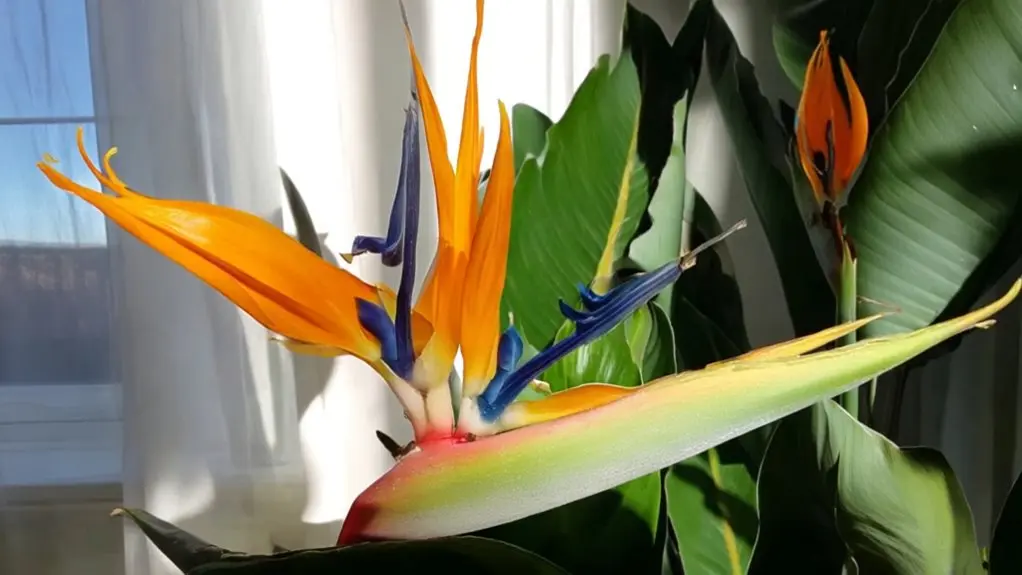
You can grow Bird of Paradise indoors by providing bright, indirect light near south, east, or west-facing windows. Ideally, aim for about 4-6 hours of light daily.
Water it when the top inch of soil feels dry. Use well-draining soil to prevent root rot, and try to keep humidity around 60-70%.
Keep temperatures between 65°F and 85°F. Also, watch out for pests, and remember to repot every 2-3 years in spring.
For detailed care tips and troubleshooting, you can explore more guidance on this tropical plant’s indoor needs.
Can You Grow Bird of Paradise Indoors?
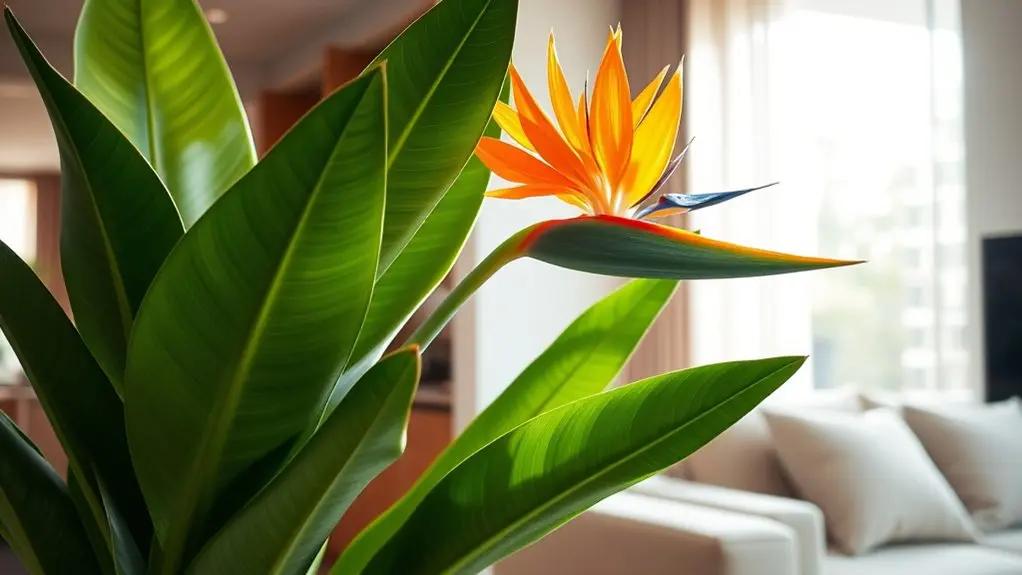
Although bird of paradise plants thrive outdoors, you can successfully grow them indoors if you provide bright, indirect light near south, east, or west-facing windows.
Bird of paradise plants can flourish indoors with bright, indirect light from south, east, or west-facing windows.
While indoor specimens rarely bloom due to lower light intensity, their striking foliage still reflects the bird of paradise symbolism associated with freedom and joy.
This plant holds cultural significance in various regions, symbolizing paradise and exotic beauty, making it a meaningful addition to your indoor space.
For maximum growth, maintain temperatures between 65-85°F, use nutrient-rich, well-draining soil, and water when the top inch of soil dries out.
High humidity and proper fertilization further support health.
How to Provide the Right Light for Indoor Bird of Paradise
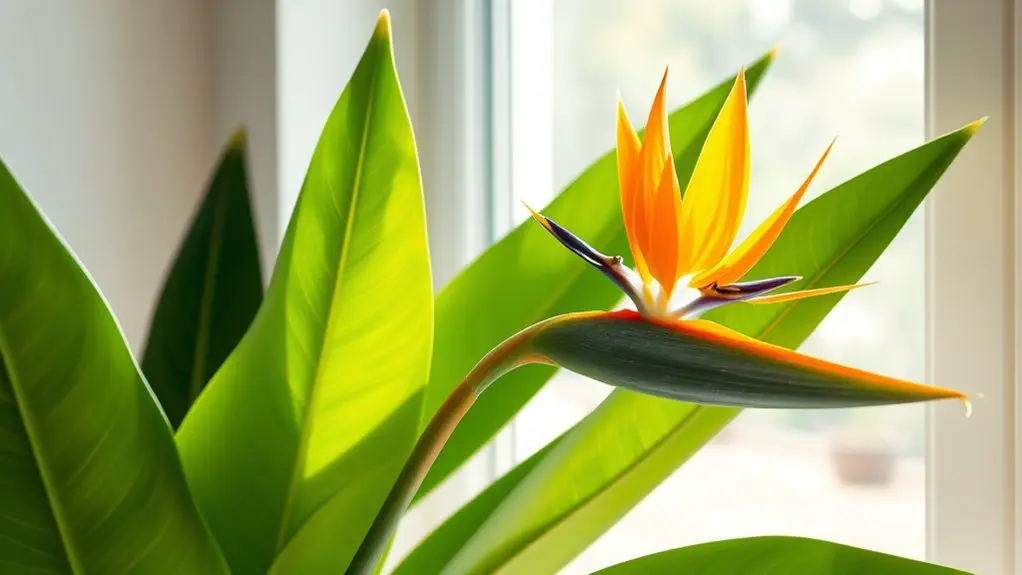
When you provide your indoor Bird of Paradise with bright, indirect light near south, east, or west-facing windows, you create the ideal environment for its growth. Proper lighting conditions are critical for healthy development and flowering.
To maximize light exposure, ensure 4-6 hours of bright, filtered light daily to support photosynthesis.
Gradually perform sunlight acclimation by introducing direct sunlight over 1-2 weeks to avoid leaf scorch.
Avoid placing the plant in dark or low-light areas, as this can cause browning and stunted growth.
If natural light is insufficient, use supplemental grow lights to maintain consistent illumination.
Following these steps sets up excellent lighting conditions for your indoor Bird of Paradise to thrive in a scientific and sustainable way.
How to Water and Feed Your Indoor Bird of Paradise
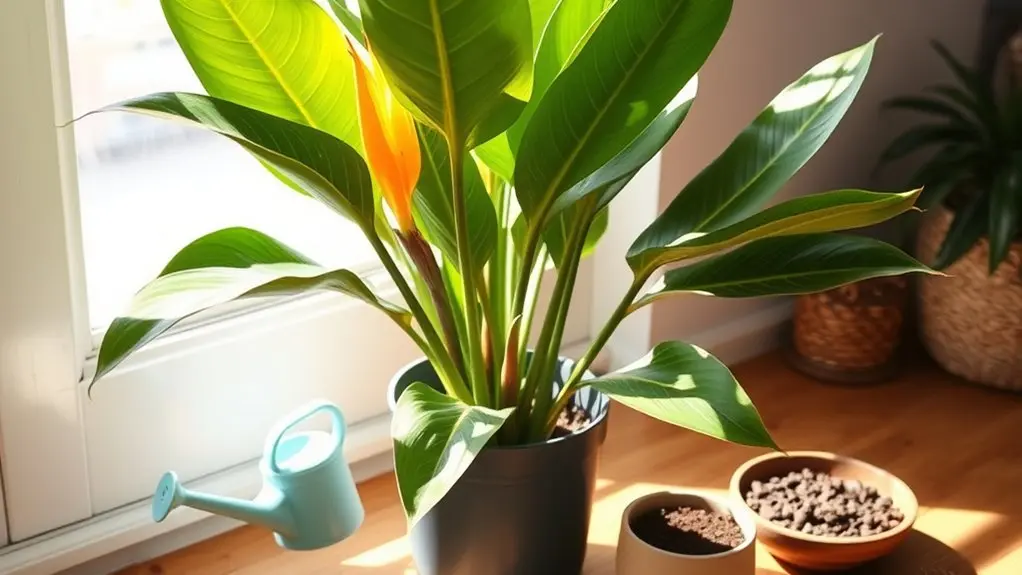
You should water your Bird of Paradise when the top inch of soil feels dry. This usually means watering every 10 to 14 days. It’s important to avoid overwatering because that can lead to root rot.
When it comes to feeding, use a balanced liquid fertilizer once a month during spring and summer. Then, as the plant’s growth slows down in fall and winter, you can reduce the feeding or stop altogether.
Keeping the soil consistently moist without letting it get waterlogged is key. This helps the roots develop well and keeps your plant healthy and vibrant.
Watering Frequency Tips
Since maintaining proper moisture levels is essential for your indoor Bird of Paradise, you should water it only when the top inch of soil feels dry. This usually happens every 1 to 2 weeks. Proper watering supports soil health and complements pruning techniques by promoting vigorous growth.
Follow these tips for the best watering frequency:
- Use a moisture meter or finger test to check soil dryness accurately.
- Water thoroughly until excess drains freely to prevent root rot.
- Adjust frequency during active growth phases in spring and summer.
- Reduce watering in fall and winter when growth slows.
Consistent monitoring helps you avoid overwatering and dryness. This way, your Bird of Paradise will thrive indoors with healthy foliage and strong roots.
Fertilizing Schedule Guide
Proper watering sets the foundation for nutrient uptake, making fertilizing an important next step in caring for your indoor Bird of Paradise. To optimize soil nutrition, apply a balanced liquid fertilizer once a month during the plant’s active growth phase in spring and summer.
Pay close attention to fertilizer timing. Reduce or pause feeding in fall and winter as growth slows. Always dilute the fertilizer to prevent overfeeding, which can cause leaf burn or stress.
Apply fertilizer directly to moist soil to avoid root damage and enhance absorption efficiency.
Consistent, appropriate fertilizing supports lush foliage development and may encourage flowering indoors, even though blooms are less frequent inside.
Following this schedule guarantees your Bird of Paradise receives adequate nutrients without risking toxicity or nutrient imbalances.
How to Keep Your Bird of Paradise Comfortable Indoors: Temperature and Humidity Tips
Although Birds of Paradise can adapt to indoor environments, maintaining temperatures between 65°F and 85°F is crucial to prevent stress from cold drafts or sudden drops.
Proper temperature regulation and humidity control ensure healthy growth and vibrant flowering indoors.
Maintaining ideal temperature and humidity levels is key for your Bird of Paradise’s lush growth and vibrant blooms indoors.
To keep your Bird of Paradise comfortable, use a room thermometer and hygrometer to monitor temperature and humidity precisely.
Avoid placing the plant near air conditioning vents or cold windows, especially in winter.
Try to maintain humidity levels between 60-70% by misting regularly or using a humidifier.
It’s important to keep stable indoor conditions with consistent warmth to prevent temperature fluctuations that cause stress.
Following these guidelines promotes an ideal microenvironment, supporting your plant’s physiological processes and overall vitality indoors.
This way, your Bird of Paradise will thrive and brighten up your space.
How to Fix Common Problems: Brown, Curling Leaves, and Pest Control
You’ll often notice brown, curling leaves when there’s something off with the light or watering. It’s usually a sign that your plant isn’t getting quite what it needs.
On the other hand, if the leaves start turning yellow, that might mean the roots are struggling—often because of too much water.
To fix these issues, try adjusting how much light your plant gets and tweak your watering routine a bit. Don’t forget about humidity, too; sometimes that makes a big difference.
Also, keep an eye on the leaves for any pests like spider mites or mealybugs. If you spot any, it’s best to act quickly and treat the problem right away to stop it from spreading and causing more damage.
Identifying Leaf Damage
How can you accurately identify and address leaf damage in your indoor Bird of Paradise? Leaf discoloration and pest identification play key roles in diagnosing issues. Use these steps:
- Examine leaf edges for brown, crispy areas indicating underwatering or low humidity.
- Look for brown spots that may signal fungal infection or overwatering.
- Observe leaf curling, which can result from underwatering, environmental stress, or pests.
- Inspect leaves for holes or damage caused by spider mites or fungal pathogens.
Removing damaged leaf parts and treating pests promptly is vital. It’s also important to regularly monitor moisture and humidity levels to prevent the problem from coming back.
This systematic approach helps you diagnose issues accurately and manage common leaf damage effectively in your plant.
Managing Watering Issues
When the top inch of soil feels dry, it’s time to water your Bird of Paradise. Make sure excess moisture drains freely to prevent root rot.
Forget the common myth about frequent shallow watering. Instead, water deeply to help your plant develop strong, healthy roots.
Brown, crispy leaf edges usually mean underwatering or low humidity. So, increase how often you water and mist the leaves regularly.
Curling leaves are another sign your plant needs more moisture. Water thoroughly and keep the soil consistently moist, but avoid waterlogging it.
If the soil gets compacted, it can block air from reaching the roots. To fix this, soak your plant for a few hours. Then repot it using well-draining soil to improve aeration and drainage.
Don’t forget to check and clean the leaves regularly. This helps reduce stress and keeps pests away.
Controlling Common Pests
Why do brown edges and curling leaves often come with pest infestations on your Bird of Paradise? These symptoms usually happen because of environmental stress and damage from pests like spider mites and mealybugs.
Using effective pest prevention and organic treatments can really help keep your plant healthy.
To control common pests:
- Wipe leaves with a mixture of water and rubbing alcohol to get rid of spider mites.
- Use insecticidal soap or alcohol to remove mealybugs.
- Increase how often you water and mist your plant regularly to reduce brown edges caused by low humidity.
- Make sure you water deeply and consistently to stop curling leaves that happen from underwatering.
When and How to Repot Your Indoor Bird of Paradise
Although repotting can stress your indoor Bird of Paradise, doing so every 2 to 3 years is essential when its roots begin to emerge from drainage holes or the plant visibly outgrows its container.
Choose a pot 2 inches larger in diameter and use well-draining soil rich in nutrients, such as a peat, perlite, and organic matter mix.
The best time to repot is during active growth in spring or early summer.
Carefully remove the plant, apply pruning techniques by trimming circling or damaged roots, and position it slightly higher in the new pot for stability.
After repotting, water thoroughly to settle the soil.
Place the plant in bright, indirect light and avoid fertilizing for at least a month to help it recover and encourage new root development.
Frequently Asked Questions
Can Birds of Paradise Produce Flowers Indoors?
Yes, birds of paradise can produce flowers indoors if you meet their flowering requirements. With proper indoor care, including bright, direct sunlight, consistent warmth, and fertilization, you’ll increase the chances of blooming.
It does take patience though, as flowers may take some time to develop. Just keep up with the care, and you should be rewarded with beautiful blooms eventually.
Are Birds of Paradise Toxic to Pets?
You can’t take bird safety lightly. Birds of Paradise are highly toxic to pets, causing severe gastrointestinal distress and drowsiness.
Their pet toxicity demands immediate veterinary care if ingested. So, always keep these plants well out of your pet’s reach.
How Fast Do Indoor Birds of Paradise Grow?
Indoor Birds of Paradise grow about 12 to 24 inches yearly with ideal tropical plant care. Their growth supports indoor plant aesthetics but slows during winter.
You’ll need to provide proper light, watering, and fertilization to maximize development indoors. Taking good care of them really makes a difference!
Can Birds of Paradise Survive Low Light Temporarily?
Think of your Bird of Paradise as a solar-powered machine. It can survive low light temporarily but won’t operate at its best.
Meeting lighting requirements and adjusting watering frequency carefully helps it stay healthy during brief dim spells indoors. Just keep an eye on it, and it should bounce back once the light improves.
What Are the Best Companion Plants for Birds of Paradise?
You should pair Birds of Paradise with elephant ears or banana plants, matching their soil requirements and bright conditions. Their pollination methods rely on wind or birds, so companion plants shouldn’t obstruct airflow or access to pollinators.
It’s best to keep things open around them to make sure the pollinators can easily reach the flowers. Plus, choosing plants that thrive in similar conditions helps everything grow happily together. So, think about how your garden flows and keep those pathways clear!
Conclusion
You can successfully nurture a bird of paradise indoors by mimicking its natural habitat with precise light, water, temperature, and humidity control. Think of your care as a delicate symphony, where each element plays an essential role in the plant’s health.
Addressing leaf discoloration and pests promptly guarantees your plant thrives rather than merely survives. With attentive repotting, you’ll create a stable foundation, allowing your bird of paradise to flourish like a tropical masterpiece within your home.