
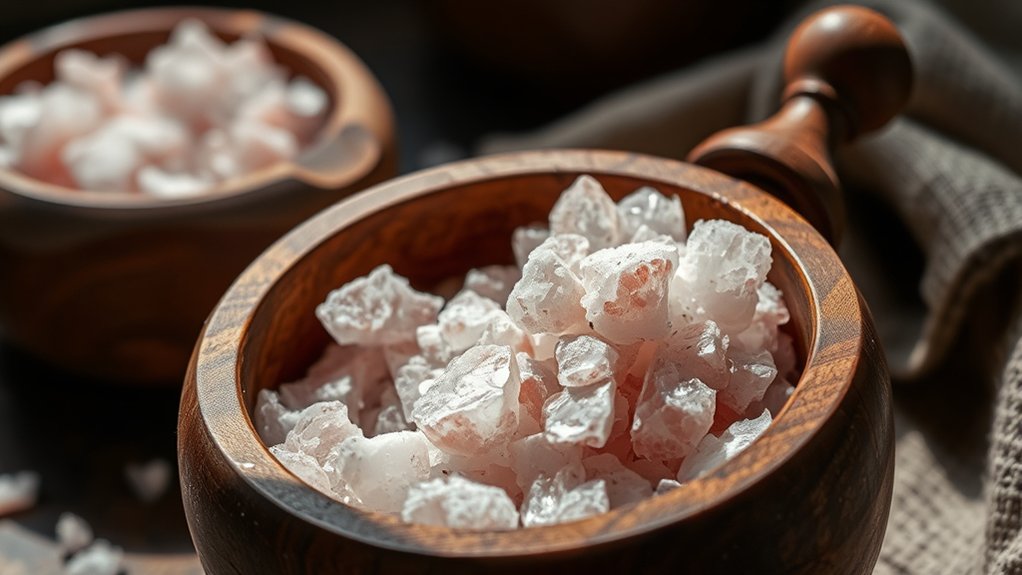
Finding the perfect salt to elevate your cooking can be surprisingly tricky. You want something flavorful but natural, versatile yet unique.
If you’ve ever felt overwhelmed by all the salt options out there, you’re not alone—many people struggle with picking the right artisan salt that truly makes a difference in their dishes.
For 2026, Redmond Real Salt is your top choice as the best artisan salt. Its ancient, unrefined sea salt from Utah’s seabed retains essential minerals that enhance flavor naturally.
With various grain sizes and sustainable harvesting practices, it suits different cooking needs while supporting environmental responsibility.
If you want to discover how its subtle sweetness and mineral profile can elevate your dishes, keep exploring to find out more.
| Image | Name | Editor's Rating | Price |
|---|---|---|---|

|
Redmond Real Salt - Ancient Fine Sea Salt, Unrefined Mineral...
|
|
Redmond Real Salt, Ancient Unrefined Sea Salt
- THE SECRET’S IN THE SALT - Redmond Real Salt, an unrefined...
- MINED IN THE USA - Real Salt comes from an ancient seabed in...
- REAL SALT TASTE TEST - There’s a reason people fall in love at...
- UNPROCESSED & ADDITIVE-FREE - Unlike white table salt that’s...
- PROTECTED FROM POLLUTANTS - Sealed beneath layers of volcanic ash...
Redmond Real Salt, Ancient Unrefined Sea Salt, brings a natural touch to your kitchen. This salt solves the problem of overly processed salts by providing an unrefined option that retains essential minerals. Its subtly sweet flavor enhances dishes without adding bitterness, making meals more enjoyable.
This salt is easy to use and maintain. It comes in a 16-ounce pouch with various grain sizes, so you can choose the perfect texture for cooking, seasoning, or storage. Whether you prefer coarse or fine grains, this salt fits seamlessly into your culinary routine.
Sourced from Utah’s ancient seabed, Redmond Real Salt is harvested with sustainable and ethical methods. This means you get a mineral-rich, pink and black salt that supports environmental responsibility while offering unique flavor profiles.
The salt’s trace minerals contribute to a healthier diet without any additives. It’s a natural alternative that helps improve the taste and nutritional value of your meals. However, the coarse grains might require grinding for some recipes, and availability can be limited in certain areas.
Best for: home cooks and health-conscious individuals seeking a natural, mineral-rich sea salt that enhances flavor and supports sustainability.
What We Like:
- Maintains natural minerals due to unrefined harvesting
- Available in multiple grain sizes for versatile kitchen use
- Ethically and sustainably sourced from Utah’s ancient seabed
- Enhances flavor without bitterness or additives
Specification
| Specification | User Benefit |
|---|---|
| Grain Sizes | Offers flexibility for different cooking and seasoning needs |
| Packaging Size | Convenient 16-ounce pouch suitable for frequent use |
| Mineral Content | Adds nutritional value and enhances flavor naturally |
| Origin | Sourced from Utah’s ancient seabed for unique taste |
| Processing | Unrefined and additive-free for purity and health |
| Sustainability | Ethically mined to support environmental responsibility |
Factors to Consider When Choosing Artisan Salt
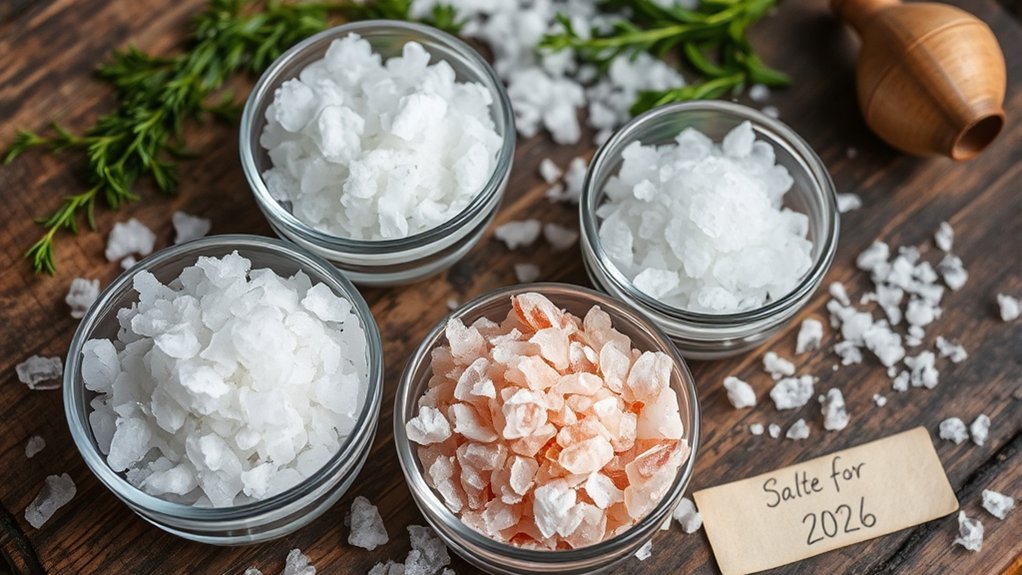
When you’re choosing artisan salt, start by thinking about the flavors you enjoy and the mineral benefits they bring to the table. It’s also good to consider the packaging—something that fits your lifestyle and is easy for you to use.
Don’t forget about the grain size, too, since that can really affect how you cook with it. And if you care about where your salt comes from, make sure to look into the sourcing practices and sustainability. That way, your choice can reflect your values as well.
Flavor Profile Preferences
Choosing the right artisan salt depends heavily on your flavor preferences, as different varieties offer distinct taste experiences. Some salts provide a subtle sweetness that enhances delicate dishes, while others have a more pronounced mineral taste or bitterness, adding depth to hearty recipes.
Trace minerals naturally present in unrefined salts can introduce unique notes, elevating the flavor profile of your meals. Grain size also impacts how you experience the salt; finer grains dissolve quickly for immediate flavor, whereas coarser grains deliver a more subtle, lingering taste.
Furthermore, certain salts, like sea salts, may carry floral notes, while mined salts can have earthy undertones. Consider how your cooking method, whether grilling, baking, or finishing, might influence how these flavors come across, helping you select the ideal artisan salt for each dish.
Mineral Content Benefits
The mineral content in artisan salts offers both flavor enhancements and potential health benefits, making it a key factor in selecting the right variety for your culinary needs. These salts often contain trace minerals like magnesium, calcium, and potassium, which can subtly improve taste and provide added health advantages.
Unlike refined table salt, unrefined artisan salts retain natural minerals due to minimal processing, supporting hydration and electrolyte balance. The unique mineral profiles of different salts can also add nuanced flavors, elevating your dishes.
Choosing salts rich in minerals aligns with health recommendations favoring natural, unprocessed foods. By considering mineral content, you not only enhance your culinary experience but also make a health-conscious choice that benefits your overall well-being.
Packaging Convenience Options
Selecting the right packaging for artisan salt depends on your cooking style and storage needs. Consider the size and type, like refill pouches or shakers, that fit how often you cook and the space you have.
If you use salt frequently, shakers offer convenience. Larger pouches are better for bulk storage. Look for options that provide different grain types, like fine or coarse, to suit specific culinary uses.
For travel and on-the-go storage, choose packaging that’s easy to transport without risking moisture or contamination. Also, prioritize eco-friendly materials, such as recyclable or biodegradable options, to reduce environmental impact.
Resealable features help maintain freshness and extend shelf life after opening, ensuring your artisan salt stays flavorful and pure whenever you need it.
Sourcing and Sustainability
Since artisan salts are often sourced from specific regions, their distinct flavor profiles and mineral contents reflect the unique environmental conditions of those areas. When choosing an artisan salt, consider sustainable harvesting practices that protect local ecosystems and prevent resource depletion.
Ethical labor standards are equally important. Look for producers who prioritize fair wages and safe working conditions, ensuring social responsibility. Moreover, buying locally sourced salts can reduce your carbon footprint because it minimizes food miles and transportation emissions.
Transparency in sourcing is key. Trustworthy brands openly share their sourcing methods and environmental efforts, allowing you to make informed, eco-conscious choices. By focusing on these factors, you support sustainable practices that benefit both the environment and communities involved in salt production.
Grain Size Suitability
Choosing the right grain size for artisan salt depends on how you plan to use it in your cooking. Finer grains dissolve quickly, making them perfect for seasoning during cooking or baking, where even distribution matters.
Coarse grains, on the other hand, provide a burst of flavor when used as a finishing salt or as a crunchy topping for bread. They’re ideal for brining or adding visual appeal.
When baking, finer grains integrate more smoothly into doughs and batters, ensuring consistent saltiness. Larger grains tend to taste less salty because of their lower surface area, so keep that in mind if you’re aiming for a specific salt level.
Selecting the right grain size enhances both flavor and presentation, making your dishes more refined.
Frequently Asked Questions
How Is Artisan Salt Different From Regular Table Salt?
Artisan salt differs from regular table salt in its texture, flavor, and processing. You’ll notice it’s often coarser, with unique mineral profiles that add depth to your dishes.
Unlike table salt, which is heavily processed and contains anti-caking agents, artisan salt is minimally refined. This allows you to enjoy natural minerals. Using it enhances your culinary experience with richer flavors and a more satisfying crunch.
Can Artisan Salt Be Used in Baking Recipes?
Yes, you can use artisan salt in baking recipes. Its unique flavors and textures can add depth to baked goods, especially when you want a subtle saltiness or a special finishing touch.
Just keep in mind that artisan salts often have larger crystals, so you might need to adjust the quantity slightly or crush the salt before adding it. Overall, it enhances your baked creations with a distinctive touch.
Is Artisan Salt More Expensive Than Processed Salts?
Yes, artisan salt is generally more expensive than processed salts. You’ll notice the higher price because artisan salts often come from unique sources and involve traditional harvesting methods.
They also have distinctive flavors and textures. When you choose artisan salt, you’re paying for quality, craftsmanship, and rarity. While it costs more, you get a richer flavor profile that can elevate your dishes, making it a worthwhile investment for culinary enthusiasts.
What Minerals Are Typically Found in Artisan Salts?
You’ll find that artisan salts typically contain minerals like magnesium, calcium, potassium, and trace elements, which are naturally present in their source waters or brines. These minerals contribute to their unique flavors and textures.
Unlike processed salts, artisan salts undergo minimal refining, preserving these natural minerals. As a result, they often have more complex tastes and potential health benefits, making them a popular choice for gourmet cooking and finishing dishes.
How Should Artisan Salt Be Stored for Maximum Freshness?
Think of your artisan salt as a precious gem. Its freshness needs safeguarding. Store it in an airtight container away from moisture, heat, and sunlight to preserve its delicate minerals and flavors.
Avoid humid spaces like the kitchen sink or near the stove. Keep it in a cool, dark place, and you’ll guarantee it stays vibrant and flavorful. That way, it’s always ready to elevate every dish with its unique touch.
Conclusion
Choosing the best artisan salt for 2026 means balancing your flavor preferences, mineral needs, and sustainability standards. By considering factors like grain size, packaging, and sourcing, you’ll select a salt that elevates every dish with exquisite essence.
Remember, the right salt isn’t just about taste. It’s about harmony, health, and heritage. So, take your time, trust your taste buds, and turn your kitchen into a haven of harmonious healthful harmony.