
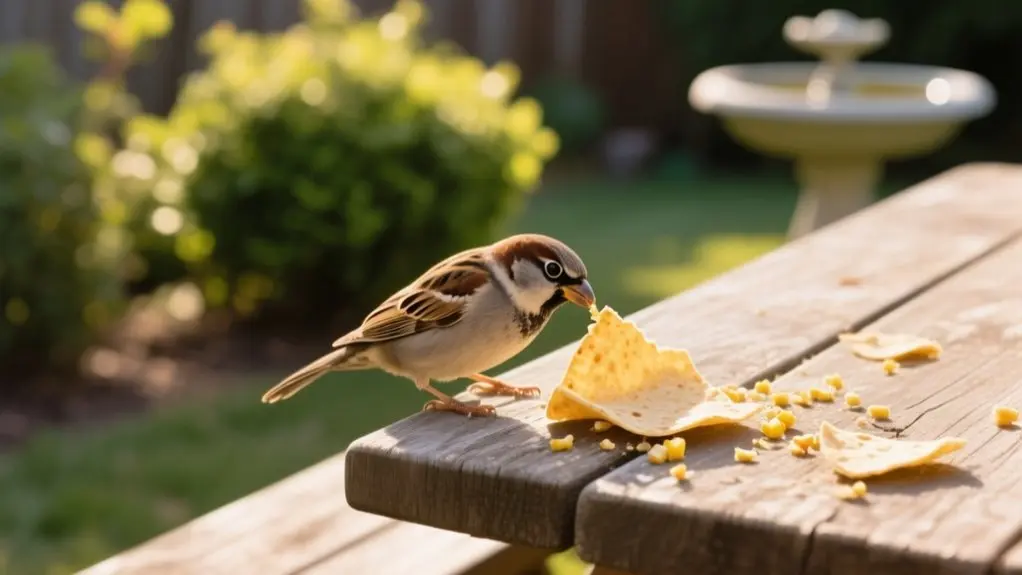
You can feed birds plain corn tortillas occasionally, but you need to be careful. Make sure the tortillas have no salt or preservatives, break them into small pieces, and moisten them to prevent choking.
Avoid seasoned or dry tortillas, as they can cause digestive problems and nutritional deficiencies. Always provide fresh water and never rely on tortillas as a main food source.
If you want to keep your feathered friends safe and healthy, there are smarter ways to offer treats and support their diet.
What Are Corn Tortillas Made Of and Are They Safe for Birds?
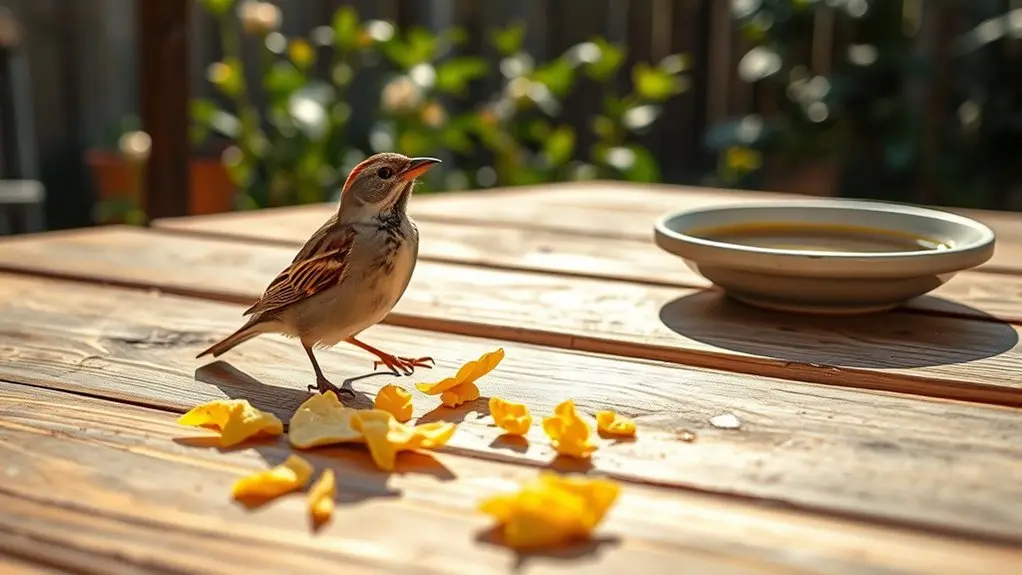
Although corn tortillas are made from masa harina, a type of corn flour, they aren’t a natural food source for birds. While many bird species safely eat corn kernels, corn tortillas differ because they’re processed and often include additives or preservatives.
These additions can be harmful to your feathered visitors. Corn tortillas also have a dry, tough texture that may cause choking, especially if birds don’t have water nearby.
Unlike their usual diet of seeds, fruits, and natural grains, corn tortillas lack the essential nutrients birds need to stay healthy.
Can Birds Easily Digest Corn Tortillas?
Three factors make it challenging for birds to easily digest corn tortillas: their dry texture, high sodium content, and lack of essential nutrients.
When you offer tortillas to birds, their dryness can cause choking or digestion difficulty unless birds have access to fresh water to moisten the food.
Tortillas’ dryness may cause birds to choke or struggle without fresh water nearby.
Unlike bird seed, which naturally suits their digestive systems, corn tortillas don’t provide the balanced nutrients birds need.
While birds can eat corn tortillas occasionally, they shouldn’t replace more appropriate foods like seeds or fruits.
If you want to feed birds, it’s better to stick with natural options they’re adapted to digest.
What Risks Are There in Feeding Corn Tortillas to Birds?
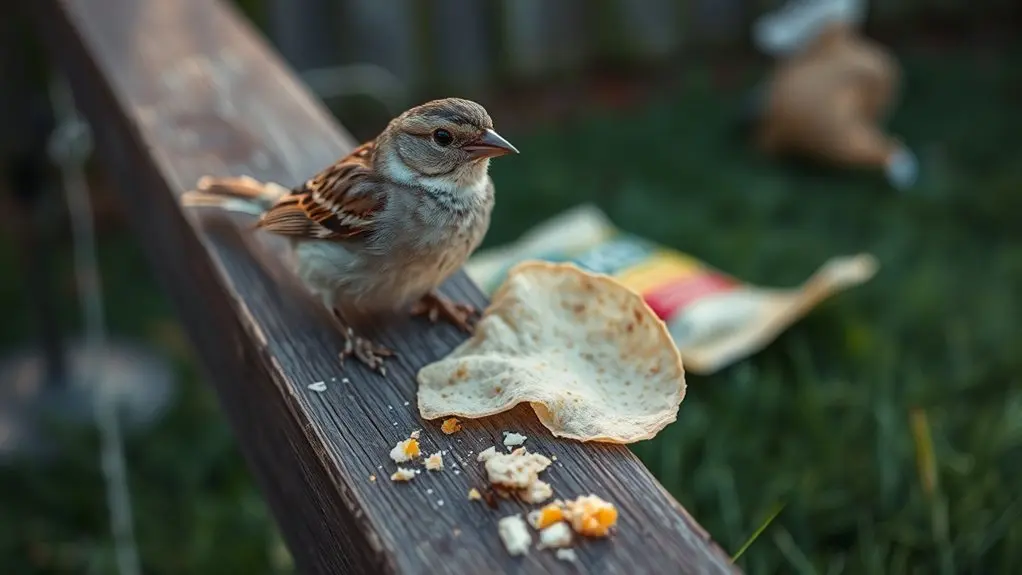
When you feed corn tortillas to birds, you risk causing choking due to their dry texture. This can easily get stuck in a bird’s throat.
Beyond choking, several health concerns come with offering corn tortillas to birds. These include potential nutritional deficiencies since tortillas don’t provide the balanced diet birds need. You should also be aware of the high sodium content, which can harm birds over time.
Feeding corn tortillas regularly may lead to digestive issues, especially if birds lack fresh water to help digestion.
Here are key risks to keep in mind:
- Choking hazard from dry texture
- High sodium causing health concerns
- Nutritional deficiencies from processed ingredients
- Digestive problems without adequate water
- Long-term poor health from unsuitable diet
Stick to natural, bird-appropriate foods for their safety.
Are Seasoned or Flavored Tortillas Harmful to Birds?
Why should you avoid giving birds seasoned or flavored tortillas?
Seasoned tortillas often contain salt, spices, and preservatives that can cause serious health issues in bird species. High sodium levels may lead to dehydration, salt toxicity, and kidney damage.
Seasoned tortillas contain salt and preservatives that can cause dehydration, toxicity, and kidney damage in birds.
Ingredients like onion and garlic, common in flavored tortillas, are toxic to many birds and can trigger severe complications.
Furthermore, processed tortillas might include unhealthy fats or oils that harm birds’ feather quality and overall well-being.
Feeding birds these additives puts their health at risk, so it’s vital to steer clear of any seasoned or flavored options.
Instead, choose plain, unprocessed tortillas if you want to offer corn tortillas safely to wild birds without risking their health.
How to Prepare Corn Tortillas Safely for Wild Birds
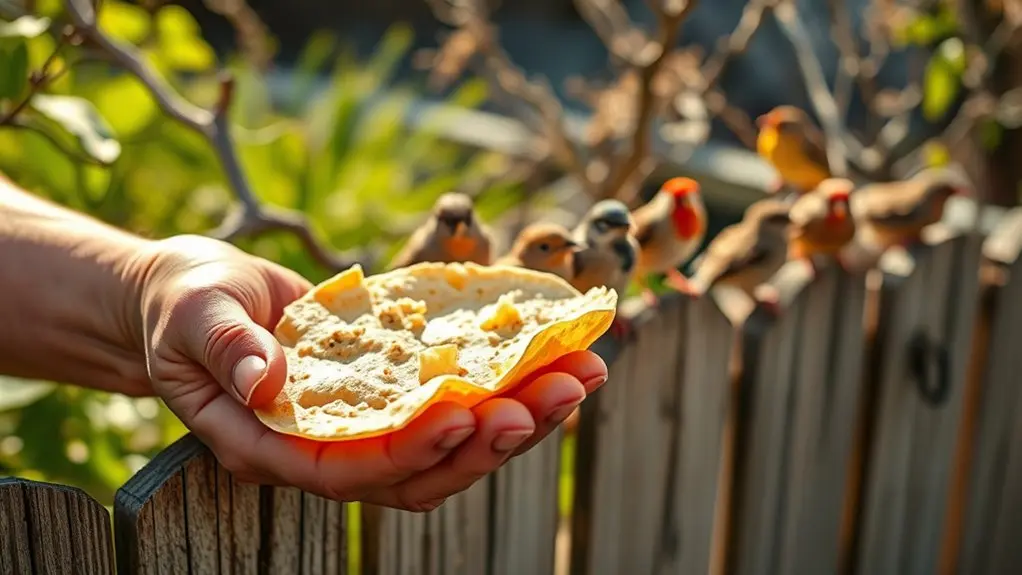
When you’re offering corn tortillas to wild birds, it’s best to break them into small pieces so the birds don’t choke.
Also, make sure the tortillas don’t have any salt, preservatives, or harmful additives—those aren’t good for the birds at all.
It’s a good idea to always have fresh water nearby for them to drink.
And remember, corn tortillas should only be an occasional treat, not something you give them regularly.
That way, you’re keeping the birds safe and healthy!
Preparing Tortillas Safely
Although corn tortillas can be a safe treat for wild birds, you’ll need to prepare them carefully to avoid health risks. When preparing tortillas, always choose plain tortillas without added salt, spices, or preservatives.
Break them into small pieces to prevent choking and offer them fresh or slightly dried to avoid mold.
Don’t forget to provide fresh water alongside the tortillas to help birds digest and stay hydrated. After feeding, monitor birds closely and remove any uneaten pieces promptly to prevent spoilage and contamination.
- Use only plain tortillas free from harmful additives
- Break tortillas into small, manageable pieces
- Offer fresh or slightly dried tortillas
- Provide fresh water with the food
- Monitor birds and clean up uneaten food promptly
Bird-Friendly Tortilla Tips
To keep wild birds healthy, you should prepare corn tortillas thoughtfully before offering them as treats. Cut the tortillas into small, manageable pieces to avoid choking hazards for your backyard birds.
Always choose fresh, soft corn tortillas without added salt, spices, or preservatives, as these ingredients can harm birds. Limit the amount you offer, making tortillas a bird-friendly occasional snack rather than a staple food.
Stale or dry tortillas are harder to digest, so avoid those. Moreover, provide fresh water nearby to help birds stay hydrated and aid digestion, especially if the tortillas are a bit dry.
Which Bird Species Commonly Eat Corn Tortillas?
Which birds are drawn to corn tortillas? If you offer birds corn tortillas, you’ll likely attract various wild bird species that enjoy the carbs and texture.
Common birds that forage on corn tortillas include:
- Sparrows, which are small but curious about tortilla scraps
- Crows, known for their adaptability and willingness to try new foods
- Jays, who often explore urban environments for easy meals
- Pigeons, frequent in cities, readily consuming tortilla bits
- Doves, also urban foragers, that peck at leftover tortillas
While these birds may eat corn tortillas occasionally, remember they lack essential nutrients found in a natural diet.
Also, keep tortillas free of harmful additives and make sure smaller birds have water nearby to prevent choking on dry pieces when you offer birds this treat.
How Often Should You Feed Corn Tortillas to Wild Birds?
How often should you offer corn tortillas to wild birds? You should feed them corn tortillas only in moderation, ideally once or twice a week. Corn tortillas can serve as an occasional treat but shouldn’t replace a bird’s natural diet.
Because they’ve a dry texture, it’s important to moisten them before feeding to prevent choking hazards. Always keep an eye on how the birds respond; if they lose interest or show signs of health issues, stop offering tortillas immediately.
Moisten corn tortillas before feeding to prevent choking, and watch for any health concerns in the birds.
To support their overall well-being, maintain a balanced diet by providing a variety of natural foods.
Also, make sure fresh water is available to help with digestion and hydration, especially in dry weather. This approach keeps wild birds healthy while enjoying occasional corn tortillas.
Bird-Approved Alternatives to Corn Tortillas
If you’re looking to give birds a break from corn tortillas, why not try some safe seed options?
Black oil sunflower seeds or unsalted peanuts are great choices.
You can also bring in more feathered friends by offering nutritious fruits like apples and grapes.
And for those insect-eating birds, protein-rich treats like mealworms are perfect—they work wonders and help keep the birds healthy.
Safe Seed Options
Although corn tortillas might seem like a convenient snack, you’ll want to skip them and offer birds safer, more nutritious alternatives.
When it comes to bird feeding, choosing natural seeds helps support their health and attracts a variety of species.
Here are some bird-approved seed options to take into account:
- Black oil sunflower seeds: Rich in fat and highly attractive to many birds.
- Cracked corn: Great for ground feeders like sparrows and blackbirds.
- Safflower seeds: Favored by cardinals and less appealing to squirrels.
- Nyjer (thistle) seeds: Perfect for finches and small birds.
- Avoid processed foods: Stick to natural seeds for bird wellbeing.
Offering these safe seeds guarantees you provide energy without the risks that corn tortillas pose.
Nutritious Fruit Choices
Choosing the right food for birds goes beyond seeds. Fruits offer a tasty and healthy alternative that many birds love. Fresh berries, apples, melons, and grapes provide essential vitamins and hydration, making them particularly attractive to a wide range of species.
Softened raisins or currants, especially when rehydrated, draw in robins and waxwings. This adds diversity to your backyard visitors. Unlike processed options like corn tortillas, fruits deliver natural nutrition that supports birds’ health and energy.
To keep your feathered friends safe, regularly clean feeders and remove any spoiled fruit to prevent mold growth. Offering these nutritious fruit choices not only satisfies birds’ dietary needs but also encourages natural foraging behavior.
This makes your yard a vibrant and bird-friendly environment.
Protein-Rich Insect Foods
When you want to attract a wider variety of birds, offering protein-rich insect foods like mealworms can make all the difference. Mealworm benefits include providing essential nutrients and vitamins that promote bird health and well-being.
Insect feeding supports dietary diversity, drawing species like woodpeckers and nuthatches that might ignore corn tortillas. You can easily raise mealworms at home and serve them fresh to your feathered visitors.
To boost your bird-feeding strategy, consider these options:
- Fresh mealworms for high protein
- Suet cakes with insects for winter energy
- Peanut butter mixed with cornmeal for added grit
- Fresh fruits like berries and apples for vitamins
- Variety in protein sources to attract diverse birds
Incorporating these choices enhances your yard’s bird diversity naturally.
What Human Foods Should You Avoid Feeding Birds?
Since birds rely on specific nutrients to stay healthy, you should avoid feeding them human foods like bread, chips, and processed snacks that lack these essentials. These items don’t support proper bird nutrition and can cause malnutrition.
Feeding guidelines recommend steering clear of salty, additive-filled foods that risk dehydration and digestive problems. Dry foods like taco shells also pose choking hazards, especially if birds can’t access water.
Avoid salty, additive-filled foods and hard dry items like taco shells to prevent dehydration and choking risks.
Moldy or spoiled food can lead to fungal infections, so always check for freshness before offering treats. Moreover, avoid foods contaminated with pesticides or chemicals, as birds can’t detect these toxins.
Sticking to safe treats and understanding bird nutrition will help you protect their health and enjoy feeding them responsibly.
Supporting Healthy Bird Diets While Offering Treats
You want to make sure the treats you offer support your bird’s health rather than harm it.
So, it’s best to choose fresh fruits, vegetables, or bird-safe seeds. These provide the nutrients they need without the risks that come with processed foods.
Appropriate Bird Food
Offering birds the right foods can make a big difference in their health and well-being. When it comes to bird feeding, maintaining nutritional balance is key to supporting wild bird health.
While corn tortillas are edible, they lack essential nutrients and may contain harmful additives, so use them sparingly. Focus on foods that naturally meet birds’ dietary needs instead.
Here are some appropriate bird food options to take into account:
- Seeds like sunflower and millet for protein and fats
- Fresh fruits such as berries for vitamins
- Vegetables including leafy greens for minerals
- Unsalted peanuts as a healthy treat
- Always provide fresh water to aid digestion
Safe Treat Alternatives
Although corn tortillas aren’t toxic, their dry texture and lack of nutrients make them a poor choice for birds. To support a healthy bird diet, focus on safe treat alternatives with higher nutritional value.
Unsalted peanuts and raw sunflower seeds offer essential fats and proteins, while fresh fruits like berries, apples, and grapes provide natural sugars and vitamins that many birds enjoy. Mealworms are another excellent option, rich in protein and beneficial during breeding seasons.
Remember to vary treats to maintain interest and guarantee balanced nutrition. Keep feeding frequency moderate to avoid overfeeding, as treats should supplement, not replace, regular meals.
Including grit, such as crushed eggshells, can aid digestion and supply calcium, rounding out a well-supported diet with beneficial minerals.
Tips for Watching Bird Behavior When Feeding Tortillas
When feeding corn tortillas to birds, pay close attention to how different species respond. Some might show curiosity while others avoid them because of their processed texture. Using careful tortilla feeding techniques, you can learn a lot about their preferences and health.
Employ bird observation methods to watch for any signs of discomfort or changes in behavior. Here are some key tips:
Use bird observation techniques to detect discomfort or behavior changes when introducing new foods like tortillas.
Note which species approach tortillas versus natural foods to gain dietary preference insights.
Watch for coughing or swallowing issues indicating potential choking hazards.
Track how often and how long birds visit your feeding spot.
Compare tortilla acceptance with seeds or fruits offered simultaneously.
Observe for increased aggression or competition caused by introducing tortillas.
These practices help you understand how birds adapt to new foods safely and effectively.
How to Ensure Safe and Enjoyable Feeding Experiences
To guarantee birds enjoy corn tortillas safely, break them into small pieces that won’t cause choking.
Practice safe feeding by offering tortillas sparingly since they don’t cover all bird diet essentials fully. Always provide fresh water alongside to help digestion.
Keep monitoring bird health closely when introducing tortillas and watch for any adverse reactions.
You can also offer seeds and fruits as healthier alternatives to balance their diet.
Frequently Asked Questions
Can Baby Birds Eat Corn Tortillas?
No, baby birds shouldn’t eat corn tortillas because their nutritional value is poor and they can be hard to digest.
You’ll want to follow feeding guidelines that prioritize soft, protein-rich foods instead.
Safe alternatives include specialized bird formulas or pureed fruits and vegetables, which support healthy growth.
Always consult an avian expert to make sure you’re offering the best diet for baby birds’ needs and safety.
Do Corn Tortillas Attract Unwanted Pests When Feeding Birds?
You bet corn tortillas can attract unwanted pests when feeding birds, so you need to be careful.
To keep pests at bay, follow proper pest control methods and bird feeding guidelines. Don’t leave tortillas out too long or in damp spots.
Good tortilla storage tips, like sealing them tightly and storing them in a cool, dry place, also help.
Can Corn Tortillas Cause Allergies in Birds?
Yes, corn tortillas can cause allergies in birds due to certain tortilla ingredients like preservatives and gluten.
If you feed them tortillas, watch for allergy symptoms such as feather plucking, respiratory distress, or digestive upset.
Since bird preferences vary, it’s best to introduce new foods cautiously.
To keep your feathered friends safe, stick to fresh, natural foods that better match their dietary needs and reduce the risk of allergic reactions.
How Do Birds React to Corn Tortillas Compared to Other Grains?
You’d think birds would throw a tortilla party, but their reaction is more like a polite nibble than a feast.
The tortilla texture feels like dry cardboard to them, making it less appealing than their favorite grains.
Compared to nutrient-rich seeds, corn tortillas lack the nutritional value birds crave.
You’ll notice bird preferences lean heavily toward softer, energy-packed grains, so tortillas rarely win their hearts or their beaks.
Is It Okay to Feed Corn Tortillas Indoors to Pet Birds?
Yes, you can feed corn tortillas indoors to your pet birds, but keep feeding frequency low to avoid digestive issues.
The tortilla texture is soft, which usually aids bird digestion, but processed ingredients might still cause problems if given often.
Always offer plain tortillas without additives, and watch how your bird reacts.
Conclusion
Feeding birds corn tortillas can be a cautious choice. While plain tortillas provide a simple snack, seasoned or processed pieces pose potential pitfalls.
Prioritize plain, properly prepared portions and prevent problematic additives. Pay close attention to your feathered friends’ reactions, promoting positive, playful, and pleasant feeding experiences.
By balancing bird-friendly bites with natural nutrition, you’ll support safe snacking and satisfying social moments with your wild visitors. Stay smart, stay safe, and savor sweet birdwatching!