
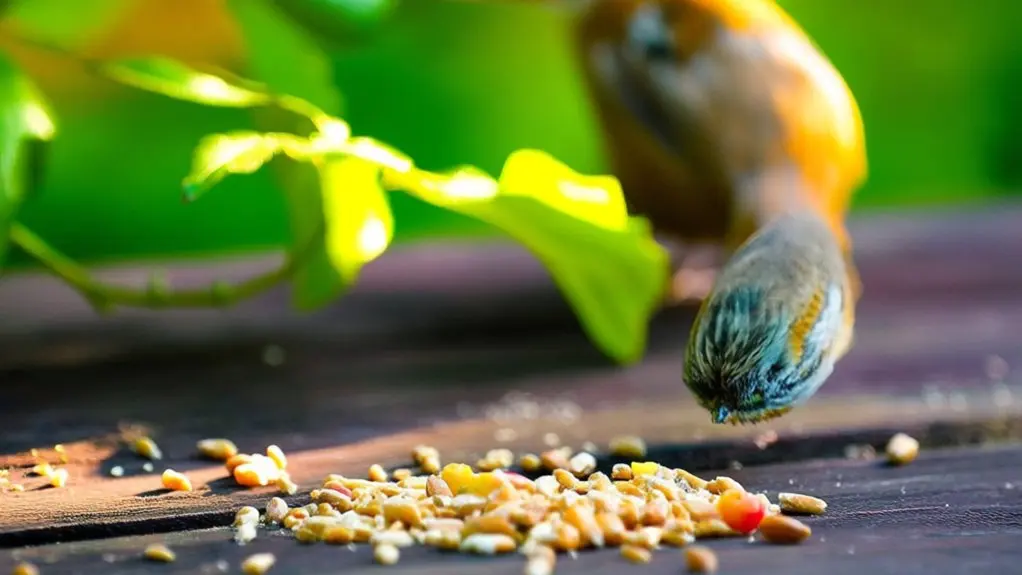
You can safely feed many wild birds chicken scratch, a grain mix mainly made of cracked corn, wheat, and oats that provides quick energy and attracts ground-feeding species like sparrows and doves. Though it’s cost-effective, it lacks some essential nutrients. So, use it alongside diverse bird seed and store it properly to avoid pests and spoilage.
This approach supports bird health and influences local bird behavior. If you want, explore more to understand its full impact and best practices.
Chicken Scratch: What Is It and What’s Inside?
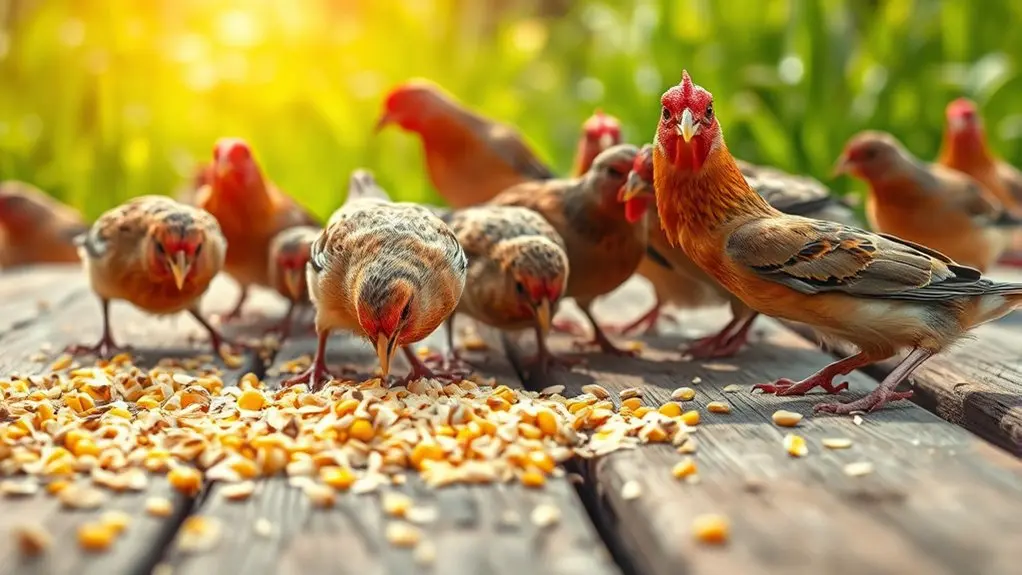
Although chicken scratch varies in composition, it generally consists of a loose blend of grains and seeds such as cracked corn, wheat, oats, and milo. It’s designed to meet the nutritional needs of poultry.
You’ll find that this mixture provides essential energy and nutrients tailored for chickens and similar birds.
The exact ingredients can differ, but common components include cracked corn, wheat, oats, and sorghum.
Typically sold in large bags at farm supply stores, chicken scratch offers an economical feeding option for regular poultry care.
While its primary purpose is to support poultry nutrition, this feed’s grain variety and accessibility also make it appealing to other bird species.
Understanding its composition helps you evaluate its suitability and nutritional benefits for your birds.
Which Wild Birds Can Eat Chicken Scratch Safely?
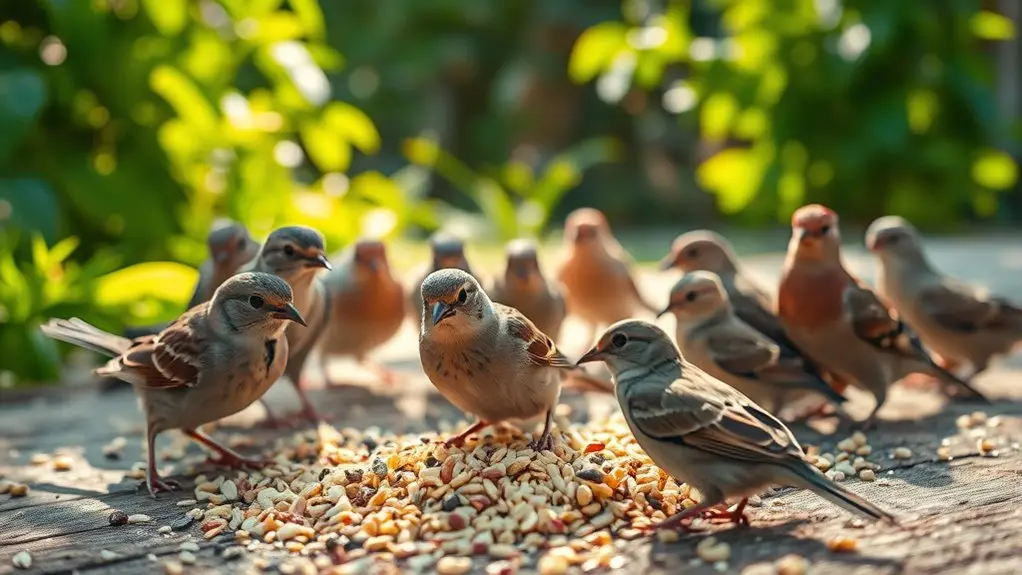
When you offer chicken scratch outdoors, several wild bird species will readily consume it because it’s seed-rich. Sparrows, doves, and jays especially love the finely cracked corn and mixed grains in chicken scratch. Ground-feeding birds like sparrows and doves benefit from the easy-to-access cracked corn.
Larger birds such as quail and wild turkeys also enjoy feeding on the grain components. But some birds with specialized digestive systems, like thrushes and warblers that have grinding gizzards, usually avoid chicken scratch. They just can’t process it efficiently.
While many wild birds can safely eat chicken scratch, it’s best to use it in moderation. You also want to be careful not to attract pests like rats. That way, you keep a safe feeding environment for both the birds and the wildlife around them.
Benefits and Drawbacks of Feeding Chicken Scratch
You’ll find that chicken scratch is a cost-effective mix of grains, kind of like traditional birdseed. It tends to attract larger birds like sparrows and doves, which is pretty nice if you enjoy watching them.
That said, its nutritional profile mightn’t cover all the needs of wild birds, so it’s not a perfect solution for every feathered friend.
Also, feeding chicken scratch can sometimes invite unwanted guests, like rats or invasive species, which is something to keep in mind.
Nutritional Value Comparison
Because chicken scratch contains seeds like cracked corn, wheat, and milo, it offers a nutritional profile somewhat comparable to certain wild bird feeds. You’ll find it provides energy mainly through carbohydrates, making it beneficial for birds needing quick fuel.
However, chicken scratch lacks essential vitamins and minerals that formulated poultry diets and specialized wild bird mixes supply. If you feed wild birds exclusively with chicken scratch, they might develop nutritional deficiencies over time.
While it’s inexpensive and widely accepted by various birds, its limited nutrient balance can pose health risks and may attract unwanted pests.
To guarantee ideal nutrition, it’s best to supplement chicken scratch with more complete seed mixes or nutrient-rich foods designed specifically for wild birds.
Attracting Bird Species
Although chicken scratch attracts a broad range of backyard birds such as sparrows, doves, and jays due to its mixture of cracked corn, wheat, and milo, it primarily appeals to larger, ground-feeding species.
When you use chicken scratch, consider these benefits and drawbacks:
- Benefits: Cost-effective and longer-lasting than traditional bird seed, attracting robust species like grackles and English sparrows.
- Drawbacks: Limited appeal to insectivorous or warbler species, which prefer different food types.
- Species Concentration: Feeding chicken scratch can increase the presence of ground feeders, potentially leading to dominance by a few species.
Knowing these factors can help you tailor your feeding strategy to attract the bird species you prefer. It also helps you manage the overall diversity in your backyard ecosystem.
Pest and Waste Issues
When feeding chicken scratch, you have to think about pests like rats and mice. This is especially true if the feed is left out in the open or not stored the right way. Chicken scratch is made up of cracked corn, wheat, and milo, which can actually sprout if not eaten fast enough. That can lead to unwanted weeds growing and more waste.
Spilled feed under the feeders can attract insects like flies and bees, which is a sanitation headache. But here’s the good news: giving chicken scratch to wild birds can cut down on seed waste because they often eat the grains that fall to the ground.
To keep pests and waste under control, it’s smart to use covered feeders and clean up any spilled feed right away. Taking these steps helps you avoid attracting pests and reduces the impact on the environment while still making good use of chicken scratch as a supplemental feed.
Risks of Using Chicken Scratch and How to Avoid Them
If you leave chicken scratch on the ground or store it improperly, you risk attracting pests such as rats, bees, and invasive species that threaten both your birds and surrounding environment. Wet or fermented scratch promotes mold growth, posing health hazards.
Plus, untreated scratch can sprout seeds, leading to waste and more pest problems. To keep these risks low, follow some simple practices.
Store chicken scratch in sealed, dry containers to prevent moisture and pest access. Clean feeding areas regularly to remove leftover scratch and reduce vermin attraction.
And avoid overfeeding; only give your birds what they can eat quickly to limit spoilage. These little steps make a big difference!
How Chicken Scratch Affects Bird Behavior and Diversity
When you scatter chicken scratch, you’ll notice that it draws in a variety of bird species, like sparrows, doves, and jays. This changes the way they feed, making things a bit more lively around your feeder.
Because this seed mix is pretty appealing, it boosts activity and the number of visits to your feeder. However, it can also lead to a shift, favoring larger, seed-eating birds over some of the smaller ones.
Bird Species Attraction
How does chicken scratch influence the variety of wild birds visiting your backyard? Chicken scratch, made of cracked corn, wheat, and milo, attracts a broad range of ground-feeding bird species. Its high carbohydrate content draws sparrows, doves, and jays, increasing species diversity by encouraging natural foraging behavior.
But keep in mind, this seed mix may favor certain grain-eaters over delicate insectivores, like warblers. So while you’ll see more of some birds, others mightn’t show up as often.
Key effects include:
- Attracting larger ground feeders such as sparrows and doves
- Boosting the frequency of visits by seed-preferring birds
- Potentially reducing presence of insectivorous, less seed-dependent species
Feeding Patterns Changes
Although chicken scratch primarily feeds your poultry, it also influences wild birds by attracting those drawn to grains like cracked corn, wheat, and milo. When you provide chicken scratch regularly, you encourage increased foraging behavior in wild birds, which can alter their natural feeding patterns.
This supplemental food source often leads some species to depend more on it, shifting their daily routines away from native foraging. You’ll notice that certain bird species congregate more frequently around feeding areas, which changes local bird community dynamics.
Over time, these pattern changes can favor species adapted to feeding on grains, potentially altering the composition of the bird population in your area. Understanding these behavioral shifts helps you manage how chicken scratch impacts wild bird behavior and diversity.
Diversity Impact Factors
Changes in feeding patterns caused by chicken scratch directly influence the diversity of bird species in your area. Since chicken scratch attracts mainly ground-feeding birds like sparrows, doves, and jays, it can shift local bird community dynamics.
You’ll notice some species become more abundant, while others that prefer different food sources or feeding methods may decline.
Think about it this way: chicken scratch favors ground foragers, which can potentially reduce species variety. If you use it too much, you might encourage dominance by aggressive or highly motivated birds.
Also, where and how much scratch you put out really affects which species visit and thrive.
Safe Ways to Mix Chicken Scratch With Bird Seed
When you mix chicken scratch with bird seed, balancing the proportions is essential to prevent nutritional imbalances in wild birds. Use a small, controlled amount of chicken scratch to avoid excessive fat intake, which can cause weight gain and health issues.
Incorporate cracked corn from scratch to boost protein levels, benefiting species like sparrows and doves.
Always mix the components in a dry, clean container to reduce spoilage and waste. Serve the mixture in moderation to maintain freshness and appeal.
Regularly check feeding sites to prevent pest attraction and ensure the blend remains suitable for wild birds.
Where to Buy Affordable Chicken Scratch for Bird Feeding
Ensuring a balanced mix of chicken scratch and bird seed is only part of maintaining a healthy feeding routine. Finding affordable sources for chicken scratch can help sustain this practice economically. You can secure quality chicken scratch at competitive prices by exploring different purchasing options.
Consider these sources for affordable chicken scratch: feed stores and co-ops like Tractor Supply and Walmart offer 50-lb bags for about $6.50. Local farm and ranch stores provide bulk purchases, lowering the cost per pound.
Affordable chicken scratch is available at feed stores, co-ops, and local farm supply bulk options.
Online agricultural suppliers often feature discounts or free shipping on large orders. Comparing prices locally and online ensures you choose cost-effective, nutritious chicken scratch.
This way, you can support consistent feeding for your birds without overspending.
Frequently Asked Questions
Can Feeding Chicken Food Harm Pet Birds Like Parrots?
Yes, feeding chicken food to your parrots can harm them by causing nutritional imbalances, obesity, or vitamin deficiencies. You should provide species-specific diets to guarantee proper nutrient intake and maintain your pet bird’s ideal health.
It’s really important to remember that what works for chickens doesn’t necessarily work for parrots. Their dietary needs are quite different, so sticking to food designed for your parrot is the best way to keep them healthy and happy.
How Does Chicken Food Impact Bird Digestion?
Chicken food disrupts bird digestion by providing inappropriate nutrients and additives. Wild birds can’t properly process these ingredients. This imbalance affects their gut flora and causes digestive upset.
Over time, this can lead to obesity or other health complications. So, feeding chicken food to wild birds isn’t a good idea. It’s better to stick with foods designed specifically for them.
Are There Seasonal Considerations for Feeding Chicken Scratch?
Think of chicken scratch as seasonal fuel; you’ll boost its use in winter when birds need extra calories for warmth.
In summer, they rely more on natural foods, so you should adjust feeding accordingly for their health.
Can Chicken Food Cause Allergic Reactions in Birds?
Yes, chicken food can cause allergic reactions in birds, especially due to ingredients like soy or wheat.
You should monitor for symptoms like respiratory issues or skin irritations. If your birds show sensitivities, try to avoid feeds with additives. It’s always better to be cautious and keep an eye on how your birds respond to their food.
What Are Alternative Treats for Birds Besides Chicken Scratch?
Forget the Renaissance feast; you can offer birds millet, dried fruits, mealworms, and fresh apples. Unsalted nuts, oatmeal, or commercial suet cakes are great, too.
These alternatives provide balanced nutrition and variety. They help support healthy, diverse diets for backyard birds.
Conclusion
If you think feeding chicken scratch to wild birds is just a casual snack, think again. It can completely transform your backyard ecosystem! While many birds can enjoy it safely, ignoring the risks could turn your bird haven into chaos.
By mixing it wisely with bird seed and choosing affordable, quality scratch, you’ll boost bird diversity and health like never before. So, don’t underestimate chicken scratch. It’s a game-changer for bird enthusiasts!