
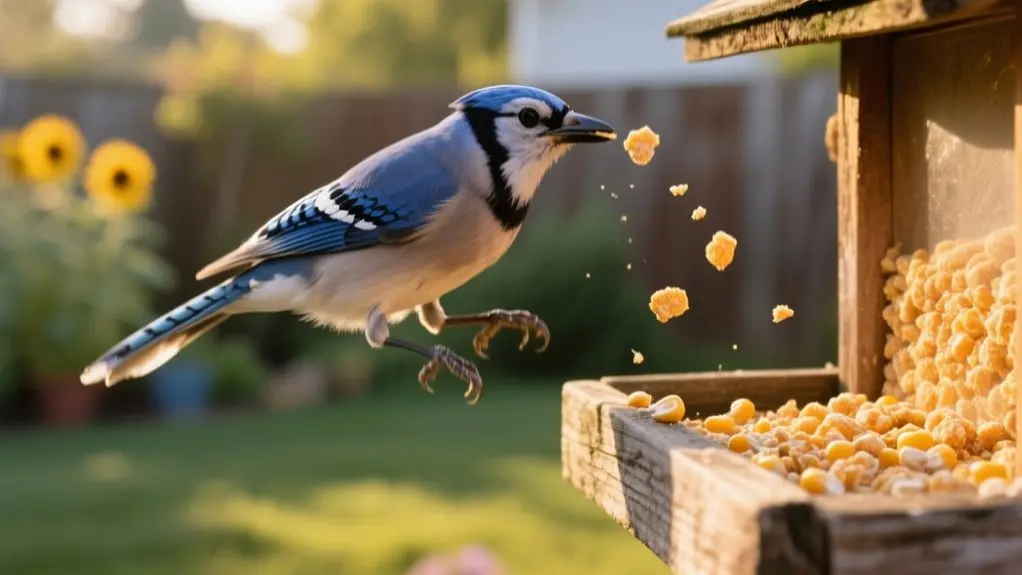
You can feed birds plain cornflakes occasionally, but don’t rely on them regularly. Cornflakes are mostly processed corn with added sugars, salts, and preservatives, which can lead to nutritional imbalances, obesity, and kidney issues in birds.
They lack essential fats, proteins, and vitamins that birds need for good health. Offering cornflakes in moderation is okay, but better options like seeds and natural foods keep birds healthy.
Find out how to keep your feathered friends well-nourished with smarter choices.
What Are Cornflakes and Their Ingredients for Birds?
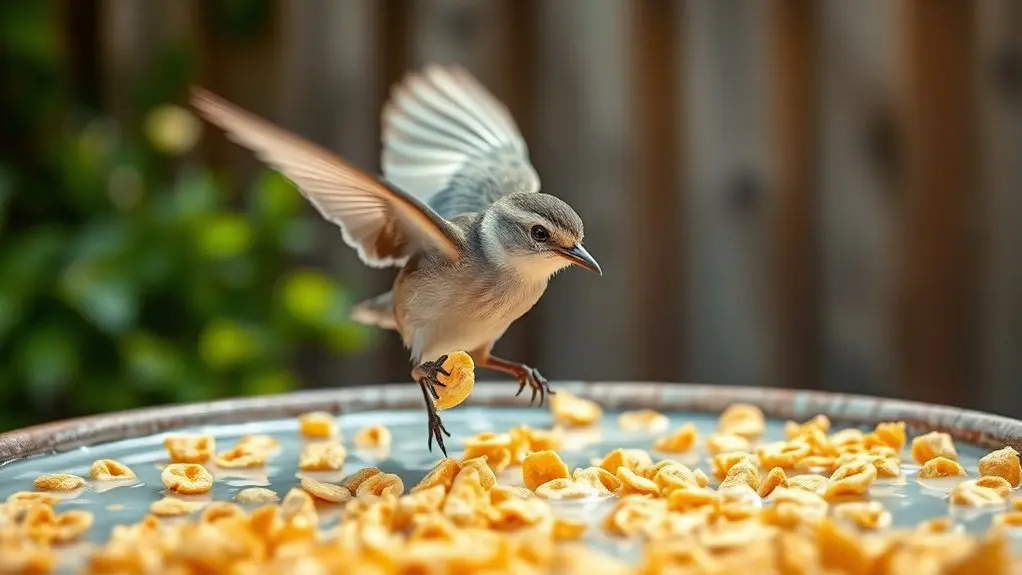
Although cornflakes are made primarily from corn, they often contain added sugars, salt, and preservatives that aren’t suitable for birds.
Cornflakes contain added sugars, salt, and preservatives that make them unsuitable for birds.
Cornflakes are a processed cereal, meaning their ingredients have been altered from their natural state.
While corn itself can be part of a bird diet, the processing reduces the nutritional value essential for birds. Most cornflakes are high in carbohydrates but lack the fats and proteins birds need to stay healthy.
Feeding birds cornflakes regularly can cause nutritional imbalances and health problems due to these additives. Instead, it’s better to offer whole, unprocessed grains or seeds that provide the right balance of nutrients.
Understanding cornflakes’ ingredients helps you see why they’re not an ideal choice for your feathered friends.
Can Birds Safely Eat Plain Cornflakes?
You might be wondering if plain cornflakes are a safe snack for your birds.
Well, they do provide some carbohydrates, which can give your feathered friends a quick energy boost.
But here’s the thing—they don’t contain important nutrients like fats and proteins that birds really need to stay healthy.
Nutritional Value Considerations
While plain cornflakes aren’t toxic to birds, they don’t provide the essential nutrients your feathered friends need for a healthy diet. Cornflakes mainly offer carbohydrates and sugars, lacking the fats, proteins, and vitamins found in seeds and grains.
Seeds contain balanced nutrients that support energy, growth, and feather health, making them a superior choice. You can offer cornflakes occasionally, but never let them replace nutritious seeds.
Always pick unflavored, unsweetened cornflakes to avoid harmful additives. Here’s a quick comparison:
| Nutrient | Cornflakes | Seeds |
|---|---|---|
| Protein | Low | High |
| Fat | Very Low | Moderate/High |
| Vitamins | Minimal | Rich |
Potential Risks And Benefits
Plain cornflakes can be a safe occasional snack for birds, but they shouldn’t replace their main diet. When you feed birds cornflakes, you provide a crunchy treat they might enjoy.
But it’s important to remember these flakes lack essential fats and proteins. Birds eat seeds and grains for balanced nutrition, so relying on cornflakes could lead to digestive issues and poor health.
Overfeeding cornflakes might discourage birds from natural foraging, disrupting their dietary habits.
To feed birds responsibly, offer cornflakes sparingly alongside more nutritious foods like seeds, fruits, and insects. This way, you support their health while giving them a tasty snack without risking nutritional deficiencies or digestive problems.
How Do Sugars and Salts in Cornflakes Affect Birds?
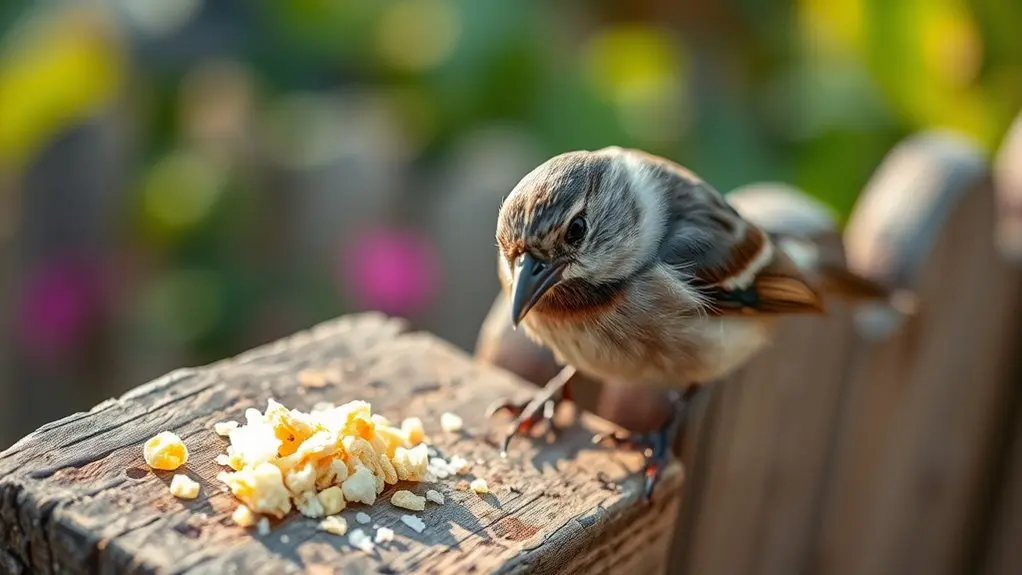
How exactly do sugars and salts in cornflakes impact birds? When you offer cornflakes to birds, the added sugars and salts can cause several issues.
Sugars may lead to obesity and other health problems if birds eat too much, while salts pose a risk due to birds’ low sodium tolerance.
Here’s what you should keep in mind: excess sugars can disrupt birds’ natural diet and cause weight gain. High salt levels may cause dehydration and kidney damage.
Regular intake of sugary, salty cornflakes makes it harder for birds to get essential nutrients.
Preservatives and artificial flavors in cornflakes can harm birds over time. To protect birds, offer cornflakes only occasionally, not as a regular food source.
Why Cornflakes Lack Essential Nutrients for Birds’ Health
Sugars and salts in cornflakes can harm birds, but another concern lies in what these flakes don’t offer. Cornflakes lack essential protein, healthy fats, and crucial vitamins and minerals that birds need for growth and health.
While some cornflakes are fortified with synthetic vitamins, these don’t match the benefits of natural nutrients found in whole foods. Feeding birds cornflakes at bird feeders can lead them to fill up on these low-nutrient flakes, neglecting more nutritious options.
The high carbohydrate content in cornflakes may also cause obesity and related health issues if birds rely on them too much.
To keep birds healthy, it’s best to avoid using cornflakes in bird feeders and provide natural, nutrient-rich foods instead.
How Do Birds Digest Cornflakes Versus Natural Foods?
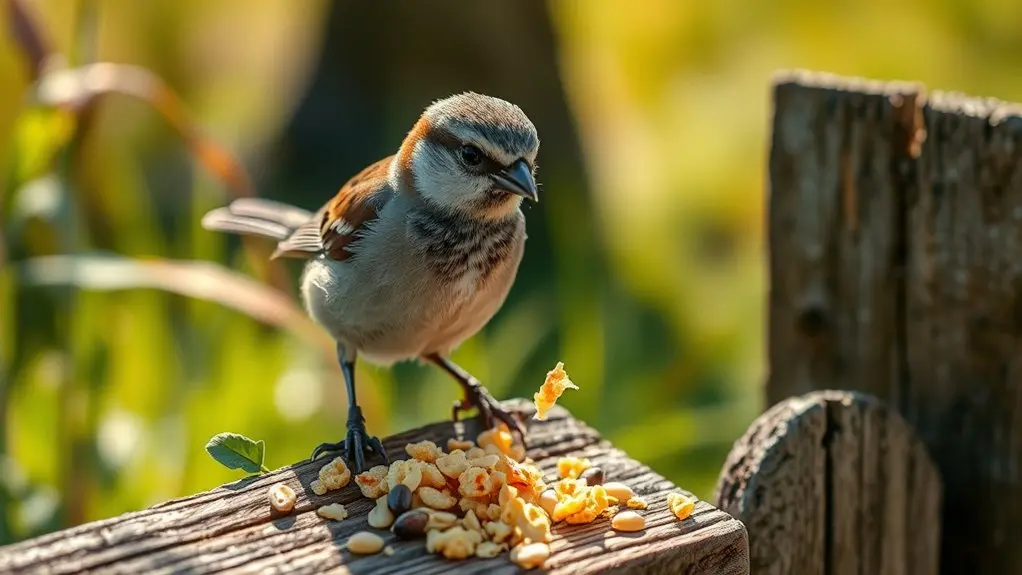
Although birds digest cornflakes in a similar way to other processed grains, they soften them in the crop before enzyme action in the proventriculus and grinding in the gizzard.
The lack of essential nutrients in cornflakes means their digestive systems don’t get the balanced fuel they need.
When you watch birds digest cornflakes versus natural foods, you’ll notice key differences:
- Cornflakes lack proteins and fats crucial for energy and growth.
- High starch content in cornflakes can ferment rapidly, causing digestive upset.
- Additives and sugars in cornflakes are harder for birds to break down.
- Natural foods like seeds and insects provide balanced nutrients and easier digestion.
Which Bird Species Are Likely to Eat Cornflakes?
You’ll notice that common birds like House Sparrows and European Starlings often enjoy cornflakes because they love the crunch and sweetness.
Ground-feeding birds such as pigeons might nibble on them, but they usually prefer seeds and grains.
On the other hand, smaller songbirds tend to avoid cornflakes altogether, sticking to their natural foods instead.
Common Cornflake Eaters
Several common backyard birds readily eat cornflakes, making them a popular choice for casual bird feeders.
If you want to attract a variety of species, cornflakes offer an easy snack that many birds enjoy.
Here are some common backyard birds likely to nibble on cornflakes:
- House Sparrows and European Starlings, who enjoy grains and cereals.
- Doves and pigeons, attracted by the crunchy texture and carbs.
- Crows and grackles, larger birds that opportunistically feed on diverse foods.
- Smaller songbirds like finches and chickadees may try cornflakes but prefer seeds.
Ground-Feeding Bird Preferences
When you scatter unsweetened cornflakes on the ground, you’re most likely to attract ground-feeding birds like doves, pigeons, and sparrows. These birds search for easy-to-find snacks. They enjoy cornflakes as a quick carbohydrate boost but need more nutritious options for a balanced diet.
Larger birds such as crows and ravens may also eat cornflakes occasionally due to their opportunistic feeding habits.
| Bird Species | Cornflake Preference |
|---|---|
| Doves | Frequently eat unsweetened cornflakes |
| Pigeons | Regularly scavenge cornflakes |
| Sparrows | Often found pecking at cornflakes |
Remember to offer cornflakes in moderation, alongside seeds and grains, to maintain bird health.
Species Avoiding Cornflakes
Although some birds happily peck at cornflakes, many species steer clear of them because they prefer natural foods like seeds and insects.
Seed-eating birds, in particular, often avoid cornflakes since these processed grains lack the nutrients they need.
Here’s a quick look at species that tend to avoid cornflakes:
- Small songbirds like chickadees and finches favor seeds and insects over cornflakes.
- Seed-eating birds generally reject processed grains to meet their nutritional needs.
- Birds attracted to crunchiness still choose unprocessed foods for better nourishment.
- Urban sparrows and starlings may sample cornflakes but don’t rely on them.
You’ll notice that while some larger birds eat cornflakes opportunistically, many seed-eating birds simply stick to their natural diets.
Are Cornflakes a Good Substitute for Birdseed?
Why might you consider feeding birds cornflakes instead of traditional birdseed? You may find cornflakes convenient or think birds will enjoy them. However, cornflakes lack the essential fats and proteins that birds need for a balanced diet.
Unlike birdseed mixes, which include sunflower seeds, millet, and other nutrient-rich seeds tailored to different species, cornflakes are mostly processed corn high in carbohydrates but low in crucial nutrients. This nutritional imbalance can harm birds, especially during colder months when they require more energy and nutrients.
While some birds might nibble on cornflakes occasionally, relying on them as a substitute for birdseed isn’t a good idea.
To support wild birds’ health and well-being, it’s best to stick with diverse birdseed blends specifically designed for their dietary needs.
How Often and How Much Cornflakes Can You Feed Birds?
You should feed birds cornflakes no more than once a week, and keep the portions small to avoid any health issues.
It’s best to stick to plain, unsweetened cornflakes.
Also, keep an eye on how much your birds eat each time.
That way, you can make sure they’re getting a balanced diet alongside their regular seeds and fruits.
Recommended Feeding Frequency
Feeding birds cornflakes once a week, in small amounts like a few pieces per session, helps keep their diet balanced without overloading them with sugar and low nutrients.
You should treat cornflakes as an occasional snack, not a staple. Keep these tips in mind:
Limit cornflakes to a few pieces per feeding to avoid excess sugar intake.
Offer cornflakes sparingly, about once a week, to prevent unhealthy habits.
Supplement cornflakes with nutritious foods like seeds, fruits, and vegetables.
Monitor leftover cornflakes and reduce feeding frequency if waste accumulates.
Appropriate Portion Sizes
Balancing how often and how much cornflakes you offer helps maintain birds’ health without encouraging reliance on processed foods.
When feeding cornflakes, stick to appropriate portion sizes; about one teaspoon per bird is ideal. This small amount serves as an occasional treat and prevents overfeeding, which could upset their balanced diet.
Limit feeding to once or twice a week to encourage natural foraging and avoid dependence on processed snacks.
Always provide fresh, unseasoned cornflakes since flavored varieties may contain additives harmful to birds.
While some birds may ignore cornflakes completely, offering the right portion size guarantees you’re supplementing their diet without replacing their preferred seeds and grains.
Keeping portion sizes appropriate helps maintain their health and supports natural behaviors.
Monitoring Bird Consumption
Although cornflakes can provide a quick snack for birds, you should offer them sparingly, about a teaspoon per feeding, once or twice a week. Monitoring bird consumption helps maintain healthy feeding patterns and prevents birds from relying too much on cornflakes.
To do this effectively, keep these tips in mind:
- Observe how often birds visit and how much cornflakes they eat.
- Supplement cornflakes with nutritious seeds, nuts, and fruits.
- Remove any leftover cornflakes promptly to avoid spoilage and pests.
- Guarantee birds continue natural foraging by limiting cornflake availability.
What Are the Risks of Feeding Birds Cornflakes and Other Processed Foods?
Processed foods like cornflakes may seem like a convenient snack to share with birds, but they can pose several health risks.
Cornflakes contain added sugars, salts, and preservatives that can harm birds if eaten regularly. Their high carbohydrate content may lead to obesity and related health problems, especially if cornflakes replace more balanced foods.
Since many processed foods lack essential nutrients like fats and proteins, birds don’t get the energy they need to stay healthy.
Feeding birds processed foods can also disrupt their natural foraging habits, making them dependent on less nutritious options.
Instead, you should offer whole grains or seeds to guarantee birds receive the nutrients crucial for their survival and well-being.
Avoid relying on processed foods for their diet.
What to Avoid When Feeding Birds Cornflakes and Snacks
When feeding birds cornflakes and snacks, you should steer clear of flavored or sweetened varieties since added sugars and artificial ingredients can harm their health.
Always choose plain cornflakes without preservatives or additives to protect various bird species.
Remember, bread is bad for wild birds, so avoid it entirely as it offers no nutritional value and can cause health issues.
Also, offer cornflakes in moderation because they lack essential nutrients found in seeds and grains.
Keep these tips in mind:
- Avoid flavored or sweetened cornflakes to prevent harm
- Check for spoilage to avoid digestive issues
- Crush cornflakes for ground-feeding wild birds but don’t rely on them
- Never substitute cornflakes for proper bird food; bread is bad for birds!
This helps keep your feathered visitors safe and healthy.
What Are Better Bird Treats Than Cornflakes?
To keep your feathered friends healthy, it’s best to offer treats that provide real nutritional value instead of plain cornflakes. Sunflower seeds are a top choice, delivering essential fats and proteins. White proso millet suits small birds like finches, while cracked corn energizes ground feeders.
Fresh fruits and veggies add vitamins and hydration, and fat balls made from suet and seeds are perfect for colder months.
| Treat | Benefits | Suitable Birds |
|---|---|---|
| Sunflower Seeds | Essential fats and proteins | Many species |
| White Proso Millet | Nutritious, small seeds | Finches, sparrows |
| Cracked Corn | Energy-rich, ground feeding | Ground feeders |
| Fruits & Veggies | Vitamins, hydration | Most birds |
Choosing these treats keeps birds healthy and happy.
How to Offer Cornflakes as an Occasional Treat Without Harm
Although cornflakes aren’t a nutritious staple, you can safely offer them as an occasional treat by choosing plain, unflavored flakes without additives like sugar or salt.
To avoid harm and keep your feathered friends happy, follow these tips:
Crush cornflakes into small pieces to prevent choking and make eating easier.
Serve cornflakes sparingly since they lack essential fats and proteins birds need.
Remove any uneaten cornflakes promptly to prevent spoilage and pests.
Pair cornflakes with nutritious seeds or fruits to provide a balanced diet.
Frequently Asked Questions
Can Feeding Cornflakes Affect Birds’ Behavior or Migration Patterns?
Yes, feeding cornflakes can cause behavioral changes in birds. When you offer cornflakes, birds might rely more on this easy food source, which disrupts their natural foraging habits.
This dependence can alter their migration patterns since they may skip essential feeding grounds needed to build energy.
Over time, these behavioral changes reduce their ability to survive long migrations and affect their overall health, making natural instincts weaker.
Do Cornflakes Cause Allergies or Sensitivities in Certain Bird Species?
Yes, cornflakes can cause allergic responses in certain bird species, especially those with sensitive digestive systems like budgerigars and cockatiels.
You might notice signs such as itching, swelling, or gastrointestinal upset after they eat cornflakes.
Since cornflakes contain additives and preservatives, you shouldn’t feed them regularly.
Instead, offer cornflakes only occasionally and watch for any changes in your bird’s behavior or health to avoid triggering allergic sensitivities.
How Do Cornflakes Impact Wild Birds Versus Pet Birds Differently?
You might think cornflakes are a gourmet treat for birds, but ironically, they clash with their natural dietary preferences. Wild birds can nibble on them occasionally, but cornflakes offer little nutrition and disrupt their balanced diet of seeds and insects.
For pet birds, relying on cornflakes risks unbalanced nutrients and weight gain since their dietary preferences need careful management.
Can Cornflakes Contribute to Obesity or Other Health Issues in Birds?
Yes, cornflakes can contribute to obesity and other health issues in birds. If you feed them too often, the high sugar and refined carbs in cornflakes disrupt their weight management.
Without essential fats and proteins, birds develop nutritional deficiencies, which increases their risk of fatty liver disease and metabolic disorders.
You should avoid cornflakes and provide balanced birdseed mixes instead.
This helps your birds maintain a healthy weight and overall well-being.
Are There Seasonal Considerations for Feeding Birds Cornflakes Safely?
When winter’s icy breath bites, you’ll want to offer birds cornflakes as seasonal nutrition, but tread carefully.
Cornflakes provide quick energy, like a warm spark in cold times, yet they lack essential nutrients. You should mix them with seeds and grains to keep birds healthy.
Always remove leftovers swiftly to prevent spoilage. By balancing cornflakes with nutritious foods, you help birds thrive through seasonal challenges without risking their well-being.
Conclusion
Feeding birds cornflakes is like offering them a shiny but empty treasure chest. It looks appealing but lacks the real riches they need. While plain cornflakes aren’t toxic, their sugars, salts, and missing nutrients can harm your feathered friends over time.
Instead, choose natural treats that nourish and support their health. If you do offer cornflakes, keep it rare and small. Make sure you’re putting their well-being before convenience every time.