
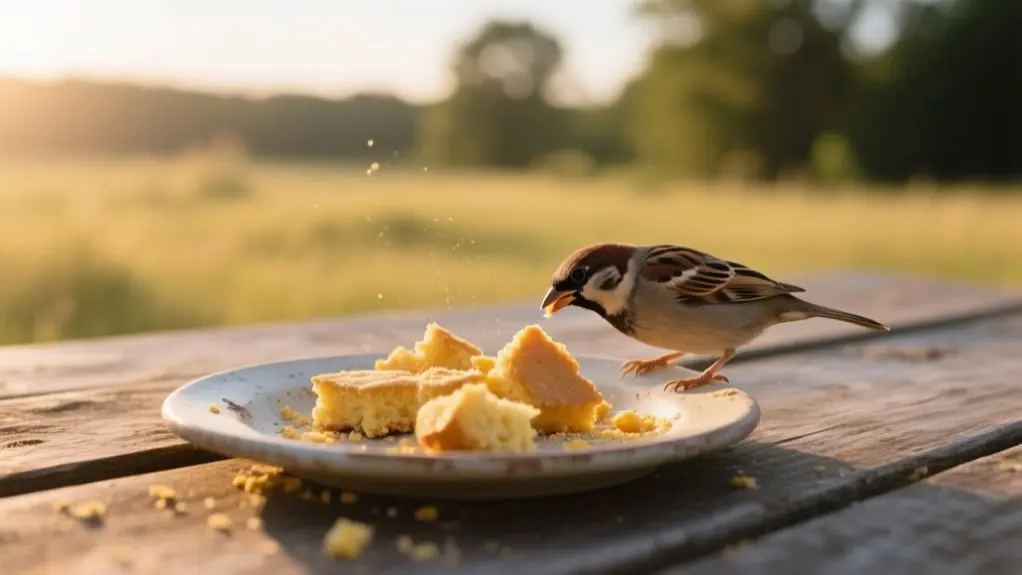
Yes, you can give birds cornbread occasionally, as long as it’s made without yeast, salt, or added sugar. It’s a simple treat that provides quick energy but lacks essential nutrients, so don’t let it replace their regular, balanced diet.
Always offer fresh, mold-free pieces in small sizes to keep birds safe and healthy. If you want to understand how cornbread fits into bird care and explore better feeding options, there’s more to discover.
What Is Cornbread? How To Make It For Birds
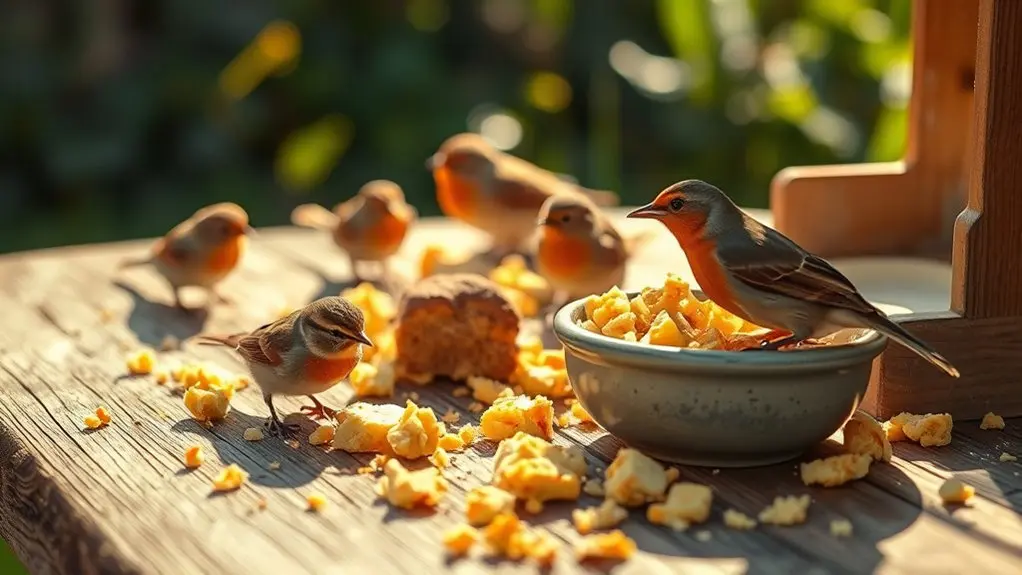
Cornbread is a simple bread made from cornmeal and a few basic ingredients like baking powder, fat, and water.
To make cornbread for birds, you’ll mix these ingredients, typically cornmeal, baking powder, a fat such as lard, and water. Then bake the batter in a 9×13-inch pan at 375ºF for 30 to 35 minutes.
Once it’s baked and cooled, you can cut it into pieces and place them in mesh bags to hang outdoors for birds to enjoy.
If you want to boost its nutritional value, consider adding chopped nuts, dried fruit, or crumbled cheese to the mix.
Keep in mind, cornbread serves as a supplementary treat and shouldn’t replace a bird’s balanced diet rich in seeds and other nutrients.
Can Birds Safely Eat Cornbread?
Wondering if you can safely share cornbread with birds? Yes, you can, but with caution. When considering can birds safely eat cornbread, remember it should be an occasional treat, not a staple.
Avoid cornbread with yeast or high salt, as these ingredients harm birds. While cornbread isn’t toxic, it doesn’t provide all the nutrients birds need and may cause them to skip more nutritious foods.
Avoid cornbread with yeast or high salt; it’s not toxic but lacks essential bird nutrients.
To make it safer, offer fresh, mold-free cornbread, and consider homemade versions with chopped nuts or dried fruits to boost nutrition.
Always watch for mold, which can be dangerous.
Nutritional Pros And Cons Of Cornbread For Birds
You might think cornbread is just a simple treat for birds, but it actually has its ups and downs.
Sure, it provides some carbohydrates, which give them quick energy. However, it doesn’t have many of the important nutrients birds really need to stay healthy.
Also, cornbread can fill them up pretty fast, which might stop them from eating other foods that are better for them.
Plus, it’s super important to avoid cornbread that has additives or mold because those can be harmful to their health.
Nutritional Benefits Overview
Although cornbread can offer birds a quick energy boost through carbohydrates, it doesn’t provide the essential proteins and vitamins they need for a balanced diet. When evaluating the nutritional value of cornbread for birds, keep in mind that it mainly serves as a source of energy rather than extensive nutrition.
Here are some key points to reflect on:
- Cornbread supplies carbohydrates that help birds stay active, especially in colder weather.
- It lacks critical nutrients like protein and vitamins necessary for growth and health.
- Birds might fill up on cornbread, reducing their intake of more nutritious foods like seeds and nuts.
- Only offer plain cornbread occasionally, ensuring it’s fresh and free from mold to keep birds safe.
Use cornbread as a treat, not a staple.
Potential Health Risks
While cornbread can give birds a quick energy boost, feeding it too often can cause more harm than good. Cornbread is high in carbohydrates but lacks essential nutrients, so relying on it as a staple can lead to nutritional deficiencies.
Some recipes include sugar and salt, which pose potential health risks when birds consume them in excess.
Furthermore, moldy cornbread is especially dangerous, causing digestive blockages and toxicity that can be fatal.
If you want to offer bread to birds, keep in mind that cornbread should only be an occasional treat. Always supplement it with seed mixes or other balanced foods to guarantee birds get the nutrients they need and avoid the potential health risks associated with frequent cornbread feeding.
Cornbread’s Effect On Bird Digestion And Health
Because cornbread contains high amounts of carbohydrates and lacks the essential nutrients birds need, feeding it to them regularly can disrupt their digestion and overall health.
Understanding cornbread’s effect on bird digestion and health helps you make better choices for their diet of bread.
Here’s what happens when birds consume cornbread frequently:
- High carbs and low nutrients can cause digestive issues.
- Flour and sugar make birds feel full fast, skipping nutritious foods.
- Vitamin deficiencies may develop over time due to poor nutrient intake.
- Moldy cornbread can cause serious digestive blockages and illness.
While an occasional treat is fine, cornbread shouldn’t replace seeds and nuts in a bird’s diet.
When To Feed Cornbread To Birds
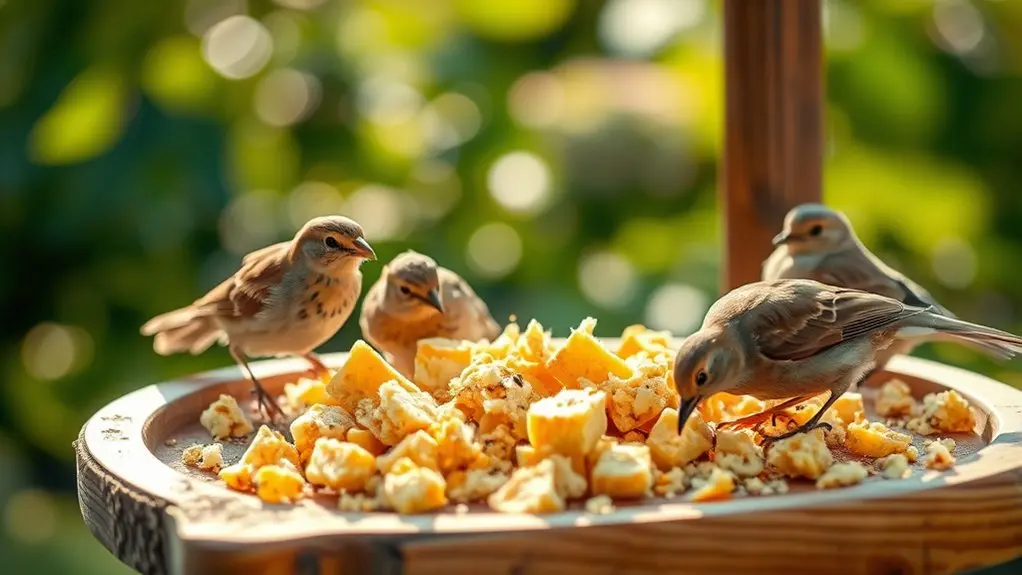
Feeding cornbread to birds requires careful timing and moderation to avoid digestive issues and nutrient imbalances. You should consider when to feed cornbread to birds mainly during harsh winter months, when natural food sources become scarce.
Offering cornbread as an occasional treat helps provide extra energy without replacing their regular diet. It’s best to use homemade cornbread without added sugars or preservatives to keep it safe and nutritious.
When you do feed cornbread, break it into small pieces to prevent choking, especially for smaller birds. Stale cornbread can also be used, reducing waste while supplying food in colder seasons.
Common Cornbread Feeding Mistakes
You’ve got to be careful not to overfeed birds cornbread because it can upset their digestion and crowd out their regular diet.
Plus, how you prepare it matters—a lot. For example, using yeast or giving them big chunks can actually harm their health.
Overfeeding Risks
While cornbread can be a tasty treat for birds, offering too much can cause them to fill up quickly and skip more nutritious foods they need to stay healthy.
Overfeeding cornbread creates several risks you should avoid:
- Birds may miss out on essential vitamins and nutrients found in seeds and natural foods.
- Large chunks of cornbread can choke smaller birds or block their digestive tracts.
- Moldy cornbread can cause respiratory problems and other illnesses.
- Regular overfeeding can lead to vitamin deficiencies, weakening birds over time.
To keep birds healthy, limit cornbread to occasional treats and always offer a balanced diet.
Avoid overfeeding to guarantee your feathered friends get the nutrition they need for a long, vibrant life.
Improper Cornbread Preparation
Although cornbread can be a safe snack, improper preparation puts birds at risk.
Improper cornbread preparation often includes using ingredients harmful to birds, like salt, sugar, or additives, which you should NEVER feed.
Avoid cornbread containing yeast or preservatives, as these can cause digestive issues and discomfort.
Fresh cornbread molds quickly, so choose stale bread instead to protect birds from potential toxins.
Always crumble cornbread into small pieces before feeding to prevent choking and digestive blockages.
By paying attention to these common cornbread feeding mistakes, you guarantee a safer treat for birds.
Making Bird-Friendly Cornbread At Home
When making cornbread for birds, focus on simple, natural ingredients like cornmeal, baking powder, fat, and water to keep it safe and healthy.
Crafting bird-friendly cornbread means avoiding salt or sweeteners that could harm them.
Avoid salt and sweeteners in bird-friendly cornbread to keep it safe and healthy for your feathered friends.
You can boost its nutrition by adding chopped nuts, dried fruits, or crumbled cheese to attract more birds.
Bake it in a deep 9×13-inch pan at 375ºF for 30 to 35 minutes to guarantee it’s fully cooked.
Here’s how to make bird-friendly cornbread at home:
- Use basic ingredients: cornmeal, fat, baking powder, water without additives.
- Add bird-safe extras like nuts or dried fruit.
- Bake thoroughly for safety.
- Let it cool, then place in mesh bags outdoors for easy bird access.
Safe Ways To Serve Cornbread To Backyard Birds
If you want to offer cornbread to backyard birds safely, prepare it without added sugars or yeast and serve it in small, easy-to-handle pieces. Birds can enjoy this occasional treat, but it’s best to keep it as a supplement to their regular diet.
Hanging cornbread in mesh bags lets birds peck at it comfortably while reducing pest problems. Always monitor how much cornbread birds consume to keep their nutrition balanced.
| Serving Method | Benefits | Tips |
|---|---|---|
| Small pieces | Prevents choking | Break into bite-size bits |
| Mesh bags | Easy access, less mess | Hang away from predators |
| On ground | Natural for ground feeders | Keep area clean |
| Feeding station | Controlled environment | Clean regularly |
| Limited quantity | Avoids diet imbalance | Offer occasionally |
Alternatives To Cornbread For Feeding Wild Birds
If you want to offer wild birds something nutritious and safe to eat, try birdseed blends with sunflower, millet, and safflower seeds. These are favorites for many bird species and provide great energy.
You can also toss out some unsalted nuts, fresh fruits, or even suet cakes to mix things up and keep their diet interesting. Birds love having variety, and these options are healthy choices.
Another great idea is to plant native flowering plants and shrubs. Not only do they look beautiful, but they also give birds natural, sustainable food sources throughout the year.
It’s like creating a little bird-friendly buffet right in your own yard!
Nutritious Bird Food Options
Although cornbread can be an occasional treat, you should focus on offering wild birds more nutritious options to support their health.
Cornbread lacks essential nutrients, so providing balanced food helps birds thrive.
Here are some nutritious options you can consider:
- Sunflower seeds, millet, and high-protein seed mixes designed for birds.
- Fresh fruits like apples and berries, which supply vitamins and hydration.
- Unsalted nuts such as peanuts and almonds, great for protein and healthy fats.
- Homemade bird food combining oats, seeds, and dried fruits for a wholesome alternative.
Safe Feeding Alternatives
When you want to offer wild birds a safer and more nutritious alternative to cornbread, several options provide essential nutrients and energy without the drawbacks of processed bread.
Safe feeding alternatives include seeds and nuts like sunflower seeds, safflower seeds, and unsalted peanuts, which supply crucial nutrients birds need.
Fresh fruits such as apples, bananas, and berries, along with vegetables like corn and peas, also make excellent choices.
You can try homemade suet by mixing animal fat with seeds and dried fruits for high energy, especially in colder months.
Commercial bird feed offers balanced nutrition tailored to wild birds.
Moreover, planting native plants attracts birds naturally by providing seeds and insects, reducing reliance on bread and promoting local biodiversity.
These alternatives guarantee healthier bird feeding habits.
Myths And Facts About Cornbread And Birds
Because cornbread can seem like a simple snack to share with birds, you might wonder if it’s a healthy choice. While many birds eat cornbread without immediate issues, there are important myths and facts to weigh.
- Cornbread lacks essential nutrients birds need, so it shouldn’t replace seeds or insects.
- Fresh cornbread can be safe, but stale or moldy cornbread can harm birds’ health.
- Adding salt or sugar to cornbread is dangerous; keep it plain if you feed it.
- Birds might fill up on cornbread and skip more nutritious foods, which can affect their wellbeing.
Understanding these points helps you make smarter choices when sharing cornbread with birds.
Why Feeding Cornbread Is A Bird Care Tradition
If you’ve ever wondered why cornbread is a common offering to birds in some communities, you’ll find that this practice is deeply rooted in tradition and care. In Appalachian culture, feeding stale cornbread to birds during winter shows resourcefulness and respect for nature.
In Appalachian tradition, feeding stale cornbread to birds in winter reflects care, resourcefulness, and respect for nature.
Using leftover cornbread at bird feeders reduces waste, highlighting your role as a steward of local wildlife. Since cornbread contains simple ingredients, it’s an easy way for families to connect with their environment and support birds when food is scarce.
This act also strengthens community bonds as neighbors share cultural experiences around bird feeders.
Even with some nutritional concerns, offering cornbread remains a meaningful tradition that helps you care for and connect with wild birds throughout harsh seasons.
Tips For Enjoying Birds That Eat Cornbread
Offering cornbread to birds can create a delightful and engaging experience in your backyard. Birds love the occasional cornbread treat, but you’ll want to keep a few tips in mind to make the most of it.
- Use cornbread sparingly and confirm it contains no harmful additives like salt or sugar.
- Enrich DIY cornbread with healthy extras such as chopped nuts or dried fruit to boost nutrition.
- Place cornbread in mesh bags or specialized feeders so birds have easy access while keeping larger animals away.
- Monitor which birds enjoy cornbread most and adjust feeding accordingly, always removing any moldy leftovers to protect their health.
These steps help you enjoy vibrant, healthy birds that love cornbread while keeping your feeding routine safe and rewarding.
Frequently Asked Questions
Can Baby Birds Eat Cornbread Safely?
You shouldn’t feed cornbread to baby birds because it doesn’t fit their baby bird diet needs.
Cornbread lacks the protein and nutrients essential for their growth and can fill them up without providing what they truly need.
It’s better to offer high-quality bird formulas or softened seeds that support healthy development.
Feeding cornbread might also cause digestive problems and make them avoid more nutritious foods later on.
Does Cornbread Attract Specific Bird Species?
Cornbread attracts bird species like a magnet on a sunny day! You’ll notice cardinals, blue jays, and chickadees flocking to your feeder because of their unique bird preferences.
These birds love cornbread’s texture and energy-packed carbs, especially in cold weather.
If you want to draw specific species, offering cornbread with nuts or dried fruit can make your backyard a hotspot.
Just remember to balance their diet with seeds and grains!
How Should Cornbread Be Stored for Bird Feeding?
You should store cornbread for bird feeding in a cool, dry place to prevent spoilage.
Because cornbread ingredients like cornmeal and eggs can spoil quickly, wrap it tightly in plastic wrap or use an airtight container to keep moisture out.
For leftovers, refrigerate it up to a week or freeze individual portions for longer storage.
Always check for mold or off smells before feeding it to birds to keep them safe and healthy.
Can Cornbread Cause Allergies in Birds?
You might be surprised, but cornbread rarely causes allergic reactions in birds. While it’s generally safe, you should watch for any signs of discomfort or unusual behavior after they eat it.
Allergic reactions aren’t common, but individual birds can react differently.
To keep your feathered friends healthy, feed cornbread sparingly and always offer a variety of nutritious foods alongside it.
That way, you’ll catch any issues early and keep them thriving.
Is Cornbread Safe for Birds During Winter?
Yes, cornbread can be safe for birds during winter if you follow proper feeding guidelines.
You should offer it only as an occasional treat and avoid any additives like sugar or salt.
Crumble the cornbread into small pieces to prevent choking and encourage natural foraging behavior.
Conclusion
Watching birds peck at cornbread crumbs scattered beneath a sunlit tree can feel like sharing a simple, sweet moment with nature. While cornbread can be a treat, you’ll want to offer it sparingly to keep birds healthy and happy.
Remember, a balanced diet is key for their bright feathers and joyful songs. So, next time you feed them, think of cornbread as a special gift, not an everyday meal.