
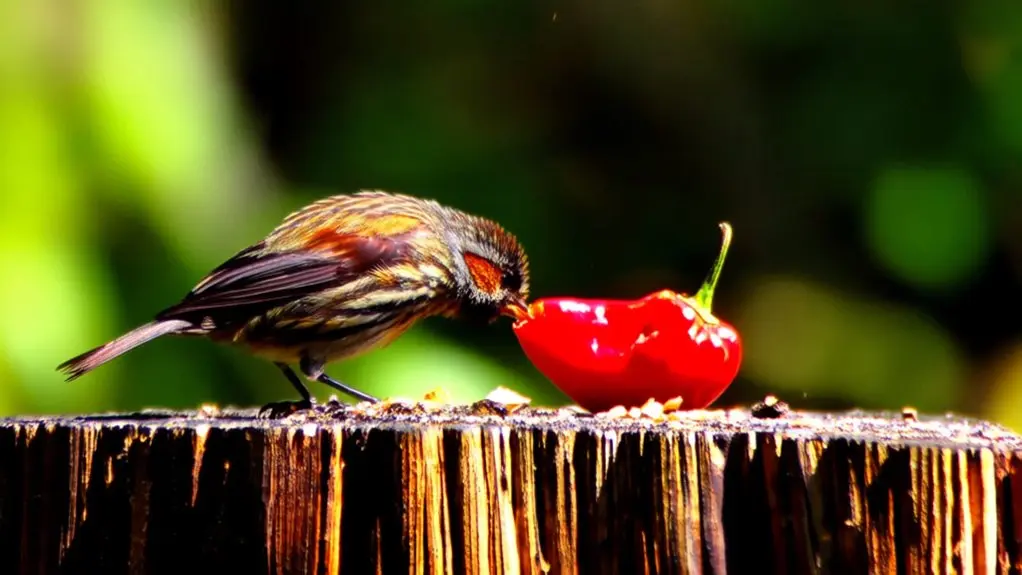
Yes, you can safely feed chili to birds because they don’t have the TRPV1 receptors that make capsaicin spicy and painful for mammals. Birds tolerate chili peppers well and even help disperse their seeds.
However, you should handle chili powder carefully since airborne particles can irritate birds’ eyes and respiratory systems. While chili-treated seeds may deter squirrels, birds remain unaffected.
Keep exploring to understand the safety precautions and effectiveness of chili-based bird products. There’s more to learn about how these products work and how to use them safely around your feathered friends.
Why Does Capsaicin Affect Birds and Mammals Differently?
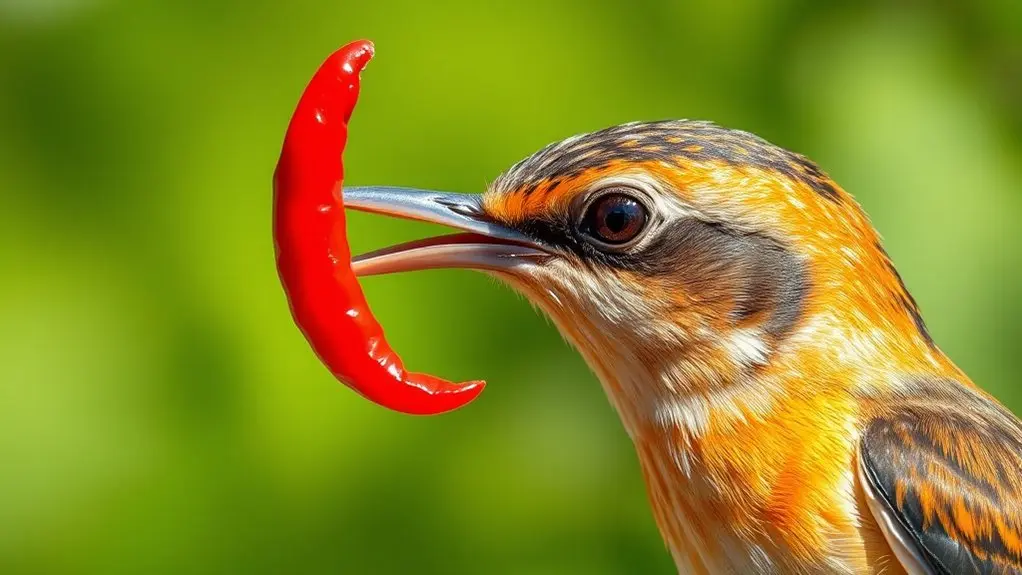
Although capsaicin triggers a burning pain in mammals by activating the TRPV1 pain receptors, birds lack this receptor, which makes them insensitive to the hot sensation. When you encounter spicy peppers, mammals experience capsaicin as intense heat due to TRPV1 activation.
Capsaicin causes burning pain in mammals by activating TRPV1 receptors, but birds lack this receptor and feel no heat.
Birds, however, don’t have the vanilloid receptor 1, so they don’t feel this burning effect.
Additionally, birds possess fewer taste buds and different sensory receptors, enabling them to tolerate or even enjoy spicy peppers without discomfort. This evolutionary adaptation benefits birds by allowing them to consume and disperse chili seeds effectively.
Meanwhile, mammals avoid these fruits because of the painful stimulus.
Understanding this receptor difference clarifies why capsaicin affects mammals and birds so distinctly in terms of sensory experience and behavior. It’s pretty interesting how nature has designed these mechanisms, don’t you think?
Is Chili Powder or Hot Pepper Seed Safe for Birds?
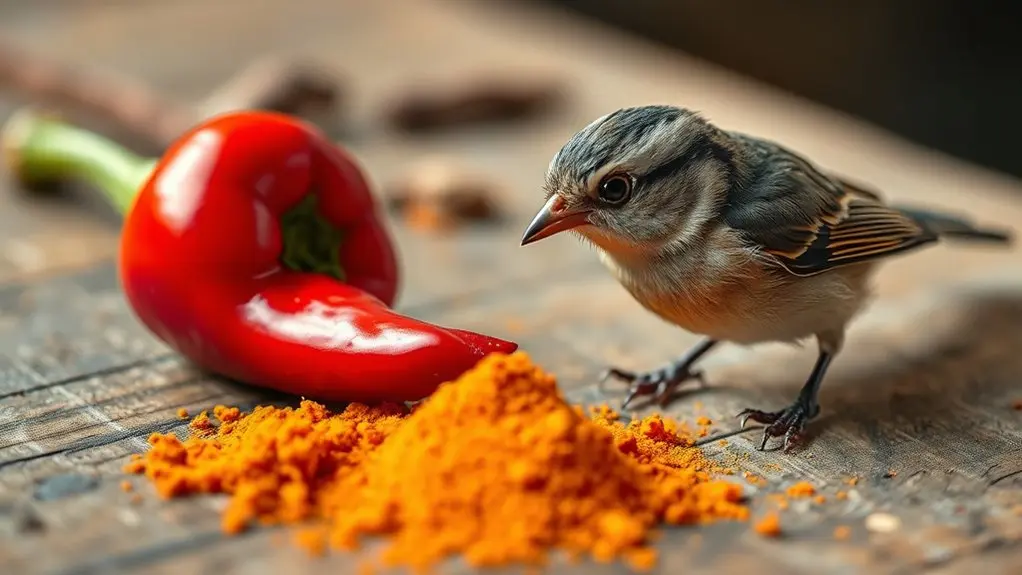
When you offer birds chili powder or hot pepper seeds, you can rest assured that these foods are generally safe for them in moderation. Birds are less sensitive to capsaicin, the compound that causes heat, allowing them to consume chili-coated seeds and suet without harm. Many wild bird species naturally eat hot peppers, demonstrating their tolerance.
However, loose chili powder can irritate birds’ eyes and respiratory systems if it blows around, so take precautions. Use baffles or place treated seeds in wind-protected areas to minimize exposure to airborne particles.
Commercial bird foods with chili extracts are designed to deter mammals and remain safe for birds when applied correctly. Overall, chili powder and hot pepper seeds pose minimal risk if handled thoughtfully and offered in controlled amounts.
Are Hot Pepper Bird Seeds Effective for Deterring Squirrels?
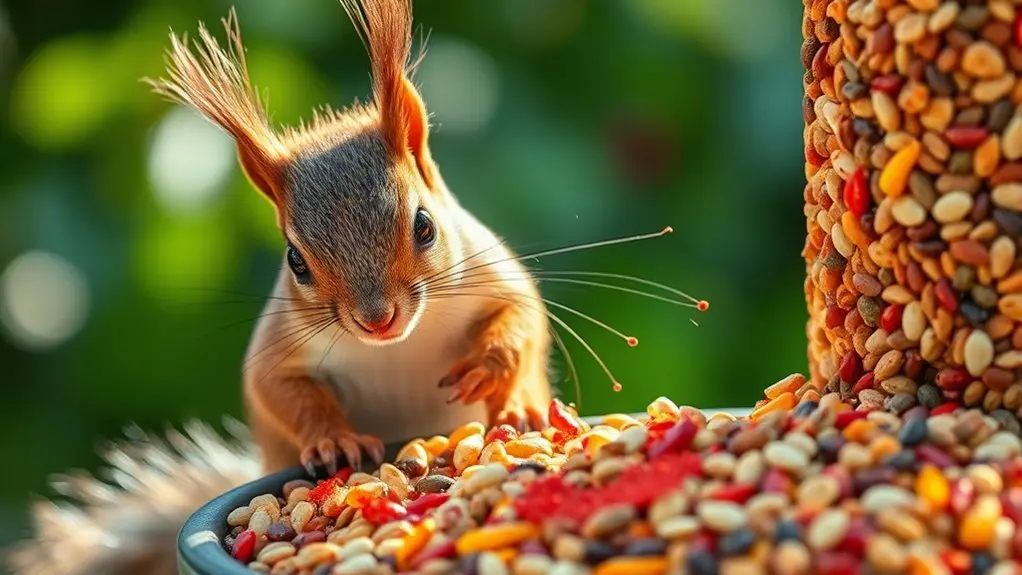
If you want to keep squirrels away from your birdseed, hot pepper bird seeds offer a chemical deterrent based on capsaicin. Mammals find capsaicin irritating, but birds tolerate it well. Capsaicin triggers a burning sensation in mammals, which discourages squirrels from eating treated seeds.
However, effectiveness varies. Some squirrels, especially when they’re really hungry, may still eat the seeds.
Factory-produced hot pepper seeds with higher capsaicin concentrations tend to work better, but they can be expensive and harder to find.
Mixing hot pepper powder into seeds can get messy and poses handling risks, like irritating your eyes.
What Safety Risks Does Loose Chili Powder Pose to Birds?
You should know that loose chili powder can irritate birds’ eyes and respiratory systems, especially if it gets blown around feeders. When birds inhale or accidentally eat those tiny particles, it can cause them discomfort or make them more sensitive.
Eye Irritation Hazards
Although chili powder can deter pests and unwanted animals, its fine particles pose a significant risk of eye irritation to birds when they become airborne around feeders. When loose chili powder disperses, it can directly contact birds’ eyes, leading to discomfort or damage.
You should be aware of these key hazards:
- Airborne particles can cause immediate stinging and irritation upon eye contact.
- Birds may rub their eyes after exposure, potentially worsening injury or inflammation.
- Windy conditions increase the likelihood of powder dispersal, raising exposure risk.
To protect birds, avoid using loose chili powder near feeders or opt for enclosed feeder designs that minimize powder dispersion. These precautions reduce the risk of eye irritation and help keep visiting birds safe.
Respiratory Sensitivity Concerns
Because loose chili powder easily becomes airborne, it can irritate birds’ respiratory systems when inhaled during feeding or handling. Fine particles may cause respiratory distress or discomfort, potentially triggering coughing, sneezing, or labored breathing in sensitive birds.
While evidence indicates that ingesting chili is generally safe for birds, inhaling the dust poses distinct risks that shouldn’t be overlooked. The powder’s small size allows it to penetrate deep into the respiratory tract, leading to inflammation or sensitivity.
You should recognize that respiratory exposure differs fundamentally from ingestion and presents a separate safety concern. Taking measures to minimize airborne dust can help protect birds from respiratory irritation.
Handling Precautions Needed
When handling loose chili powder, you need to take precautions to prevent irritation to birds and yourself. The fine particles can easily become airborne, which can be risky for sensitive bird eyes, respiratory systems, and your skin.
To minimize these risks, follow some essential steps. First, wear gloves to avoid transferring capsaicin to your hands. This can cause discomfort and might spread to birds’ sensitive areas.
Also, keep chili powder and treated seeds away from windy conditions. This helps prevent the powder from dispersing and irritating birds’ eyes and respiratory tracts.
Lastly, avoid direct contact with birds’ eyes and feathers during feeding. This reduces the chance of accidental irritation or ingestion of chili powder.
Just a little care goes a long way!
Does Cayenne Pepper Keep Squirrels Away From Feeders?
You can use cayenne pepper to keep squirrels away from feeders because mammals find capsaicin irritating, but birds don’t seem to mind it at all.
That said, it doesn’t always work perfectly—some squirrels might still go for the treated seeds if they’re really hungry. Also, be careful when applying cayenne powder since it can irritate birds’ eyes if it gets loose.
It’s a good idea to apply it carefully and maybe even install baffles around your feeders for extra protection.
Cayenne Pepper Effectiveness
Although squirrels are notorious for raiding bird feeders, cayenne pepper provides an effective deterrent without harming the birds. Birds lack the receptors sensitive to capsaicin, the active compound in cayenne pepper, so they consume treated seeds without discomfort.
Squirrels, however, find the spicy taste unpleasant and avoid these feeders.
The effectiveness of cayenne pepper relies on three key points: Birds’ limited taste buds prevent them from detecting capsaicin, ensuring their safety. Squirrels’ sensitivity to heat causes them to avoid pepper-coated seeds. Proper application helps maintain pepper presence on seeds, maximizing deterrence.
This natural method offers a practical, safe solution to reduce squirrel interference while allowing birds to feed comfortably. It’s a simple way to keep your feeders squirrel-free without any harm to the birds.
Application Precautions
Since mammals like squirrels find capsaicin unpleasant, cayenne pepper remains a popular choice to deter them from bird feeders. However, you need to apply it carefully. Loose cayenne powder can blow into birds’ eyes, causing irritation.
To prevent this, use bird-safe feeders with baffles or guards that minimize pepper contact with birds’ faces. Pre-treated seed or suet containing capsaicin is a cleaner option, reducing the risk of mess and accidental eye exposure.
Avoid excessive application of loose powder; it may cause discomfort or harm to birds despite their tolerance.
Are Hot Pepper Bird Seeds Worth the Cost?
When deciding whether to purchase hot pepper bird seeds, you should consider both their cost and effectiveness. These seeds contain high capsaicin levels that deter mammals but come with significant drawbacks.
First, the expense: at around $228.85 per 50 pounds, the price is pretty steep for most bird enthusiasts looking for a budget-friendly feeding option.
Then, there’s the handling complexity. You’ll need protective gear and extra precautions, which means more effort and cost compared to traditional seeds.
Also, consumer reports show inconsistent results and difficulties in application, so the efficacy can be hit or miss.
Plus, it can get messy, which reduces the overall value.
Given all this, hot pepper seeds often don’t justify their steep price. You might find investing in squirrel-proof feeders a more cost-effective and reliable way to protect your birdfeed without the extra hassle.
What Are Better Alternatives to Hot Pepper for Squirrel Control?
If you want to protect your birdfeeders from squirrels without the drawbacks of hot pepper treatments, several more effective alternatives exist. Squirrel-proof feeders equipped with baffles and cages physically block squirrels, offering a cleaner, long-term solution.
Using seed cylinders bonded with gelatin or pretreated suet limits loose seeds, reducing attraction without relying on spicy substances.
Seed cylinders bonded with gelatin or pretreated suet minimize loose seeds and reduce squirrel attraction naturally.
Installing metal guards or other physical barriers prevents squirrels from accessing food directly. Additionally, placing feeders away from trees or structures minimizes squirrels’ jumping ability.
Regular cleaning and rotating feeders disrupt squirrels’ learning patterns, decreasing their persistence.
These methods provide scientifically grounded, practical approaches to squirrel control that avoid potential irritation or harm caused by hot pepper applications. This way, you ensure safer feeding environments for birds and less frustration for you.
Frequently Asked Questions
Can Birds Get Any Nutritional Benefits From Eating Chili Peppers?
Yes, birds can gain nutritional benefits from eating chili peppers, including antioxidants and vitamins like vitamin C. These nutrients may support their immune function and overall health.
That said, research on the specific effects is still pretty limited. So, while we know there are benefits, there’s more to learn about how chili peppers really impact birds.
Which Bird Species Are Most Likely to Eat Chili Peppers in the Wild?
You’ll find toucans, thrushes, northern cardinals, and Micronesian Starlings most likely eating chili peppers in the wild. These species tolerate moderate spice levels and often consume ripe peppers, aiding seed dispersal and nutrition.
They play an important role in spreading the seeds, which helps chili plants grow in new places. Plus, these birds get a good boost of nutrition from the peppers. It’s pretty cool how nature works, right?
How Can I Introduce Chili Peppers Safely Into My Pet Bird’s Diet?
You should introduce chili peppers gradually, starting with small amounts of mild varieties like jalapenos.
Keep a close eye on how your bird reacts to the new food. Avoid any additives that might be harmful.
It’s always a good idea to check with an avian veterinarian first. They can help make sure it’s safe and that your bird can handle it before you increase the amount.
Do Birds Prefer Fresh Chili Peppers or Dried Chili Flakes?
Like a seasoned chef choosing spices, birds prefer dried chili flakes over fresh peppers. You’ll find flakes more manageable and potent due to capsaicin concentration, aligning with many species’ natural feeding adaptations and tolerance levels.
It’s kind of like how we pick what works best in the kitchen—birds go for what’s easier to handle and gives them the right kick. Plus, dried flakes last longer and are easier to spread around, making them a favorite snack in the wild.
Can Chili Peppers Affect Bird Behavior or Activity Levels?
Yes, chili peppers can affect bird behavior and activity levels. You’ll notice birds often reduce feeding or avoid very spicy peppers, especially above 500,000 Scoville units. Their aversion varies by species and pepper heat intensity.
Conclusion
Think of chili as a guarded gate. Birds pass through unbothered, while mammals like squirrels hit a fiery barrier. Hot pepper bird seeds can deter unwanted visitors without harming your feathered friends.
But loose chili powder poses risks you don’t want to gamble with. Understanding these differences helps you choose safer, more effective methods for protecting feeders.
Like a well-designed lock, the right approach keeps squirrels out without endangering the birds you want to welcome.