
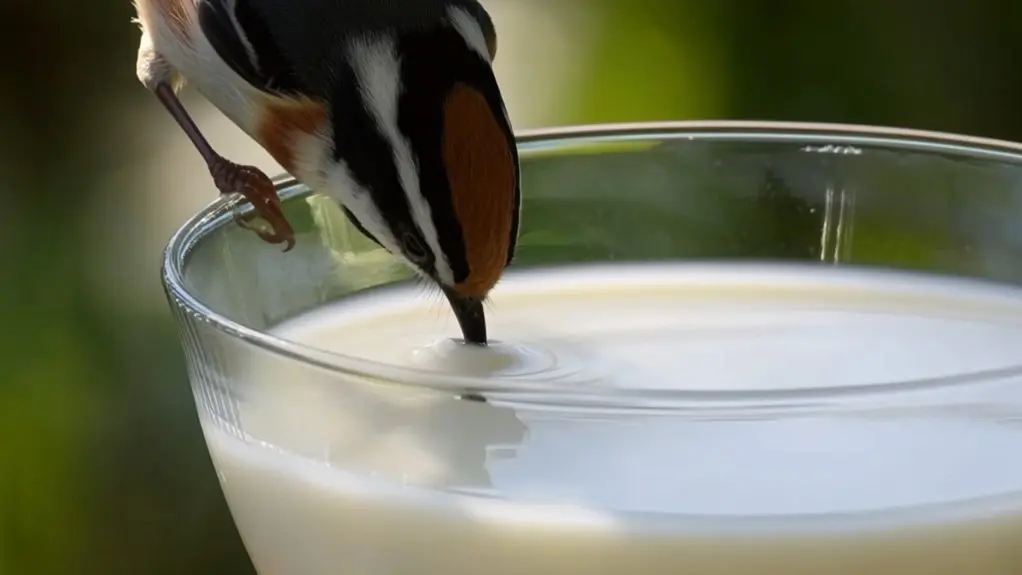
You can offer your bird small amounts of lactose-free milk occasionally, but it’s not an ideal or necessary part of its diet. Birds naturally lack the enzyme to digest dairy, so even lactose-free milk might cause digestive upset if given too much.
Hard cheeses and plain yogurt are safer dairy options in limited quantities. To protect your bird’s health, it’s best to understand proper serving sizes, risks, and alternatives before introducing any dairy treats.
What Is Lactose-Free Milk?
Although you mightn’t be familiar with it, lactose-free milk is simply regular cow’s milk treated with an enzyme that breaks down lactose into glucose and galactose. This process makes it easier to digest for people who are lactose intolerant and can’t properly break down traditional milk sugar.
Despite this modification, lactose-free milk maintains a nutritional profile very similar to regular milk, providing essential nutrients like calcium, vitamin D, and protein.
You’ll find it widely available in most grocery stores, where it serves as a direct substitute for regular milk in cooking, baking, and beverages.
Can Birds Safely Drink Lactose-Free Milk?
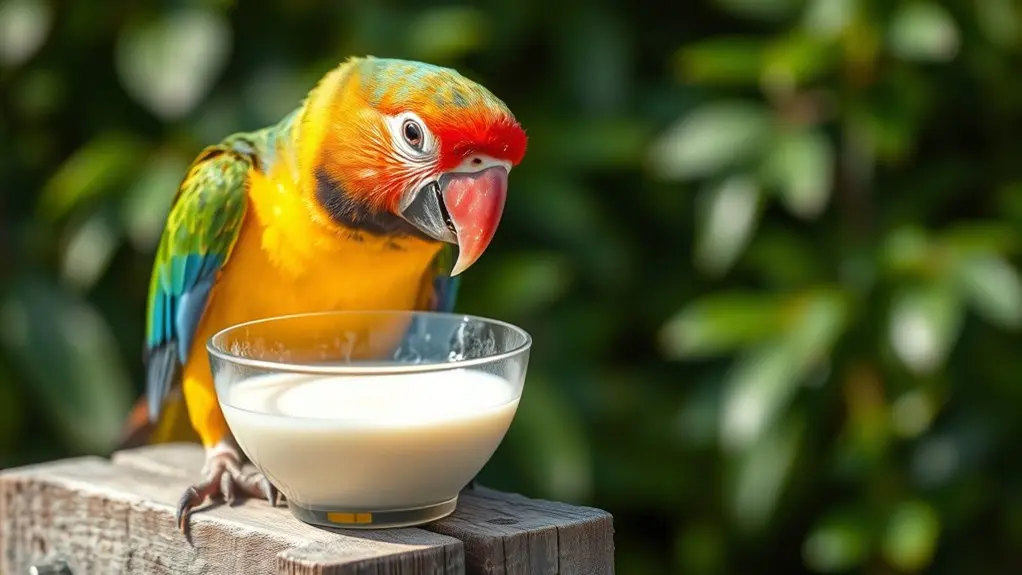
While lactose-free milk eliminates the lactose that often causes digestive issues in birds, it’s important to remember that it should only be given as an occasional treat in small amounts. Even without lactose, the proteins and fats in lactose-free milk may not suit your bird’s diet if overused.
Birds vary in dairy tolerance, so introduce it cautiously and observe any reactions. Always consult an avian veterinarian before offering dairy products to ensure safety.
| Factor | Consideration | Recommendation |
|---|---|---|
| Lactose Content | Absent in lactose-free milk | Safer than regular milk |
| Nutritional Impact | Contains proteins and fats | Limit quantity |
| Bird Tolerance | Varies by species and individual | Introduce gradually |
| Frequency | Occasional treat | Avoid daily use |
| Veterinary Advice | Essential before offering dairy | Always consult first |
How Do Birds Handle Lactose and Lactose-Free Milk?
Because birds naturally lack the enzyme lactase, they struggle to digest lactose found in regular milk. This enzyme breaks down lactose into simpler sugars. But since birds don’t produce it in significant amounts, lactose passes through their digestive system undigested.
Lactose-free milk contains added enzymes that break down lactose, making it easier for mammals to digest. However, these enzymes don’t necessarily benefit birds, as their digestive systems aren’t designed to process dairy products.
While some birds may tolerate small amounts of lactose-free milk, larger quantities can still cause digestive upset.
Since dairy isn’t a natural part of their diet, it’s best to avoid offering lactose or lactose-free milk regularly. If you do provide it, limit it to very occasional, small treats to minimize potential digestive issues.
What Dairy Is Safe for Parrots?
If you want to offer dairy to your parrot, choose products that contain little to no lactose, like certain cheeses and yogurts. Make sure to provide them only in small amounts. Avoid regular milk and commercial lactose-free milk with additives because these can harm your bird.
Always go for whole, unprocessed dairy and use it just as an occasional treat. It’s a good idea to check with an avian vet before you start giving your parrot any dairy.
| Dairy Product | Lactose Content | Parrot Safety |
|---|---|---|
| Hard Cheeses (e.g., cheddar) | Low | Safe in small amounts |
| Plain Yogurt | Low or none | Occasionally safe |
| Lactose-Free Milk | Variable, additives | Not recommended |
How Much Lactose-Free Milk Can You Give Your Bird?
When you decide to offer lactose-free milk to your bird, it’s important to limit the amount to just a small portion, about a teaspoon or less. This small quantity makes sure your bird gets the treat without risking digestive upset or other health issues.
Lactose-free milk has little to no lactose, so it’s safer than regular dairy. But still, it should only be given occasionally, not on a regular basis.
Lactose-free milk contains minimal lactose, making it safer but best offered only occasionally to your bird.
Even though parrots can handle small amounts of dairy, too much milk can cause problems.
Always keep an eye on your bird after giving lactose-free milk to watch for any adverse reactions. If you notice anything unusual or want advice tailored to your bird, it’s best to check with an avian veterinarian.
That way, you can keep your bird’s diet balanced and safe.
Risks of Overfeeding Lactose-Free Milk to Birds
You need to be careful about overfeeding lactose-free milk to your bird. It can mess with their digestive health and lead to nutrient imbalances.
Even though there’s no lactose, some additives in the milk might become harmful if your bird drinks too much.
Potential Toxic Breakdown
Although lactose-free milk eliminates lactose, overfeeding it to birds can still trigger health risks due to preservatives, flavorings, and additives that many products contain. These substances may cause toxicity or metabolic disturbances since birds lack the enzymes to process certain ingredients.
When you offer lactose-free milk, be aware of these potential dangers:
- Additives and sweeteners in the milk can be harmful or toxic to birds.
- Excessive intake disrupts nutritional balance, leading to health complications.
- Preservatives and flavorings may cause adverse metabolic effects.
To protect your bird’s health, avoid regular or large quantities of lactose-free milk. Moderation is essential because overfeeding can result in toxic buildup and serious issues that go beyond lactose intolerance.
Digestive Health Concerns
Since birds have a limited ability to process dairy products, overfeeding lactose-free milk can cause significant digestive health concerns. Even though it’s lactose-free, this milk often contains additives or preservatives that may irritate your bird’s sensitive digestive system.
Excessive consumption can disrupt their natural gut flora, leading to nutritional imbalances and gastrointestinal distress. You might notice symptoms like diarrhea or other digestive upset if your bird consumes too much.
Providing dairy too frequently or in large amounts increases the risk of these complications, despite the milk being lactose-free. To maintain your bird’s digestive health, it’s crucial to recognize that lactose-free milk isn’t free from potential harm when overused.
Moderation is key to preventing these digestive issues and supporting your bird’s overall well-being. So, it’s best to keep an eye on how much lactose-free milk your bird is getting to avoid any tummy troubles.
Safe Serving Limits
When you offer lactose-free milk to your bird, it’s really important to keep the servings small and infrequent. This helps avoid digestive upset and other health risks. Overfeeding can cause diarrhea, mess with their nutritional balance, and even lead to obesity.
Birds have sensitive digestive systems, so even lactose-free milk needs to be given carefully. To make sure you’re serving it safely, just follow these simple guidelines:
- Limit servings to occasional treats instead of daily offerings.
- Use small portions that complement, not replace, a balanced diet.
- Keep an eye on your bird for any signs of digestive discomfort or changes in behavior.
That way, you can treat your feathered friend without any worries!
Alternatives to Lactose-Free Milk for Parrots
When you’re looking for alternatives to lactose-free milk for your parrot, you might want to try small amounts of unsweetened almond, coconut, or oat milk. These options are generally safer.
Just keep in mind, though, that plant-based milks don’t provide all the nutrients your bird needs. So, it’s best to offer them only occasionally.
Also, herbal infusions can be a nice way to add some beneficial nutrients to your parrot’s diet. But before you introduce anything new, it’s always a good idea to check with an avian veterinarian.
They can help make sure whatever you’re giving is safe and healthy for your feathered friend.
Safe Dairy Alternatives
Although lactose-free milk can sometimes be given in small amounts, you’ll find that safer dairy alternatives exist for parrots. Many commercial lactose-free milks contain additives or preservatives that may be harmful.
Instead, consider these safer options to supplement your bird’s diet occasionally:
- Unsweetened almond milk, which is free from additives and low in fat.
- Unsweetened coconut milk, providing healthy fats without lactose.
- Homemade lactose-free milk alternatives made without preservatives or sweeteners.
These options are generally better for your parrot’s health and can be given as treats or supplements now and then.
Just be sure to introduce any new food gradually and watch for any reactions.
Nutritional Plant-Based Options
Beyond lactose-free milk, you can explore a variety of nutritional plant-based options that serve as safe and healthy supplements for your parrot. Unsweetened almond, oat, and coconut milks are generally safe when free of additives and artificial ingredients.
These alternatives are typically lactose-free or contain negligible lactose, making them suitable for parrots sensitive to lactose.
Always choose unflavored versions to avoid harmful sugars and additives. Offer these plant-based milks only occasionally as treats, never as a substitute for a balanced, nutritionally complete diet.
Serve them at room temperature and in small amounts to minimize the risk of digestive upset.
By selecting the right plant-based milks carefully, you can enrich your parrot’s diet safely while respecting their specific dietary needs. It’s a nice way to add a little variety without compromising their health.
Just keep it simple and stick to the basics!
Herbal Infusions For Parrots
Since parrots can be sensitive to dairy alternatives, herbal infusions provide a gentle and natural option to complement their diet. You should select caffeine-free herbs like chamomile, thyme, or basil, which offer mild flavor and potential health benefits.
Serve these infusions at room temperature to avoid digestive upset.
Always strain the infusion and remove any tea bags or herbs to prevent choking hazards. Remember, herbal infusions are best given as occasional treats, not daily staples.
Before introducing them, consult an avian veterinarian to ensure the herbs are safe for your specific parrot.
Keep these three guidelines in mind:
- Use only non-toxic, caffeine-free herbs.
- Serve infusions at room temperature.
- Remove all solid plant material before offering.
Tips for Introducing Lactose-Free Milk and Other New Treats
When you introduce lactose-free milk or any new treat to your bird, start with small amounts to gauge their tolerance and prevent digestive upset. Make certain the milk is unsweetened and free from additives or flavorings that could harm your bird.
Offer it only occasionally rather than regularly to avoid health issues.
Always serve lactose-free milk at room temperature. Remove containers or straws to prevent choking or accidental ingestion of foreign objects.
After offering the treat, closely observe your bird for any adverse reactions like diarrhea or lethargy.
Frequently Asked Questions
Can Baby Birds Drink Lactose-Free Milk?
You shouldn’t give baby birds lactose-free milk because their digestive systems can’t properly handle it.
Instead, feed them specialized bird formula or consult an avian vet to guarantee they get the right nutrients for healthy growth.
This way, you can be sure your little feathered friends are getting exactly what they need to thrive.
Does Lactose-Free Milk Affect Bird Feathers?
You won’t see any change in bird feathers from lactose-free milk, as 90% of feather quality depends on balanced nutrition.
Feeding milk won’t improve or harm feathers directly, so focus on a proper diet instead. It’s really all about giving birds the right nutrients. That’s what makes their feathers look healthy and strong.
Is Lactose-Free Milk Safe for Wild Birds?
Yes, you can offer wild birds lactose-free milk occasionally, as it’s easier for them to digest than regular milk.
However, always prioritize fresh water and avoid making milk their main hydration source to keep them healthy.
It’s a nice treat now and then, but water should always be their go-to drink.
Can Lactose-Free Milk Replace Water for Birds?
You absolutely can’t replace water with lactose-free milk for birds. It’s like trying to fuel a jet with lemonade! Always provide fresh water.
Use lactose-free milk only sparingly as a rare, special treat to keep them healthy.
How Should Lactose-Free Milk Be Stored for Birds?
You should store lactose-free milk in a sealed container and keep it refrigerated between 35-40°F. Make sure it’s away from sunlight and heat to keep it fresh.
Try to use it within 7-10 days after opening. Always check for any signs of spoilage before offering it to your birds. That way, you can be sure it’s safe and tasty for them.
Conclusion
Think of giving your bird lactose-free milk like offering a new song. It might be a gentle tune, but not every bird will dance to it. While lactose-free milk is easier on their digestion, it’s best in small amounts and not a daily staple.
Just like a diverse playlist keeps things fresh, providing varied, bird-safe treats guarantees your feathered friend stays happy and healthy without any digestive hiccups.