
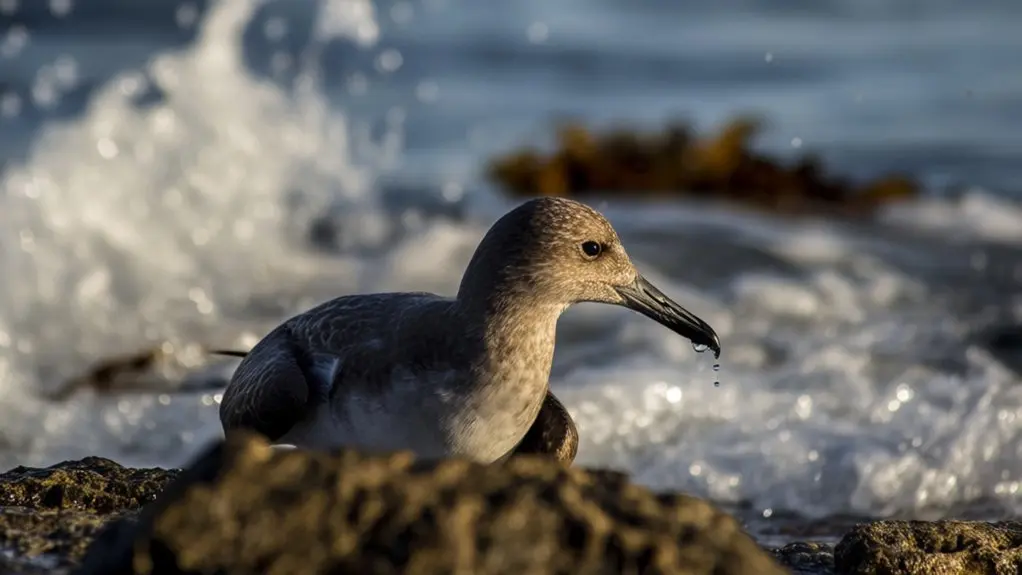
Yes, you can drink salt water only if your body has specialized salt glands that efficiently remove excess salt from your bloodstream, like seabirds do. These glands are located above the eyes and filter salt, expelling it through ducts near the nostrils. This process prevents dehydration.
Land birds usually lack these glands and can be harmed by salt water. It’s pretty interesting to understand how these glands function and vary among species. That’s why seabirds thrive in salty environments, while other birds face challenges.
How Do Seabirds Drink Salt Water Without Harm?
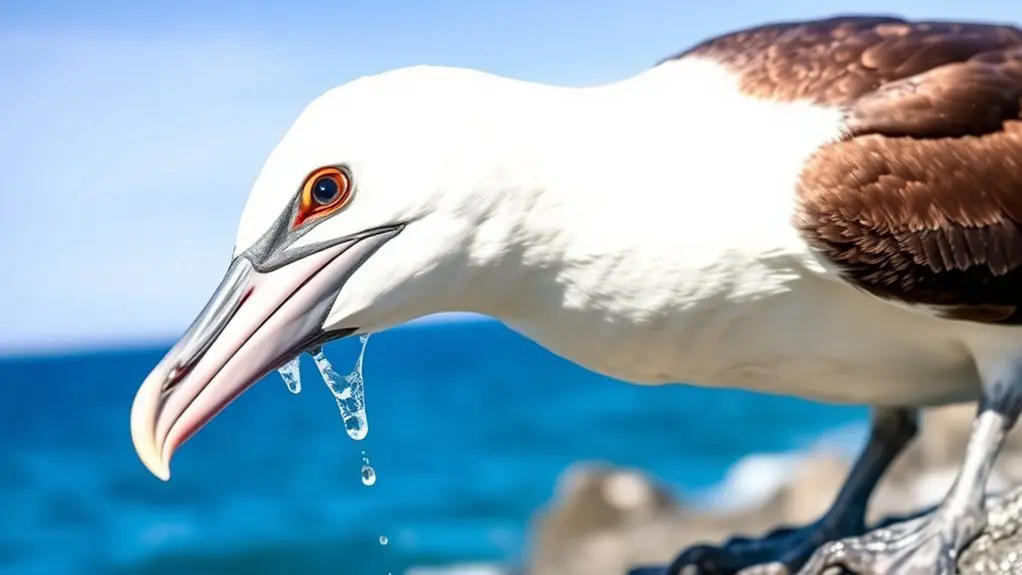
Although seawater contains high salt concentrations that would typically dehydrate most animals, seabirds can safely drink it because they’ve specialized salt glands above their eyes. These glands actively remove excess salt from the bloodstream, preventing harmful buildup.
They produce a highly concentrated saline fluid that travels through ducts leading to the bird’s beak and nostrils.
You’ll often notice salty droplets or a goopy brine coming from their nostrils. It’s a visible sign of salt being expelled.
This efficient system lets seabirds stay properly hydrated and keeps their electrolyte balance in check, even though they’re drinking seawater.
What Are Salt Glands? How Do They Work?
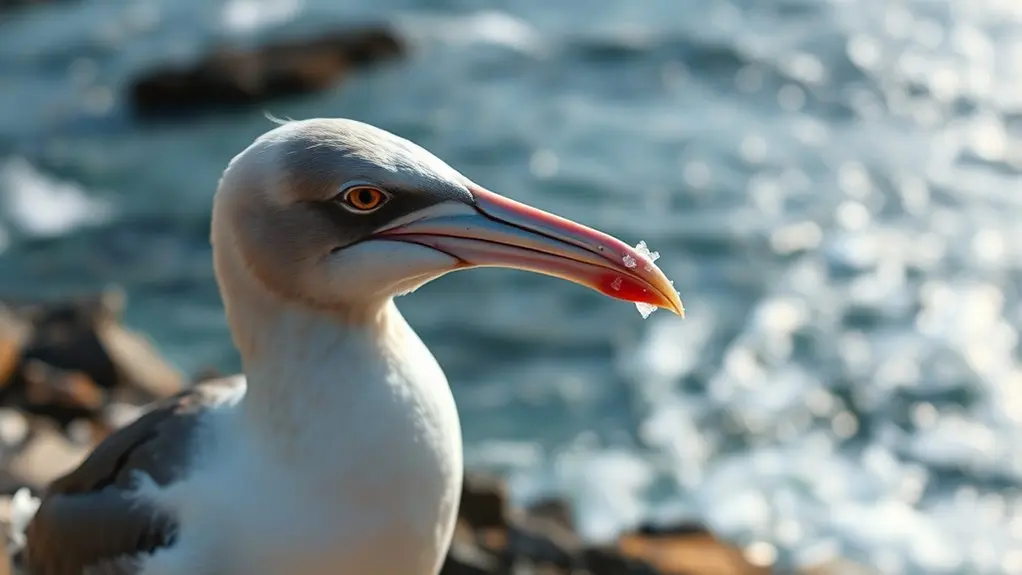
You’ll find salt glands located just above the eyes of seabirds. These glands actively filter excess salt from the bloodstream.
They produce a highly concentrated saline solution that the bird then expels through ducts near the beak and nostrils.
This clever process helps seabirds manage their salt intake efficiently and avoid harmful salt buildup, especially when they drink seawater.
Location Of Salt Glands
Because seabirds ingest large amounts of saltwater, they rely on specialized salt glands located above their eyes to maintain salt balance. These paired glands sit on each side of the head and absorb excess salt from the bloodstream via capillaries.
The glands then actively excrete the concentrated salt solution through ducts that lead to the bird’s beak and nostrils. You can often see this salty fluid dripping from their nostrils or running down grooves on their bills.
It’s pretty fascinating how these birds manage salt levels so well. Seabirds that go on long offshore journeys, like albatrosses and petrels, actually have larger salt glands to handle the extra salt they take in.
Placing the salt glands near the eyes is super smart because it lets the birds efficiently process and get rid of salt. This is really important for seabirds since they live in salty environments and need to keep their bodies balanced.
Salt Gland Function
How do salt glands enable seabirds to survive in their salty environments? Salt glands are specialized organs located above the eyes that remove excess salt from the bloodstream. They absorb salt through capillaries and produce a concentrated brine, which is expelled via ducts in the beak and nostrils.
This mechanism maintains osmotic balance. It allows seabirds to drink seawater without suffering from salt toxicity. Pretty clever, right?
| Feature | Description |
|---|---|
| Location | Above the eyes |
| Function | Excrete excess salt |
| Mechanism | Absorb salt via capillaries, produce brine |
| Excretion Pathway | Ducts in beak and nostrils |
| Species Variation | Larger in long-distance travelers (albatrosses, petrels) |
Salt Excretion Process
Although seawater contains high levels of salt that would be harmful to most animals, seabirds possess salt glands, specialized organs above their eyes. These glands extract and expel this excess salt from their bloodstream.
You should understand the salt excretion process involves three key steps:
- Salt glands absorb surplus salt from the blood via dense capillaries.
- The glands produce a concentrated saline solution.
- This salty fluid is expelled through ducts in the beak and nostrils, often dripping down the bill or released as brine.
Seabirds like albatrosses, which travel far offshore, have larger salt glands to handle greater salt loads. This mechanism enables them to drink seawater while maintaining osmotic balance.
How Are Seabird Salt Glands Different From Land Birds?
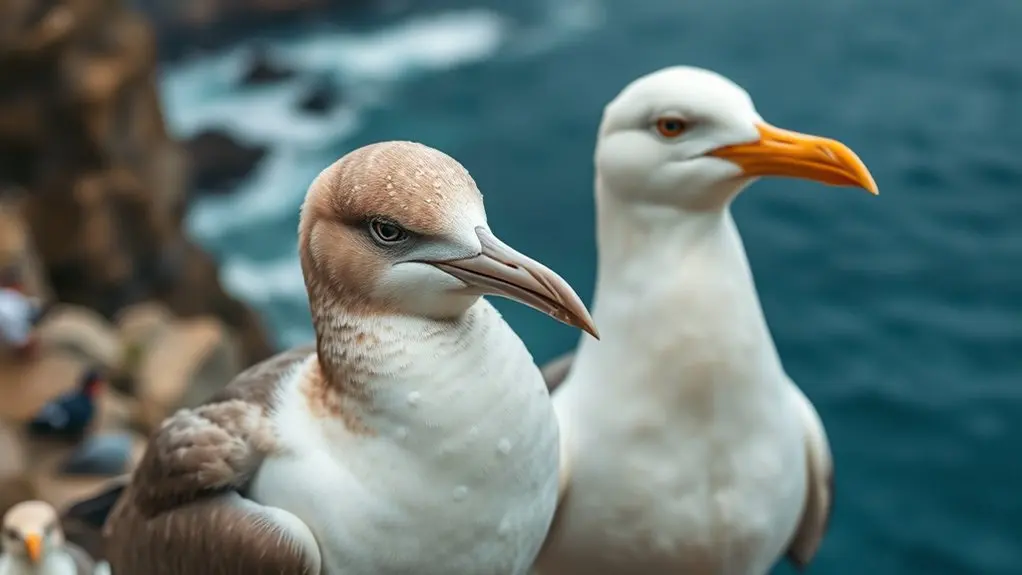
When you compare seabirds to land birds, you’ll notice that seabirds possess larger and more developed salt glands. These glands allow them to efficiently excrete the high salt content they ingest from seawater. They’re located above the eyes and connect to ducts that expel a highly concentrated saline solution through the beak or nostrils.
Seabirds have larger salt glands above their eyes to excrete concentrated salt from seawater efficiently.
In contrast, land birds have smaller salt glands that are adapted to handle only occasional salt intake from salty foods or minimal saltwater exposure. The enhanced size and function of seabird salt glands reflect their marine environment.
This means they can process salt at a rate sufficient to survive solely on seawater without dehydration.
It’s a pretty neat adaptation that clearly separates how seabirds regulate salt compared to terrestrial birds. Their bodies are basically built to handle life in the salty ocean environment.
Which Seabird Species Rely Most on Drinking Salt Water?
Because seawater contains high salt concentrations, only certain seabird species have evolved the ability to rely primarily on drinking it. You’ll find that these seabirds have specialized adaptations enabling them to survive in harsh marine environments without freshwater.
Albatrosses and petrels depend almost entirely on salt water, thanks to their highly efficient salt glands that remove excess salt. Fulmars and shearwaters also drink salt water frequently, utilizing larger salt glands for desalination during extended offshore foraging trips.
Penguins and some gull species primarily consume freshwater but can switch to salt water when necessary. They don’t rely on it exclusively, though. So, while they can handle salt water, it’s not their main source of hydration.
How Do Seabirds Use Salt Glands to Expel Excess Salt?
You’ll find that seabirds have salt glands located just above their eyes, and these glands play a really important role in managing salt intake. Basically, they filter out the extra salt from the bloodstream.
Then, these glands produce a concentrated salty fluid, which doesn’t just stay inside. Instead, it gets expelled through ducts near the beak.
This clever process helps the bird keep its osmotic balance in check.
Salt Gland Location
Where exactly do seabirds handle the challenge of removing excess salt from their bodies? They rely on specialized paired salt glands located above their eyes. These glands perform a vital role in maintaining osmotic balance by filtering and expelling salt.
Here’s how these glands function anatomically: The salt glands absorb excess salt from the bloodstream via dense capillaries. They produce a concentrated saline fluid, which is then transported through ducts. This fluid exits through openings near the bird’s beak and forehead, often visible as nasal drips or tears.
Species like albatrosses and petrels, which set out on long offshore journeys, have larger salt glands to cope with increased salt intake. Understanding this precise location and structure is essential before exploring how salt is excreted.
Salt Excretion Process
Although seabirds consume large amounts of saltwater, their bodies efficiently prevent salt overload by using specialized salt glands located above their eyes. These glands extract excess salt from the bloodstream through dense capillaries, concentrating it into a hypertonic saline solution.
This highly concentrated fluid then travels through ducts leading to the beak and nostrils, where it’s expelled as a thick, salty brine.
Species that set out on extended offshore journeys, like albatrosses and petrels, have larger salt glands to handle greater salt intake. This excretion mechanism effectively keeps their osmotic balance in check.
So, seabirds can safely drink seawater without building up harmful salt levels.
Understanding this process helps explain how seabirds thrive in marine environments where freshwater is hard to come by. It’s pretty fascinating how their bodies are adapted for life at sea!
Why Do Seabirds Need to Drink Salt Water?
Because freshwater sources are often scarce or hard to reach in marine environments, seabirds have adapted to drinking salt water to stay hydrated. This adaptation is super important for their survival.
Seawater provides not just hydration but also essential minerals that seabirds need, especially during long foraging trips. Their specialized salt glands help them get rid of the extra salt efficiently, so they can drink seawater without any harm.
You’ll find that many seabirds, like albatrosses and penguins, depend entirely on salt water since freshwater just isn’t available where they live. It’s pretty amazing how they’ve evolved to handle such tough conditions!
How Might Climate Change Affect Seabirds’ Salt Glands?
As climate change intensifies, seabirds will likely face greater challenges in regulating salt through their specialized glands. Freshwater scarcity, driven by higher temperatures and drought, will increase their reliance on saltwater, placing more demand on salt gland function.
Climate change heightens seabirds’ salt regulation challenges amid freshwater scarcity and increased saltwater reliance.
Rising sea levels and altered ocean salinity can impair the glands’ efficiency in excreting excess salt.
Also, shifts in prey availability and diet composition may change the quantity and type of salt ingested, requiring adjustments in salt gland activity.
Environmental stressors like habitat loss can further compromise gland health and performance.
You should understand that these combined factors could reduce seabirds’ ability to maintain osmotic balance. This might affect their survival and reproduction as climate change progresses.
Do Any Land Birds Drink Salt Water?
While most land birds lack the specialized salt glands necessary to get rid of extra salt, a few coastal or desert species have small salt glands that help them handle limited salt intake. It’s pretty interesting how nature works!
You should keep in mind these key points about land birds and salt water:
- Some species, like sandgrouse, can drink brackish or salty water temporarily, but they mostly rely on fresh water sources.
- Terrestrial birds usually avoid salt water because it can cause dehydration and salt poisoning.
- Unlike seabirds, which have large salt glands, land birds’ smaller glands only offer limited ability to desalinate water.
Frequently Asked Questions
Can Baby Seabirds Drink Salt Water Safely?
Yes, baby seabirds can safely drink salt water because their salt glands develop early, allowing them to efficiently excrete excess salt.
You’ll find this adaptation essential for their hydration and survival in marine environments. It’s pretty cool how nature equips them to handle salty conditions right from the start. So, even as tiny chicks, they’re already set up to live by the sea without getting dehydrated.
How Quickly Do Salt Glands Remove Salt From the Bloodstream?
Think of salt glands as diligent filters, working swiftly to cleanse. They remove salt from the bloodstream within minutes, with full excretion visible shortly after. Often, the process completes in as little as three hours.
It’s pretty impressive how quickly they get the job done. These glands don’t waste time—they keep things moving to keep the body balanced. So next time you think about salt removal, remember it’s a fast and efficient system.
Do Seabirds Get Dehydrated if Salt Glands Fail?
Yes, you’ll find seabirds get dehydrated if their salt glands fail because they can’t remove excess salt from their bloodstream. This causes osmotic imbalance, hypernatremia, and physiological stress.
All of these issues ultimately disrupt hydration and survival. So, without functioning salt glands, seabirds really struggle to stay hydrated.
Can Humans Learn From Seabird Salt Glands for Medical Uses?
You can learn from seabird salt glands, as their efficient salt removal inspires medical advances in treating salt imbalances and developing portable desalination.
Researchers investigate these mechanisms to improve therapies and bioengineered organ designs scientifically.
It’s pretty amazing how nature’s solutions can lead to better health technologies and devices.
Are There Any Birds That Drink Both Fresh and Salt Water Regularly?
Yes, you’ll find seabirds like gulls and pelicans regularly drink both fresh and salt water. Their adaptable salt glands let them switch sources based on availability. This helps ensure they stay hydrated across diverse coastal and island environments.
It’s pretty cool how they manage to thrive in places where fresh water isn’t always easy to find. So, whether it’s a puddle or the ocean, these birds know how to make the most of what’s around.
Conclusion
You might find it surprising, but seabirds have a remarkable adaptation that lets them sip salt water without trouble. Their specialized salt glands efficiently filter out excess salt, allowing them to thrive where freshwater is scarce.
While this ability sets them apart from most land birds, it’s a delicate balance that climate change could unsettle. So, next time you see a seabird, remember it’s expertly equipped for its salty world, not just surviving but flourishing.