
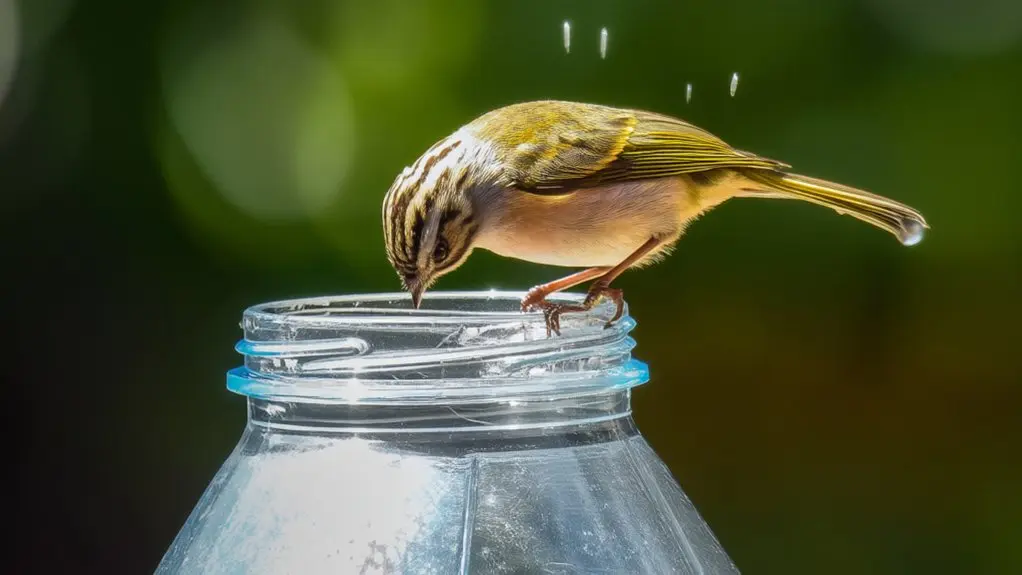
Yes, you can safely hydrate your bird using a water bottle designed for avian use. Choose bottles made from glass or stainless steel with reliable metal or silicone ball mechanisms to control flow and prevent leaks. Use filtered or purified water and clean the bottle daily, focusing on nozzles to avoid bacterial buildup.
Train your bird gradually so it gets comfortable using the bottle. Keep an eye out for any blockages or signs of health issues while it drinks. Following these best practices will help make sure your bird stays well-hydrated and healthy.
Choosing the Best Water Bottle for Your Bird
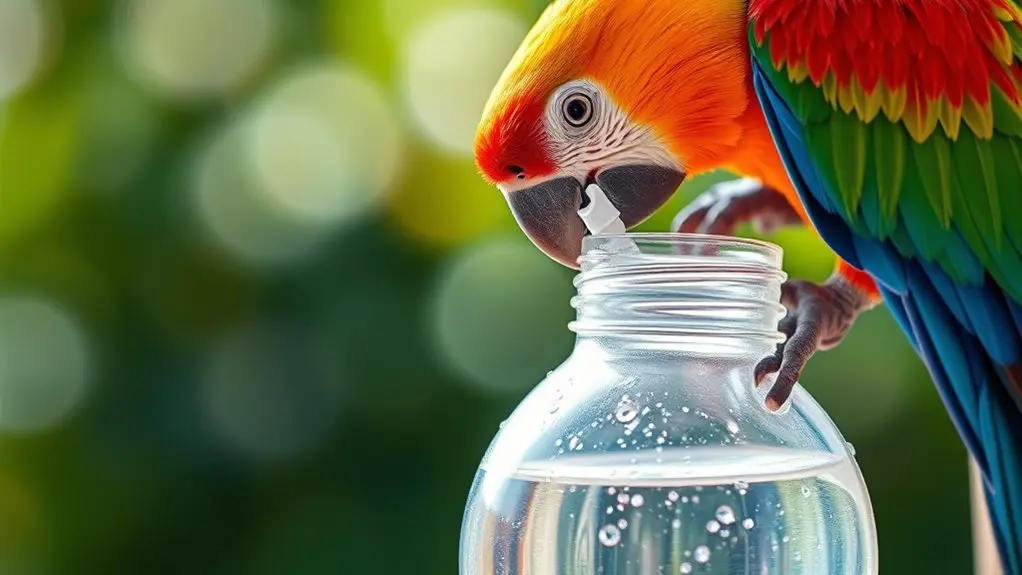
When selecting a water bottle for your bird, you should prioritize materials like high-quality glass or stainless steel to guarantee durability and avoid harmful chemical leaching from plastics.
Choose a bottle size that fits your bird’s size and drinking habits. Make sure it provides easy access without taking up too much cage space.
Select a water bottle sized perfectly for your bird’s needs, ensuring easy access and efficient use of cage space.
Opt for bottles featuring a metal or silicone ball mechanism. These reduce leakage and let you control water flow efficiently.
It’s essential to clean and sterilize the bottle regularly. Pay close attention to the nozzle and tube to prevent bacterial buildup.
Also, pick a bottle with clear, visible water level indicators. This way, you can easily monitor your bird’s hydration and quickly spot any leaks or malfunctions.
It really helps keep your bird happy and healthy!
What Water Is Safest to Use in Bird Water Bottles
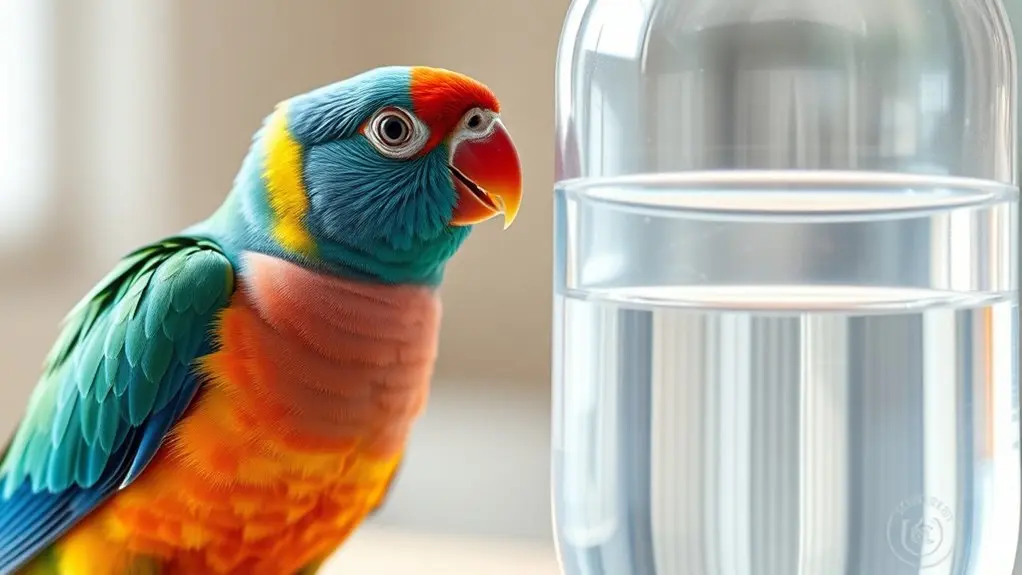
Selecting the right water bottle is only part of keeping your bird well-hydrated; the quality of the water you provide plays an equally important role. Filtered or purified water, such as reverse osmosis or carbon-filtered water, is safest because it removes chlorine, chloramine, heavy metals, and contaminants.
Spring water without additives can be a natural alternative but should be tested for purity. Avoid using untreated tap water, as it often contains chemicals harmful to birds. Make sure to filter or treat it before use.
Boiling water bottles monthly helps eliminate bacteria and prevents mineral or mold buildup.
Distilled water lacks essential minerals, so avoid it for daily hydration unless you supplement with mineral drops. Prioritize clean, safe water to maintain your bird’s health effectively.
How to Train Your Bird to Use a Water Bottle
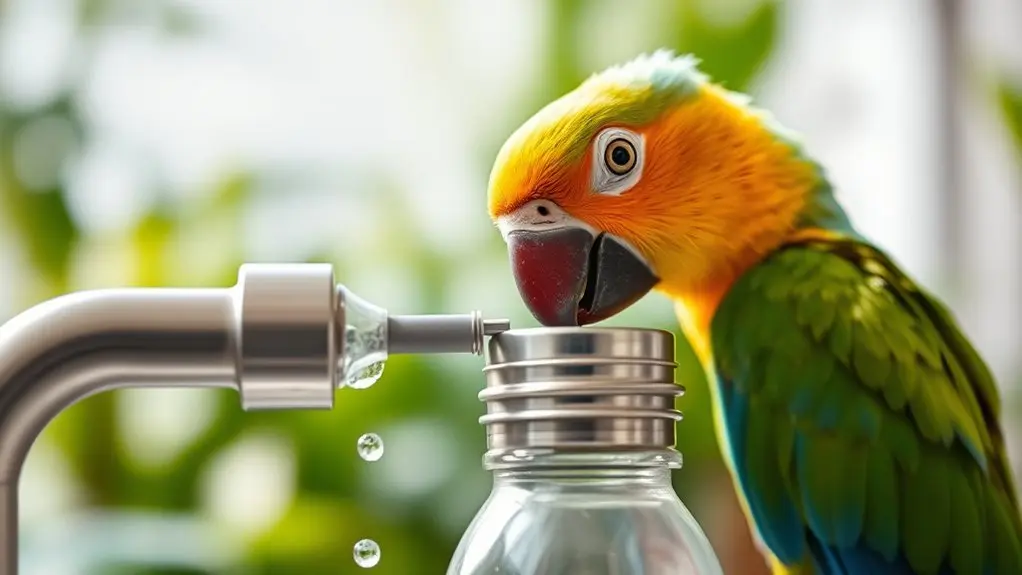
Although birds may initially hesitate, you can successfully train your bird to use a water bottle by introducing it gradually and demonstrating how the ball mechanism releases water. Start by securing the bottle on the cage at a comfortable height to reduce intimidation.
Use gentle taps or touch the ball to show your bird how it works, rewarding any interaction with praise or treats.
At first, offer water in a dish to confirm your bird’s thirst and help them associate water availability with the new bottle.
Watch your bird closely during this process, and remember to be patient and consistent. It might take some time, but don’t get discouraged.
With regular reinforcement and encouragement, your bird will learn to use the water bottle comfortably and independently. Just keep at it, and soon enough, your feathered friend will be a pro!
How Birds Safely Drink From Water Bottles
To make sure your bird drinks safely from a water bottle, start by positioning it right at beak level. This makes it easy for your feathered friend to reach.
Then, introduce the bottle slowly and show your bird how it works — clear demonstrations really help.
You’ll want to train your bird gently, encouraging natural behaviors like pecking or licking the nozzle. Don’t rush it; patience is key here.
Also, remember to clean and check the bottle regularly. Keeping the water fresh and the bottle spotless is super important for your bird’s health.
Proper Bottle Usage
When you introduce a water bottle to your bird, it’s important to secure it at the right height and make certain the ball mechanism operates smoothly. This guarantees your bird can access water comfortably and safely.
To promote proper bottle usage, keep these key points in mind:
- Position the bottle so your bird can reach the nozzle without stretching or straining.
- Check regularly that the ball valve moves freely and water flow is steady to prevent frustration or dehydration.
- Offer a water dish alongside the bottle during changeover to reduce stress and encourage exploration.
Training Birds To Drink
Since birds may not instinctively know how to use a water bottle, you’ll need to guide them through the process carefully. Begin by demonstrating how the ball mechanism releases water and gently encourage your bird to peck at it.
Secure the bottle at eye level inside the cage to help them associate it with drinking.
Use positive reinforcement like praise or treats when your bird interacts with the bottle to build confidence.
Gradually increase their exposure, making sure they can operate the ball or nozzle independently.
Observe your bird regularly during training to confirm they’re drinking safely and to prevent habits like excessive pecking or biting.
This approach guarantees your bird adapts to water bottles comfortably and safely.
Common Water Bottle Problems and How to Fix Them
Although water bottles offer a convenient way to keep your birds hydrated, they can develop common issues such as blockages, leaks, and bacterial buildup. To keep your bird’s water source safe and functional, watch for these problems and take prompt action.
1. Blockages
Clean the tube and ball mechanism regularly to remove mineral deposits and debris that can stop water flow.
2. Leaks
Check for cracks or a loose cap. Replace worn ball bearings to prevent dripping or water loss.
3. Bacterial buildup
Change water daily and sanitize the bottle frequently to avoid clogs and health risks. It’s a simple step that really helps keep your bird healthy.
Water Bottles vs. Water Dishes: Which Is Better for Birds?
Deciding between water bottles and water dishes depends largely on your bird’s preferences and your ability to keep things clean. Many birds prefer water dishes because they let them do natural things like dunking and bathing, which bottles just don’t support.
That said, water bottles usually stay cleaner and cut down on bacteria since they keep dirt and debris out. But bottles can be tricky to maintain because you have to watch out for blockages and leaks.
Think about how your bird drinks and interacts with water, and how often you’re willing to clean.
If your bird loves bathing, a water dish might be the way to go. But if keeping things hygienic is your top priority and your bird is okay with it, a water bottle can be safer.
Finding the right balance helps make sure your bird stays hydrated and healthy.
How Often to Clean and Refill Your Bird’s Water Bottle
To keep your bird healthy and hydrated, you need to clean and refill its water bottle at least once every 24 to 48 hours. This routine prevents bacterial growth and keeps the water fresh.
Clean and refill your bird’s water bottle every 24 to 48 hours to ensure freshness and prevent bacteria.
Follow these key steps:
- Scrub the bottle thoroughly with a brush and use a safe disinfectant, like a diluted bleach solution, then rinse well.
- Refill the bottle with fresh, filtered, or mineralized water to ensure clean drinking water.
- Increase cleaning and refilling frequency during hot weather or if your bird is particularly active.
Consistent maintenance also prevents blockages and leaks, making sure your bird always has access to safe water.
Signs Your Bird Isn’T Drinking Enough From Its Water Bottle
If your bird hasn’t drunk from its water bottle for over 24 hours, you need to pay close attention. A decrease in water intake can quickly lead to dehydration, which you might notice through signs like lethargy, fluffed feathers, or fewer droppings.
If your bird repeatedly avoids the water bottle, it may be uncomfortable or not getting enough fluids. Physically, a dry or sunken crest is an early warning sign.
Behaviorally, increased sleep, reduced activity, or reluctance to move suggest dehydration.
Monitoring these indicators helps you act promptly to guarantee your bird’s health. If you spot any of these signs, consult a veterinarian to prevent serious complications and keep your bird hydrated and healthy.
Tips for Keeping Your Bird’s Water Fresh and Bacteria-Free
Although keeping your bird’s water bottle clean might seem straightforward, it requires consistent attention to prevent bacterial growth and guarantee your bird stays healthy. You’ll want to follow these essential steps:
First, clean and disinfect the bottle daily using a bottle brush and a mild bleach solution. This helps eliminate bacteria and biofilm buildup, which can be harmful to your bird.
Daily cleaning with a bottle brush and mild bleach removes harmful bacteria and biofilm buildup.
Replace the water at least once every 24 hours, especially in warm conditions. This keeps the water fresh and minimizes bacterial growth.
Try to use filtered or purified water to reduce contaminants that encourage bacterial growth.
Also, regularly check the bottle and nozzle for mold or blockages. Replace parts as needed to keep everything working smoothly.
Frequently Asked Questions
Can Wild Birds Drink From Human Water Bottles?
Wild birds can drink from human water bottles, but you really shouldn’t rely on this. The narrow spout and potential contaminants make it unsafe for them.
Instead, it’s better to provide clean, natural water sources like birdbaths. This way, you’re helping keep them healthy and happy. It’s a small change that makes a big difference!
Do Water Bottles Affect a Bird’s Hydration Compared to Natural Sources?
When it comes to hydration, water bottles can be a double-edged sword. They offer cleaner water, which is a big plus. But if you neglect maintenance, things can go downhill quickly.
Birds might miss out on the benefits of natural water sources if their bottles aren’t kept clean. This can affect their overall drinking habits and health. So, it’s really about finding the right balance.
Are There Specific Bird Species That Dislike Water Bottles?
Yes, you’ll find cockatiels, budgerigars, and waterfowl often dislike water bottles because they prefer open dishes for easy drinking and bathing. Birds with larger beaks or shy temperaments may also avoid water bottles altogether.
It’s just that open dishes feel more natural and accessible to them. So, if you notice your bird hesitating around a water bottle, it might be their preference showing. Switching to an open dish could make all the difference.
Can Water Bottles Cause Behavioral Changes in Pet Birds?
You’ll notice frustration, anxiety, and behavioral changes if your bird struggles with a water bottle’s mechanism or leaks. You might see decreased drinking, increased stress, and altered activity levels.
Is It Safe to Use Flavored or Vitamin-Enhanced Water in Bottles?
You shouldn’t use flavored or vitamin-enhanced water for your bird. These contain additives and artificial ingredients that can harm their health.
Always provide fresh, plain water to guarantee your bird stays safe and hydrated properly. It’s really the best way to keep them healthy and happy.
Conclusion
Picture your bird sipping clean, fresh water from a well-maintained bottle, its feathers gleaming with health. By choosing the right water bottle, using safe water, and keeping it spotless, you guarantee your feathered friend stays hydrated and happy.
Remember, consistent cleaning and proper training make all the difference. With these simple steps, you’re not just offering water, you’re providing an essential source of life and comfort for your bird every day.