
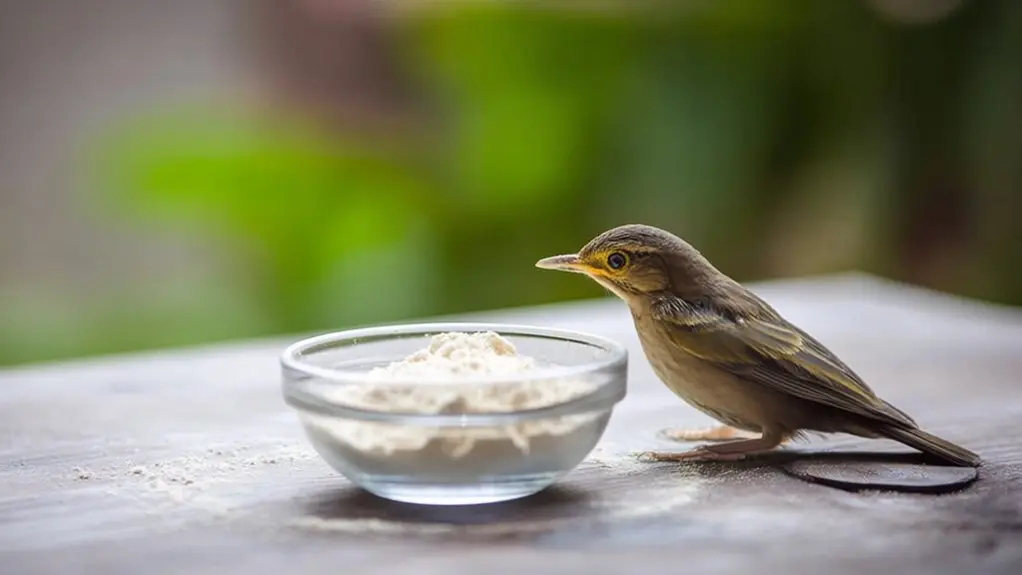
Yes, you can safely offer almond flour to your bird in moderation, but make certain it’s plain, unsalted, and free from additives. Introduce it gradually to monitor for any digestive or allergic reactions.
Almond flour provides healthy fats, protein, and essential nutrients that support your bird’s health. But excessive feeding can cause issues, so keep portions small.
Proper storage and cautious feeding are key. Explore how to optimize its use and guarantee your bird’s safety effectively.
What Is Almond Flour?
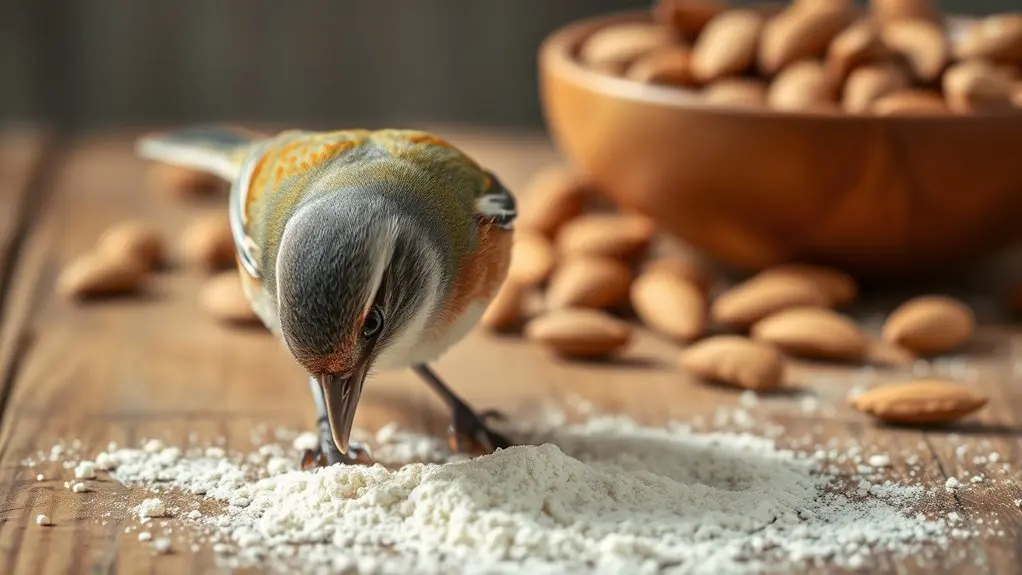
Although almond flour might look similar to traditional wheat flour, it’s made by grinding blanched almonds into a fine, powdery texture.
Almond flour resembles wheat flour but is crafted by finely grinding blanched almonds.
You’ll find it naturally gluten-free, packed with healthy fats, vitamin E, and calcium. Its slightly nutty flavor distinguishes it from wheat flour, making it popular in paleo, keto, and low-carb recipes where conventional flour isn’t suitable.
Since it contains the oils from almonds, you need to store almond flour properly in an airtight container, away from heat and light to prevent it from becoming rancid.
When you use almond flour, you’re incorporating a nutrient-dense alternative that offers both texture and flavor benefits. It’s especially valuable in specialized diets requiring gluten-free or low-carbohydrate ingredients.
Can Birds Safely Eat Almond Flour?
When you consider adding almond flour to your bird’s diet, it’s important to recognize that this finely ground form of almonds is safe for birds to consume in moderation. Almond flour contains healthy fats, vitamin E, and calcium, all beneficial nutrients when offered sparingly.
Just make sure the almond flour you choose is plain, unsalted, and free from sugars or artificial additives, as these can cause health issues. Because it’s high in fat, overfeeding almond flour can lead to weight gain or digestive problems.
To prevent choking and help with consumption, especially in small or weak-beaked birds, try mixing almond flour into other treats or chop it finely.
Nutritional Benefits of Almond Flour for Birds
You’ll find almond flour packed with healthy fats, vitamin E, calcium, protein, and magnesium. These nutrients are all essential for your bird’s health.
Plus, they help support things like feather quality, bone strength, immune function, and skin condition.
Adding almond flour in moderation can really boost your bird’s diet with balanced nutrition. It’s a simple way to give your feathered friend some extra goodness!
Nutrient Profile Overview
Almond flour contains several key nutrients that can support your bird’s health, including healthy monounsaturated fats, vitamin E, calcium, and magnesium. It also offers a notable amount of protein and fiber, which promote muscle maintenance and aid digestive function.
Because it’s a natural, minimally processed product, almond flour provides these nutrients without added sugars or artificial components. This nutrient profile helps enhance immune response and feather quality when almond flour is part of a balanced diet.
However, due to its high nutrient density and fat content, you should feed almond flour cautiously to avoid excess calorie intake. Too many calories can lead to obesity or other health complications.
Health Benefits Summary
Although birds require a varied diet to thrive, incorporating almond flour can enhance their nutrition considerably. Almond flour supplies healthy fats, vitamin E, calcium, magnesium, and zinc, all essential for feather health, immune support, bone strength, metabolic functions, and reproduction.
Its high protein and essential amino acids promote muscle development and vitality. Additionally, antioxidants in almond flour help reduce inflammation and improve skin condition. Offering it in moderation guarantees balanced nutrition without overfeeding.
| Nutrient | Benefit | Bird Health Impact |
|---|---|---|
| Vitamin E | Antioxidant | Enhances immune function |
| Protein | Muscle building | Supports strength and vitality |
| Calcium, Zinc | Bone and metabolic support | Promotes strong bones and metabolism |
Almond Flour Risks and Safety Precautions
When you’re feeding almond flour to your bird, keep in mind that large particles can be a choking hazard. So, it’s best to offer finely ground, plain almond flour without any salt or additives.
Also, avoid salted almonds because too much sodium can be harmful to your feathered friend.
Make sure to use safe preparation methods to keep the flour fresh and free from any contaminants. This way, you’re helping to protect your bird’s health every step of the way.
Choking Hazard Risks
Since small birds have delicate airways and limited ability to manage dry, finely ground substances, feeding them almond flour requires careful attention to prevent choking hazards. Almond flour’s fine texture increases the risk of inhalation or aspiration if birds eat large amounts rapidly.
You can reduce choking risks by mixing almond flour with soft foods and offering small portions. It’s also good to watch your bird’s beak size and strength because larger birds handle almond flour better than tiny species.
Always supervise feeding new foods so you can catch any signs of distress immediately.
| Risk Factor | Mitigation Strategy |
|---|---|
| Fine powder texture | Mix with soft foods |
| Large quantities | Offer small, manageable amounts |
| Small bird species | Supervise closely during feeding |
Avoid Salted Almonds
Managing the type of almond flour you offer is just as important as controlling portion size and texture. You should avoid salted almonds because added sodium poses significant health risks to birds. Excess salt intake can cause dehydration, kidney damage, and other serious complications.
To keep your bird safe, always select plain, unsalted almond flour. Many flavored or seasoned almond products contain artificial additives that aren’t suitable for avian consumption. Removing salt or choosing unsalted options prevents potential health hazards.
Safe Preparation Methods
Although almond flour offers nutritional benefits like healthy fats and vitamin E, you should prepare it carefully to guarantee your bird’s safety. Almond flour is safe when given in moderation, but improper preparation can lead to health risks.
To ensure safety, use plain almond flour without added sugars, salt, or flavorings. Serve it in small amounts or mix it into other safe foods to prevent choking.
Also, avoid stale, rancid, or mold-contaminated almond flour to prevent toxicity.
Introduce it gradually and keep an eye on your bird for any digestive upset or allergic reactions.
Signs of Almond Flour Reactions in Birds
When your bird consumes almond flour, it may show signs of allergic or digestive reactions, especially if it has a sensitivity to nuts. Watch for symptoms like vomiting, diarrhea, lethargy, or itching around the beak and eyes.
Birds eating almond flour might show allergic or digestive symptoms like vomiting, diarrhea, or itching around the beak and eyes.
Some birds might develop swelling or have difficulty breathing, which can mean a severe allergic response.
That kind of reaction needs immediate veterinary care. Not all birds react right away; sometimes repeated or high intake can trigger symptoms over time.
So, it’s really important to keep a close eye on your bird after you introduce almond flour.
Catching these signs early can help prevent more serious health issues and keep your bird safe. If you notice anything worrying, stop giving almond flour and check with your avian vet as soon as you can.
Recommended Almond Flour Feeding Amounts
Noticing how your bird reacts to almond flour helps you figure out the right feeding amount to keep it safe and healthy. Almond flour should be given sparingly as a treat, not as a staple.
Small birds require roughly a quarter teaspoon or less per feeding, while larger parrots can handle up to a teaspoon.
Overfeeding raises the risk of excess fat intake and related health issues. So, keep an eye on your bird and adjust portions as needed.
Feed almond flour no more than a few times weekly. Use about a pinch for small birds, and up to a teaspoon for larger species.
It’s a good idea to balance almond flour with other nutritious ingredients in homemade treats.
Also, watch for any digestive discomfort or weight changes after feeding. This approach helps maintain nutritional balance and supports your bird’s well-being.
Introducing Almond Flour to Your Bird’s Diet
Since almond flour offers beneficial nutrients like healthy fats, protein, and vitamin E, you can safely introduce it to your bird’s diet in moderation. Begin by selecting plain, unsweetened almond flour without added salts or flavorings to avoid harmful additives.
Offer small amounts initially to prevent excess calorie intake, as almond flour is nutrient-dense.
Keep an eye on your bird for any adverse reactions such as digestive upset or changes in behavior during the first feedings. If you notice any issues, stop giving almond flour and consult an avian veterinarian right away.
Gradually adding almond flour lets you see how well your bird tolerates it while still giving nutritional benefits.
Best Ways to Use Almond Flour in Bird Treats
After confirming your bird tolerates almond flour well, you can start incorporating it into homemade treats. This will provide additional nutrients like healthy fats, vitamin E, and calcium. Just make sure to use plain, unsalted almond flour without any additives to keep things safe.
For balanced nutrition, it’s a good idea to combine almond flour with other bird-safe flours or ingredients. And remember, always serve these treats in moderation to avoid overfeeding fats and calories.
Here are some best practices when using almond flour in bird treats:
- Mix almond flour with oat or millet flour for texture and nutrient variety.
- Avoid adding sugar, salt, or artificial flavorings.
- Form small, bite-sized treats that suit your bird’s species.
- Bake or dehydrate treats at low temperatures to keep nutrients intact.
Following these steps will help you create safe, nutritious snacks that support your bird’s health effectively.
Storing Almond Flour Safely for Birds
Although almond flour offers valuable nutrients for your bird, improper storage can quickly degrade its quality and safety. To protect it, store almond flour in an airtight container that prevents moisture, pests, and air exposure. These elements can speed up rancidity.
Keep the container in a cool, dry place away from direct sunlight to preserve freshness. If you want to store it longer, refrigerate or freeze the almond flour. This slows down oxidation and spoilage.
Before feeding your bird, always check the flour for signs of spoilage like off smells, mold, or discoloration. When properly sealed and stored, almond flour can last several months.
Still, it’s a good idea to routinely verify its freshness to keep your bird healthy and safe.
Frequently Asked Questions
Can Almond Flour Replace Birdseed in a Bird’s Diet?
You shouldn’t replace birdseed with almond flour since it lacks essential nutrients birds need. Use almond flour only occasionally as a supplement, ensuring their diet remains balanced and provides all necessary vitamins, minerals, and energy sources.
It’s really important to keep their meals nutritious. So, stick with birdseed as the main food and think of almond flour as just a little extra treat now and then. That way, your feathered friends stay happy and healthy!
Is Almond Flour Suitable for All Bird Species?
No, almond flour isn’t suitable for all bird species. You should avoid it for smaller birds and those with health issues.
Introduce it gradually, monitor reactions, and make sure it complements a balanced diet rather than replaces it.
How Does Almond Flour Compare to Other Nut Flours for Birds?
Think of almond flour as a nutrient-rich river, flowing with healthy fats and vitamin E, unlike chickpea or quinoa flours. You’ll want to use it sparingly, balancing benefits with potential weight risks for your bird.
It’s all about moderation here. Almond flour can be great, but too much might lead to extra weight. So, keeping an eye on portion sizes is key.
Can Wild Birds Find Almond Flour Naturally in Their Habitat?
No, wild birds can’t find almond flour naturally in their habitat because it’s a processed product made by humans. They typically encounter whole nuts, seeds, and natural foods, not finely ground flours like almond flour.
Does Almond Flour Affect Bird Feather Quality or Color?
Coincidentally, almond flour doesn’t affect your bird’s feather quality or color when fed moderately. You’ll find its healthy fats support feather health, but overfeeding might impact condition, so balance it within their diet carefully.
Just keep in mind, moderation is key here. Too much almond flour could cause issues, so it’s best to mix it with other nutrients. This way, your bird gets a well-rounded diet that keeps feathers looking great.
Conclusion
Think of almond flour as a delicate ingredient in your bird’s dietary symphony. It can add beneficial nutrients when used wisely. You can safely offer it in small, controlled amounts, but always watch for any adverse reactions.
Introduce almond flour gradually and store it properly. This way, your feathered friend enjoys its benefits without risk.
By following these guidelines, you’ll create a balanced, safe addition to your bird’s nutrition. It’s a great way to enhance their health thoughtfully and precisely.