
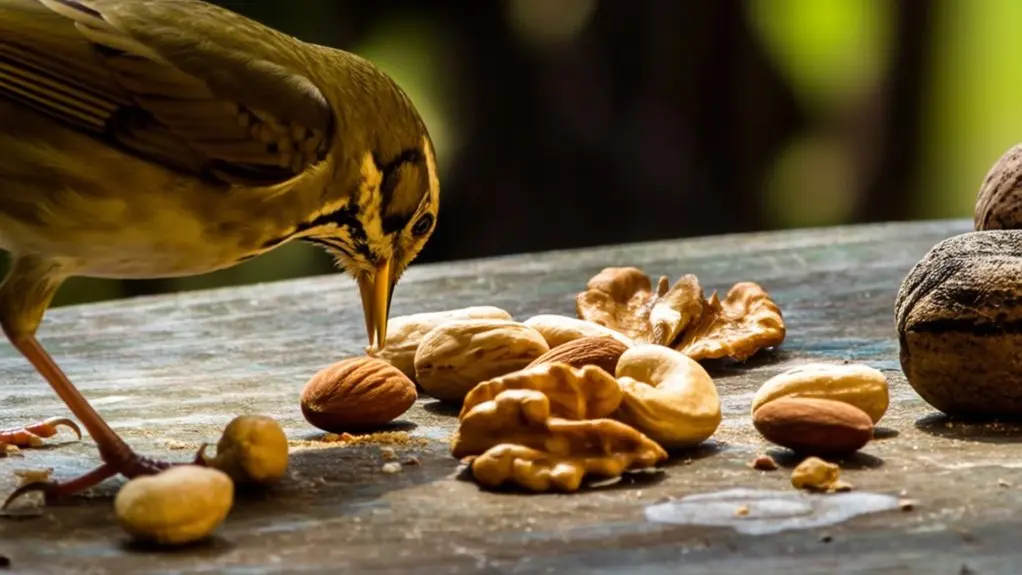
You can safely feed many birds unsalted, raw, or dry-roasted nuts like almonds, walnuts, pecans, and peanuts without shells. Avoid nuts with added salt, flavorings, or mold because they can harm birds. Some species crack whole nuts, while smaller ones prefer chopped or shelled options to prevent choking.
Nuts provide essential fats and energy, especially in winter. To support healthy foraging, proper preparation and feeder choice are key. It’s worth exploring how to optimize feeding for diverse nut-eating birds.
Why Nuts Matter to Birds
Although birds consume a variety of foods, nuts play a crucial role in their diet by providing high levels of fats and calories essential for energy during migration and cold months.
Nuts offer vital fats and calories, fueling birds through migration and the cold season.
When you offer whole nuts, either shelled or unshelled, you enable birds like blue jays, woodpeckers, and chickadees to cache and store food efficiently. This behavior supports their survival by ensuring a reliable energy source when conditions worsen.
Nut consumption also promotes natural behaviors such as foraging and seed dispersal, which contribute to habitat maintenance and regeneration.
For resident winter birds, nuts supply critical nutrients that sustain health and energy levels, helping them prepare for harsher environments.
Which Nuts Are Safe for Birds (And Which to Avoid)
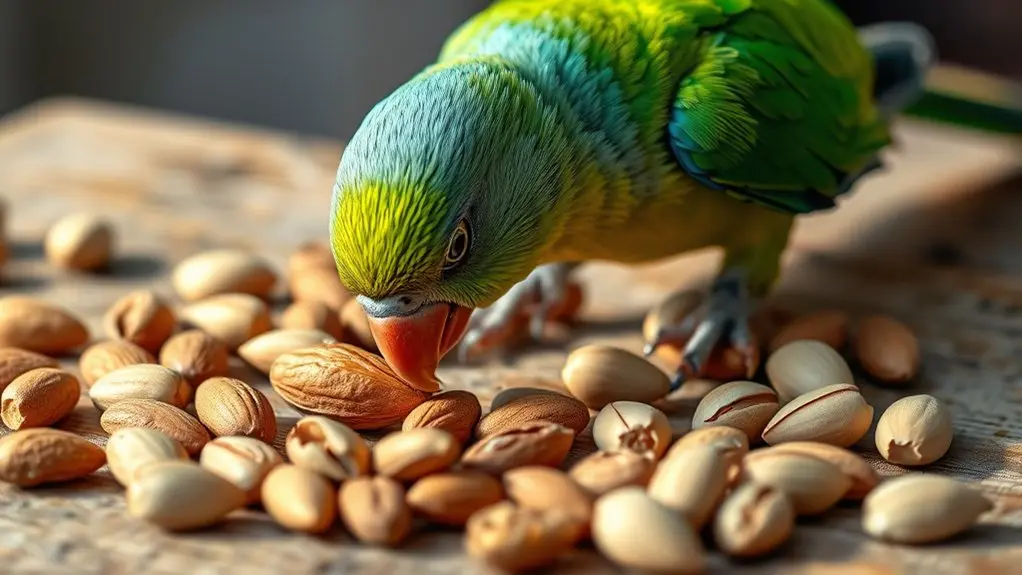
You should offer birds unsalted, unflavored nuts like almonds, walnuts, and cashews to keep things safe. Just make sure to avoid any nuts that have added salt, oil, sugar, or seasonings.
Also, steer clear of raw peanuts because they can carry aflatoxin, which is harmful.
And one more thing—always toss out any nuts that look moldy or discolored. It’s also a good idea to pick nuts with shells that match your bird’s beak strength, so they can handle them easily.
Safe Nut Varieties
Which nuts can you safely offer to birds without risking their health? You should provide unsalted, raw, or dry-roasted nuts like almonds, walnuts, pecans, and pine nuts.
Peanuts are safe if unsalted and shell-less, preferably dry-roasted rather than raw to reduce aflatoxin risk.
Brazil nuts and cashews are appropriate in moderation. Just make sure cashews are unsalted and shell-less to avoid choking hazards.
Avoid any nuts with added seasonings, coatings, or preservatives because these may contain harmful substances or artificial flavors.
Always inspect nuts before feeding. Discard any moldy, discolored, or spoiled ones since mold produces toxins dangerous to birds.
Nuts To Avoid
When feeding birds, it’s crucial to avoid nuts that pose health risks, such as raw peanuts, which can harbor aflatoxins, potent toxins harmful to avian species.
You should also steer clear of nuts that are salted, flavored, honey-roasted, or oil-roasted. These additives can be toxic or cause digestive issues.
Nuts coated with seasonings or preservatives may lead to health complications and aren’t suitable for birds.
Additionally, moldy or discolored nuts must never be offered since fungal contamination can cause severe illness.
To guarantee your birds’ safety, provide only fresh, unseasoned, and untreated nuts.
Bird Species That Eat Nuts and Why
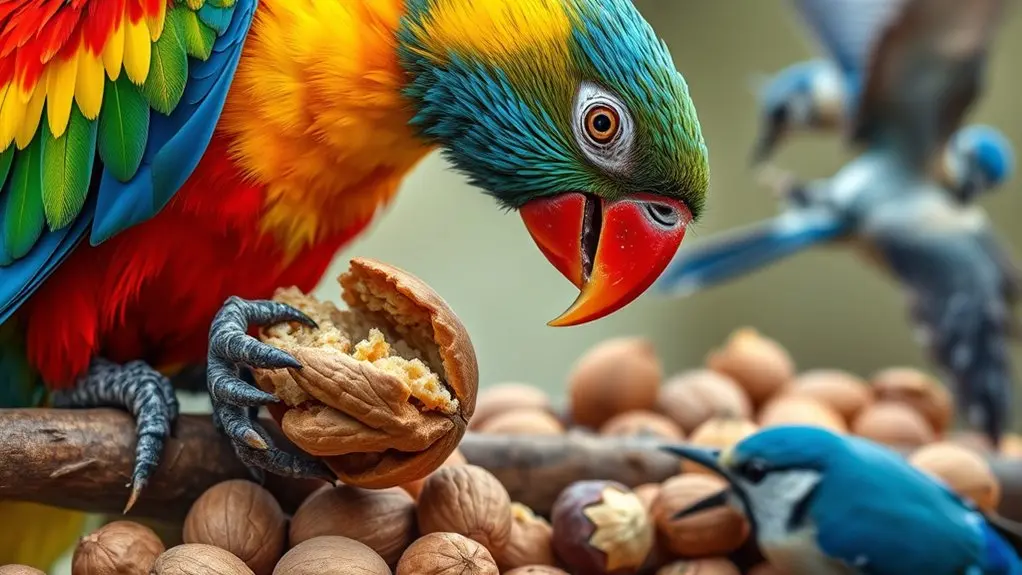
You’ll find that birds like blue jays, woodpeckers, and chickadees eat nuts because they offer high-fat energy that’s vital for survival. These little guys really rely on the energy boost nuts provide.
What’s interesting is that these species often store nuts to make sure they’ve enough food during the tough winter months when resources are scarce. It’s like they’re planning ahead for the cold season.
Common Nut-Eating Birds
Why do certain bird species favor nuts as a key part of their diet? Nuts provide a dense source of fats and energy essential for survival, especially in colder months. When you observe nut-eating birds, you’ll notice distinct behaviors and adaptations.
Blue jays and woodpeckers prefer whole, in-shell nuts due to their strong beaks designed to crack shells. Smaller birds like chickadees and titmice often choose shelled or chopped nuts for easier consumption.
Nuthatches, chickadees, and titmice cache nuts by carrying them away from feeders, storing food for winter.
Clark’s nutcrackers use specialized pouches to transport and cache dozens of pine nuts, showcasing remarkable food storage skills.
Understanding these species-specific traits helps you provide suitable nuts and supports their natural foraging habits.
Nutritional Benefits For Birds
Certain bird species prioritize nuts in their diets because these foods offer concentrated sources of fat and energy that support survival during demanding periods. Birds such as jays, woodpeckers, and nuthatches actively seek nuts like almonds, walnuts, and acai palm nuts due to their high-fat content. These nutrients provide essential calories for migration and winter endurance.
You’ll notice that the size and hardness of nuts correspond to the beak strength of specific species, enabling efficient cracking and consumption.
By offering nuts, you help birds meet their dense energy requirements, especially during breeding, migration, and cold months.
This targeted nutrition supports crucial physiological functions, ensuring birds maintain energy reserves critical for survival and reproductive success. It’s pretty amazing how something as simple as a nut can make such a difference in a bird’s life.
Bird Caching And Storage
How do some birds guarantee a reliable food supply during scarce months? Many species, such as nuthatches, chickadees, and titmice, employ caching behavior to store nuts for future consumption. This strategy guarantees survival when food is limited.
Consider these key points:
- Clark’s nutcrackers transport and cache dozens of pine nuts in specialized pouches for winter use.
- Birds bury or hide nuts in multiple locations to create dispersed food reserves.
- Woodpeckers and jays use strong beaks and dexterity to securely store nuts in concealed sites.
- Caching provides a critical, energy-rich resource during fall and winter when natural food sources dwindle.
Understanding bird caching reveals adaptation mechanisms that support their nutritional needs across seasons. It’s pretty amazing how these behaviors help birds get through tough times!
Preparing and Serving Nuts Safely
When preparing nuts for birds, you should store them in a cool, dry place to prevent mold and spoilage.
Before offering nuts, inspect and clean them thoroughly to reduce the risk of fungal growth and aflatoxin contamination, which are harmful to birds.
Providing nuts with shells intact can enrich the birds’ environment by encouraging natural foraging behaviors. However, cracking or partially cracking the shells can help hesitant birds access the nut meat more easily.
It’s vital to avoid seasoning, salt, or any flavorings on the nuts, as these additives can be toxic or reduce their safety as bird food.
Best Feeders for Nuts
Although nuts provide excellent nutrition for birds, selecting the right feeder is essential to guarantee all species can access them safely. Different feeders accommodate various nut types and bird behaviors.
Use specialized feeders or open trays for whole, in-shell nuts to prevent large birds from dominating smaller ones.
Opt for ring or mesh-wire feeders to slow fast-eating birds like jays, allowing smaller species to feed comfortably.
Choose hoppers or tube feeders for out-of-shell or chopped nuts to minimize mess and facilitate easy access.
You can also incorporate nuts into no-mess mixes in feeders or apply nut butters and suets to trees as alternative feeding methods to attract diverse nut-eaters.
Picking the right feeder makes sure all birds get a fair chance to snack and helps promote healthy feeding habits among different species.
How Birds Cache Nuts for Winter
Feeding birds nuts not only supports their immediate energy needs but also ties into their natural behavior of storing food for leaner times. Many species like nuthatches, chickadees, and titmice cache nuts in concealed locations such as tree bark, soil, or leaf litter during fall when natural food becomes scarce.
Clark’s nutcrackers are a great example. They transport dozens of pine nuts in sublingual pouches to secure sites. This caching behavior helps birds build a high-energy reserve that’s critical for surviving winter.
When you offer nuts, you’re helping with this instinctive process. It lets birds efficiently gather and store food for later. Understanding this behavior makes you appreciate how birds adapt to endure harsh seasonal conditions.
Risks of Feeding Nuts
While offering nuts to birds can be beneficial, you need to be aware of potential health risks. Certain nuts may endanger birds if not properly prepared or selected. Consider these critical risks when feeding nuts:
- Unshelled or salted nuts can cause toxicity and dehydration in birds.
- Moldy or spoiled nuts might contain aflatoxins, which are highly toxic and potentially fatal.
- Nuts with added flavorings, coatings, or seasonings often harbor chemicals harmful to avian health.
- Large, hard nuts pose choking hazards, especially for smaller bird species unable to crack them safely.
Just keep these points in mind to help keep your feathered friends safe and healthy!
How to Attract Nut-Loving Birds to Your Yard
If you want to attract nut-loving birds to your yard, planting native nut-producing trees like oak, hickory, and beech provides a natural, sustainable food source.
Additionally, placing nut feeders in sheltered, quiet areas encourages shy species such as nuthatches and chickadees to visit regularly.
Offer a variety of unsalted peanuts and shelled tree nuts to cater to different preferences.
Use specialized feeders like mesh-wire or platform types to hold whole or chopped nuts, making it easier for birds to get their food.
It’s important to keep nuts dry and clean to prevent mold, which can be harmful to birds.
By combining native plantings with proper feeder placement and maintenance, you create an inviting environment that supports diverse nut-eating bird populations efficiently and safely.
It’s a simple way to enjoy watching these beautiful birds while helping them thrive.
Frequently Asked Questions
Can Birds Digest Nut Shells if Eaten Accidentally?
No, birds can’t digest nut shells if eaten accidentally. You should know that shells often pass through their digestive system unchanged. Swallowing fragments might cause internal injury or blockages, especially in smaller or less experienced birds.
Do Nuts Affect Bird Migration Patterns or Behavior?
You might be surprised, but yes, nuts do affect bird migration. They alter energy reserves, which can potentially delay or advance the timing of migration.
If birds get overfed, it can actually reduce their motivation to migrate. This change can impact their natural behavior and even influence the routes they choose to take.
How Do Wild Birds Find Nuts in Urban Areas?
You’ll notice wild birds use sharp eyesight and spatial memory to locate nuts on the ground, in feeders, or buried.
Species like jays are especially good at remembering where nuts are hidden across urban landscapes with nut-producing trees.
It’s pretty impressive how they keep track of all those spots!
Are There Seasonal Differences in Birds’ Nut Consumption?
Yes, you’ll notice birds eat more nuts in fall and winter to build energy reserves. They favor high-fat nuts during these colder months.
In spring and summer, birds eat fewer nuts. Instead, they focus on insects and fresh plants to meet their breeding needs.
Can Feeding Nuts Influence Birds’ Mating or Nesting Success?
Yes, feeding birds nutritious nuts can boost their energy for mating and nesting, enhancing success. However, you should avoid overfeeding or giving inappropriate nuts. Imbalances may harm reproductive health and reduce nesting outcomes.
It’s all about balance, really. Giving the right amount and type of nuts helps birds thrive, but too much of a good thing can backfire. So, keep an eye on what and how much you’re offering!
Conclusion
Feeding nuts to birds is like offering nature’s little treasure chest. They’re packed with nutrients but do need a bit of care.
You can safely share almonds, walnuts, and pecans, but make sure to avoid salted or moldy nuts. Choosing the right feeders and preparing the nuts properly helps a lot.
This way, you’ll attract vibrant, nut-loving species while keeping them healthy. Remember, your thoughtful feeding turns your yard into a busy aviary pantry.
You’ll be supporting birds through every season with care and attention. It’s a simple way to make a big difference for your feathered friends.