
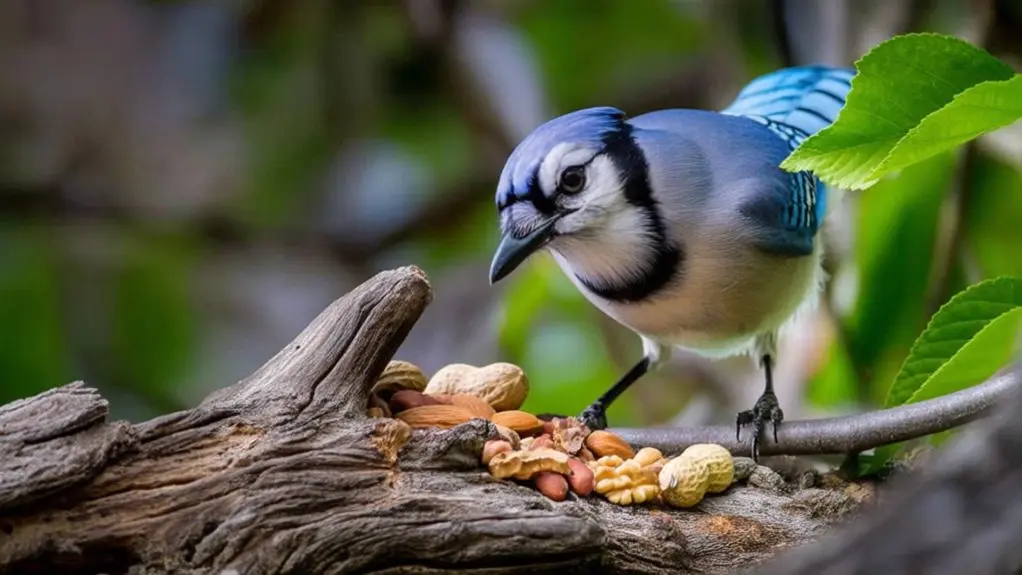
You can safely offer birds many types of fresh, unsalted nuts like peanuts, almonds, and walnuts. These nuts provide essential fats and nutrients that birds need. Just make sure to avoid salted, moldy, or flavored nuts because they can cause health problems like dehydration or toxic fungal effects.
It’s best to provide shelled or broken nuts in appropriate feeders. Also, store them properly to reduce spoilage and keep the nuts fresh for your feathered friends. Understanding how birds handle nuts and the challenges in feeding them will help guarantee your wild visitors stay healthy and energetic.
Safe and Nutritious Nuts for Birds
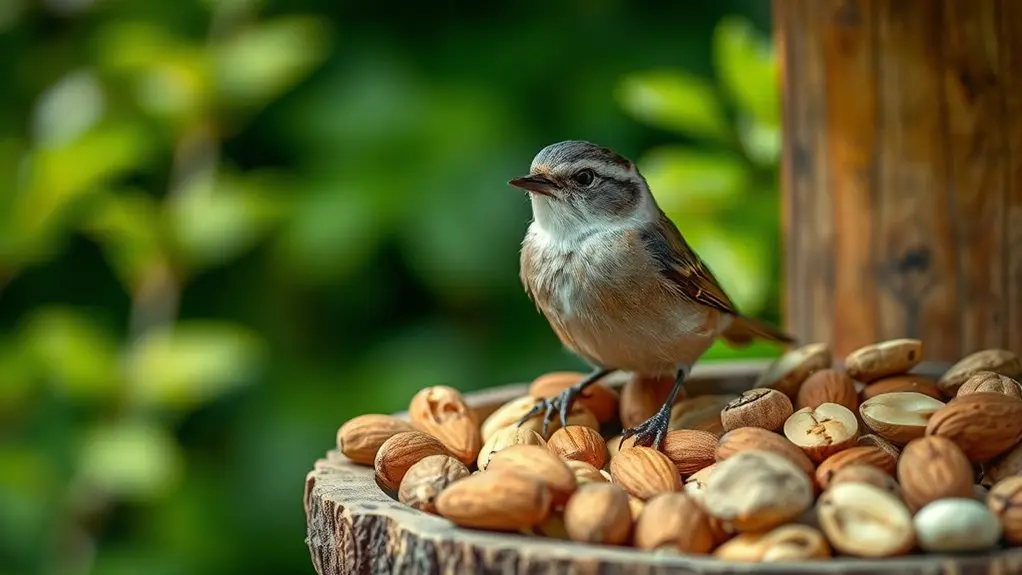
Although birds can eat various nuts, you should only offer unsalted types like peanuts, almonds, and walnuts. These provide essential nutrients without harmful additives. Plus, they’re rich in fats, which supply critical energy, especially during cold winter months when birds need more calories to keep warm.
Offering shelled and broken nuts makes it easier for small bird species to eat and digest them. It’s a simple way to help them get the most out of their food.
Providing a variety of these unsalted nuts encourages a diverse range of backyard birds to visit your feeding area. This supports local bird biodiversity, which is great for your garden.
Nuts to Avoid When Feeding Birds
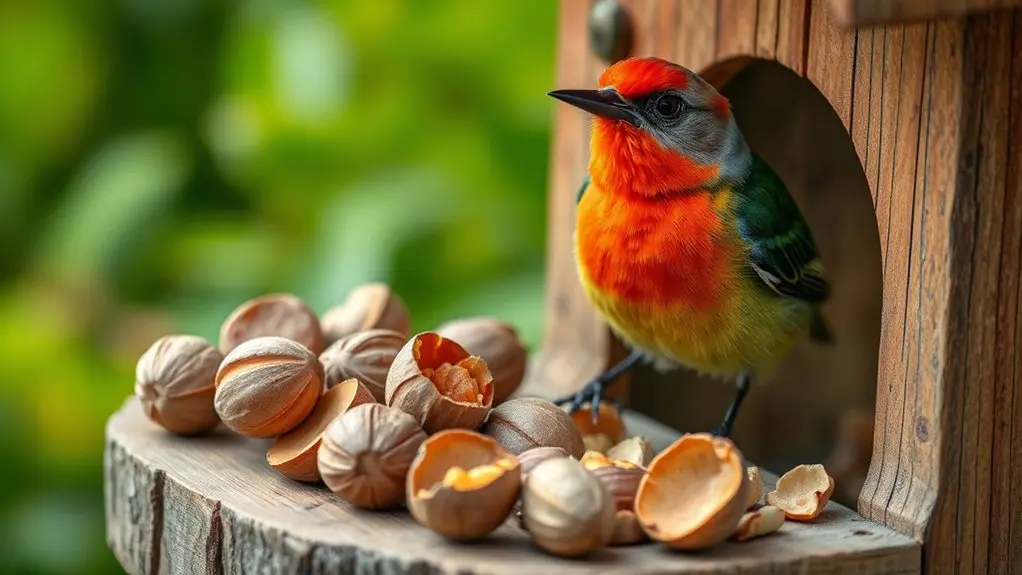
You shouldn’t feed birds salted nuts because the high sodium levels can cause dehydration and kidney damage.
Plus, moldy nuts are just as dangerous since they might contain harmful mycotoxins that can affect birds’ health.
Salted Nuts Risks
Why should you avoid feeding birds salted nuts? Salted nuts contain high levels of sodium, which can be toxic to birds. When birds consume salted nuts, they risk dehydration because excess salt disrupts their water balance.
This can lead to kidney damage and impair organ function, ultimately causing serious health problems. Unlike humans, birds lack the physiological mechanisms to process large amounts of salt efficiently.
Many commercially available nuts for humans include added salt, so you must carefully select plain, unsalted varieties when feeding birds.
Providing salted nuts may inadvertently contribute to illness and increase mortality risks.
That’s why it’s really important to offer only unsalted nuts. To protect avian health, always choose unseasoned nuts and avoid any products with added salt.
Moldy Nuts Danger
When nuts become moldy, they can harbor harmful fungi that produce mycotoxins. These toxins pose serious health risks to birds. They may lead to respiratory problems, immune system suppression, or even death if ingested.
While many birds can detect and avoid moldy or spoiled nuts, some might still eat them when other food is hard to find. So, it’s important to keep an eye on the nuts you offer.
You should regularly inspect nuts for mold, discoloration, or strange smells and toss out any that seem off.
Also, storing nuts in a cool, dry place helps prevent moisture buildup, which means less chance of mold growing.
How to Offer Nuts at Your Feeder
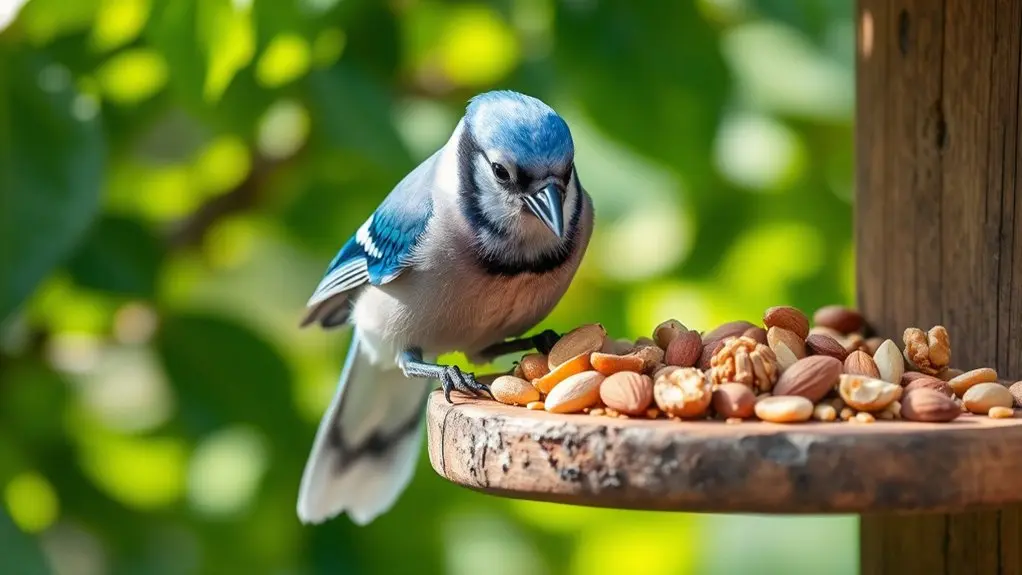
Although nuts provide essential nutrients for many bird species, offering them correctly at your feeder requires some specific considerations. Use feeders designed for nuts, like tray, hopper, or tube types, so they can hold whole or chopped nuts such as peanuts, walnuts, or pecans.
Make sure the nuts are fresh and dry to prevent mold, which can be harmful to birds. Avoid salted or flavored nuts—stick with unsalted, natural varieties to keep the birds healthy.
Place your feeders in elevated spots or on branches. This helps reduce visits from squirrels and makes it easier for birds to get to the food.
You can also mix nuts with other bird foods to attract a wider variety of species. This supports a balanced diet and keeps things interesting for your feathered visitors.
How Birds Eat and Handle Nuts
Because different bird species have unique ways of eating and handling nuts, understanding their behaviors can help you better meet their feeding needs. Birds use special techniques for eating and storing nuts.
For example, species like blue jays, woodpeckers, and nuthatches peck at nuts or wedge them into crevices to crack the shells open efficiently. Many birds also show caching behavior—they carry nuts away from feeders to store or eat later, making sure they’ve a steady food supply.
Smaller birds, like chickadees, break nuts into smaller pieces to make them easier to eat. You’ll often see birds leaving peck marks on shelled nuts or carrying whole nuts to safer spots for feeding.
Ground feeders usually prefer cracked or fallen nuts, while others feed up in trees or shrubs. This shows how birds have different foraging habits depending on their preferences and environments.
Challenges Feeding Nuts to Wild Birds
Feeding nuts to wild birds presents several challenges that can affect both the birds’ health and the success of your feeding efforts. Squirrels frequently access nut feeders, so you’ll need to install obstacles or baffles to deter them effectively.
Avoid offering heavy or salted nuts, as these can harm birds; always select unsalted, fresh nuts stored properly to prevent spoilage.
Cost constraints might tempt you to use cheaper mixes, but these often contain lower-quality or moldy nuts, which pose health risks and should be discarded immediately.
Additionally, overfilling or placing feeders improperly can cause nuts to spoil quickly and attract pests or predators, compromising bird safety.
How Nuts Help Birds in Different Seasons
When natural food sources dwindle during colder months, nuts provide birds with essential high-calorie fats that help maintain their energy and body warmth. You’ll notice birds rely heavily on nuts in winter when berries and insects are scarce. Native nut-producing trees and shrubs offer a renewable food supply that supports birds year-round.
Here’s how nuts help birds across seasons:
Nuts play a vital role in supporting birds through every season’s challenges and changes.
- In fall, many birds cache nuts to ensure a reliable food source during winter’s scarcity.
- During winter, the high-fat content in nuts sustains energy and thermoregulation.
- In spring and summer, nutrient-rich nuts contribute to reproductive health and survival during seasonal transitions.
Combining Nuts With Other Bird Foods
Although nuts alone provide valuable nutrients, combining them with other bird foods like seeds and dried fruits considerably enhances dietary diversity and attracts a broader range of bird species. You can mix peanuts with cracked sunflower seeds to encourage both woodpeckers and finches at your feeder. Offering varied foods also helps birds meet calorie needs during harsh weather.
To reduce competition, use separate feeders or compartments, allowing birds to select preferred items. Incorporating nuts alongside fruits or seeds supports both insectivorous and granivorous birds, optimizing feeding opportunities.
| Food Combination | Target Bird Species | Nutritional Benefit |
|---|---|---|
| Nuts + Seeds | Woodpeckers, Finches | Protein, fats, carbohydrates |
| Nuts + Dried Fruits | Thrushes, Orioles | Vitamins, sugars, fats |
| Nuts + Mixed Seeds | Sparrows, Chickadees | Balanced energy, vitamins |
Frequently Asked Questions
Can Pet Birds Eat the Same Nuts as Wild Birds?
Yes, you can feed pet birds many nuts wild birds eat, like unsalted peanuts and walnuts. Just make certain they’re unseasoned and given in moderation.
Also, watch for any adverse reactions to keep your bird healthy. It’s all about balance and paying attention to what your bird needs.
Do Birds Prefer Raw or Roasted Nuts?
Imagine offering a fresh apple versus a caramelized one; birds prefer raw nuts because they retain natural oils and nutrients.
You’ll notice raw nuts are more appealing, safer, and easier for birds to digest than roasted varieties.
It’s kind of like how we enjoy foods in their natural state sometimes—it just feels better and healthier.
How Do Nuts Affect Bird Migration Patterns?
Nuts provide high-energy reserves that influence your birds’ migration timing and duration. When nuts are abundant, birds may delay departure or shorten stopovers.
They might also migrate earlier if supplies dwindle. This directly impacts their fuel accumulation and travel patterns.
Are Nuts Safe for Baby Birds?
Don’t hand baby birds nuts like gourmet snacks; their tiny digestive systems aren’t built for it. Nuts’ high fat and choking risks can harm fledglings, so you should wait until they’re fully developed before offering any.
It’s better to hold off until they’re ready. Baby birds need gentle, easy-to-digest food to grow strong. Once they’re older, you can consider introducing nuts carefully.
Can Feeding Nuts Cause Bird Allergies?
You won’t cause bird allergies by feeding nuts, as birds’ immune systems rarely react that way. Just make sure nuts are clean and free from mold or pesticides. Contaminants, not nuts themselves, pose health risks.
Conclusion
Feeding nuts to birds is like offering a balanced symphony. Each safe nut plays a crucial role in their diet, while harmful ones can disrupt the harmony. So, you should carefully select and prepare nuts to guarantee nutritional benefits and avoid risks.
By understanding how birds handle and digest nuts, you support their energy needs, especially across seasons. It’s pretty important to get this right. Combining nuts with other foods creates a complete diet, helping wild birds thrive in their natural environments.