
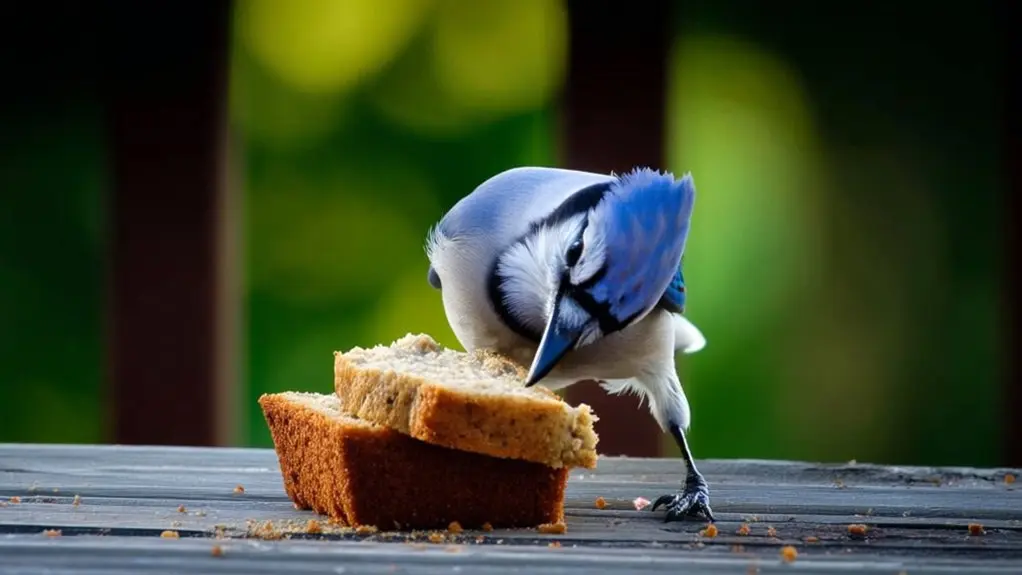
You shouldn’t feed birds banana bread because its high sugar, fat, and processed ingredients can harm their health. It disrupts their natural diet, causing nutritional imbalances, obesity, and digestive problems. Plus, if the bread is moldy, it can introduce toxins that are really bad for them.
Waterfowl are especially vulnerable to these effects. Leftover banana bread can also pollute their habitats, which isn’t good for the whole ecosystem.
If you want to support birds safely, it’s important to understand the risks. Knowing better alternatives will help you protect their well-being more effectively.
Is Banana Bread Bad for Wild Birds?
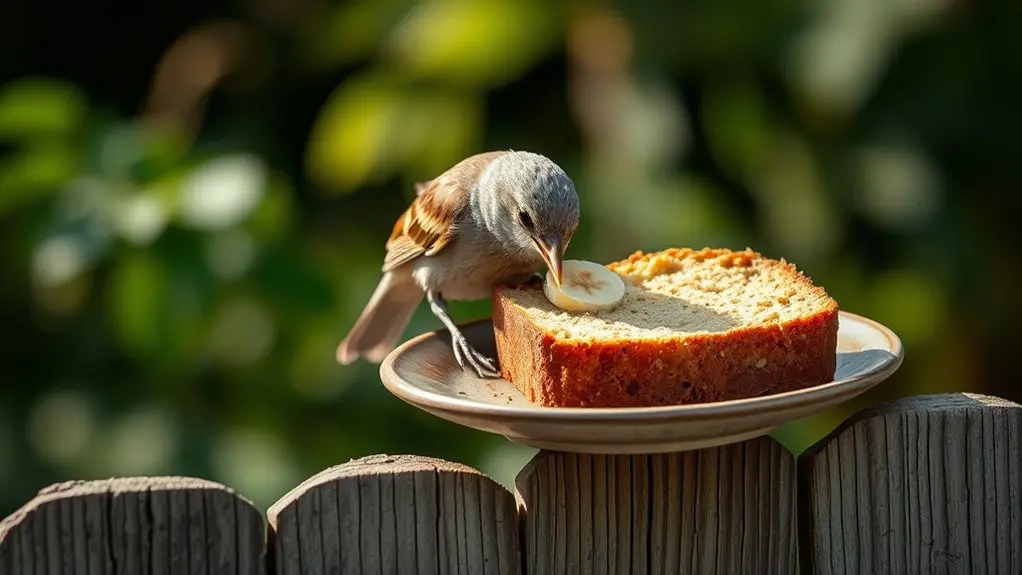
Why should you avoid feeding banana bread to wild birds? Banana bread contains high levels of sugar and fat, which don’t really match what wild birds naturally eat. Its processed flour and additives don’t offer any essential nutrients, just empty calories that can actually do more harm than good.
Banana bread’s sugar, fat, and additives lack nutrients and can harm wild birds more than help.
When birds eat banana bread regularly, they might end up with obesity and digestive problems because their nutrition isn’t balanced.
Plus, if the banana bread is moldy or spoiled, it can introduce toxins or infections that are really bad for their health.
Feeding birds this kind of human food can also mess with their natural foraging habits. That could disrupt their nutrient intake and how they survive out in the wild.
What Ingredients in Banana Bread Harm Birds
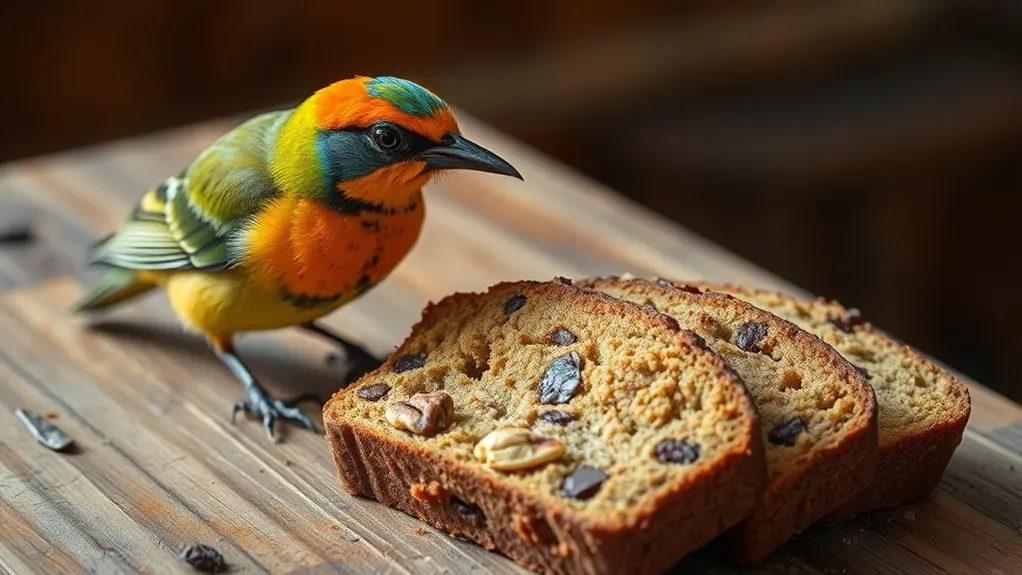
Although banana bread might seem like a harmless treat, several common ingredients in it can pose serious health risks to birds. Added sugar and artificial sweeteners, often present in banana bread, are toxic and can disrupt avian metabolism.
Chocolate chips and certain nuts included in recipes contain substances harmful or potentially lethal to birds.
Excessive butter or oil content may lead to digestive distress. Additionally, spices like cinnamon and nutmeg can irritate or damage birds’ respiratory and digestive systems.
Mold or spoilage in banana bread introduces fungal toxins, increasing the risk of poisoning and infection.
Given these hazards, you should avoid offering banana bread to birds to prevent exposing them to harmful compounds found in typical recipes. It’s really best to stick to bird-safe treats instead.
How Banana Bread Affects Bird Nutrition and Health
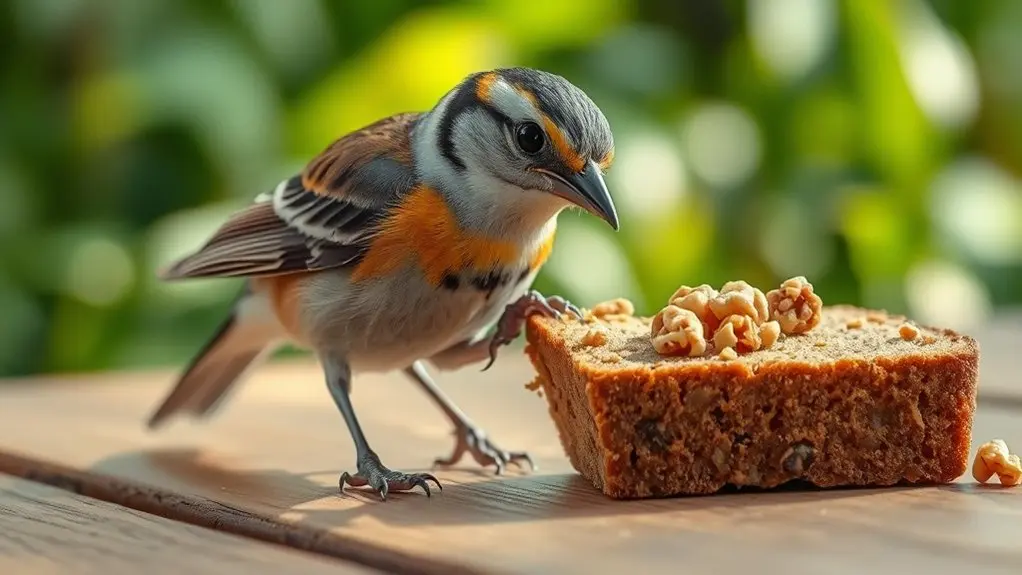
When you feed birds banana bread, you introduce a food high in sugars and fats but low in essential nutrients like proteins, vitamins, and minerals. This imbalance can negatively impact their overall health and nutrition.
Banana bread lacks the vital components birds need to thrive, and its processed ingredients can disrupt their digestive systems.
You should recognize these effects to understand why banana bread isn’t a suitable dietary choice. Excess sugars and fats can lead to obesity and metabolic disorders.
Insufficient proteins, vitamins, and minerals cause malnutrition.
Additives and processed sugars may induce digestive issues. Also, spoiled or moldy banana bread poses toxicity risks.
Risks of Feeding Banana Bread to Waterfowl
Beyond general concerns about bird health, feeding banana bread to waterfowl presents specific risks that can harm both the birds and their environment. You should know that banana bread often harbors mold and bacteria, which can cause illness or infections in waterfowl.
Its high sugar and fat content disrupts their natural diet and digestive processes, leading to nutritional imbalances. Processed sugars and preservatives in banana bread are unsuitable for waterfowl and may cause deficiencies.
Additionally, leftover or moldy banana bread can pollute water sources, promoting harmful algae growth that damages aquatic ecosystems. If you regularly feed waterfowl banana bread, they may become dependent on this unnatural food, reducing their ability to forage naturally and compromising their survival skills in the wild.
Safe and Healthy Alternatives to Banana Bread
Why choose healthier alternatives to banana bread for feeding birds? Banana bread often contains added sugars, fats, and preservatives that can harm birds. Opting for nutritious, natural foods supports their health and well-being more effectively.
Here are safer options to contemplate:
- Small pieces of fresh, ripe bananas provide natural sugars and essential nutrients without additives.
- Unsweetened whole grain or sprouted bread in moderation offers a safer carbohydrate source than banana bread.
- Protein-rich foods like mealworms, sunflower seeds, and chopped nuts enhance bird nutrition beyond processed baked goods.
- Fresh fruits such as berries, apple slices, or melon chunks supply crucial vitamins and hydration, promoting overall health.
Avoid any bread containing added sugars or flavorings to prevent adverse effects on birds’ digestive systems and long-term health. It’s better to stick with simple, natural foods that keep our feathered friends happy and healthy!
Supporting Birds That Don’t Eat Seeds
Although many bird feeders focus on seeds, supporting birds that don’t eat seeds means you need to provide more than just traditional feed. You’ll want to restore native habitats by planting indigenous species that attract natural food sources like insects and fruits.
Reducing or eliminating pesticide use in your yard helps protect insect populations, which are essential food for insect-eating birds.
Offering access to fresh berries and small fruits, while encouraging insect presence, creates a diverse and balanced diet for these birds.
Keeping a bird-friendly environment with minimal disturbance and native vegetation supports species that rely on non-seed foods.
Plus, educating your community about natural diets and habitat preservation goes a long way in improving survival rates for these birds.
Your active role in restoring habitats and cutting back on pesticides directly benefits the health and ecological stability of non-seed-eating birds.
What to Do If Birds Have Already Eaten Banana Bread
If birds have already eaten banana bread, the first thing you want to do is keep an eye on them. Watch for any signs that something might be wrong, like if they seem tired or are having stomach issues.
It’s a good idea to offer them some healthy, bird-friendly foods and make sure they always have fresh water to drink. This helps them bounce back more easily.
Just keep monitoring how they act, and if you notice anything unusual, don’t hesitate to reach out to a vet for advice.
Assess Bird Health
When birds have consumed banana bread, you should closely observe them for signs of distress such as lethargy, vomiting, or diarrhea. Banana bread contains sugar, butter, and eggs, which may cause digestive upset or toxicity.
If you notice any abnormal behavior or symptoms, promptly contact a veterinarian experienced in avian health.
Meanwhile, remove all remaining banana bread to prevent further ingestion of harmful ingredients.
To properly assess bird health, monitor activity levels and appetite changes. Check for gastrointestinal symptoms like vomiting or diarrhea. Also, observe respiratory effort and posture for signs of distress.
Make sure birds have access to fresh water to aid recovery.
Early detection and intervention are really important to reduce potential health risks from ingesting banana bread. So keep a close eye on them and don’t hesitate to get help if you’re worried.
Offer Nutritious Alternatives
After observing birds for any signs of distress from consuming banana bread, you should focus on providing them with nutritious alternatives to support their recovery. Offer fresh, nutrient-rich foods such as chopped fruits, seeds, and mealworms, which aid digestion and replenish essential nutrients.
Avoid giving them more bread or processed human foods because that can mess with their nutrition even more. Make sure clean water is always available to help with hydration and keep their digestive system healthy.
If you notice birds showing persistent symptoms, don’t hesitate to contact a wildlife rehabilitator right away.
| Food Type | Nutritional Benefits | Examples |
|---|---|---|
| Fruits | Vitamins, antioxidants | Apples, berries |
| Seeds | Healthy fats, protein | Sunflower, millet |
| Mealworms | Protein, minerals | Live or dried mealworms |
Monitor Behavior Changes
Although birds may appear healthy shortly after consuming banana bread, you should closely monitor their behavior for signs of digestive distress or other health issues. Pay attention to any lethargy, vomiting, or abnormal droppings.
Behavioral changes like reduced activity, loss of appetite, or difficulty flying could indicate underlying problems.
If concerning symptoms arise or multiple birds are affected, contact a wildlife veterinarian or bird rescue promptly.
Additionally, remove any leftover banana bread to prevent further ingestion of unsuitable food.
Observe and note any digestive or behavioral abnormalities. Track changes in activity levels and feeding habits.
Report symptoms to professionals for timely intervention. Eliminate access to banana bread and similar foods in feeding areas.
This approach guarantees early detection and appropriate care for affected birds.
Frequently Asked Questions
Can Feeding Banana Bread to Birds Attract Unwanted Pests?
Yes, feeding banana bread to birds attracts unwanted pests like ants, flies, and rodents. Its sweetness and moisture encourage mold growth and pest populations.
This can spread diseases and disrupt local ecosystems. It ends up harming birds and nearby habitats too. So, it’s best to avoid giving banana bread to birds.
How Should I Dispose of Leftover Banana Bread to Protect Wildlife?
Think of leftover banana bread like a tempting but dangerous snack left on a picnic table. You should seal it in trash bins to keep it away from wildlife.
If you want to compost small pieces, make sure to do it far from animals. This helps prevent disease and keeps pests from being attracted.
It’s all about protecting the local critters while managing your leftovers safely!
Does Banana Bread Affect Baby Birds Differently Than Adults?
Yes, banana bread affects baby birds differently because their immature digestive systems can’t process sugars and preservatives well. This can lead to malnutrition, disrupted gut flora, stunted growth, and higher mortality compared to adult birds.
Basically, baby birds are way more sensitive to what they eat, so giving them banana bread isn’t a great idea. Adults might handle it better, but it’s still not the best snack for any bird.
Are Certain Bird Species More Attracted to Banana Bread Than Others?
You’ll notice pigeons and sparrows enthusiastically pecking at banana bread’s crumbly surface, while orioles savor its fruity aroma. Insectivores skip it, preferring protein-rich insects.
This just shows how different species’ diets shape their attraction to banana bread. It’s pretty interesting how what they eat influences what they like to snack on!
Can Birds Develop a Preference for Unhealthy Human Foods Like Banana Bread?
Yes, you’ll find birds can develop a preference for unhealthy human foods like banana bread. Repeated exposure conditions them to favor sugary, processed items. This can potentially disrupt their natural diet and lead to nutritional imbalances over time.
It’s kind of like how we get hooked on junk food when we eat it a lot. Birds don’t naturally eat these kinds of foods, so it’s not great for their health in the long run.
Conclusion
Feeding birds banana bread is like offering them a puzzle with missing pieces. It may look appealing but lacks the nutrients they truly need. Ingredients like sugar, salt, and preservatives can harm their health, especially waterfowl.
Instead, choose safe, natural alternatives to support their diet. If birds have already eaten banana bread, keep an eye on them and try not to feed it again. Prioritizing proper nutrition helps keep wild birds thriving in their natural environment.