
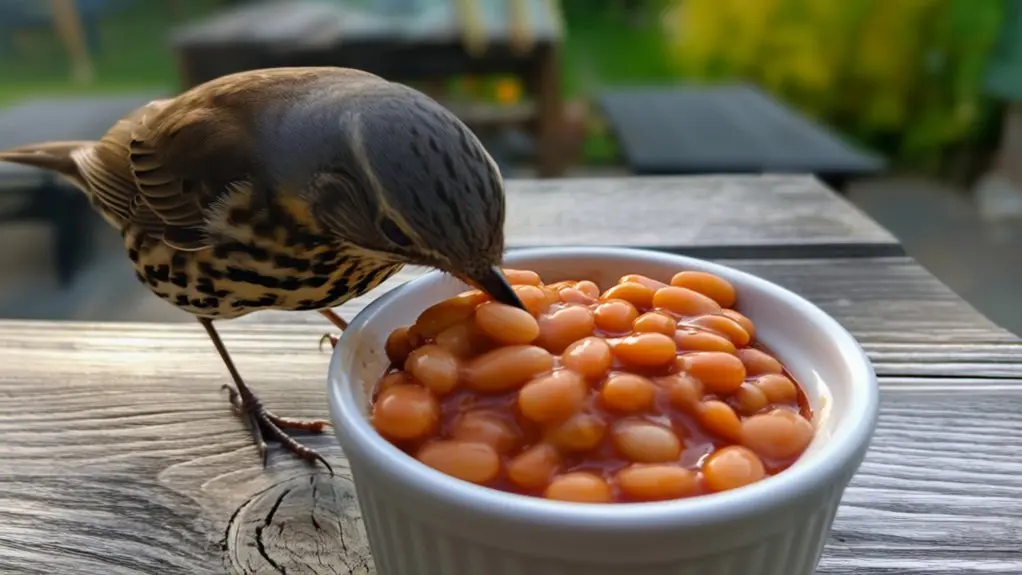
You shouldn’t feed birds baked beans because they contain toxic ingredients like onion and garlic, which can cause severe health issues. Commercial baked beans also have high salt, sugar, and preservatives that harm birds’ kidneys and livers. Even rinsing canned beans won’t remove these dangers.
Instead, offer fully cooked plain beans or safe alternatives like lentils and peas for a balanced diet. Learn how to keep your bird healthy with safer feeding options and best practices.
Why Baked Beans Are Unsafe for Parrots
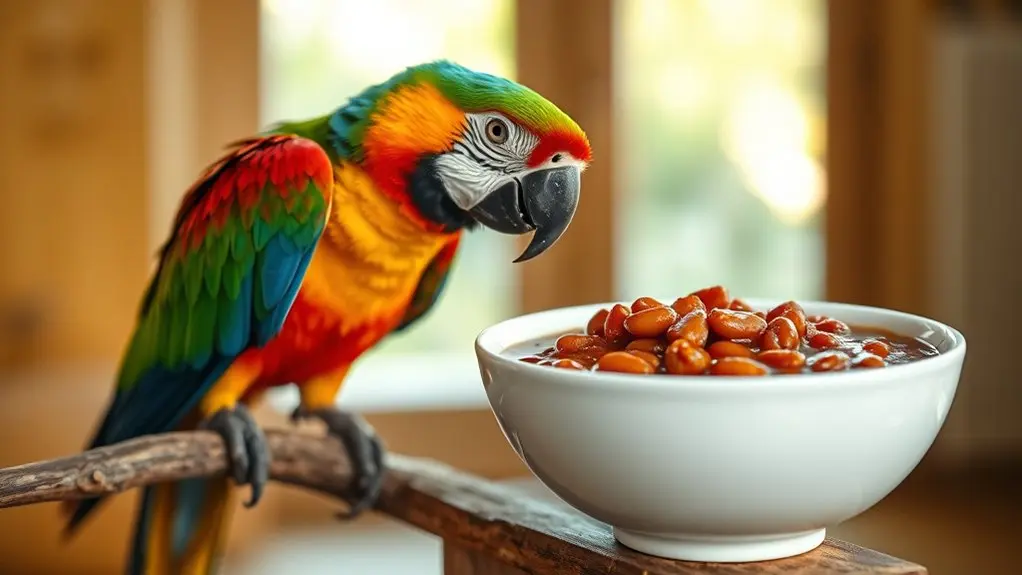
Although baked beans might seem like a harmless snack, they pose significant health risks to parrots. You should know that baked beans often contain dehydrated onion and garlic, both toxic to parrots and capable of causing severe health issues.
Additionally, commercial baked beans have high levels of salt, sugar, and additives, which are detrimental to your bird’s health. Rinsing the beans doesn’t eliminate these toxic ingredients, so it won’t make them safe.
Furthermore, undercooked or dried beans contain hemagglutinin, a toxin particularly dangerous to parrots. Feeding baked beans to your parrot can lead to serious complications, including poisoning and digestive distress.
Harmful Ingredients Common in Baked Beans
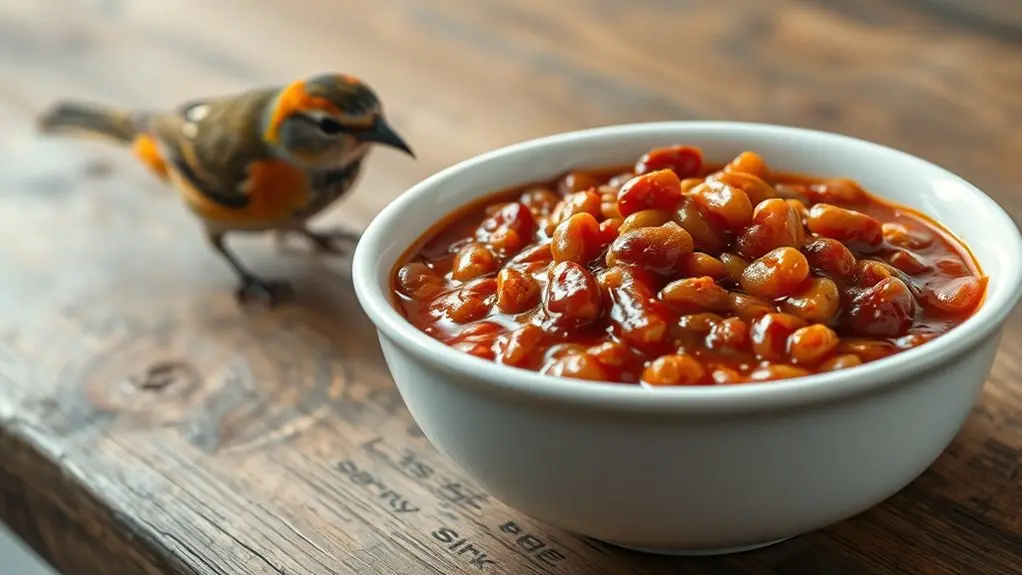
When you look at the ingredients in baked beans, you’ll notice several substances that can be really risky for birds. Dehydrated onion and garlic are common in baked beans, and they’re toxic to birds. These can cause serious health problems.
On top of that, commercial baked beans usually have high levels of salt and sugar. Both of these aren’t good for birds because they mess with their electrolyte balance and metabolism.
Many canned varieties also contain preservatives and additives. The effects of these chemicals on birds aren’t well known, but they could be harmful.
Even if you rinse the beans, it only gets rid of some surface salt and sugar. It won’t remove the toxic dehydrated onion, garlic, or the chemical additives.
Because of all these harmful ingredients, baked beans just aren’t a safe food option for birds. So, it’s best to avoid feeding them to your feathered friends.
How to Prepare Beans Safely for Birds
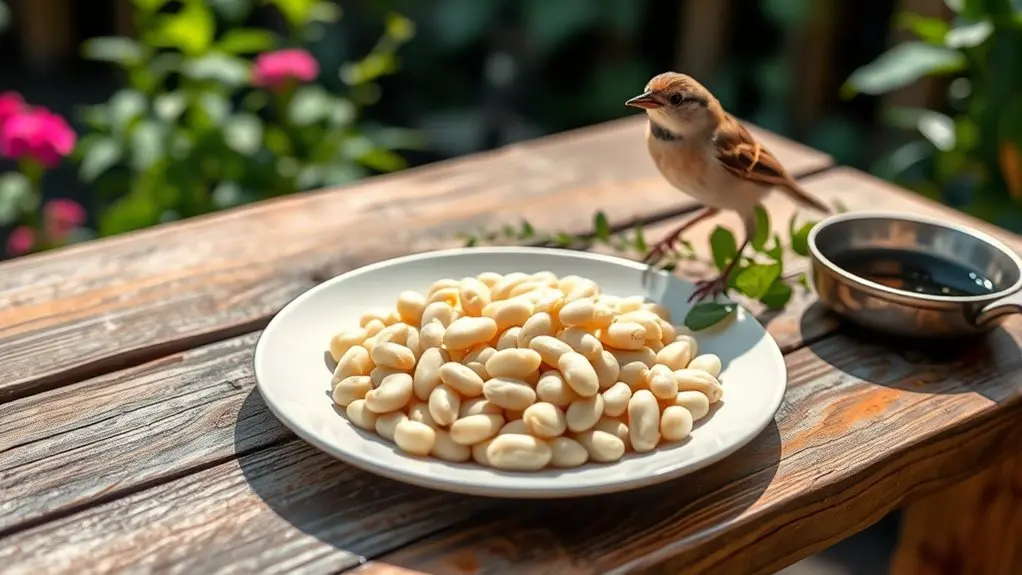
Given the risks associated with common baked bean ingredients like dehydrated onion, garlic, salt, and preservatives, you must take specific steps to prepare beans safely for birds.
First, use raw beans and avoid any pre-seasoned or canned varieties. Thoroughly boil or steam the beans until fully soft; this process deactivates toxins such as hemagglutinin present in raw beans.
Do not add salt, sugar, oils, or any seasonings during cooking. After cooking, rinse the beans well to remove residual surface salts or sugars, though rinsing won’t eliminate toxic powders if present.
Serve only fully cooked, unseasoned beans to your bird, and offer them sparingly as part of a balanced diet.
These precautions reduce health risks and support your bird’s nutritional needs safely. Just remember, it’s all about keeping things simple and safe for your feathered friend.
Why Canned and Processed Beans Are Risky
If you feed your bird canned or processed baked beans, you expose it to harmful substances like high salt, sugar, and preservatives. These additives can disrupt your bird’s electrolyte balance and metabolism. That can pose some serious health risks.
Many processed beans include dehydrated onion and garlic. Both are toxic to birds. Even small amounts can cause anemia and digestive distress.
Although rinsing canned beans might reduce surface salt and sugar, it won’t remove the preservatives or seasonings inside. The unknown chemical additives in canned products make their safety unpredictable. It’s really a risk you shouldn’t take.
Regular consumption of these processed beans can lead to chronic health problems. This includes kidney and liver damage.
To keep your bird healthy, it’s best to avoid canned and processed baked beans altogether.
Safe Bean Alternatives and Bird-Friendly Foods
Because processed beans pose significant health risks, you should opt for safe, bird-friendly alternatives like thoroughly cooked black beans, green beans, lentils, peas, and chickpeas. Properly steaming or boiling these beans neutralizes harmful toxins such as hemagglutinin, ensuring they’re safe for birds. Avoid any seasoning or salt, as these additives can be detrimental to avian health.
Besides beans, you can also provide high-protein, natural options that support wild birds’ nutritional needs. Consider including dried mealworms and canned grasshoppers, which are rich in protein and essential nutrients. Feed balls formulated specifically for wild birds are great too, as they balance vitamins and minerals.
Fresh, unseasoned vegetables like green beans and peas are excellent choices for fiber and hydration. These options help keep wild birds healthy and happy. It’s all about offering them safe, nutritious foods they can thrive on.
What to Do With Leftover Baked Beans (For Humans)
You can safely eat leftover baked beans as long as you store them in an airtight container in the fridge and reheat them to 165°F (74°C) within 3-4 days. It’s pretty simple to keep them tasty and safe that way.
Why not get a little creative with them? They make great fillings for baked potatoes or tacos, adding a nice twist to your usual meals. It’s an easy way to mix things up without much extra effort.
And if you happen to have unopened cans or more beans than you can use, consider donating them to food banks. It’s a great way to reduce waste and help out people in your community. Everyone wins!
Safe Human Consumption
How long can you safely store leftover baked beans for later consumption? You can keep them in an airtight container in the refrigerator for up to 3-4 days. Proper storage slows bacterial growth, which helps keep them safe and tasty.
When reheating, make sure the beans reach an internal temperature of at least 165°F (74°C). This step is important to kill any harmful pathogens.
Also, avoid adding extra salt, sugar, or seasonings during reheating to keep the nutritional balance just right.
To handle leftovers safely, think about these tips:
Store baked beans promptly in airtight containers to stop contamination. Reheat them thoroughly, and use a food thermometer to check the temperature. Try to eat them within 3-4 days to lower the risk of foodborne illness.
Following these simple guidelines will help keep your leftover baked beans safe and nutritious for you to enjoy later.
Creative Recipe Ideas
Though leftover baked beans are often overlooked, they offer versatile options for creating nutritious and flavorful meals. You can transform them into hearty breakfast burritos by combining beans with eggs and vegetables, wrapped in a tortilla. Adding baked beans to baked potatoes or using them as a nacho topping provides quick, savory snacks.
Incorporate beans into pasta salads or grain bowls to boost protein content and introduce a smoky flavor. For more complex dishes, mix baked beans into homemade chili or stews, enhancing texture and nutritional value.
Additionally, spreading baked beans on toast or serving them alongside grilled meats offers a simple, satisfying meal.
Using leftover baked beans this way maximizes food use, reduces waste, and introduces diverse culinary possibilities. It’s a great way to get creative in the kitchen without much extra effort. Give it a try and see how many new favorites you can come up with!
Donation And Sharing
Maximizing the use of leftover baked beans goes beyond just trying new recipes. It also includes thoughtful donation and sharing practices. To reduce food waste effectively, you can donate properly stored baked beans to food pantries or charitable organizations.
Just make sure you keep the beans in airtight containers to maintain freshness and safety. Sharing leftovers with family or friends is another great way to support sustainable consumption. It provides a nutritious meal option without any extra prep.
Remember, baked beans contain ingredients that can be harmful to pets and wildlife, so never feed them to animals.
Here are some key points to keep in mind: store leftovers in airtight containers to preserve quality before donating or sharing. Donate only to organizations that accept perishable food items. And always reheat leftovers thoroughly to make sure they’re safe to eat.
Following these guidelines helps you manage baked bean leftovers responsibly and reduces waste.
Tips for a Balanced, Bird-Safe Diet Without Baked Beans
Because baked beans contain salt, sugar, and toxic additives like onion and garlic, you should exclude them from your bird’s diet to guarantee safety and health.
Instead, focus on providing a balanced diet with high-quality seeds, pellets, fresh fruits, and vegetables.
Incorporate leafy greens, berries, and cooked grains to supply essential nutrients while avoiding processed foods that may contain harmful substances.
Even rinsed baked beans remain unsafe due to lingering toxic compounds.
For superior nutrition, consult avian nutrition experts or trusted resources to tailor a diet that meets your bird’s specific needs.
Prioritizing fresh, natural foods ensures your bird thrives without exposure to dangerous ingredients commonly found in baked beans and similar processed items.
Frequently Asked Questions
Can Other Pet Birds Besides Parrots Eat Baked Beans?
You shouldn’t feed baked beans to pet birds besides parrots. Their high salt, sugar, and toxic additives like onion and garlic can harm smaller species.
It’s safer to stick to plain, cooked beans or natural foods for your bird. That way, you avoid any health risks and keep them happy and healthy.
How Often Can Birds Have Beans as a Treat?
You shouldn’t give birds beans as a treat even once a century. Baked beans contain harmful additives and toxins.
Instead, offer safe options like dried mealworms occasionally. This helps keep your bird healthy and thriving.
Are There Signs of Bean Poisoning in Birds?
Yes, you’ll notice signs like lethargy, weakness, vomiting, diarrhea, or breathing difficulties if your bird is poisoned by beans.
Immediate veterinary care is vital to prevent severe complications like organ failure or seizures. Don’t wait to get help if you see these symptoms. Your bird’s health depends on quick action.
Can Bird Digestive Systems Handle Raw Beans?
No, bird digestive systems can’t handle raw beans. Raw beans contain hemagglutinin, a toxin harmful to birds. It can cause red blood cell damage and anemia.
Only thoroughly cooked beans are safe for birds to digest and consume. So, if you want to feed beans to birds, make sure they’re properly cooked first.
Do Baked Beans Affect Bird Behavior or Mood?
Yes, baked beans can negatively affect your bird’s behavior and mood because they contain high amounts of salt and sugar.
They also often have harmful additives like onion and garlic. These ingredients may cause dehydration and irritability.
On top of that, they can lead to digestive upset, which impacts your bird’s overall activity and comfort.
Conclusion
You might think baked beans are a harmless treat for your feathered friend, but they’re actually a recipe for disaster. Loaded with salt, sugar, and preservatives, these beans can harm your bird’s health rather than help it.
So, while you enjoy your savory snack, remember that your parrot’s diet needs precision and care, not canned shortcuts. Skip the baked beans and stick to bird-safe alternatives for a truly nutritious feast.