
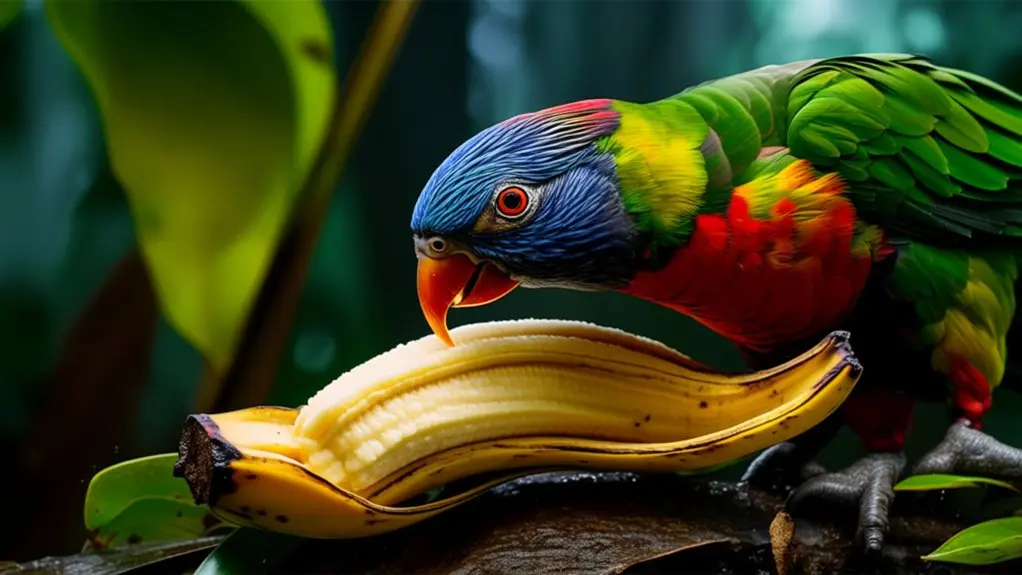
You can safely feed ripe bananas to many backyard birds like cardinals, orioles, and robins. They’ll enjoy a tasty, nutritious treat that’s rich in natural sugars, potassium, and vitamins. Just remember to remove the peels to avoid digestion issues and potential toxins.
Offer bananas in small amounts during the warmer months and at feeding times like early morning or late afternoon. It’s a great way to mix up their diet and give them a little extra energy.
If you want to attract more birds and keep them healthy, there’s plenty more to explore about feeding bananas safely. It’s always good to learn a bit more to make sure your feathered friends stay happy and healthy!
Do Birds Eat Bananas? Why They Like Them
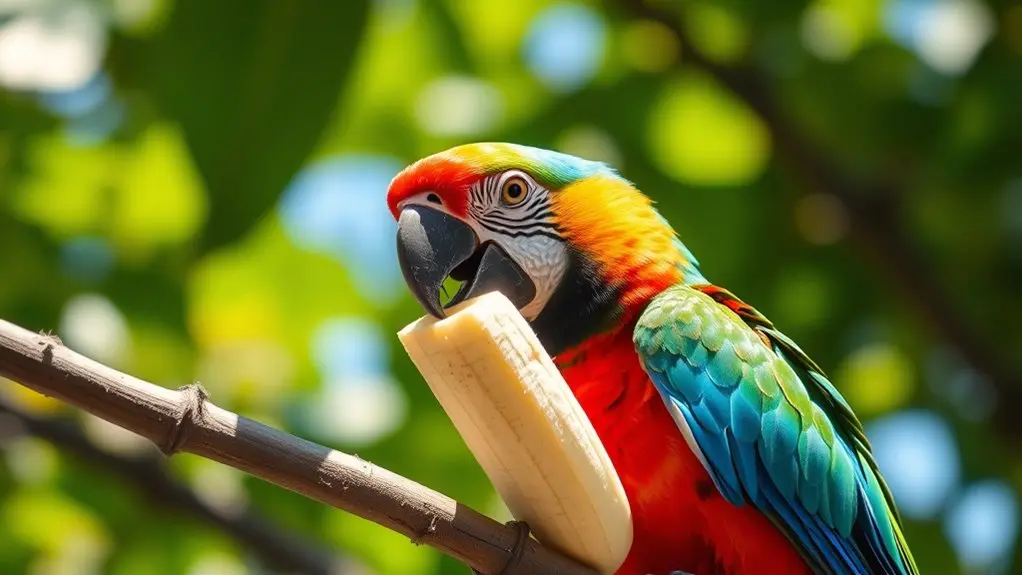
Have you ever wondered if birds eat bananas and why they might enjoy them? Many bird species, like northern cardinals, gray catbirds, and scarlet tanagers, do eat bananas. They find them a tasty and nutritious treat.
Birds are naturally drawn to bananas because of their natural sugars, potassium, and high water content. These nutrients provide quick energy and hydration.
When you offer ripe bananas, their soft texture makes it easy for birds to peck at the flesh. They usually prefer the fruit over the peel.
Including bananas in your backyard feeding can support bird health. This is especially true during times when other food sources are scarce.
What Nutrients Do Bananas Provide to Birds?
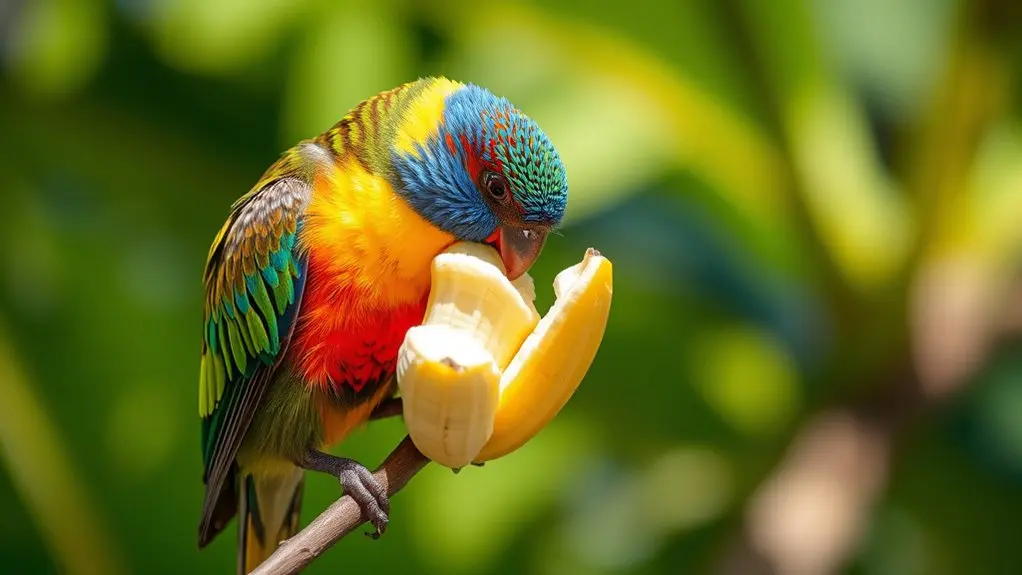
Since birds enjoy bananas for their taste and texture, it’s helpful to understand the nutrients these fruits provide that support their health. Bananas offer essential potassium and vitamin B6, which help maintain nerve and muscle function.
They’re also packed with carbohydrates and natural sugars, giving birds quick energy. This is especially valuable during hot or dry weather.
A 100g serving contains about 8.7mg of vitamin C and 20mcg of folate, boosting immune function and supporting cell health. Plus, the dietary fiber in bananas aids digestion, keeping birds comfortable and healthy.
How to Prepare Bananas Safely for Backyard Birds
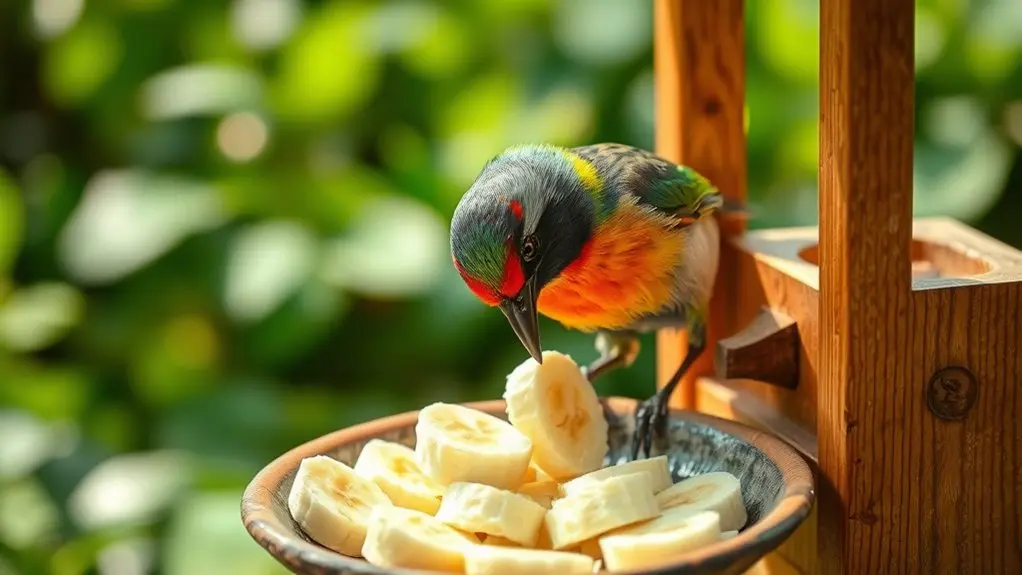
When offering bananas to your backyard birds, you must remove the peel completely because it’s tough to digest and can contain harmful chemicals.
To prepare bananas safely, follow these steps:
To prepare bananas safely for birds, slice or mash ripe fruit and serve fresh only.
- Slice or mash ripe bananas into small, manageable pieces to prevent choking and make eating easier.
- Serve fresh, ripe bananas only. Avoid overripe or fermented fruit to prevent digestive issues and pests.
- Regularly clean and refresh the banana offerings to maintain hygiene and reduce disease risk.
It’s pretty simple once you get the hang of it. Just keep an eye on the fruit and make sure it’s fresh for your feathered friends!
Should You Remove Banana Peels Before Feeding Birds?
Although some birds like blackbirds and starlings may nibble on banana peels, you should remove the peel before feeding bananas to your backyard birds. Most birds prefer the soft, sweet flesh because banana peels are tough, fibrous, and difficult to digest.
Peels contain cellulose, which offers little nutritional value and can be hard on their digestive systems.
Also, banana skins may carry pesticides, waxes, or supermarket chemicals that could harm your feathered friends. By removing the peel, you guarantee you’re providing a safer, more nutritious treat.
This simple step helps protect birds from potential contaminants and supports their health.
That way, you can enjoy watching them safely indulge in this tasty fruit without any unnecessary risks. It’s an easy way to look out for your backyard visitors!
Risks When Feeding Bananas to Birds
When feeding bananas to birds, you’ve got to watch out for the peels. Some birds might react badly because the peels can have substances that aren’t great for them.
Also, don’t go overboard with the bananas. If you give too many or feed them too often, it could mess with their digestion or even make them gain weight since bananas are pretty high in sugar.
Banana Peel Hazards
Since you want to provide bananas to your bird, it’s important to avoid feeding them banana peels. While the fruit itself is safe, peels pose several hazards you should consider.
First, peels often contain pesticides, wax, or preservatives from commercial farming, which can be toxic to birds. Plus, the tough cellulose in peels is hard for birds to digest, potentially causing gastrointestinal discomfort or blockages.
Also, unwashed peels may harbor bacteria or mold, increasing the risk of infections or illness.
To keep your feathered friend healthy, stick to the banana’s flesh and discard the peel.
This way, you minimize harmful exposure and digestive problems, ensuring feeding time remains safe and enjoyable for your bird.
Overfeeding And Health Risks
Because bananas contain high levels of natural sugars, feeding them to your bird in large amounts can lead to obesity and other health complications. Overfeeding can cause digestive upset, diarrhea, and even elevate blood sugar, increasing the risk of avian diabetes.
Additionally, relying too much on bananas may create nutritional imbalances, depriving your bird of essential nutrients. To keep your pet healthy, offer bananas in moderation as part of a balanced diet.
| Risk | Effect |
|---|---|
| High sugar content | Obesity, elevated blood sugar |
| Excessive intake | Digestive upset, diarrhea |
| Nutritional imbalance | Deficiency in essential nutrients |
| Frequent feeding | Increased risk of avian diabetes |
| Lack of moderation | Overall health decline |
When Is the Best Time to Offer Bananas to Birds?
You’ll want to offer bananas during the warmer months when birds need extra energy, especially in spring and summer. This timing supports their breeding and fledgling stages when nutrition is essential.
Also, keep in mind that early morning or late afternoon are the best times to provide bananas since these match their natural foraging habits.
Optimal Seasonal Timing
Although birds can enjoy bananas year-round, offering them during warmer months and early fall provides the greatest benefit. During this time, natural food sources start to dwindle, making your banana offerings essential.
Here’s when you should focus on feeding bananas to birds:
- Summer and early fall: Birds actively forage and can use the extra energy bananas provide.
- Late fall: Bananas help as natural fruits become scarce, supporting birds preparing for winter.
- Winter: Fresh bananas can supplement their diet during cold spells when food is limited.
Always serve ripe, fresh bananas to attract a variety of bird species and maximize nutritional value.
Bird Energy Requirements
When is the best time to offer bananas to birds to meet their energy needs? You’ll want to focus on warmer months when birds are more active and breeding, which increases their energy demands. Bananas also serve as a quick energy and hydration source during cold winters when natural food is scarce.
Feeding in early morning or late afternoon helps birds make the most of the natural sugars throughout their day. It’s best to avoid midday heat to prevent spoilage and pest issues.
| Time of Day | Benefit |
|---|---|
| Early Morning | Boosts energy for daily activity |
| Late Afternoon | Sustains energy before night |
| Warm Months | Supports breeding and activity |
| Cold Months | Provides quick energy and water |
| Midday Heat | Avoid to reduce spoilage & pests |
Which Bird Species Commonly Eat Bananas?
Since many birds seek out fruit during colder months, you’ll often find species like Northern cardinals and gray catbirds nibbling on bananas. These fruits provide essential energy when insects are scarce.
You might also notice other birds enjoying bananas, such as Orioles, including Baltimore Orioles, which favor bananas cut in half. Scarlet tanagers and related species incorporate bananas into their diet.
American robins switch to bananas and berries as winter food sources.
Additionally, fruit-loving birds like cedar waxwings and red-bellied woodpeckers appreciate bananas too. Understanding which species commonly eat bananas helps you support their nutritional needs effectively during colder seasons.
How to Feed Bananas to Backyard Birds
To attract backyard birds with bananas, you’ll want to prepare the fruit in a way that’s both safe and easy for them to eat. Start by removing the banana peel, as it’s tough to digest and may contain harmful substances.
Slice ripe bananas into manageable pieces or mash them, making it easier for different bird species to consume.
Offer the prepared banana on bird tables, in feeders, or scatter small pieces on the ground to attract ground feeders.
Always use fresh, ripe bananas and cut portions appropriately to prevent choking.
To keep your feathered visitors healthy, clean feeding areas regularly and replace banana pieces frequently to maintain freshness and avoid attracting pests.
This thoughtful preparation guarantees a safe, enjoyable treat for your backyard birds.
How Bananas Compare Nutritionally to Other Bird-Friendly Fruits
After preparing bananas properly for your feathered friends, you might wonder how their nutritional value stacks up against other fruits that birds enjoy. Bananas compare surprisingly well with similar fruits like plantains.
Plantains offer more vitamin C (10.9 mg/100g) compared to bananas (8.7 mg/100g). Vitamin A content in plantains (909 IU/100g) far exceeds that in bananas (64 IU/100g), which benefits birds’ vision and immune health.
Plantains provide significantly higher vitamin C and A than bananas, boosting birds’ vision and immunity.
Both raw green bananas and plantains contain amylase enzymes, aiding bird digestion more effectively than ripe, sugary bananas.
Raw, green bananas and plantains provide better nutrition than cooked or ripe forms, which lose vitamins and increase sugar. Understanding these differences helps you offer your birds the healthiest, most digestible fruit options.
Creative Ways to Serve Bananas to Attract More Birds
You can attract more birds by slicing bananas into manageable pieces that are easy for them to eat. It’s a simple way to make the fruit more accessible and inviting.
Try threading banana slices onto skewers or mixing chopped bananas with seeds to create a nutritious, enticing treat. These little tweaks can really catch the birds’ attention.
These simple techniques encourage natural foraging and bring a variety of birds right to your feeder. Before you know it, you’ll have a lively, feathered crowd enjoying your banana snacks!
Slicing Techniques For Birds
When serving bananas to birds, slicing them thoughtfully can make all the difference in attracting a wider variety of species. Proper slicing not only guarantees safety but also encourages natural feeding habits.
Here are three effective techniques to try:
First, cut bananas lengthwise into halves or quarters. This helps smaller birds handle the fruit easily and reduces choking risks.
Next, slice bananas into thin rounds and spread them on a flat surface or tray. This way, multiple birds can feed simultaneously and even interact socially.
Finally, cut bananas into small, manageable pieces to place on branches or in feeders. This encourages natural foraging behavior and attracts more birds.
Using these slicing methods, you’ll create inviting feeding opportunities that cater to different bird sizes and preferences. It makes your birdwatching experience more rewarding and fun!
Skewering And Stuffing Ideas
Although simple banana slices work well, skewering and stuffing bananas can transform your bird-feeding setup into a more engaging experience for both you and the birds. Thread banana slices onto thin sticks to create interactive feeders that attract a variety of species.
You can also stuff banana pieces into natural crevices or tree cavities, mimicking how fruit appears in the wild.
For a creative touch, hang dried banana chips on strings or wires to entice fruit-eating birds like orioles and tanagers.
Wrapping banana slices in thin cloth layers creates compact feeders perfect for small or shy birds.
These methods not only diversify feeding options but also encourage natural foraging behavior, making your garden a vibrant haven for different bird visitors.
Combining Bananas With Seeds
Since birds thrive on a varied diet, combining bananas with seeds offers a nutrient-rich treat that attracts a wider range of species to your garden. You can easily create these appealing snacks by mixing small banana slices with roasted melon, pumpkin, or squash seeds for a tasty, nutritious blend.
Another fun idea is threading banana chunks and seeds onto skewers. This way, birds can forage naturally and access both foods at once.
You can also coat dried orange halves or pinecones with peanut butter, then add banana slices and seeds to craft multi-sensory feeders. This combo really enhances flavor and texture, making your offerings more enticing.
Frequently Asked Questions
Can Birds Eat Banana Leaves or Only the Fruit?
You shouldn’t offer birds banana leaves because they’re tough and indigestible.
Instead, focus on giving them the soft, nutritious banana fruit. They can safely enjoy and digest it without any issues.
Do Bananas Help Birds During Migration Periods?
Yes, bananas help birds during migration by providing quick energy and potassium for stamina. You should know they also aid hydration, but you shouldn’t overfeed them due to high sugar, which might harm some species.
It’s a great idea to offer bananas in moderation. Birds really benefit from the boost, especially when they’re covering long distances. Just keep an eye on how much they eat to keep them safe and healthy.
Can Banana Allergies Affect Certain Bird Species?
Banana allergies rarely affect bird species, but you should watch for any unusual reactions when introducing bananas. Individual sensitivities can cause upset, so monitor your bird closely to keep them safe and healthy.
It’s always a good idea to start with small amounts and see how your bird responds. If you notice any changes in behavior or health, it’s best to stop feeding bananas and consult a vet. Birds, like people, can have unique reactions, so staying alert is key.
How Often Should Bananas Be Included in a Bird’s Diet?
You should offer bananas to your bird once or twice a week, ensuring they remain an occasional treat. This helps prevent obesity and digestive issues while keeping their diet balanced and nutritious.
Watch their reactions closely. It’s always good to see how your bird responds to new foods. That way, you can make sure they’re happy and healthy.
Are Banana Seeds Safe for Birds to Consume?
You won’t need to worry. Banana seeds are generally safe for birds to eat. Just watch out for large or hard seeds from wild bananas, which could cause harm.
Always protect your feathered friend’s delicate health. It’s better to be cautious and keep an eye on what they nibble. That way, your bird stays happy and healthy.
Conclusion
When you offer ripe, soft bananas to your backyard birds, imagine their bright eyes lighting up as they peck at the sweet fruit. You’re not just feeding them, you’re providing essential nutrients that support their vibrant health. Just remember to remove peels and serve in small, safe portions.
With each bite, you’re creating a nourishing moment that invites more feathered friends to visit. It’s a great way to turn your garden into a lively, colorful haven filled with nature’s simple joys.