
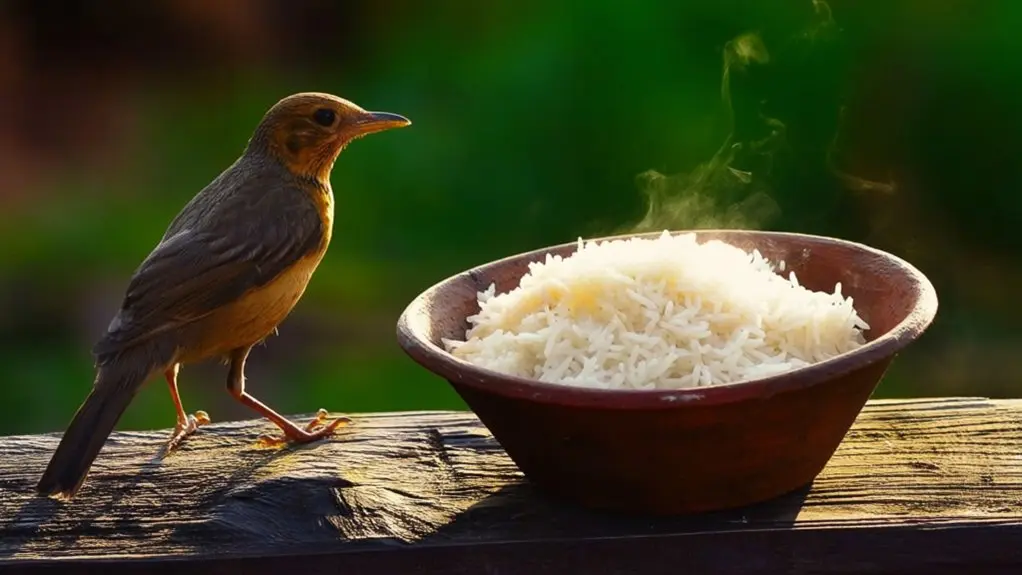
You can safely feed birds plain, cooked basmati rice in moderation. Just make sure to avoid additives like salt or spices because those could harm them. Cooking the rice actually helps improve digestibility, making it easier for birds to process.
While rice gives birds quick energy through carbohydrates, it doesn’t have all the essential nutrients they need. So, it’s best to offer it as a supplement alongside seeds, nuts, and insects.
Uncooked rice isn’t ideal, but it’s not toxic either. Knowing these facts can help you make better feeding choices and understand safer, healthier options for the birds.
Can Birds Safely Eat Basmati Rice?
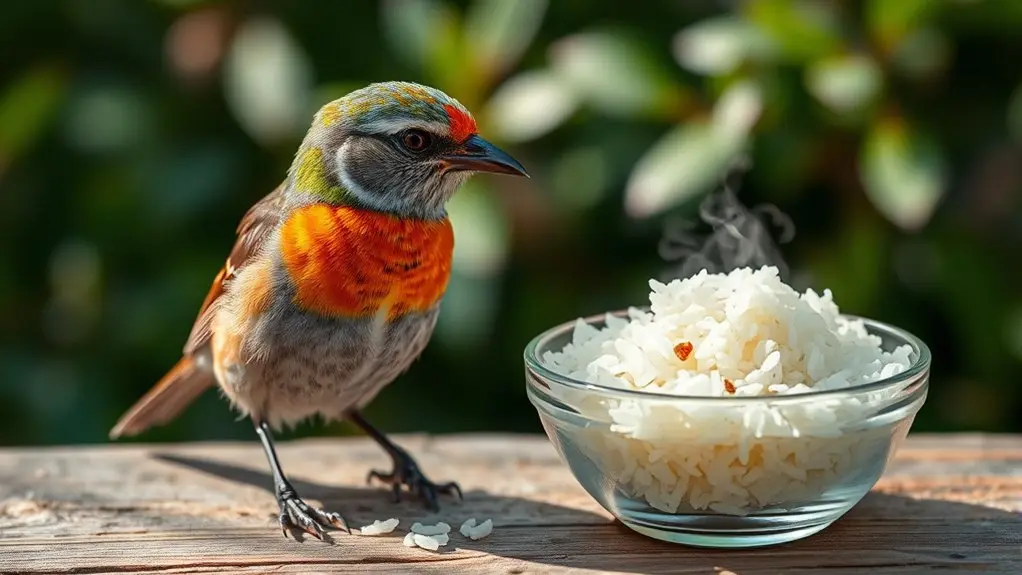
How safely can birds eat basmati rice? You’ll find that birds can safely consume both cooked and uncooked basmati rice. Cooked basmati rice is easily digestible and offers a good carbohydrate source.
Birds can safely eat both cooked and uncooked basmati rice as a nutritious carbohydrate source.
Uncooked rice doesn’t swell dangerously in birds’ digestive tracts.
Compared to white rice, basmati retains more nutrients due to less processing, providing higher nutritional value. However, you should always serve basmati rice plain and unseasoned. Avoid harmful additives like salt or spices that could negatively affect birds.
Feeding small, moderate amounts of either cooked or uncooked basmati rice can safely supplement a bird’s natural diet. By following these guidelines, you guarantee birds gain energy and nutrients without risking digestive issues or toxicity.
Why Do People Think Rice Harms Birds?
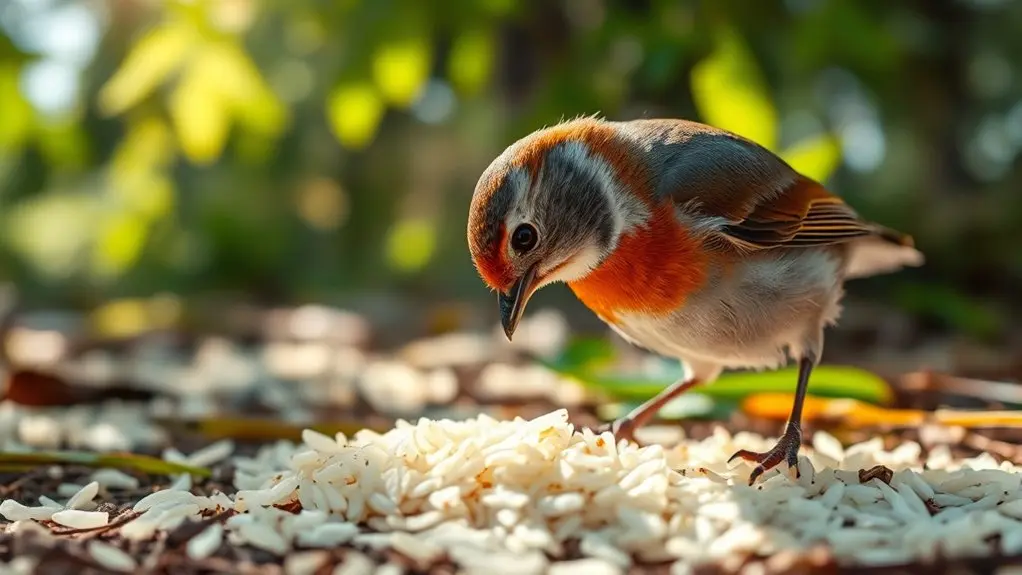
Although scientific evidence clearly shows that rice doesn’t harm birds, many people still believe the opposite due to a persistent myth. This misconception stems from several factors.
First, there’s the false belief that rice swells in birds’ stomachs, causing them to explode. Then, misunderstandings about grain expansion and digestion lead to fears of choking or death.
Plus, the myth became popular in the 1980s, even though scientific studies disproved it.
Cultural traditions and repeated misinformation also play a big role in keeping this misconception alive.
Scientific research confirms that rice, including basmati, is easily digestible and doesn’t expand enough to cause harm.
Which Wild Birds Eat Basmati Rice?
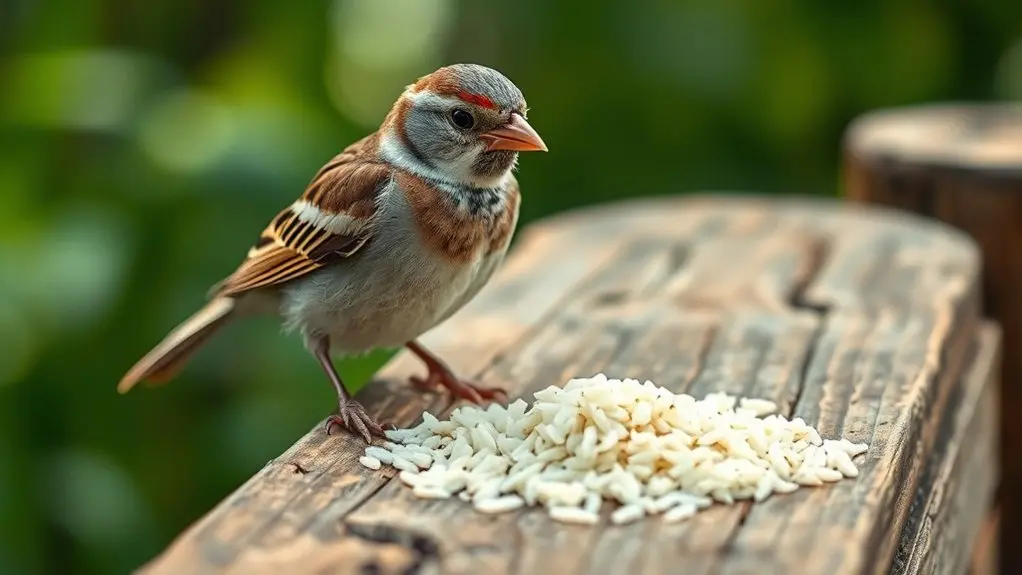
Understanding which wild birds eat basmati rice helps clarify its role in their diet and dispels concerns about its safety. Numerous species, including sparrows, finches, and blackbirds, naturally consume grains like basmati rice as a carbohydrate and energy source.
Robins and thrushes also forage in rice fields, opportunistically feeding on basmati rice when available.
While waterfowl and migratory birds prefer wild rice due to its higher nutritional content, basmati rice remains acceptable to many terrestrial birds if unseasoned and properly cooked. This diversity indicates that basmati rice can be part of a wild bird’s diet in moderation, without adverse effects.
How Does Basmati Rice Compare Nutritionally for Birds?
When you consider the nutritional profile of basmati rice for birds, you’ll find it primarily offers carbohydrates that serve as a quick energy source. However, it lacks several vital nutrients needed for balanced avian health.
Here’s how basmati rice compares nutritionally:
It contains minimal fat and protein, making it less complete than other grains or seeds. Its vitamin and mineral content is low unless fortified or supplemented. Cooking improves digestibility but doesn’t add essential nutrients like calcium or amino acids.
For a healthy diet, you should offer basmati rice in moderation alongside nutrient-dense foods. This way, your bird gets the energy from the rice but also the nutrients it really needs to stay healthy and happy.
Uncooked vs. Cooked Basmati Rice: What’s Safer for Birds?
Because cooked basmati rice softens during preparation, it becomes easier for birds to digest compared to uncooked rice. Cooking reduces the grain’s hardness and minimizes the risk of excessive swelling in a bird’s digestive tract.
Cooked basmati rice is gentler on birds’ digestion, reducing hardness and swelling risks compared to uncooked grains.
This makes it a safer choice, especially for smaller birds like finches and sparrows.
Uncooked basmati rice isn’t inherently harmful but can be tougher to process, particularly if dry. Offering it in moderation is important to avoid digestive discomfort.
Whether you provide cooked or uncooked rice, always guarantee it’s plain, free from salts, oils, or seasonings to prevent adverse effects.
Are There Any Risks From Contaminants in Basmati Rice for Birds?
Although basmati rice is generally safe for birds, it can contain contaminants like pesticides, heavy metals, and arsenic absorbed from soil and water during cultivation. These substances may pose health risks if ingested in high amounts or over prolonged periods.
To minimize risks, consider these points:
Pesticides and heavy metals can build up in birds, which might cause toxicity. Arsenic, often found in rice, could lead to long-term health issues. So, it’s a good idea to choose organic basmati rice to reduce exposure to these harmful contaminants.
Cooking rice thoroughly helps get rid of surface pesticide residues and microbes. Also, avoid seasoning or adding chemicals to rice, since that can introduce extra toxins.
How Much Basmati Rice Should You Feed Birds?
Ensuring birds receive basmati rice safely involves careful attention to portion size and frequency. You should feed small portions, about a teaspoon per bird, to prevent overfeeding.
For small species, a tablespoon per feeding session is enough, while larger birds can handle a bit more.
Make sure to offer cooked, unseasoned basmati rice to guarantee proper hydration and digestion. Limit feedings to a few times a week to avoid health issues like weight gain and decreased mobility.
Too much rice can mess with birds’ natural diet balance and lead to obesity-related problems.
By controlling portion size and how often you feed them, you help keep birds healthy while giving them a safe, nutritious treat.
Always watch how they respond to rice feedings and adjust portions as needed to support their well-being.
Better Foods Than Basmati Rice for Wild and Domestic Birds
If you want to make sure birds get the nutrients they need, it’s better to offer them seed mixes packed with vitamins and healthy fats instead of basmati rice.
For ducklings, specialized feed is a great choice because it’s designed to support their growth and development way more effectively than processed grains.
Plus, adding organic nuts and whole grains to their diet gives them natural fiber and important minerals that help keep both wild and domestic birds healthy.
Nutrient-Rich Seed Mixes
When you offer birds nutrient-rich seed mixes instead of basmati rice, you provide a diet closer to what they naturally forage. These mixes contain diverse seeds that supply essential nutrients missing from plain rice, enhancing bird health and vigor.
Consider these benefits of nutrient-rich seed mixes:
- They include sunflower seeds, millet, safflower, and cracked corn, offering a balanced nutrient profile.
- They deliver vital vitamins and minerals that support feather growth and energy metabolism.
- They replicate the natural variety birds seek in the wild, promoting better digestion and nutrient absorption.
- Research shows seed mixes improve breeding success and overall vitality compared to rice alone.
Specialized Duckling Feed
Although basmati rice is a common food offered to wild and domestic birds, specialized duckling feed provides a far more complete nutritional profile essential for healthy growth. Unlike basmati rice, which mainly supplies carbohydrates and lacks crucial nutrients, duckling feed is formulated with balanced grains, fish meal, vitamins, and minerals tailored to support development.
This feed guarantees proper protein intake, promotes feather growth, strengthens immune function, and improves digestibility, minimizing digestive issues often caused by improperly prepared rice.
By feeding your ducklings commercial or homemade specialized feed, you considerably reduce malnutrition risks and health problems associated with rice-only diets. Ultimately, specialized duckling feed offers superior nutritional support, making it the preferred option for both wild and domestic ducklings over basmati rice.
Organic Nuts And Grains
Organic nuts and grains offer a superior nutritional profile for wild and domestic birds compared to basmati rice. These natural foods provide essential nutrients and healthy fats that processed rice lacks, supporting birds’ immune systems and overall health.
When feeding birds, consider these key benefits of organic nuts and grains:
- Higher nutrient content in millet, oats, and sunflower seeds than conventional rice.
- Minimal processing aligns with birds’ natural dietary preferences.
- Lower pesticide residues and absence of harmful chemicals or heavy metals.
- Enhanced immune support from healthy fats and antioxidants.
Tips for Feeding Birds Basmati Rice Responsibly
How can you guarantee feeding basmati rice benefits birds without causing harm? First, always serve plain, fully cooked basmati rice. Avoid salt, spices, or oils that can upset birds’ digestive systems. Cooked rice is easier to digest and provides a safe, high-energy carbohydrate source.
Next, offer rice in moderation. Try to integrate it into a balanced diet that includes natural grains, seeds, and insects to assure complete nutrition. Keep an eye on portion sizes regularly to prevent obesity and related health issues, especially in wild or domestic birds.
Frequently Asked Questions
Can Birds With Allergies Eat Basmati Rice Safely?
You can safely offer basmati rice to birds with allergies if it’s plain and unseasoned. Always prepare it thoroughly and consult your avian veterinarian first. This helps avoid potential allergic reactions or digestive issues.
It’s always better to be cautious when introducing new foods to your feathered friend. So, keep an eye on how they respond after trying the rice. If you notice anything unusual, reach out to your vet right away.
Does Basmati Rice Affect Bird Migration Patterns?
Basmati rice doesn’t affect bird migration patterns. You’ll find that migration relies on environmental cues like daylight and temperature, not diet.
Feeding rice provides energy but doesn’t alter birds’ routes or timing during migration. So, while birds might eat rice, it’s not changing where or when they travel.
Can Feeding Basmati Rice Impact Bird Breeding Success?
Feeding basmati rice is like adding a puzzle piece. It can support bird breeding success when used sparingly and unseasoned. But relying solely on it risks nutritional gaps.
Is Basmati Rice Safe for Baby Birds or Chicks?
Yes, you can safely feed baby birds cooked, plain basmati rice in small amounts. It provides digestible energy, which is great for their growing bodies. Just remember not to give them too much at once.
Always make sure to supplement their diet with other foods. A balanced diet helps support their developing digestive systems effectively. That way, they get all the nutrients they need to thrive.
How Does Basmati Rice Affect Bird Behavior or Activity Levels?
Birds won’t exactly break a leg from basmati rice, but you’ll notice only slight activity changes if you feed it sparingly. Overfeeding might slow them down, while seasoned rice can disrupt digestion and reduce energy.
Conclusion
So, feel free to toss a bit of basmati rice to your feathered friends. Just don’t expect gourmet dining or a miracle health boost. Birds won’t starve, but they’re not exactly craving your leftover biryani either.
Remember, uncooked or cooked, rice isn’t the superfood it’s cracked up to be. Feed responsibly, avoid contaminants, and maybe mix in some better bird foods. After all, even birds deserve more than just plain carbs on their menu!