
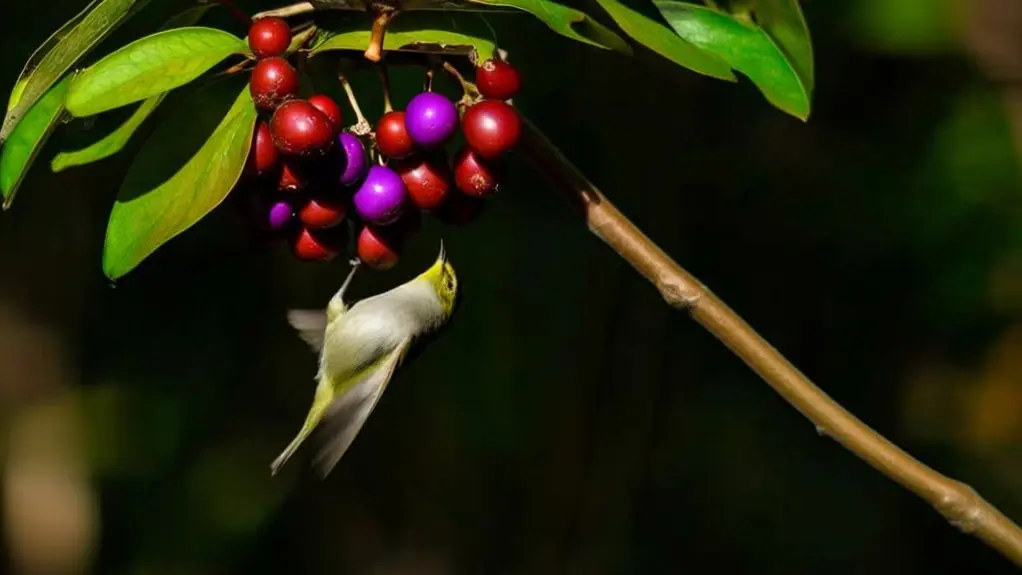
Yes, birds can eat berries. These little fruits serve as crucial energy sources during winter when insects become scarce.
You’ll find species like cedar waxwings, robins, and cardinals relying on native berries such as holly, mountain ash, and juniper. These provide fats, sugars, and vitamins that are essential for survival and migration.
Birds have unique adaptations that allow them to digest berries that are toxic to humans. This also helps with seed dispersal.
Knowing these details can help you support bird health and boost ecological balance effectively. It’s pretty cool how everything works together!
Why Do Birds Eat Berries?
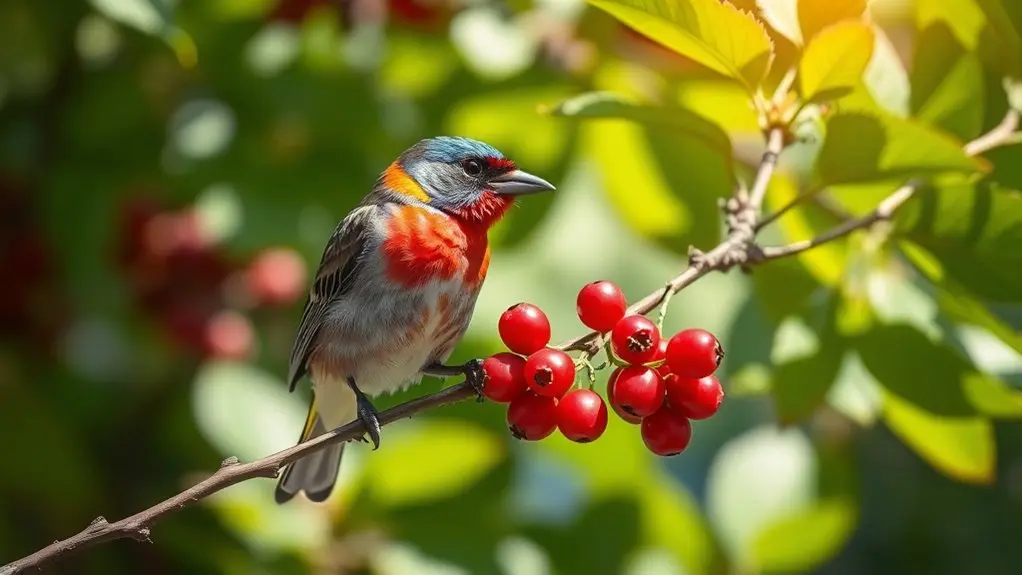
Although insects provide a primary food source for many birds, you’ll find that during winter months, when insects become scarce, birds turn to berries as a crucial alternative.
Berries offer a concentrated source of energy through essential fats, sugars, and vitamins, supporting birds’ metabolic needs in harsh conditions.
You should know that many species depend on these nutrients to build fat reserves critical for migration and survival.
Birds selectively consume berries based on characteristics like color, size, and nutritional value, showing how they adapt to optimize energy intake.
Interestingly, they can digest certain berries that are toxic to humans, which highlights the evolutionary role berries play in their diet.
Understanding these factors makes it clear why berries are so important for birds during times when insects are hard to find.
Which Backyard Birds Eat Berries in Winter?
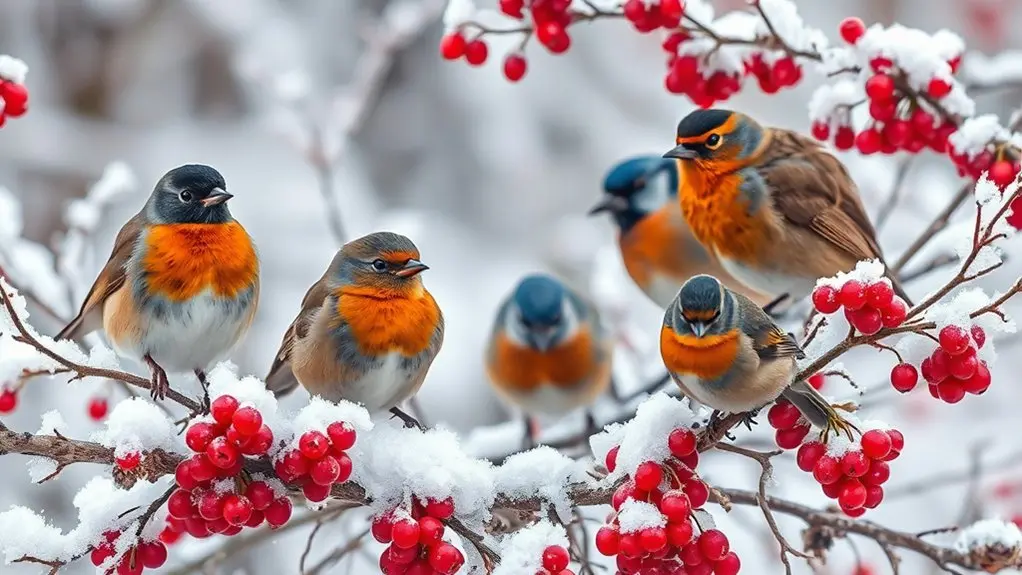
You’ll notice that birds like bluebirds, robins, and cedar waxwings really rely on berries from plants such as holly, junipers, and winterberry during the winter. These berries become a crucial food source when other options are scarce.
These birds have some interesting foraging habits too. They often gather in flocks, which helps them make the most out of the berry resources available in their area.
Knowing which birds prefer certain berry plants gives us a better idea of how they manage to survive through those cold months. It’s pretty fascinating to see how nature works!
Key Winter Berry Eaters
When winter reduces the availability of insects and seeds, many backyard birds turn to berries as a crucial food source. Species like cedar waxwings, American robins, and northern cardinals actively feed on berries to meet their energy needs.
Bluebirds and thrushes depend heavily on holly, juniper, and hawthorn berries that persist through winter.
Flocking birds such as cedar waxwings and pine grosbeaks consume large quantities of juniper and mountain ash berries during colder months.
Some, including Townsend’s solitaire and gray catbirds, defend berry-rich trees to secure this essential resource.
Berries from holly, winterberry, and viburnums provide indispensable calories when insects are scarce.
Understanding which birds rely on these fruits helps you support local bird populations throughout winter by providing appropriate berry sources.
It’s a simple way to make a big difference for your feathered friends.
Preferred Berry Plants
Identifying which berry-producing plants attract specific winter birds helps you create a supportive habitat in your backyard. Cedar waxwings prefer juniper berries and other available fruits. They often move in flocks to exploit these resources.
American robins and hermit thrushes depend on holly, pyracantha, and serviceberry berries during the colder months.
Northern cardinals frequently utilize holly and crabapple berries, which also provide shelter.
Mountain ash and crabapple trees offer high-fat, nutrient-rich berries that attract pine grosbeaks and similar winter visitors.
Townsend’s solitaires and related thrush species fiercely defend berry sources like juniper and mistletoe. These berries sustain them through winter.
Foraging Behaviors And Habitats
Although winter limits many food sources, numerous backyard birds adapt by relying heavily on berries to meet their nutritional needs. Species like cedar waxwings, robins, and bluebirds consume berries as a primary food source during colder months.
You’ll observe hermit thrushes, varied thrushes, and Townsend’s solitaires actively defending berry-rich trees, particularly those bearing high-fat fruits such as junipers and mistletoe.
Flocking birds, including cedar waxwings and pine grosbeaks, gather in groups to exploit abundant berry supplies, sustaining themselves through winter.
Additionally, northern cardinals and American robins forage on native berry-producing shrubs like holly and viburnums in suburban and woodland habitats.
Many winter birds forage alone or in small groups on these persistent fruit sources, compensating for the scarcity of insects during this period.
Why Birds Can Eat Berries That Are Poisonous to Humans
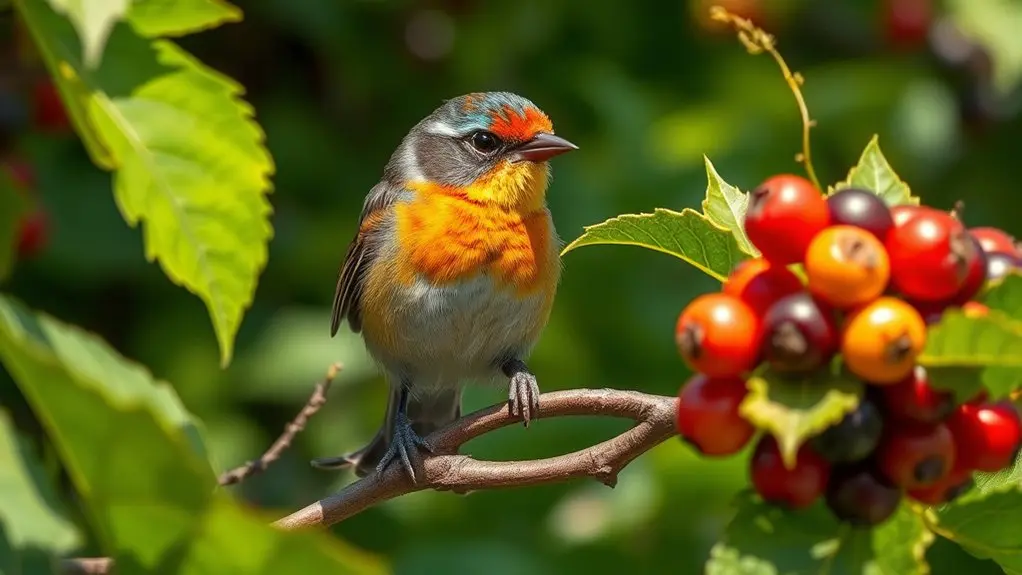
Because birds have evolved specialized digestive systems, they can safely consume many berries that are toxic to humans. You might wonder how this is possible. Birds can process or tolerate toxic compounds that would harm you.
For example, urushiol in poison ivy berries triggers allergic reactions in humans but doesn’t affect birds. Seeds in toxic berries like yew or holly remain harmless to birds because the fruit’s flesh protects them as birds digest it.
Birds’ digestive adaptations allow them to exploit food sources unavailable to many mammals, giving them an ecological advantage. This ability not only enables birds to access diverse nutrition but also facilitates seed dispersal.
Which Berries Are Safe: And Which Aren’t: For Birds
How can you tell which berries are safe for birds and which pose risks? Birds can safely consume many berries that are toxic to humans, like baneberry and deadly nightshade, because of their unique digestive systems. But not all berries are safe for every bird species. Some may actually harm certain birds.
Native berries usually offer more nutritional value than invasive ones. So, it’s a good idea to always identify berries accurately before feeding them to birds.
| Berry Type | Safety for Birds | Notes |
|---|---|---|
| Baneberry | Safe | Toxic to humans, digestible for birds |
| Pokeweed | Safe | Birds digest toxins humans cannot |
| Yew Seeds | Safe for many species | Poisonous to humans, but consumed by birds |
Proper identification helps you support bird health without risking toxicity.
How Berries Help Birds Survive Fall and Winter
When insects become scarce during fall and winter, berries serve as an essential high-energy food source for many bird species. You’ll notice that native berries like holly and winterberry often persist through winter, providing reliable nourishment.
Birds such as cedar waxwings and robins depend on these berries to build fat reserves necessary for migration and surviving cold conditions.
The bright red color of many berries enhances visibility, attracting birds during foraging. Consuming berries helps birds maintain energy levels and endure harsh weather.
Key factors include:
- Availability of native berries into winter months
- High energy content supporting fat accumulation
- Visual cues from berry coloration aiding foraging efficiency
Understanding these aspects highlights berries’ critical role in avian fall and winter survival. It’s pretty amazing how something as simple as berries can make such a big difference for birds during tough seasons.
Simple Tips to Plant Berry Bushes That Attract Birds
Although planting berry bushes may seem straightforward, selecting the right species and arranging them strategically can really boost how attractive and nutritious they’re for birds. Start by choosing native shrubs such as winterberry, serviceberry, and viburnum. These support local bird populations effectively.
Try to include species that fruit at different times to make sure food is available throughout the season. It’s also smart to prioritize high-fat, nutrient-dense berries from plants like junipers and holly. These help birds store fat for winter survival.
Plant a mix of bushes that enjoy sun and those that tolerate shade. This way, you’ll accommodate different bird species and their habitat preferences.
Lastly, keep your plants healthy and pesticide-free to produce safe and abundant berries. This will support both migrating and wintering birds.
Following these simple tips will really optimize your garden’s ecological role and attract more birds.
Feeding Berries and Fruit to Pet Birds Safely
Since berries and fruits provide essential vitamins and nutrients, you must prepare them carefully before feeding them to pet birds. Proper preparation minimizes health risks such as choking, toxicity, and bacterial contamination. Always wash fruits thoroughly to remove pesticides, bacteria, and mold.
Make sure to remove seeds from berries like apples and cherries, as these can be toxic or cause choking. Cut fruits into small, manageable pieces to help your bird eat safely.
Also, try to offer a variety of safe fruits in moderation so your bird gets a balanced diet.
It’s a good idea to consult an avian veterinarian to tailor fruit choices and quantities to your bird species’ specific nutritional needs.
Key safety steps include:
- Washing fruits thoroughly
- Removing toxic seeds
- Cutting into small pieces
Doing this guarantees your pet bird benefits from fruits without any health hazards.
Frequently Asked Questions
Do Birds Prefer Ripe or Unripe Berries?
You’ll notice birds prefer ripe berries because they’re sweeter and easier to digest. They detect ripeness through color and aroma, choosing nutrient-rich fruit that provides more energy, especially during colder months.
That said, some birds do eat unripe berries if they need to. It’s all about what’s available and what helps them get through the season. So while ripe berries are the favorite, unripe ones can still be on the menu sometimes.
Can Berry-Eating Birds Spread Invasive Plant Species?
Yes, berry-eating birds can spread invasive plant species by consuming non-native berries and dispersing their seeds over long distances. This process unintentionally helps invasive plants establish themselves in new areas.
As a result, these invasive plants can outcompete native vegetation and change the local ecosystem. It’s kind of surprising how something as simple as birds eating berries can have such a big impact!
How Do Birds Digest Toxic Compounds in Berries?
You rely on birds’ specialized enzymes, rapid digestion, and unique gut flora to break down toxic compounds in berries. These adaptations detoxify harmful chemicals efficiently, allowing birds to safely consume substances that would poison many other animals.
Pretty amazing, right? Their bodies are built to handle what would be dangerous for most creatures. This means birds can enjoy a variety of berries without worry. Nature really gave them a clever system to stay safe while eating.
Are There Seasonal Changes in Birds’ Berry Consumption?
Yes, you’ll notice birds increase berry consumption in winter when insects decline, favoring species like juniper and holly. Their diets shift seasonally, relying on native berry-producing plants aligned with migration and energy demands.
Birds really adapt what they eat depending on the season. When bugs are scarce, berries become a go-to snack. It’s all about making the most of what’s available.
Do Berry-Eating Birds Face Competition From Other Wildlife?
Yes, you’ll find berry-eating birds compete with mammals like squirrels and raccoons, as well as other birds, especially in winter.
Larger herbivores may also indirectly reduce berry availability by browsing on shrubs. So, it’s not just a simple bird-versus-bird competition out there. There’s a whole mix of wildlife sharing the same food sources.
Conclusion
You now know that berries serve as essential fuel for birds, especially in colder months when other food is scarce. While some berries are safe for birds but toxic to humans, understanding these differences helps you support local wildlife responsibly.
By planting the right berry bushes, you create a lifeline that sustains birds through harsh seasons. Like a well-oiled machine, this natural cycle keeps ecosystems humming. It really shows how interconnected and precise nature truly is.