
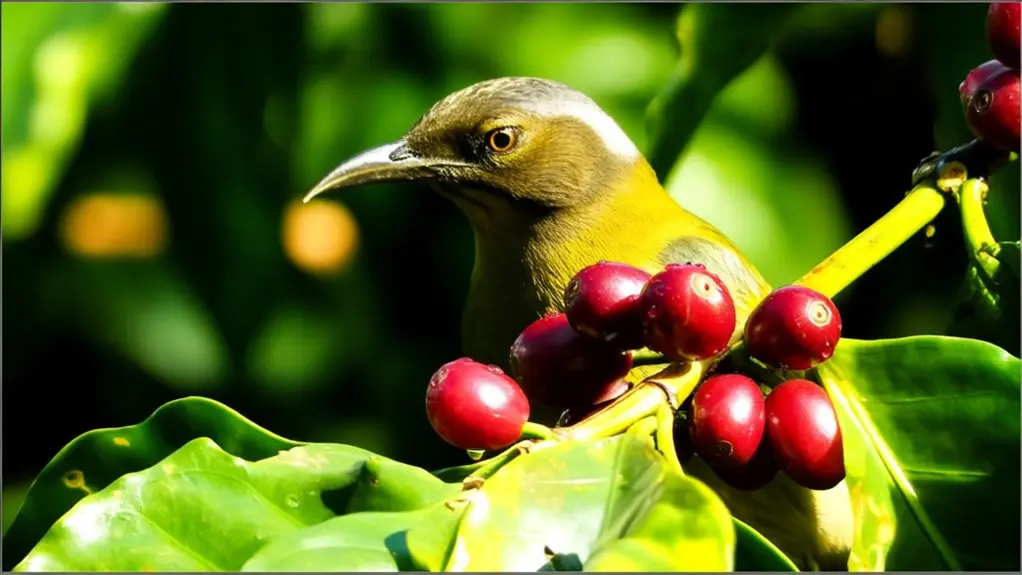
You shouldn’t feed birds coffee beans because the caffeine they contain can cause serious health issues like hyperactivity, increased heart rate, and even death. While some birds may be attracted to coffee beans due to their smell and seed-like appearance, caffeine toxicity poses significant risks.
Even small amounts can lead to behavioral problems or poisoning, especially with unroasted beans that have higher caffeine levels. If you want to understand the full impact and safer alternatives, keep exploring this topic.
Why Do Birds Eat Coffee Beans?
Why do birds eat coffee beans despite their unusual nature? You’ll find that birds often mistake coffee beans for natural seeds due to their similar size and shape.
The aroma and taste of coffee beans can attract certain bird species, especially those seeking a quick energy boost.
Since coffee beans contain caffeine, they may provide a stimulating effect, which birds might find appealing.
Caffeine in coffee beans may offer birds a natural boost, making them an appealing snack.
Also, when coffee beans are mixed with nuts or other foods, they become an enticing treat for various garden birds.
This behavior aligns with birds’ natural seed dispersal habits, where they consume and transport seeds.
Which Birds Like Coffee Beans?
Although coffee beans are unconventional food sources, several bird species actively consume them. You’ll notice sparrows, blue tits, and coal tits readily peck at and eat coffee beans, often sharing feeders where these beans are present. This behavior suggests a broad interest across multiple bird types.
Garden birds, in particular, seem drawn to coffee beans as an energy-rich option, devouring them enthusiastically. The attraction likely stems from the beans’ aroma and taste, which appeal to small birds.
Additionally, coffee beans resemble seeds naturally dispersed by birds, possibly explaining their preference.
How Does Caffeine Affect Birds’ Health and Behavior?
When birds consume caffeine, it can trigger physiological responses similar to those observed in humans, such as increased heart rate and heightened activity levels. You should know that caffeine acts as a central nervous system stimulant in birds, potentially causing hyperactivity and cardiac distress.
Research shows small caffeine amounts, like a sip of coffee or tea, generally don’t harm birds, but larger doses can induce nervousness, tremors, or death.
For instance, studies on pigeons reveal that even less than half a cup of coffee can produce adverse effects in small birds. While birds rarely ingest toxic caffeine amounts voluntarily, accidental consumption remains a health concern.
Monitoring and minimizing their exposure to caffeine is important to prevent these physiological and behavioral disturbances.
Are Coffee Beans Risky for Birds?
You should know that caffeine in coffee beans can cause heart problems and hyperactivity in birds, which can be pretty serious.
While tiny amounts mightn’t do much harm, larger doses can definitely be toxic and dangerous.
So, it’s really best to be careful and avoid giving coffee beans to birds altogether.
That way, you can help keep them safe and healthy without any risks.
Caffeine Effects On Birds
Since caffeine acts as a powerful stimulant, it can trigger hyperactivity, cardiac distress, and even death in birds if they ingest enough coffee beans. Research on domestic pigeons shows that high caffeine exposure causes intoxication symptoms and can be fatal.
The caffeine concentration in a typical cup of coffee (40–150 mg per 250 ml) far exceeds what a small bird would need to experience adverse effects.
While occasional, small sips of coffee are unlikely to harm birds, repeated or large doses markedly increase health risks. So, it’s really important to keep an eye on how much caffeine birds get.
Consequently, you should carefully manage or avoid allowing birds access to coffee beans and caffeinated drinks. Doing so reduces the chance of caffeine-related physiological disturbances, ensuring their safety and well-being.
Toxicity Levels And Risks
Although birds rarely consume coffee beans voluntarily, their caffeine content poses significant toxicity risks. Caffeine can trigger hyperactivity, cardiac issues, and even death at high doses.
Small quantities, like under half a cup of brewed coffee for a 300g pigeon, may cause mild symptoms. Roasting alters caffeine levels but doesn’t guarantee safety.
Green beans hold more caffeine, increasing poisoning risks.
Since caffeine content varies and bird sensitivity differs, feeding coffee beans to birds is risky and inadvisable. Better to keep them away from any coffee products to be safe.
Safety Precautions For Feeding
Understanding the toxicity risks of caffeine in coffee beans highlights the need for careful consideration before offering them to birds. Caffeine can induce cardiac problems and hyperactivity, posing significant health risks.
While roasting may change some chemical properties, the safety of roasted beans remains unverified and requires further study.
Experts advise against feeding any form of coffee beans to birds due to unpredictable caffeine exposure. If you must feed them, guarantee minimal quantities and closely monitor their behavior for adverse reactions.
Given the potential harm, it’s best to avoid coffee beans altogether.
Prioritize safer, scientifically endorsed food options to protect avian health, as the risks generally outweigh any attraction birds may have to coffee beans.
What Research Says About Birds and Caffeine?
When you look at how caffeine affects birds, research shows toxicity only happens at doses equal to less than half a cup of coffee. This was shown in a 2022 study on domestic pigeons. So, birds would have to drink several times their daily water intake in caffeine to reach toxic levels. That makes accidental poisoning pretty unlikely.
Pure caffeine given in controlled experiments has caused intoxication and death at certain doses. But this kind of consumption is rare in birds’ natural behavior. Studies also show that birds naturally avoid large amounts of caffeine. This helps minimize the risk from coffee beans or caffeinated drinks.
Still, it’s a good idea to keep caffeinated drinks away from birds to prevent accidental ingestion. Even though typical exposure levels are generally safe according to current research, being cautious is smart. Better safe than sorry, right?
Do Coffee Beans Give Birds an Energy Boost?
Since caffeine acts as a stimulant for many animals, birds often experience a quick energy boost after consuming coffee beans. The caffeine stimulates their central nervous system, increasing alertness and activity levels.
When birds ingest small quantities of coffee beans, they receive an immediate source of energy, similar to a natural stimulant.
However, this effect can be double-edged. Excessive caffeine intake may induce hyperactivity or cardiac distress, posing significant health risks.
Observations of rapid consumption and heightened energy in birds indicate that coffee beans represent a potent, though potentially hazardous, energy source.
If you notice birds appearing unusually active after eating coffee beans, it’s likely due to caffeine’s stimulant properties. But be careful, because the line between a beneficial and harmful dose is pretty fine.
How to Offer Coffee Beans Safely to Birds
Although coffee beans can give birds a nice energy boost, you’ve got to be careful when offering them. Always stick to roasted beans without any added sugars or flavorings.
It’s best to mix small amounts with natural bird foods so they don’t get too much caffeine. Keep an eye on the birds while they’re trying it and stop right away if you notice any signs of distress.
If you’re unsure about how much to give, chat with an avian health expert to figure out a safe serving size.
| Safety Tip | Reason |
|---|---|
| Use roasted, plain beans | Raw or flavored beans can be toxic |
| Mix with nuts/seeds | Prevents excessive caffeine intake |
| Limit quantity | Avoid caffeine overdose |
| Observe bird behavior | Detect early signs of adverse reactions |
Better Bird Food Alternatives to Coffee Beans
If you want to keep birds healthy, it’s best to pick safe and nutritious options like sunflower seeds, millet, and suet. These choices support their well-being without any of the risks that come with caffeine.
You can also try insect-based foods, like mealworms, which are great because they give birds important protein and energy—something coffee beans just don’t provide safely.
And remember, it’s always a good idea to avoid harmful substances. Sticking to commercial bird seed mixes and fresh fruits is a smart move since they meet birds’ dietary needs really well.
Safe Nutritious Bird Foods
When selecting bird foods, opting for safe and nutritious options guarantees avian health and well-being. Unlike coffee beans, which pose risks, seeds, nuts, fruits, and vegetables provide essential nutrients. You can offer black oil sunflower seeds, millet, and safflower seeds for energy and protein.
Chopped fruits such as apples and berries supply vitamins and hydration, while leafy greens like spinach and kale contribute minerals and fiber. Commercial bird pellets deliver balanced, species-specific nutrition. Here’s a concise comparison:
| Food Type | Nutritional Benefits | Suitable Bird Types |
|---|---|---|
| Black Oil Sunflower | High fat, energy dense | Finches, Cardinals |
| Millet | Carbohydrates, easy digest | Sparrows, Canaries |
| Fruits | Vitamins, hydration | Parrots, Thrushes |
| Leafy Greens | Minerals, fiber | Parakeets, Cockatiels |
| Bird Pellets | Balanced, species-specific | Most pet birds |
Avoiding Harmful Substances
Since caffeine poses serious health risks to birds, including cardiac problems and hyperactivity, it’s critical to exclude coffee beans from their diet.
Coffee beans, especially unroasted or flavored varieties, may contain harmful additives or toxins that make these risks even worse.
Instead, you should provide safer alternatives like fresh fruits, natural seed and nut mixes, and specialized bird pellets.
These foods give essential nutrients without exposing birds to caffeine or other harmful substances.
Before introducing any new food, make sure to research its safety thoroughly to avoid any accidental health issues.
By choosing bird-safe options and steering clear of coffee beans, you help keep your bird’s cardiovascular health and overall well-being in check.
This way, you ensure a balanced diet free from toxic compounds that could cause serious problems.
Frequently Asked Questions
Can Coffee Bean Plants Attract Birds to My Garden?
Yes, coffee bean plants attract birds by producing vibrant cherries that serve as natural food sources. You’ll notice increased bird activity, especially from species that help spread seeds around. This naturally boosts your garden’s biodiversity and keeps the ecosystem balanced.
Birds love these cherries, so having coffee plants can turn your garden into a lively bird hangout spot. Plus, their presence can help with pollination and pest control. It’s a simple way to make your outdoor space more vibrant and alive.
Do Birds Prefer Roasted or Raw Coffee Beans?
You might be surprised, but birds prefer roasted coffee beans over raw ones. Roasting reduces bitterness and releases aromatic oils, making the beans more palatable and attractive.
Raw beans have a harsher taste and higher caffeine content, which tends to deter most bird species. So, if you’re thinking about feeding birds coffee beans, roasted ones are definitely the better choice.
How Do Birds Metabolize Caffeine Compared to Mammals?
You’ll find birds metabolize caffeine much faster than mammals due to higher enzyme levels in their livers. This rapid breakdown allows them to clear caffeine within hours, reducing toxicity risk compared to slower mammalian metabolism.
It’s pretty interesting because their livers are just more efficient at processing caffeine. So, while caffeine might hang around in mammals for a longer time, birds get rid of it quickly. This means they’re less likely to experience negative effects from caffeine exposure.
Can Bird Droppings Spread Coffee Plant Seeds?
You might think bird droppings can’t spread coffee seeds, but they do. Birds digest the pulp and then excrete viable seeds. The acidic droppings actually help break down seed coats, which boosts the chances of germination.
That said, not all seeds survive this process or grow into full plants. But overall, birds play a pretty important role in spreading coffee seeds around. It’s nature’s way of helping coffee plants reproduce!
Are There Any Bird Species That Avoid Coffee Bean Areas?
Yes, you’ll find certain insectivorous and seed-preferring birds avoid coffee bean areas due to unfamiliar scents, caffeine sensitivity, or altered habitats. Roasted beans’ strong odors especially deter cautious species, influencing their foraging and migration behaviors scientifically.
It’s pretty interesting how these birds pick up on the smells and change their routes or feeding spots. They’re not just avoiding the taste but also the environment that coffee cultivation creates. So, coffee bean areas can actually shape where some birds decide to hang out or pass through.
Conclusion
You might think offering coffee beans to birds could be a quick energy fix, but it’s more like handing them a ticking time bomb. Caffeine’s effects on birds remain largely harmful and unpredictable, potentially disrupting their health and behavior.
Scientific evidence advises against feeding birds coffee beans. Instead, focus on safer, nutrient-rich alternatives to support their well-being. Protecting birds means choosing foods that nurture, not threaten, their delicate systems.