
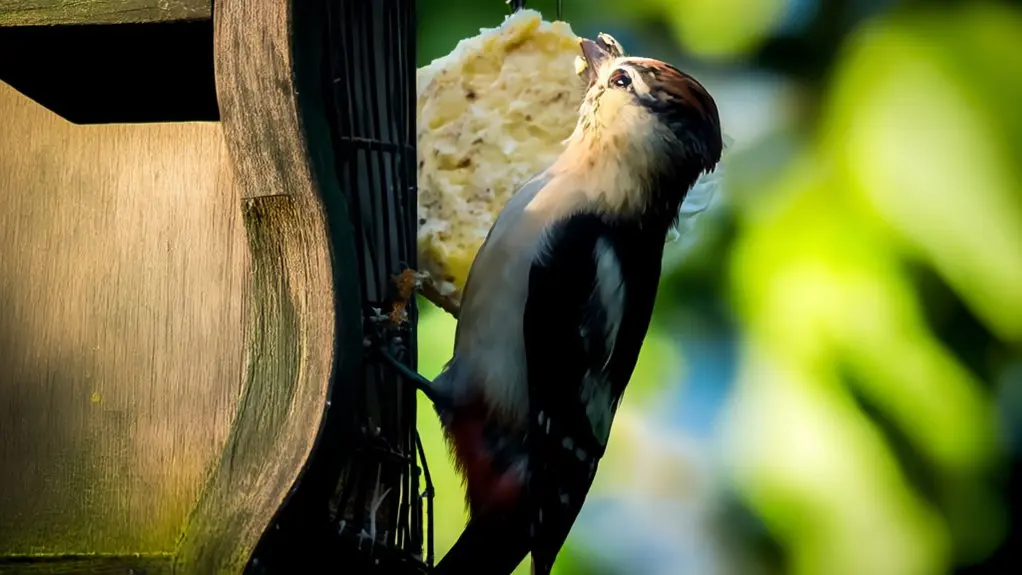
You can safely feed birds lard instead of suet if you use pure, additive-free lard that’s unsalted and properly stored to prevent spoilage. Lard’s softer texture melts more easily but still provides the high energy birds need, especially in cold weather.
Avoid lard during hot, humid conditions or nesting periods to reduce health risks. Understanding the differences in fat composition, texture, and feeding precautions guarantees you provide effective, safe nutrition. Exploring further reveals ideal preparation and alternatives.
What Is the Difference Between Lard and Suet for Birds?
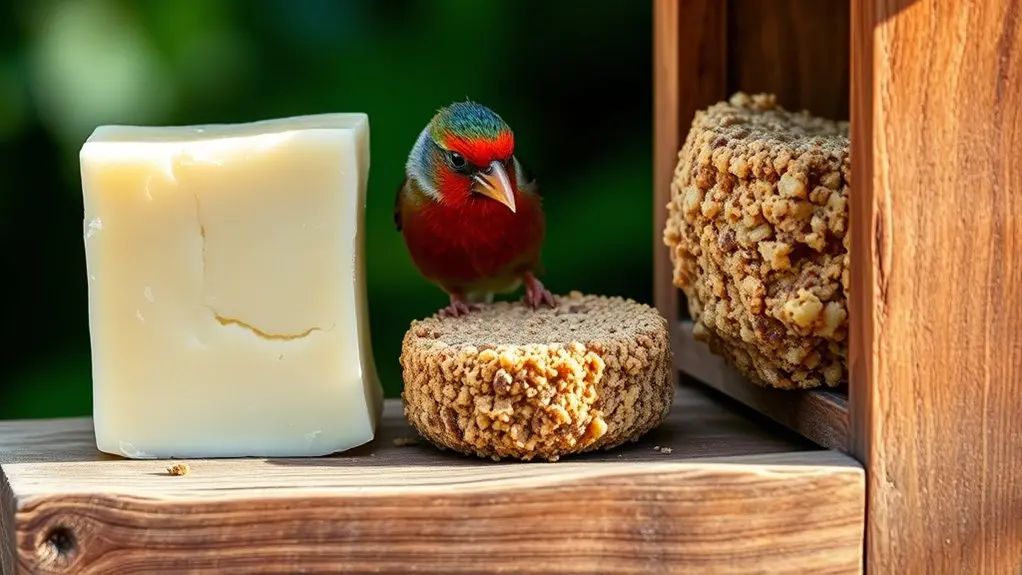
What sets lard and suet apart when feeding birds primarily involves their physical properties and sources. Lard is rendered pig fat with a soft, fatty texture, while suet is the hard, white fat surrounding the kidneys of cattle and sheep.
Suet’s higher melting point keeps it solid at room temperature, making it ideal for bird feeding, especially in suet cakes.
Suet stays solid at room temperature, making it perfect for durable and nutritious bird feeding cakes.
In contrast, lard melts more easily due to its softness. Both provide high-energy fats, but suet is traditionally preferred for bird treats.
You should note that lard may contain additives or preservatives depending on processing, whereas raw suet is typically free from chemicals.
When using lard for birds, it’s important to guarantee it’s unsalted and additive-free, as its different texture and melting point affect its suitability.
Is It Safe to Feed Birds Lard Instead of Suet?
Although suet is traditionally favored for feeding wild birds, you can safely use lard as an alternative if you guarantee it’s pure, unprocessed, and free from additives or salt.
Pure lard lacks preservatives and artificial chemicals commonly found in processed suet, which reduces potential harm to birds. Its high fat and energy content make lard especially beneficial during colder months, supporting birds’ metabolic needs.
That said, you should use raw or cooked lard carefully. Raw lard may pose bacterial contamination risks if not stored properly. Also, avoid salted or flavored lard because excess salt and additives can negatively affect birds’ health.
When Should You Avoid Feeding Birds Lard or Suet?
Because lard and suet are high-fat foods prone to spoilage, you should avoid feeding them to birds during hot weather or in environments with high humidity and poor air circulation. These conditions speed up mold and bacterial growth, which can harm birds’ health.
Avoid feeding lard and suet to birds in hot, humid, or poorly ventilated conditions to prevent mold and bacteria growth.
Also, it’s best not to offer these fats when birds are nesting or raising young. High-fat diets might mess with their natural nutritional balance.
Avoid feeding lard or suet if the fat has been stored for a long time or shows signs of rancidity. Spoiled fats can be toxic to birds.
And during disease outbreaks or stressful times, it’s a good idea to hold off on giving these energy-dense foods.
Homemade Bird Fat Recipes: Lard vs Suet
When you’re making homemade bird fat recipes, it’s important to know the nutritional benefits of lard compared to suet. This knowledge really helps when you want to support your feathered friends’ health.
You’ll probably notice that suet has a firmer texture, while lard is softer. That difference can actually affect how easily birds can access and eat the fat.
Also, think about the birds’ preferences—different species have different feeding habits. Keeping that in mind will help you customize your recipe so the birds are more likely to enjoy it.
Lard Nutritional Benefits
Since lard is rendered pig fat with a softer texture compared to raw suet, it serves as an efficient base for homemade bird fat recipes. You’ll find lard offers a rich source of monounsaturated fats and calories, which support birds’ energy needs, especially in colder months.
Unlike suet, lard’s processing reduces impurities, making it a cleaner option. Its ability to melt easily allows you to blend it with seeds or grains, enhancing nutritional diversity. This makes it a great choice for nourishing wild birds when the weather turns chilly.
| Nutrient Type | Benefit to Birds | Emotional Impact |
|---|---|---|
| Monounsaturated Fat | Sustains energy | Warmth in harsh weather |
| Calories | Supports survival | Assurance of nourishment |
| Purity | Reduces contaminants | Peace of mind |
| Texture | Easy mixing | Convenience |
| Availability | Readily accessible | Confidence in feeding |
Suet Texture Differences
Although both lard and suet serve as high-fat bases in homemade bird fat recipes, their textures differ a lot because of their composition and processing.
Lard is pure fat, so it has a smoother, more uniform consistency. It stays softer and more pliable when cooled.
Natural suet, which usually comes from beef fat, has connective tissues and impurities. This makes it firmer and crumbly in texture.
Commercial suet often has preservatives and flavorings added, which changes its texture even more.
When you use lard, you can change how firm it’s by mixing in things like cornmeal or oats. This helps you get the consistency you want.
Knowing these texture differences lets you customize homemade bird fat recipes to fit the mechanical needs of bird feeders and the feeding habits of birds.
That way, your suet substitutes work well and are practical.
Bird Preference Factors
Because birds rely on fat for essential energy, their preferences between lard and suet are influenced by factors like flavor, texture, and nutritional content.
Suet, sourced from beef or mutton fat, offers a firmer texture and higher melting point, which many birds favor.
Lard, made from pig fat, has a softer consistency and a distinct flavor that might make it less appealing to some birds.
Nutritionally, both fats provide comparable energy, but additives in suet can boost its attractiveness.
When choosing, consider the species you want to attract, what’s available, and the environmental conditions.
These things can make a big difference in which fat works best for your feathered visitors.
Better Options Than Lard and Suet for Feeding Birds
When you want to provide a reliable energy source for birds during colder months, choosing alternatives to lard and suet can really boost their nutrition and safety. Commercially prepared bird fats, made specifically for birds, offer balanced nutrition. Plus, they reduce risks linked to impurities or harmful additives.
Natural fats like rendered beef or lamb fat are healthier substitutes. They supply essential energy without the preservatives you often find in some suet products.
Also, adding native seeds, nuts, and plant-based foods gives birds sustainable, chemical-free nutrition. This supports a diverse diet and promotes overall bird health.
These options fit better with birds’ natural feeding habits and help avoid the downsides of processed fats.
How to Make Bird Feeding Healthy and Safe
To make bird feeding healthy and safe, start by choosing fats that are unprocessed and free from additives like salt or spices. It’s best to melt and then cool the fat before offering it to the birds, as this helps reduce the risk of bacteria.
You might also want to mix in some nutrient-rich ingredients, like seeds or oats, to give the birds a little extra boost.
Don’t forget to check your feeders regularly and replace any spoiled food to keep mold at bay. Keeping the feeding area clean is important too, so your feathered friends stay healthy and happy!
Safe Fat Choices
Although suet remains a popular choice for high-energy bird feeding, you can safely use lard as a nutritious alternative by selecting unprocessed, pure lard free from preservatives, salt, or nitrates. Using pure lard reduces exposure to harmful additives common in commercial suet.
Cooking or melting lard before feeding also minimizes bacterial risks. Mixing lard with seeds, nuts, and dried fruit enhances its nutritional profile, providing balanced energy.
| Factor | Recommendation |
|---|---|
| Lard type | Unprocessed, pure |
| Additives | None (no preservatives, salt, nitrates) |
| Preparation | Cooked or melted |
| Nutritional enhancement | Mixed with seeds, nuts, dried fruit |
| Safety benefit | Avoids chemical additives |
This approach guarantees safe and healthy fat choices for bird feeding. Give it a try—you might find it’s just as good, if not better!
Feeding Best Practices
Ensuring bird feeding remains healthy and safe requires careful attention to ingredient selection, feeder maintenance, and feeding schedules. When using lard, make sure it’s properly rendered and unsalted to provide a nutritious, high-fat alternative to suet. Avoid additives like salt, sugar, or preservatives because they can harm birds.
You can boost the nutritional value by mixing in natural ingredients such as seeds, oats, or dried fruits. It’s also important to regularly clean and replace feeders to prevent mold growth and reduce the risk of disease transmission.
Try to limit feeding during breeding seasons. This helps avoid creating dependency and encourages natural foraging behaviors.
Frequently Asked Questions
Can Lard Attract Unwanted Pests When Used in Bird Feeders?
Yes, lard can attract unwanted pests like rats and squirrels because of its high fat content and strong smell.
You’ll probably notice more pest activity, especially during colder months when natural food is harder to find. It’s something to keep in mind if you’re thinking about using lard in your bird feeders.
How Does Lard Affect Bird Feather Quality Compared to Suet?
You want healthy feathers, waterproofing, and insulation. Lard, with fewer additives than suet, supports better feather quality by reducing chemical exposure. But you must avoid overuse, or you risk oil buildup and feather matting in birds.
Are Certain Bird Species More Likely to Eat Lard Than Others?
Yes, you’ll find woodpeckers, chickadees, and larger birds like jays prefer lard due to its high-fat content. Small insectivores, on the other hand, tend to avoid it.
Ground feeders adapt more readily when natural foods are scarce. They show species-specific preferences, which is pretty interesting when you think about it.
What Seasonal Changes Affect Birds’ Preference for Lard or Suet?
You’ll notice birds prefer lard or suet during cold seasons for high energy. These fats give them the fuel they need to stay warm and active when it’s chilly outside.
But as temperatures rise, birds start shifting their diet. They go for insects and berries instead. This helps them avoid extra fats that could cause overheating.
Plus, their nutritional needs change with the seasons. The availability of different foods drives what they eat, so birds adapt to make the most of what’s around.
Can Lard in Bird Feeders Cause Environmental Pollution?
Yes, lard in bird feeders can cause environmental pollution if it melts and drips. This can attract pests, promote mold, and release harmful fats into soil and water.
You’ve got to manage it carefully to prevent contamination. Otherwise, it could create more problems than benefits for the environment.
Conclusion
You might think lard and suet are interchangeable bird foods, but their differences actually have a big impact on bird health. Both provide essential fats, sure, but suet’s natural makeup suits birds much better.
Lard can be a riskier choice because it often contains additives and can be harder for birds to digest. So, when you’re feeding birds, it’s better to go with suet or other safer alternatives.
This way, you’re really supporting their nutrition and wellbeing. Knowing these little details helps make sure your feeding efforts truly benefit your feathered visitors.