
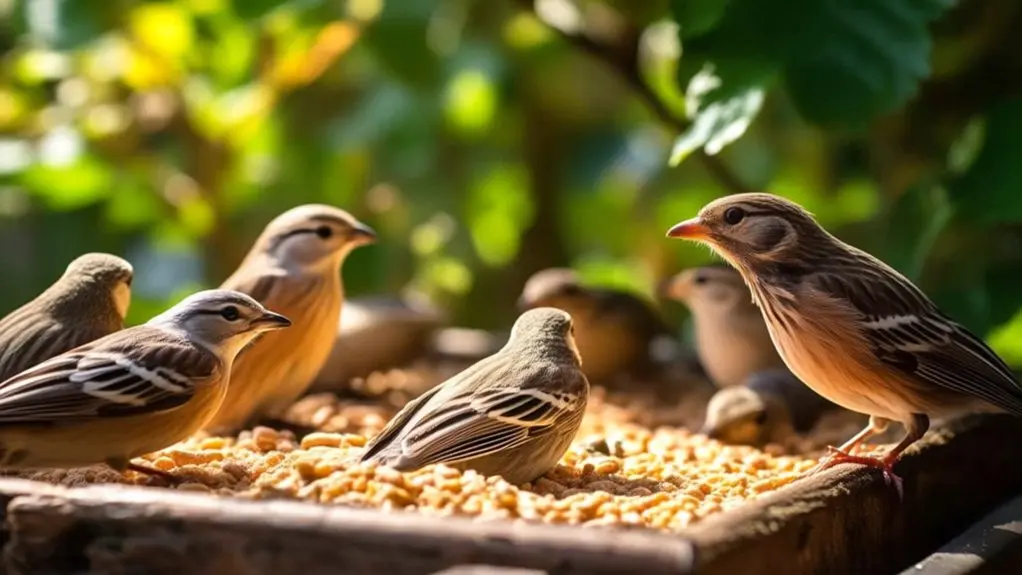
You shouldn’t feed wild birds chicken feed because it’s formulated for domesticated poultry, not native species. Its high calcium, additives, and medications can cause health issues like kidney damage and malnutrition in wild birds.
Chicken feed also disrupts natural foraging behaviors and may attract pests. This can create problems for the ecosystem and hygiene.
If you want to support wild birds safely, understanding these risks is important. Learning about better food options will help you make informed choices for their well-being.
What’s in Chicken Feed and Why It Matters
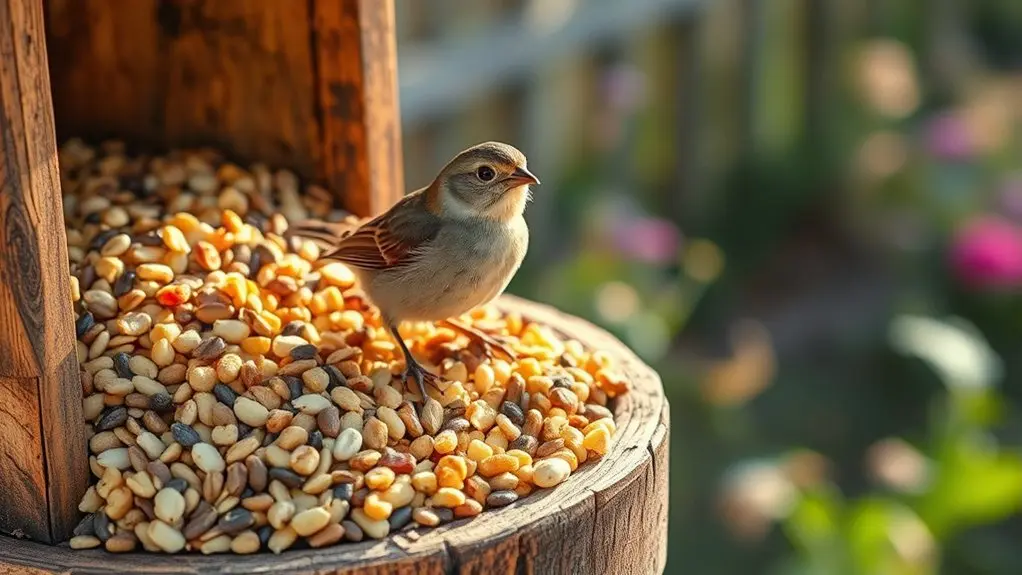
Although chicken feed may seem similar to bird seed at first glance, it contains a carefully formulated blend of ingredients like corn, wheat, soybean meal, vitamins, and minerals tailored specifically to support poultry growth and egg production.
Chicken feed combines corn, wheat, soybean meal, vitamins, and minerals to support poultry growth and egg production.
You’ll find added calcium in many feeds to strengthen eggshells in laying hens. This precise nutritional profile optimizes growth, health, and productivity in domesticated chickens but differs markedly from the mix found in wild bird seed.
Additionally, chicken feed often includes additives or medications that enhance poultry health but can be harmful if ingested by wild birds.
Understanding these differences matters because chicken feed is engineered for poultry biology and nutritional needs, not for wild bird species. So, it’s not really suitable as a substitute for natural wild bird diets.
Can Wild Birds Eat Chicken Feed Safely?
You might think feeding wild birds chicken feed is harmless, but it’s actually not the best idea. Chicken feed has a lot of calcium and additives that can be harmful to wild birds’ health.
Plus, it’s missing important vitamins and minerals that wild birds need to stay healthy.
If you regularly offer chicken feed, it can also attract pests, which is definitely something you want to avoid.
Nutritional Suitability Concerns
When considering whether wild birds can safely consume chicken feed, it’s important to understand that their nutritional requirements differ a lot from those of domesticated poultry. Wild birds don’t have the same balance of calcium, vitamins, and minerals that chicken feed is designed to provide. Because of this, they can end up with deficiencies if they eat it regularly.
Chicken feed often contains additives and medications made specifically for poultry, which could be harmful to wild birds. Plus, the high calcium content in chicken feed might cause kidney damage and other health problems for wild species.
Since wild birds have unique dietary needs, relying on chicken feed as their main food source isn’t a good idea.
Feeding wild birds chicken feed can attract them to an unbalanced diet that might hurt their health over time. So, while it might seem convenient, chicken feed really isn’t suitable for keeping wild bird populations healthy and thriving.
Health Risks To Birds
Because chicken feed contains additives and nutrient levels tailored for domesticated poultry, feeding it to wild birds poses significant health risks. The high calcium content can overwhelm wild birds’ renal systems, leading to kidney damage and other metabolic disorders.
Also, chicken feed often includes medications and preservatives designed for poultry, which may be toxic to wild species if ingested. These substances disrupt normal physiological functions and increase susceptibility to illness.
Since wild birds have evolved to consume diets with different nutrient profiles, chicken feed’s imbalanced composition can cause malnutrition and weaken their immune response.
Why Chicken Feed Isn’t the Best Choice for Wild Birds
You really shouldn’t feed wild birds chicken feed because it doesn’t match what they naturally eat. This mismatch can lead to health issues like obesity and missing out on important nutrients they need.
Plus, chicken feed often has additives and way more calcium than wild birds need, which can actually harm them and change how they behave.
On top of that, putting out chicken feed can attract unwanted pests. This creates sanitation problems in the birds’ natural habitats, which isn’t good for anyone.
Nutritional Mismatch Concerns
Although chicken feed provides essential nutrients tailored for domesticated poultry, it often lacks the diverse components wild birds need to thrive. You should know chicken feed contains high calcium and additives suited for chickens, not wild species. Wild birds depend on a varied diet of seeds, insects, and natural forage, which chicken feed doesn’t supply adequately.
This nutritional mismatch can lead to deficiencies, affecting their growth and survival.
| Nutrient Aspect | Chicken Feed Profile | Wild Bird Requirement |
|---|---|---|
| Calcium | High, to support eggshells | Moderate, species-specific |
| Protein Sources | Plant-based, fixed ratio | Mixed seeds, insects |
| Dietary Diversity | Low (formulated) | High (varied natural foods) |
Feeding chicken feed risks unbalanced nutrition for wild birds, so it’s not ideal.
Health Risks For Wild Birds
Why should you avoid feeding wild birds chicken feed despite its availability? Chicken feed is made specifically for domesticated chickens, not wild birds. This means it can actually cause some health problems for them.
Here are a few important things to keep in mind:
First, chicken feed has high calcium levels, which can harm wild birds’ kidneys and cause other serious health issues.
Also, the nutritional makeup doesn’t match what wild birds need, so they might end up with deficiencies.
Plus, chicken feed often contains additives and medications that could be harmful to wild bird populations.
And because the nutrients aren’t balanced right for wild birds, it can stunt their growth and weaken their immune systems, making it harder for them to survive.
So, feeding wild birds chicken feed isn’t a good idea. It messes with their health because of the wrong nutrient balance and potentially harmful substances.
It’s really important to offer them the right kind of food to keep them healthy and safe.
Impact On Bird Behavior
When wild birds eat chicken feed regularly, their natural behaviors and feeding habits can change quite a bit. Chicken feed is made for domesticated poultry and doesn’t have the right balance of nutrients that wild birds actually need. This can mess with how they forage for food.
You’ll often see bigger birds like sparrows, doves, and jays take over feeding spots, which shakes up the usual interactions between different species. Because chicken feed is so appealing, birds might end up eating too much of it and rely more on food from people instead of finding their own.
Plus, chicken feed can cause birds to get more aggressive with each other, changing their social behavior. Over time, these changes might make wild birds less interested in looking for a variety of natural foods. That can affect their survival skills and the roles they play in the ecosystem.
Health Risks of Chicken Feed for Wild Birds and Backyard Pests
How does chicken feed impact the health of wild birds and attract unwanted pests in your backyard? Chicken feed contains high calcium levels and additives that can harm wild birds. Excess calcium may cause kidney damage. Medications or antibiotics in the feed can disrupt bird health or foster resistant bacteria.
Chicken feed’s high calcium and additives can harm wild birds and attract unwanted pests in your backyard.
Also, feeding chicken feed outdoors can attract pests, creating sanitation issues. Key risks include:
- Kidney damage in wild birds due to high calcium.
- Negative effects from antibiotics or medications present in feed.
- Attraction of rats and insects, leading to hygiene problems.
- Mold growth from fermented wet feed, which also attracts bees and poses safety hazards.
Understanding these risks helps you prevent harm to wildlife and maintain a healthy backyard environment. It’s all about keeping your space safe and welcoming for the right visitors.
Guidelines for Feeding Chicken Feed to Wild Birds Safely
Although chicken feed is designed to meet the nutritional needs of domesticated poultry, it can pose health risks to wild birds due to its high calcium content and additives. If you choose to offer chicken feed, do so sparingly and avoid large quantities. This helps prevent calcium overload and keeps pests away.
Never scatter feed directly on the ground. Instead, use elevated feeders to minimize contamination and keep vermin from getting to the food.
It’s also important to keep feeding areas clean and remove any uneaten feed promptly to reduce health hazards.
Remember, chicken feed doesn’t have the balanced nutrients wild birds need. So, use it only occasionally and make sure to supplement with foods that are appropriate for the species you want to attract.
Following these simple steps helps protect wild bird populations and keeps their environment safe.
Better Bird Food Options Than Chicken Feed
While chicken feed can be offered occasionally, it’s not the best choice for supporting wild birds’ health and natural diets. You can provide better nutrition and attract a wider range of species by selecting foods tailored to their needs.
Chicken feed is occasional, but tailored foods better support wild birds’ health and attract diverse species.
Consider these alternatives:
- Millet, sunflower, and nyjer seeds. These offer essential nutrients that match wild birds’ dietary requirements.
- Cracked corn is a cost-effective option favored by sparrows and doves. It doesn’t carry the health risks linked to chicken feed.
- Commercial wild bird mixes include seeds, nuts, and dried fruits. These blends support diverse species.
- Species-appropriate formulations help reduce health issues and minimize pest problems by using food designed specifically for wild birds.
Choosing these options guarantees safer, more nutritious feeding that aligns with natural bird behaviors. It’s a simple way to help your feathered visitors thrive.
How to Protect Wild Birds While Feeding in Your Yard
To guarantee the safety of wild birds in your yard, you must carefully consider the placement and maintenance of feeders. Position feeders at least 12 feet from dense shrubs and 30 feet from windows to reduce predator attacks and collisions.
Use protective barriers like chicken wire or thorny branches around ground feeders to deter predators and shield smaller birds.
Place feeders in open areas with clear visibility, allowing birds to detect threats early and feed safely.
Apply reflective decals on windows to prevent bird collisions, especially during migration.
Regularly clean feeders to minimize mold, pests, and disease transmission, ensuring a healthier environment.
These measures collectively create a safer feeding space, reducing risks and promoting wild bird well-being in your yard.
Taking a little extra time to set things up right really makes a big difference for the birds visiting you. It’s all about keeping them safe and happy while they enjoy your yard.
Common Mistakes to Avoid When Feeding Wild Birds
Setting up a safe feeding environment is only part of supporting wild birds. Avoiding common mistakes is just as important for their health and well-being. To make sure you’re feeding birds responsibly, keep these key points in mind:
Don’t use chicken feed as the primary food source. It lacks essential nutrients for wild birds and can cause deficiencies. Also, avoid offering bread or processed human foods since they can lead to malnutrition and other health issues.
Place feeders away from areas where predators are active. This helps reduce the risk of injury or predation.
And never provide moldy or spoiled feed because it can cause illness and attract pests.
Frequently Asked Questions
Can Pet Birds Eat Chicken Feed Safely?
You shouldn’t feed pet birds chicken feed because it lacks essential nutrients and contains additives that can be harmful.
Instead, try giving them species-specific pellets or seed mixes. These options ensure they get balanced nutrition. Plus, they help prevent potential health complications.
It’s always best to stick to what’s designed for your bird’s needs. That way, you keep them happy and healthy!
How Does Chicken Feed Affect Bird Migration Patterns?
Chicken feed’s consistent composition causes minimal change in bird migration. While some species might momentarily munch near feeders, it doesn’t disrupt their natural navigation or seasonal shifts. So, you won’t see significant migratory modifications.
Basically, birds stick to their usual routes and timing. Even if they stop by for a quick snack, it’s just a small detour, not a permanent change. Their instincts for migration remain strong and reliable.
Is Homemade Chicken Feed Safe for Wild Birds?
No, homemade chicken feed isn’t safe for wild birds. Its high calcium levels and nutrient imbalance can harm them, and it risks attracting pests.
You should provide species-specific wild bird seed mixes instead for their health and safety. This way, you’re giving them exactly what they need without any risks. It’s the best way to keep wild birds happy and healthy!
Can Chicken Feed Cause Allergies in Birds?
Yes, chicken feed can cause allergies in birds if it contains certain additives, preservatives, or grains they’re sensitive to. You should keep an eye on your birds when trying new chicken feed.
Watch out for allergic reactions like swelling or respiratory issues. It’s important to notice any changes early to keep your birds healthy.
Does Feeding Chicken Feed Attract Specific Bird Species?
When you scatter chicken feed, you open a banquet door. Sparrows, doves, and jays arrive like invited guests. Pest species and wild turkeys join too, drawn by the grains’ allure.
This shapes your backyard’s bird population precisely. It’s pretty interesting how one simple action can bring so many different birds around. You never know who might show up next!
Conclusion
Feeding wild birds chicken feed might seem harmless, but it’s like fitting a square peg in a round hole. The nutrition just doesn’t match up, and it could actually be harmful to them.
Knowing what’s in the feed and understanding the risks can help you make safer choices. When you pick food made specifically for birds, you’re looking out for their health and wellbeing. Plus, it helps keep your yard free from unwanted pests.
If you follow the right guidelines and avoid common mistakes, you create a safer place for wild birds. This way, they can truly thrive, not just survive.